

This article is incomplete
Some sections are missing or need additional details. Help improve it by contributing.
Overview
Sleep is the primary way players recover and advance time in Outbound. At any point during the day, players can return to the camper van and select the bed to sleep, which restores health and moves the game forward to the next morning. Sleeping also increases hunger, creating a strategic balance between rest and survival resource management. The game is structured around a day-by-day progression: each new morning brings fresh opportunities to explore, gather resources, and build.
The day-night cycle is a core system that shapes how players interact with the world. Daytime offers full mobility and energy generation from solar sources, while nighttime limits visibility, stops solar power, and sets a calmer mood that encourages players to set up camp or settle in for the night. Movement stays unrestricted after dark, since a post-launch balance patch enabled sprinting at night.
Sleeping Mechanics
To sleep, players interact with the bed inside the camper van. The option becomes available once it is late enough in the day. Sleeping is straightforward: select the bed, and the game transitions to the next morning.
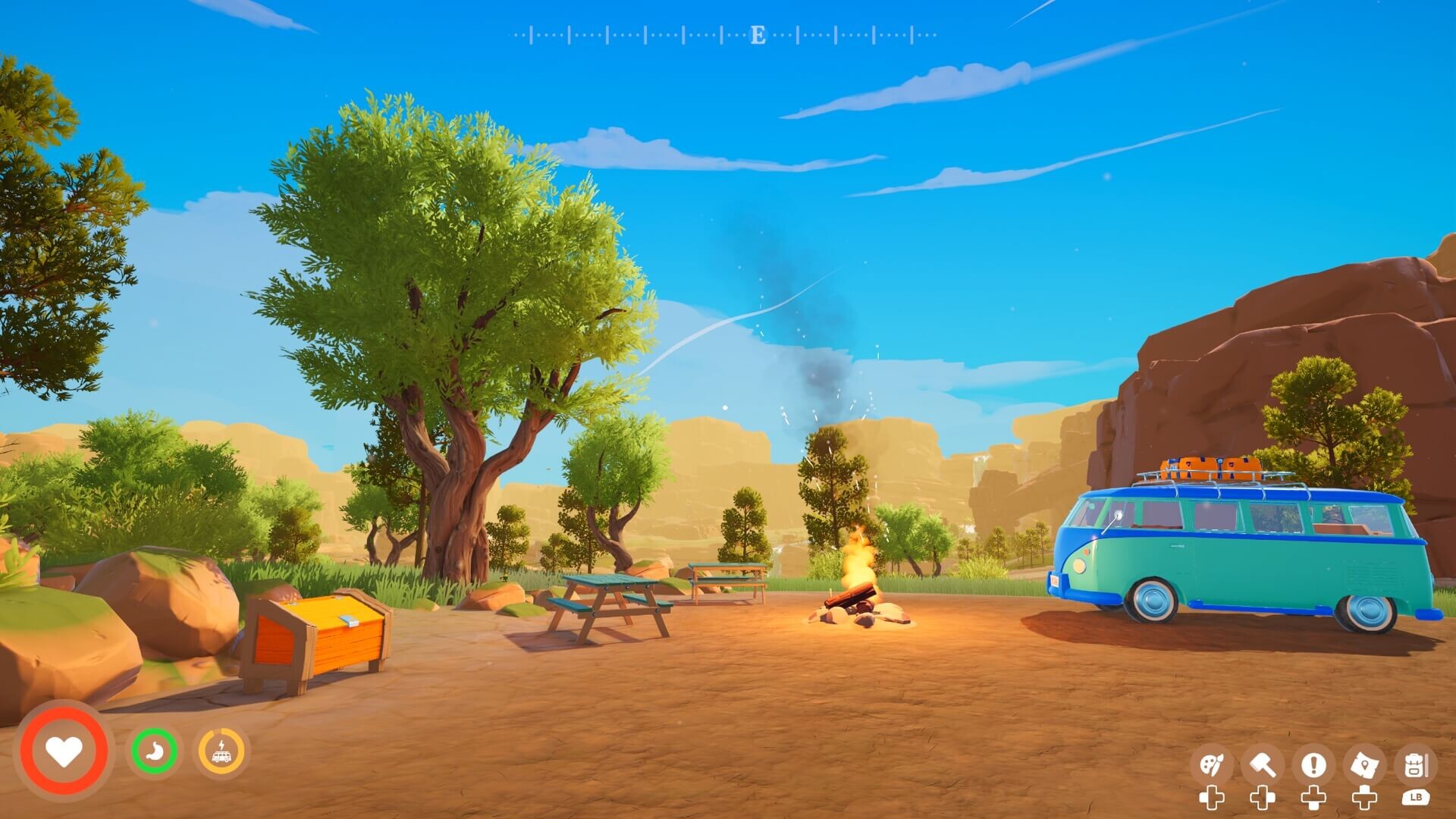
When a player sleeps, two things happen:
Health recovery: Any health lost during the day is restored. Players who took damage from environmental hazards or other sources wake up fully healed.
Hunger increases: Sleeping causes hunger to rise, meaning players need to have food available to eat after waking up. This prevents players from simply sleeping through challenges without managing their food supply.
This trade-off is central to the game's gentle survival loop. Sleeping is necessary for recovery and progression, but it requires players to plan ahead by gathering food. Farming and foraging become increasingly important as players push further into the world and sleep more frequently.
Food and Recovery
Several food sources help players manage the hunger cost of sleeping and recover health independently:
Food | Effect |
|---|---|
Berries | Fulfil hunger; found while foraging in the wild |
Ginger | Replenishes lost health; gathered from the environment |
Cooked meals | Provide larger hunger and health benefits; require a cooking station in the van |
Garden produce | Grown in van-mounted gardens; provides a sustainable food source for longer trips |
Early in the game, hunger can be the most pressing concern. Unlocking blueprints for growing food inside the van through the technology tree helps players sustain themselves on extended journeys without relying solely on wild foraging.
Multiplayer Sleep Synchronization
In multiplayer sessions (up to four players), the next day does not begin until every player has gone to bed. When one player retires for the night, the other players receive a notification alerting them. The game waits for all players to be in bed before transitioning to morning.
This synchronization mechanic encourages communication and coordination. Players who are still out exploring or gathering resources need to wrap up and return to the van before the group can progress. It prevents one player from unilaterally skipping time while others are still active.
All players share the same van, so the bed accommodates everyone regardless of how many people are in the session. There is no need to build additional beds or sleeping quarters for co-op partners.
Day-Night Cycle
Outbound has a dynamic day-night cycle that continuously shifts lighting, atmosphere, and gameplay options. The cycle is not purely cosmetic; it directly affects what players can do and how they move through the world.
Time of Day | Characteristics |
|---|---|
Daytime | Full visibility, sprinting enabled, solar panels generate energy, ideal for exploration and resource gathering |
Sunset / Dusk | Visibility begins to dim and the world settles into evening, a natural signal to head back toward camp; sprinting stays available |
Nighttime | Reduced visibility, solar panels inactive, campfire ambiance; sprinting works the same as during the day after the 1.0.8 update |
Morning | Begins after all players sleep; full solar energy generation resumes and a new day starts |
Fatigue and Sprint Restrictions
At launch, players gradually lost the ability to sprint as the sun set, and sprinting was disabled entirely after dark unless the Homing Boots were equipped. The 1.0.8 update removed that restriction: sprinting now works at any time of day, the Homing Boots are no longer required to run at night, and the patch also raised sprint speed by 15 percent and stamina regeneration by 150 percent. Travel after dark is no longer slowed by the clock.
The Homing Boots, which once existed mainly to allow a sprint back toward the van at night, are no longer needed just to run after dark. Night exploration now moves at full pace, so players can range farther from camp after sunset than they could at launch.
Carrying too many items in the backpack still reduces movement speed and can disable sprinting, regardless of the time of day. Managing inventory weight remains an important part of travel planning even though the day-night cycle no longer limits running.
Night Activities
While nighttime restricts mobility, it opens up its own set of activities and atmosphere. Night is not wasted time; it is a different phase of gameplay focused on relaxation and social interaction.
Campfire gatherings: Players can sit around a bonfire with friends, sharing warmth while moonlight and fireflies create a calm backdrop. This is one of the game's signature cozy moments.
Driving with headlights: The van can be driven at night using headlights, allowing players to relocate to a new campsite or continue traveling along roads after dark.
Crafting and building: Players can use workstations inside the van to craft items and build, provided the van has enough stored battery power to run the equipment.
Stargazing and ambiance: The nighttime environment features dynamic lighting with moonlight and fireflies, creating scenic moments for players who enjoy the game's visual atmosphere.
Connection to the Energy System
The day-night cycle is closely tied to the energy system. Solar panels, one of the primary power sources available in mid-game progression, only generate electricity during daylight hours and require clear skies. At night, solar arrays produce nothing, and the van must rely on stored battery reserves or alternative power sources such as bio burners or wind turbines.
This creates a planning challenge: players who run energy-intensive equipment at night (lights, workstations, appliances) need to ensure they charged their batteries during the day. Upgrading battery storage capacity through Signal Tower blueprints helps bridge the gap between daytime generation and nighttime consumption.
Late-game players who build a mixed renewable grid combining solar, wind, and hydro power can reduce their dependence on any single source, making nighttime energy shortages less of a concern.
Weather Variation Across Days
Each new day can bring different weather conditions. The weather system operates independently from the day-night cycle, meaning a sunny morning might give way to afternoon rain, or several overcast days might occur in a row. The developers have tuned the weather system so that long stretches of rainy weather are less likely to occur, keeping gameplay from feeling monotonous.
Weather affects more than just visuals. Rain and cloud cover reduce solar panel output, making energy management harder on overcast days. Different regions reward different power configurations: sunny coastal areas favor solar, while windier biomes make wind turbines more effective.
Accessibility Options
Outbound includes accessibility settings that allow players to adjust the day cycle. While the exact options have not been fully detailed, the game provides controls that let players modify how the day-night cycle functions. This sits alongside other accessibility features such as disabling timing-based minigames and adjusting the field of view.
These options ensure that players who find time pressure or the day-night pacing stressful can tailor the experience to their comfort level.
Tips
Always carry berries or other food before sleeping. The hunger increase from rest can leave you in trouble if you wake up with nothing to eat.
Keep ginger in your inventory as an emergency health item. It restores health directly, letting you avoid an unnecessary sleep cycle just to heal.
In co-op, communicate with your group before heading to bed. The game notifies other players when someone retires, but a quick heads-up avoids stranding a teammate mid-exploration.
Charge your battery bank during the day if you plan to craft or use powered equipment after dark. Solar panels stop producing at night.
If you are far from the van at dusk, use the sprint-to-van tool to get back quickly before night fully sets in.
Consider unlocking garden blueprints early. Growing food in the van eliminates the need to forage before every sleep, especially on longer trips.