

Overview
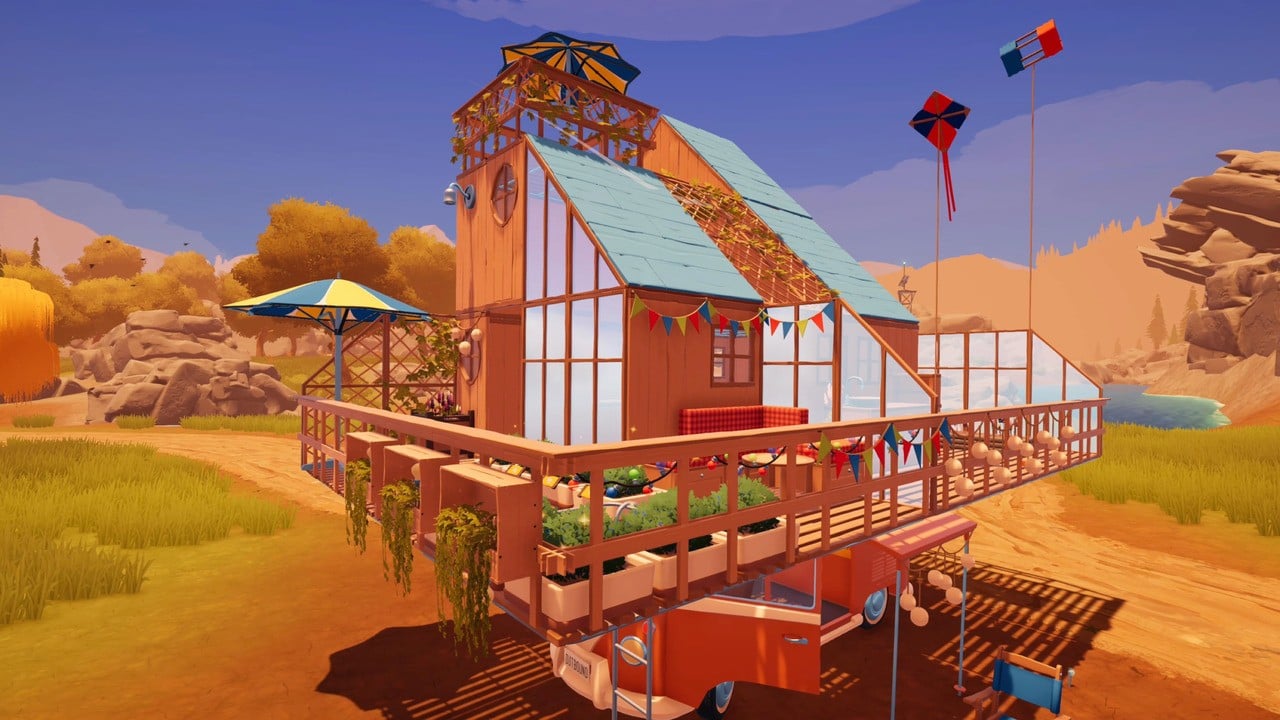
Encumbrance is the state a player enters when their backpack inventory exceeds its capacity in Outbound. Unlike survival games that lock movement entirely when players are overloaded, Outbound takes a gentler approach: exceeding the backpack limit disables sprinting but does not prevent the player from walking, interacting with objects, or picking up additional items. This design reflects the game's cozy survival philosophy. This keeps that a full backpack never leaves you stranded in the field. You simply move at a slower pace on the way back to your camper van.
How the Inventory Works
Outbound uses a grid-based inventory system. The player's backpack has a limited number of slots, and each item occupies one or more of those slots regardless of what the item is. Resources such as wood, fiber, stone, and metal scrap all take up space, and so do crafted items, food, and tools. The backpack is the only inventory a player carries while exploring on foot; everything else must be stored in the van or offloaded to a companion.
Managing what goes into the backpack is a constant part of the gameplay loop. Players venture out from their van, gather resources and materials from the surrounding biomes, and return to deposit them before heading out again. The grid layout keeps things visual and straightforward: if there are open slots, items fit. If the grid is full, the player is encumbered.
What Happens When Encumbered
When the backpack reaches capacity and the player picks up anything beyond that limit, the encumbrance penalty kicks in. The effects are intentionally mild:
Sprint disabled. The player can no longer sprint and moves at normal walking speed only.
Walking unaffected. Normal movement speed is not reduced. You can still walk freely in any direction.
Interactions unchanged. Crafting, opening menus, talking to NPCs, picking up more items, and entering the van all work as normal.
No item drops. The game does not force you to discard items. You keep everything you have collected.
Because the penalty is limited to losing the sprint, encumbrance in Outbound functions more as a gentle nudge to manage inventory rather than a hard punishment. Players who don't mind the slower pace can continue gathering until they are ready to return to the van.
Download Vouchers and Bottle Caps
Download vouchers and bottle caps are currency-type items in Outbound. Despite being small collectibles, they occupy the same backpack grid slots as any other resource. A single download voucher takes up the same amount of space as a log or a bundle of fiber, which can be surprising for new players.
Because these items share inventory space with gathering materials, it is worth spending them promptly. Download vouchers can be redeemed at signal towers, and bottle caps can be used at vending machines. Letting them pile up in the backpack wastes slots that could hold crafting materials instead. If you plan a long foraging trip, consider clearing out any vouchers or caps beforehand so you have maximum space for resources.
Van Storage
The camper van is the player's mobile base and primary storage depot. When the backpack is getting full, the quickest way to free up space is to walk to the van and deposit items into its storage compartments. The van's trunk and interior both provide room for resources, and accessing the back of the vehicle opens the storage interface.
Depositing items into the van transfers everything from the backpack by default. Players who want to keep certain items on hand (such as food or tools) can lock those items in the backpack using the lock icon that appears when clicking on them. Locked items stay in the backpack when the rest is dumped into vehicle storage.
As players progress through the technology tree, they unlock larger storage containers and additional compartments. Rooftop racks provide exterior storage space on top of the van, and the camper mode pop-up second floor opens room for even more containers alongside workstations and garden beds. Prioritizing storage upgrades early in the technology tree is one of the most effective ways to reduce how often encumbrance becomes a problem.
Dog Companion
The dog companion is one of the most useful tools for managing encumbrance. The dog is equipped with its own pouch where players can store items when things are getting heavy. This effectively extends the player's carrying capacity while out exploring.
Beyond acting as a secondary backpack, the dog can be commanded to pick up items and carry them. Players can also send the dog to deliver items straight to the van, a feature the community has nicknamed "dog express." This is particularly helpful during long foraging sessions far from the vehicle, because the dog handles the return trip while the player keeps gathering. In multiplayer sessions, each player's dog can shuttle resources back to camp independently, making group expeditions much more efficient.
Vehicle Weight
The van itself has a separate weight system that is distinct from personal encumbrance. As players load resources, furniture, crafting stations, and building materials into the van, its total weight increases. A heavier van affects driving performance: acceleration is slower, handling feels heavier, and fuel efficiency from the electric battery decreases. This encourages players to think about what they store in the van and not just hoard every resource indefinitely.
Vehicle weight upgrades become available through the researcher workstation and the technology tree. These upgrades raise the van's weight capacity, allowing it to carry more before driving is noticeably affected.
Storage Upgrades
Several upgrades throughout the game help players deal with encumbrance by expanding available storage. The table below summarizes the key options.
Upgrade | Source | Effect |
|---|---|---|
Larger Storage Containers | Adds more storage slots inside the van | |
Rooftop Racks | Provides exterior storage space on top of the van | |
Camper Mode (Pop-Up Second Floor) | Van upgrade | Opens additional room for containers, workstations, and garden beds |
Dog Companion Pouch | Gives the dog its own item storage while exploring | |
Vehicle Weight Upgrade | Researcher Workstation | Increases the van's maximum weight capacity for driving |
Weight Capacity Research
Four research nodes raise how much the van can carry. They chain, so each one needs the tier below it, and the costs climb sharply with materials pulled from progressively later regions.
Node | Cost |
|---|---|
Weight Capacity Upgrade I | 10x Bolts |
Weight Capacity Upgrade II | 10x Bolts, 10x Onyx Minerals |
Weight Capacity Upgrade III | 16x Clay, 20x Glass |
Weight Capacity Upgrade IV | 12x Adamant Metal, 22x Blossom Plank, 20x Sugar |
Personal carrying capacity runs on a separate line. The Pouch root node is free, and Pouch Upgrade I and II cost 10x Red Minerals with 6x Cloth and 10x Rose Minerals with 6x Strong Weave respectively. The two backpacks, Adventurer's and Explorer's, sit under Player Equipment at 15x Durathread and 20x Hyperthread with 6x Cloth.
Because Rose Minerals is the only Tier 5 material in the game, Pouch Upgrade II is effectively the last carrying upgrade most players finish. The full node list is on the Technology Tree page.
Weight Management Tips
Offload often. Make frequent trips back to the van to deposit resources rather than waiting until the backpack is completely full. Short, regular trips are faster than one slow, encumbered walk.
Lock essential items. Use the lock feature on food, tools, and other items you always want on hand. This prevents them from being dumped into the van when you deposit resources.
Spend currency early. Download vouchers and bottle caps take up valuable backpack space. Redeem them at signal towers and vending machines before heading out on gathering runs.
Use the dog. Send the dog companion back to the van with a load of items while you keep exploring. This cuts down on return trips significantly.
Prioritize storage research. Unlock larger containers and rooftop racks in the technology tree as early as possible. More van storage means fewer forced trips.
Plan your route. Before heading out, decide what resources you need. Targeted gathering fills the backpack with useful materials instead of random items that eat up slots.
Recycle junk. Use the recycling system to break down unneeded items into base materials or vouchers, clearing space and converting clutter into something useful.
Multiplayer Considerations
In co-op sessions with up to four players, each player has their own backpack and can become encumbered independently. Items in one player's backpack are not accessible to others unless deposited into the shared van storage first. Coordinating who carries what and timing return trips to the van can keep the group moving efficiently.
Because each player can bring their own dog companion, a group of four players effectively has four extra pouches and four dog express couriers running items back to the van. This makes encumbrance far less of a concern in multiplayer than in solo play.
See Also
Storage and Inventory for a detailed breakdown of the full inventory system
Camper Van for information on the vehicle and its upgrades
Dog Companion for the companion's full ability set
Driving for how vehicle weight affects travel
Technology Tree for all available storage and capacity upgrades
Recycling System for converting unwanted items into materials or vouchers
Resources for a list of all gatherable materials