

Combat in Huaxia: Warring States works at two scales: personal duels and small-scale skirmishes on one hand, and large strategic engagements between armies on the other. Both layers share a single set of cosmological modifiers driven by the Five Elements, Yin-Yang, and Eight Trigrams overlay, but they reward very different play.
Personal Combat
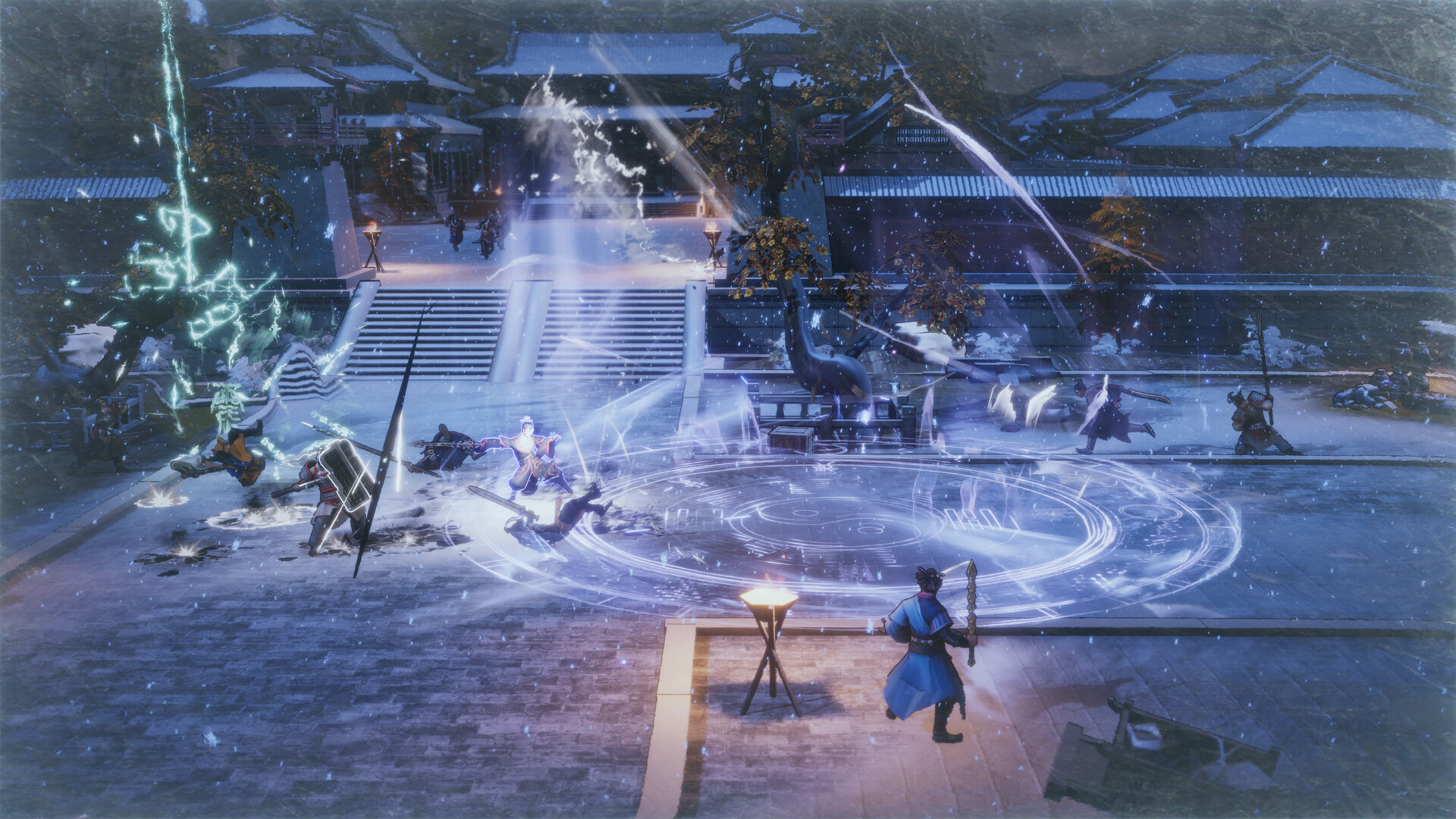
On foot, the player controls a single character whose moves are gated by their chosen weapon, martial art, and cultivation path. Demo-era figures listed twenty-two weapon categories, eighteen martial-arts forms, and eight broader combat styles, with the Early Access build retuning balance across all of these. Stamina, posture, and elemental affinity each play a role in trades.
Layer | Role |
|---|---|
Weapon (see Weapons) | Defines reach, attack speed, stagger profile, and which elemental category the weapon falls into |
Martial Art (see Martial Arts) | Selects the move set, special techniques, and unique finishers; advanced forms gate behind specific schools or masters |
Cultivation Path (see Cultivation Paths) | Three internal paths covering Essence, Qi, and Spirit shape long-term cultivation progression |
Elemental Affinity | The elemental category your weapon and form belong to gives you advantage against some elemental types and disadvantage against others, layered with the yin-yang and trigram positions |
Strategic Combat
Once you raise an army, battles play out as strategic engagements with sixty or more unit types available across the Warring States factions. Cavalry, infantry, archers, siege engines, and unique national high-tier units each have their own role; formation choice and ground type swing outcomes as much as raw unit count. Strategic battles also respect the elemental and trigram overlay where it applies to special unit abilities.
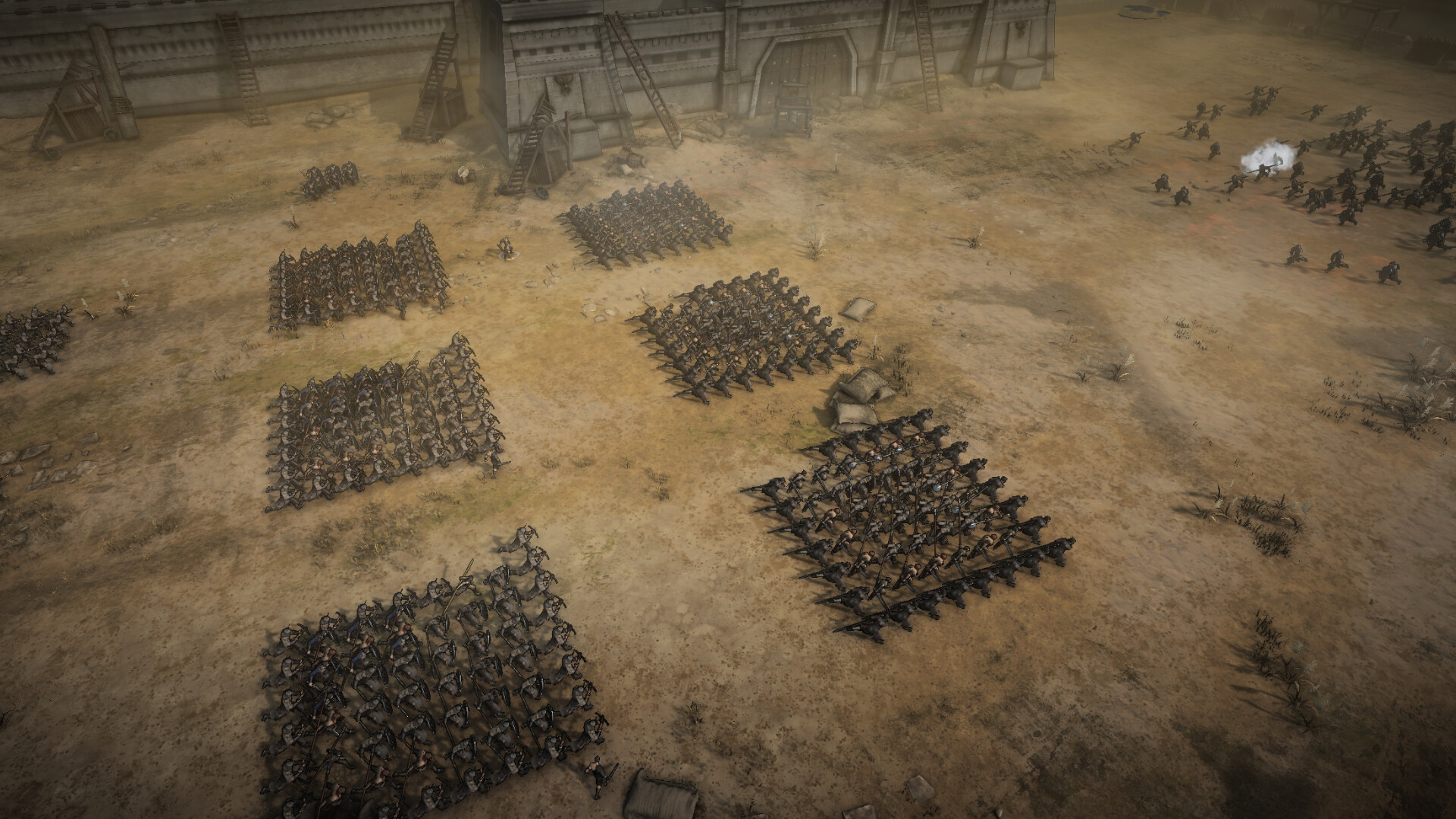
Formations and angles of approach matter; charging cavalry into prepared spear lines is a classic loss
Sieges are slower, with stronghold defenses, supply lines, and defender retainer skills all in play
Some engagements let you drop into the personal layer to lead a charge or duel an enemy general; the rest are resolved at the army level
Cosmological Overlay
Every weapon, martial art, and many unit abilities carry a cosmological tag drawn from the Five Elements, Yin-Yang, and Eight Trigrams framework. The frameworks form a layered rock-paper-scissors: the five-element generation and overcoming cycles act on top of the yin-yang complementary axis, with the eight trigrams adding directional and relational positions on the same elemental wheel.
Recruiting Combat Help
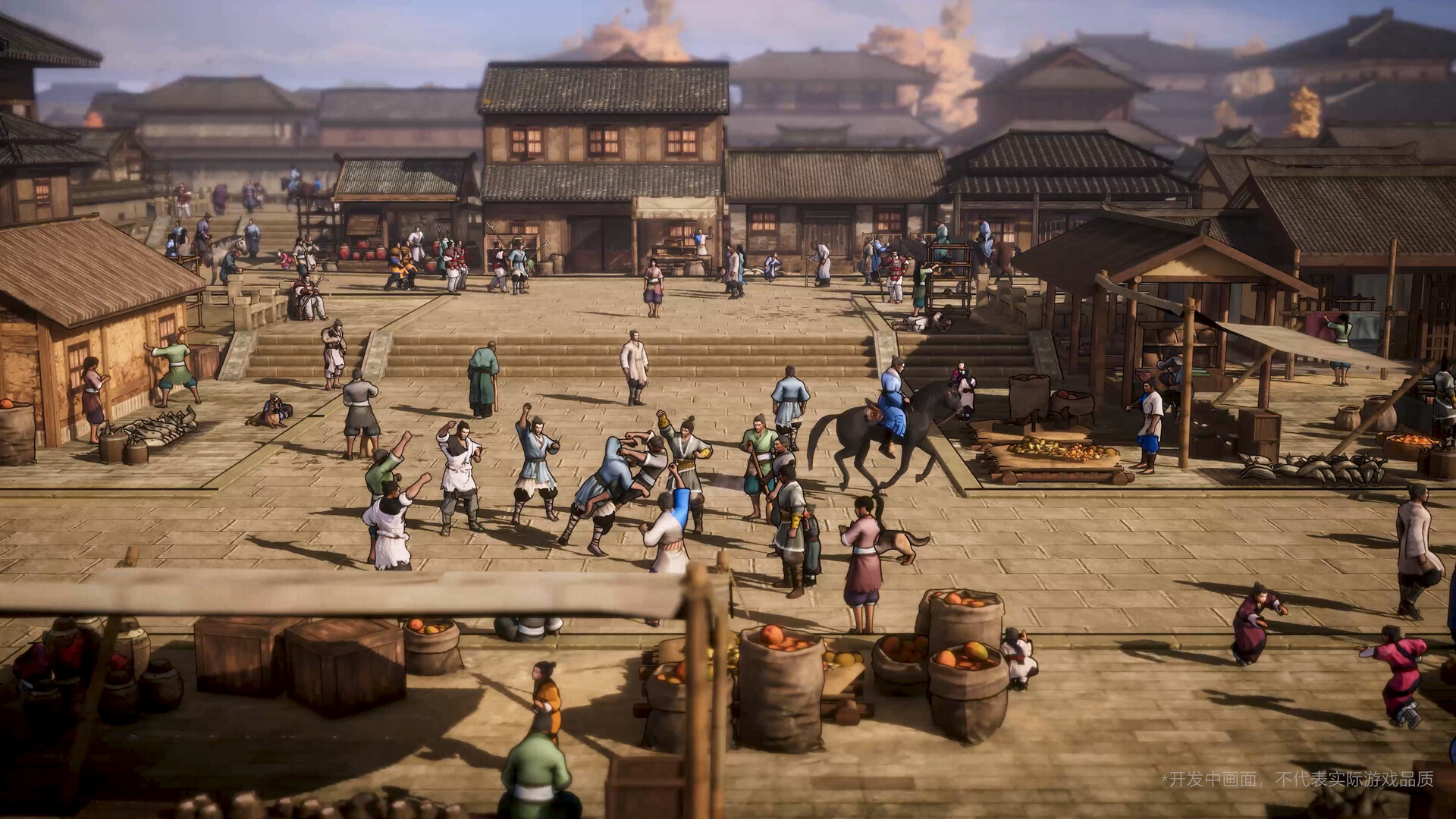
Solo characters cap out at strong but not unbeatable. Recruiting combat-oriented retainers lets you cover gaps in your kit: a ranged retainer for archery roles, a defensive retainer to soak hits, a strategist retainer for pre-battle bonuses on the strategic layer.
Unit Traits and Status Effects
Strategic battles layer passive unit traits on top of the cosmological system. A late-May update added and reworked a large set of traits, and many of them apply timed status effects rather than flat stat changes. The full trait list lives on the Unit Types page; the table here summarizes the status effects those traits hand out, since they change moment-to-moment how a fight reads.
Status | Effect |
|---|---|
Fighting Spirit | Raises tenacity and keeps a unit fighting; granted on a kill or at the start of combat by several traits. |
Phantom Shift | Dodges all incoming attacks for a short window; granted by the Blood Mist trait after a kill. |
Armor Reinforcement | Reduces incoming damage; granted at combat start or when a unit drops to low health. |
Swiftness | Increases movement speed at the opening of a fight. |
Rapid Strike | Speeds up attacks; paired with Fighting Spirit by the Berserk trait when a unit is badly hurt. |
Broken Stamina | A unit whose Stamina bar is depleted takes extra damage from traits like Brawling and Combat Mastery. |
The practical takeaway is that breaking an enemy’s Stamina and keeping a numbers advantage now pay off through traits, not just through the elemental matchup. Aggressive openings can snowball when start-of-combat traits stack Armor Reinforcement and Fighting Spirit before the first clash.
Notes for Early Access
Combat numbers are among the most volatile parts of the Early Access build. Damage values, weapon scaling, and unit stat blocks have been retuned in nearly every major patch. This page describes the structural shape of the system; concrete numbers belong on the dedicated weapon, martial-art, and unit pages where each can be timestamped against the build it was measured in.
More recent patches have refined the combat layer further. The May 19 update enhanced the battle prediction display so the projected outcome of a battle is easier to read before commit. The May 22 update optimised combat boundaries, reducing cases where units became stuck just outside the playable battle area on field and siege scenes alike. A later update at the end of May reworked unit traits across the roster, so battlefield differentiation between unit types is sharper than it was at launch.
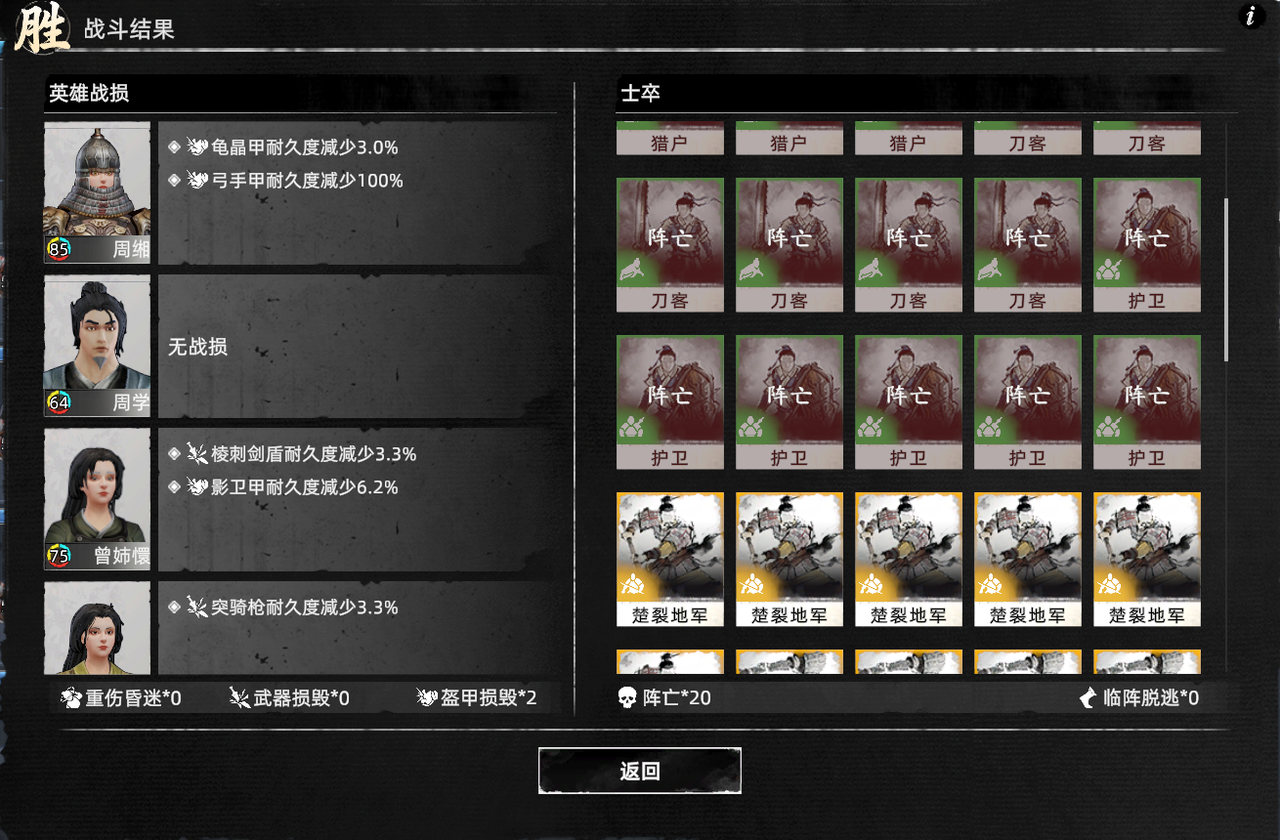
A June 2026 update rebalanced the army layer so soldiers survive longer against powerful characters. It slowed the rate at which rank-and-file troops are wiped out, raised low-tier unit health, increased mid- and high-tier unit damage, and flattened late-game hero scaling so a single leader can no longer clear a field of quality troops on their own. Equipment durability loss per hit was also reduced, easing the constant mid-battle repair churn that came from leading charges in person.
A July 2026 update expanded the strategic layer again. Battle maps are larger and more three-dimensional and hold more units at once, reinforcements join more logically, and troop casualties resolve more slowly so ordinary soldiers are no longer wiped out in a single clash. The developer described a battlefield command system for formations and tactical orders as the next major combat addition, still in development rather than shipped.
Follow-up July patches tuned the feel of these battles further. They smoothed push-collision and knockback effects so hits read more clearly, and fixed a case where allied troops would stand idle when enemy reinforcements spawned.
A further balance pass shipped on July 31, 2026. Bonus health was trimmed on cavalry and on medium and heavy armour infantry, and tier five infantry lost a little overall strength. The same patch fixed the spectator target switching to enemy units mid-battle, players being caught by abnormal enemy combos, and a case where running to the map boundary left you unable to leave combat.
The post that carried those fixes also previewed combat changes the studio wants to land before September: a battle will only count as lost once every one of your units has been eliminated, the on-screen hero limit rises to ten, spectator targets extend to every allied unit with a speed-up control, and buff damage numbers become color-coded by element. None of those four were itemised in any patch note through September 20, 2026, so they remain announced rather than shipped. See Early Access Roadmap for the wider schedule.
Mounted combat got its own pass in August 2026. Aim and movement while riding had been welded together, so a rider could not shoot in one direction while travelling in another. The August 14 development log described the split and a drawn bow that could be turned to fire backwards over the horse, while noting that the backwards shot and some other new mounted actions had not yet landed even in the test build. An August 22 preview widened the scope to overhauled animations for a range of weapons used from horseback, each with its own tactical role, and showed the backwards shot the studio calls a Parthian shot. The batch reached the main build on August 28, 2026. The patch notes describe two shipped pieces: melee attacks while mounted, with a left-click 1/2/3 combo and a right-click heavy attack implemented for one-handed and two-handed short-handled weapons and other weapons still in development, and mounted archery that fires in any direction toward the cursor. Attack feel, movement transitions and the afterimage shown when a skill is interrupted were tuned, and a bug that spawned mounted arrows from the wrong point was fixed. The notes do not name the backwards shot separately. On September 8, 2026 exclusive mounted animations were added for two-handed polearms, axes and hammers, and on September 20 a bug that blocked skill use with long weapons while mounted was fixed. Alongside all this, the August 8 patch corrected an error in combat team damage calculation, and August 14 fixed a crash-adjacent error that occurred while riding under certain conditions.
The wider August feature batch went live on an opt-in test branch on August 14 and reached the main build on August 28, 2026. That drop also refactored how equipment and trait bonuses are loaded, so attribute bonuses are recalculated on load and the panel matches actual combat power, fixed a bug where defeating the enemy captain could still count as a lost battle and delete the squad, and expanded the projectile logic as groundwork for arrow volleys and catapults, which are not yet in the build. The combat changes previewed in late July, namely the defeat condition requiring every unit to be eliminated, the raised hero display limit, the extended spectator targets with a speed-up control, and buff damage numbers colour coded by element, were not itemised in the August 28 notes or any later patch note through September 20, so treat them as announced rather than shipped.
Two September patches touched auto-battle. Since September 8, 2026 the damage order in auto-battle puts lower-rank soldiers first, and among soldiers of the same rank damage follows the original troop-type order, so a stack of tier-one levies absorbs losses before the higher tiers behind it. The September 12 update then adjusted the settlement logic so extreme cases no longer produce abnormal results. On September 20 the flee check was fixed so the flee progress bar stops the moment the character dies instead of resolving a flee afterwards.
See also: Weapons, Martial Arts, Unit Types, Five Elements, Yin-Yang, and Eight Trigrams, Cultivation Paths.
Siege Battles
Beyond field battles, the strategic combat layer also runs sieges against cities and strongholds. A siege is a dedicated battle scene that uses walls, towers, scaling ladders, and breach attempts at gates. The developer has stated the system is being optimised toward five hundred versus five hundred troop battles, which sets the upper bound for what a siege can hold. The siege battles page covers preparation, the battle itself, and the bug-fix and quality-of-life history during Early Access.
Indirect Approaches
Personal and strategic combat are not the only ways a clan or wanderer presses an advantage. Infiltration and disguise let a small team enter a rival prefecture's city under cover, trade, recruit, and gather information without raising armies. Skilled players soften a target through repeated infiltration before declaring open war, blending combat with diplomacy and espionage.