

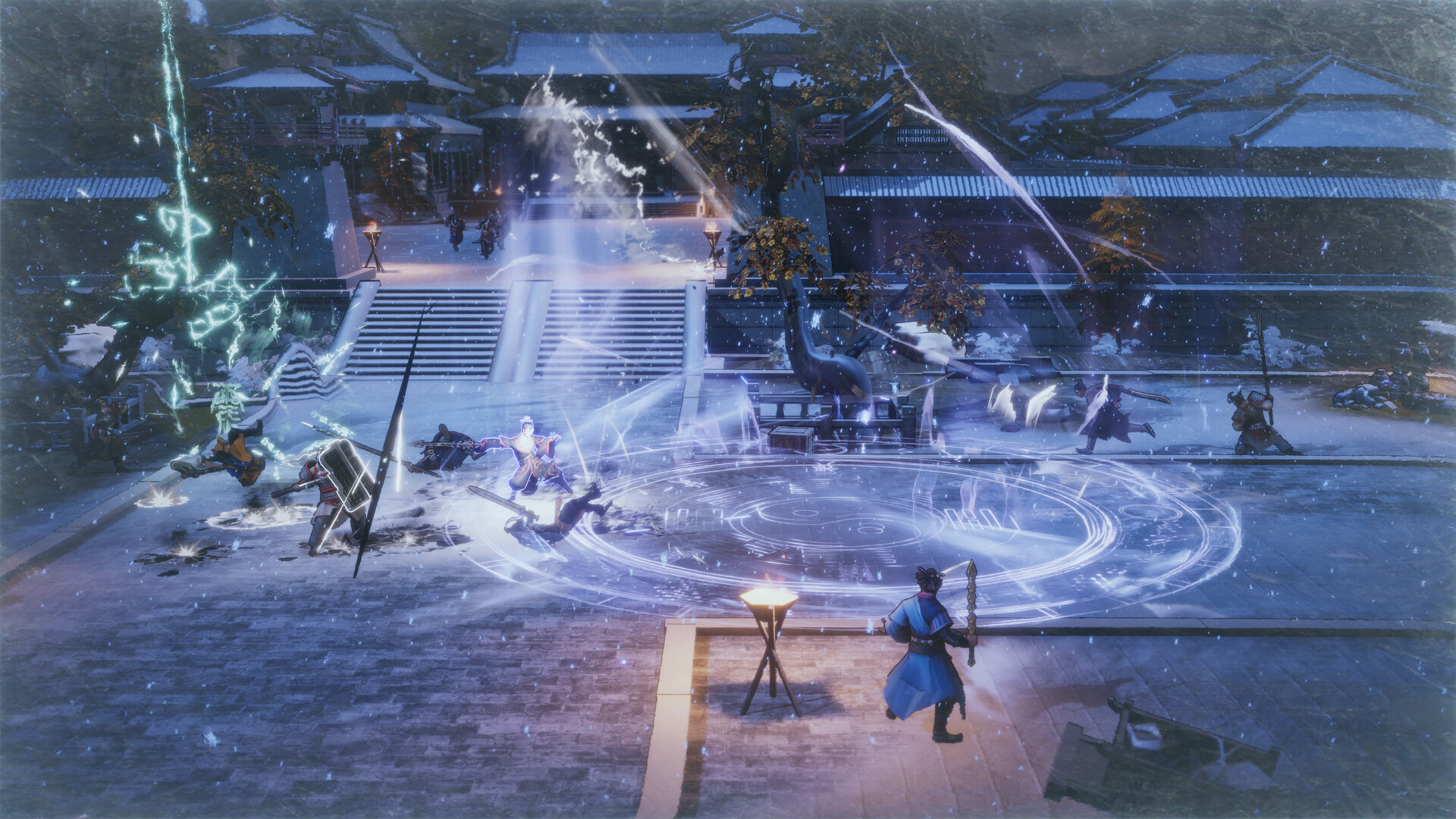
Three traditional Chinese cosmological frameworks shape combat in Huaxia: Warring States: the Five Elements (Wu Xing), Yin-Yang complementary polarity, and the Eight Trigrams (Bagua). They overlap rather than replace one another, and their interaction drives the elemental rock-paper-scissors that runs across weapons, martial arts, and many unit abilities.
The Five Elements (Wu Xing)
Wu Xing organizes phenomena into five categories: Wood, Fire, Earth, Metal, and Water. Each element generates one and overcomes another in two cycles, often called the generating cycle and the overcoming cycle.
Element | Generates | Overcomes |
|---|---|---|
Wood (木) | Fire | Earth |
Fire (火) | Earth | Metal |
Earth (土) | Metal | Water |
Metal (金) | Water | Wood |
Water (水) | Wood | Fire |
In combat, attacking with an element that overcomes the target's element grants advantage; attacking into an element that overcomes yours puts you on the back foot. The exact magnitude of advantage scales with cultivation depth and weapon mastery.
Yin-Yang Polarity
The yin-yang axis is complementary rather than oppositional. Yin is the receptive, soft, internal aspect; Yang is the active, hard, external aspect. Most weapons and martial arts skew toward one polarity. Yin-leaning forms tend toward counters, parries, and patient pressure in keeping with the traditional cosmological associations; yang-leaning forms tend toward initiative, output, and area control on the same basis. Some advanced forms balance both and unlock special techniques only when balance is maintained.
Polarity | Typical Style | Examples |
|---|---|---|
Yin (阴) | Counter, parry, patience, internal cultivation | Soft styles, heavy emphasis on Spirit cultivation |
Yang (阳) | Initiative, output, momentum, external cultivation | Hard styles, heavy emphasis on Essence cultivation |
Balanced | Adaptive; gain access to advanced moves when both poles are trained | Higher-tier forms taught by elite masters |
The Eight Trigrams (Bagua)
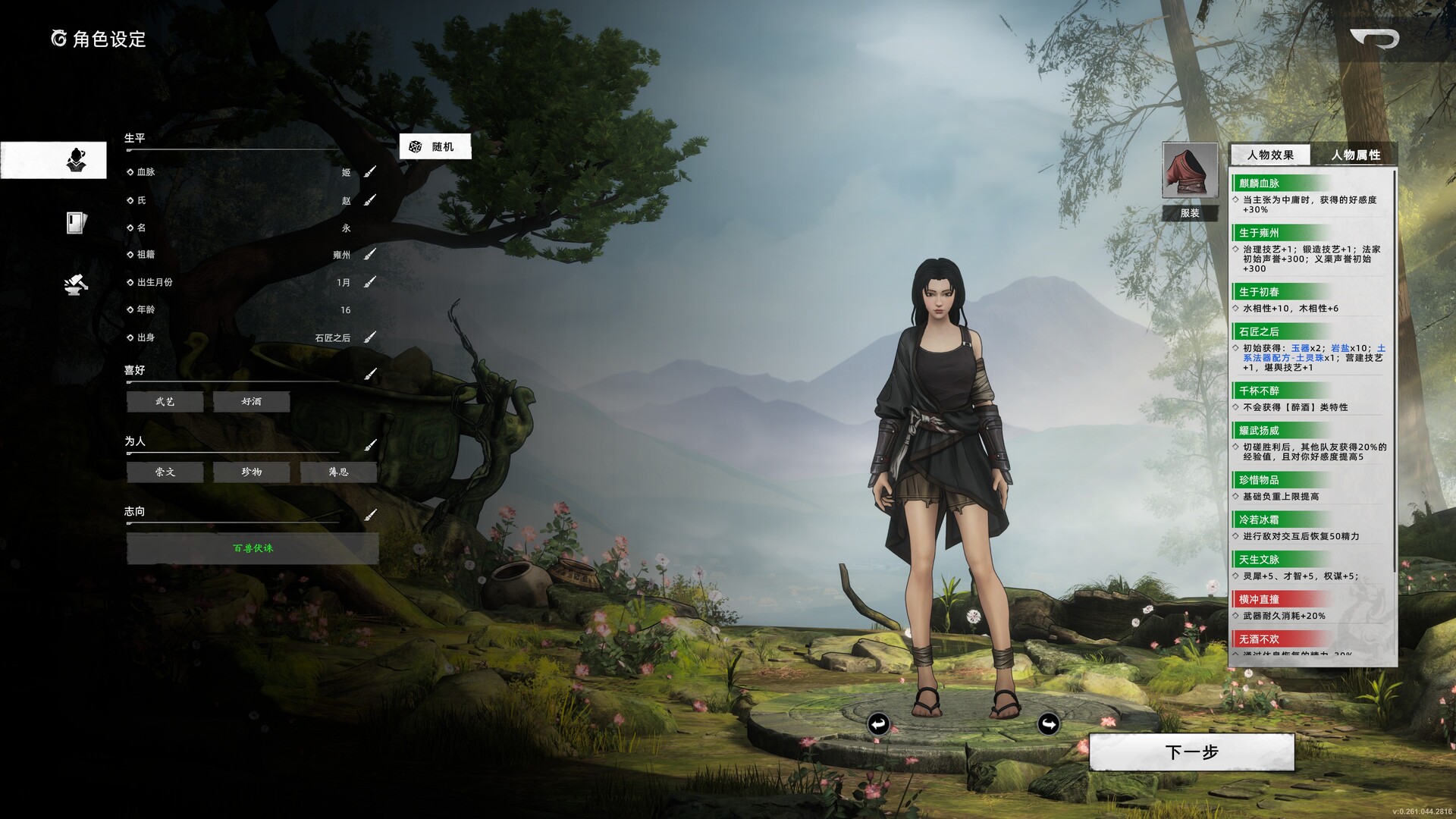
Bagua, in the classical later-heaven (后天八卦) arrangement most often referenced in modern usage, adds eight directional and relational positions on top of the elemental wheel. The trigrams are commonly named Heaven, Earth, Thunder, Wind, Water, Fire, Mountain, and Lake. They map onto the five elements with overlap, and they are the source of most of the directional language in the game's higher martial arts: a trigram tag on a technique tells you what stance, position, or relational posture the technique flows from.
Trigram | Common Element | Common Quality |
|---|---|---|
Qián, Heaven (乾) | Metal | Creativity, leadership |
Kūn, Earth (坤) | Earth | Receptivity, support |
Zhèn, Thunder (震) | Wood | Movement, shock |
Xùn, Wind (巽) | Wood | Penetration, gentle force |
Kǎn, Water (坎) | Water | Danger, depth |
Lí, Fire (离) | Fire | Clarity, brightness |
Gèn, Mountain (艮) | Earth | Stillness, defense |
Duì, Lake (兑) | Metal | Joy, communication |
How They Combine in Practice
Combat tooltips describe these three factors as compounding modifiers on the same exchange. A water-element yang technique launched from a Wind trigram stance has different scaling against a fire-element yin opponent than the same technique launched from a Mountain stance. You will not see the math directly; what you will feel is that fights against humans with martial arts of their own become readable once you know the shape of the modifiers.
Practical Tips
Carry a backup weapon with a different element; switching can flip a losing matchup before a duel begins
Some schools of thought emphasize a particular trigram or polarity; align your starting talent investments to your chosen school
Specialty masters teach forms tagged with rare trigram and polarity combinations; seek them out instead of grinding through identical generic schools
See also: Combat System, Weapons, Martial Arts.