

Weapons are the physical tools that Huaxia: Warring States characters bring to the field. Demo-era documentation reported about twenty-two weapon categories in the build, ranging from common sidearms to heavy battlefield arms. The structural shape below has held across the launch window; specific category counts and per-weapon stats can shift between Early Access patches.
Weapon Families
Weapons cluster into broad families. The exact in-game labels can vary between localisation passes, but the families themselves are stable.
Family | Examples | Role |
|---|---|---|
Swords | Jian, dao, twin-blade variants | Balanced personal melee, wide compatibility with martial arts |
Polearms | Spear, halberd, glaive, dagger-axe | Reach, single combat against mounted opponents, mass formation in army battles |
Heavy weapons | Maces, hammers, large axes, two-handed staves | Armor breaking and shock damage |
Bows and crossbows | Long bows, recurve bows, crossbows, repeating crossbows | Ranged personal combat and ranged unit support |
Hidden weapons | Throwing daggers, darts, concealed blades | Surprise attacks, rogue and assassin builds, infiltration support |
Ceremonial weapons | Rare or storied arms tied to specific schools or factions | Often gated by quest, school study, or a secret realm find |
Weapons, Martial Arts, and Cultivation
A weapon is one of three connected layers in personal combat. The other two are the studied martial art and the chosen cultivation path. Real combat strength comes from aligning all three.
The five-element, yin-yang, and eight-trigrams systems govern how the layers interact. A wood-aligned spear in the hands of a wood-aligned martial artist with a wood-favoured cultivation will outperform the same character with a fire-aligned weapon they have no affinity for. The damage numbers will look comparable on the stat screen and very different in practice.
How to Acquire a Weapon
Weapons are acquired through several routes during a typical playthrough:
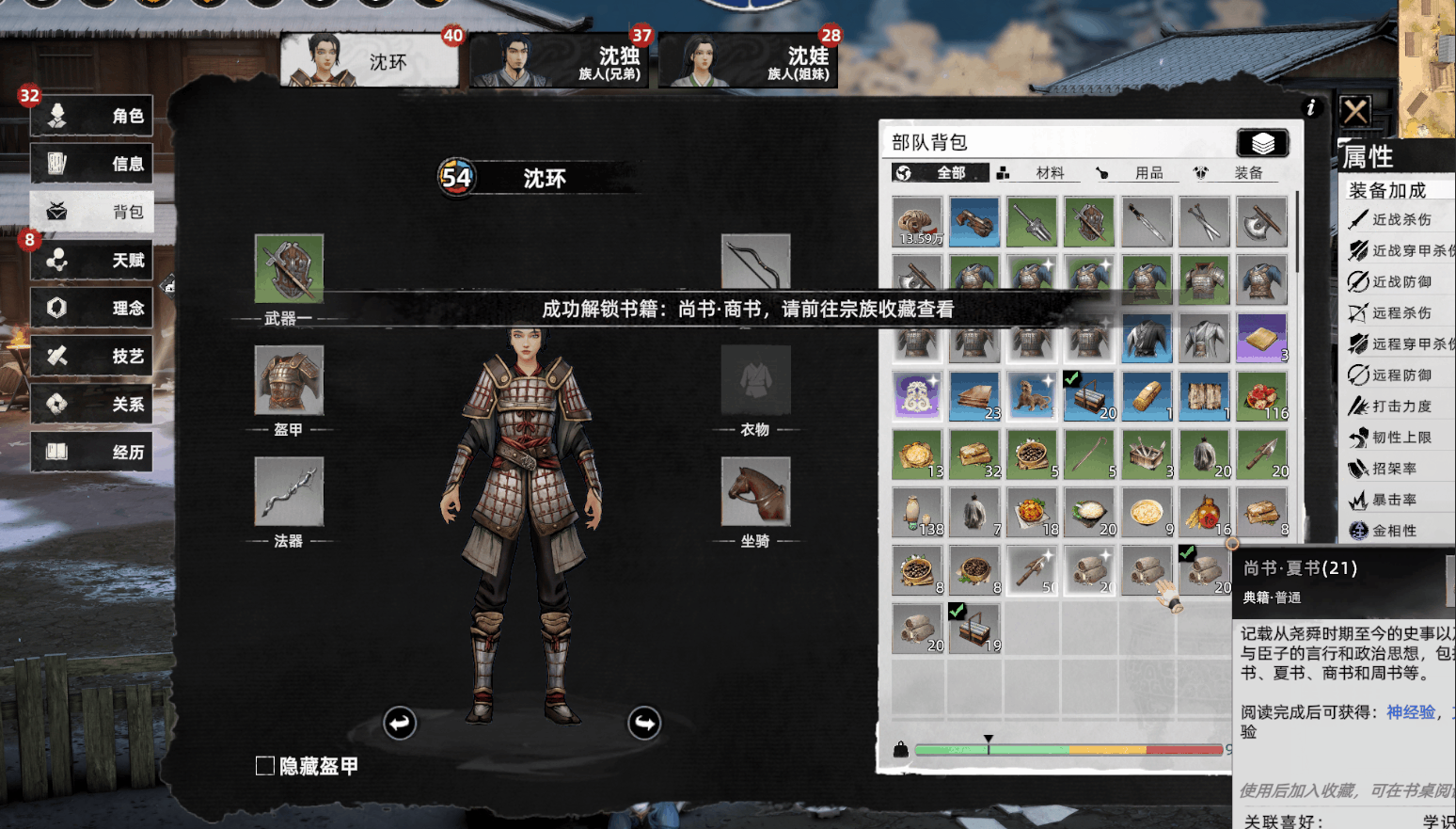
Looted from defeated enemies, secret-realm chests, or fallen masters.
Crafted at the homestead forge by a smith retainer using gathered or purchased materials.
Bought from city blacksmiths and travelling merchants. Higher-tier weapons are gated by faction reputation, school affiliation, or a quest unlock.
Awarded by a school of thought or a faction following a major quest, recruitment chain, or duel.
Some of the strongest weapons come from the harder end-game and event content. The secret realms added in July 2026 can drop epic-grade equipment, and the Wraith Fiend boss introduced alongside them has a chance to drop the Wraith Twin Blades, an epic weapon whose hits apply burning damage over time.
A free content pack released in July 2026, called Deserved Flogging, also grants a weapon called the Ruler, handed to every player alongside an apology costume and a dungeon-unlock item.
Improving a Weapon
Most weapons can be upgraded with materials at the forge. Upgrades increase raw stats and sometimes unlock special modifiers tied to the weapon's family. Rare weapons may have unique upgrade paths or storied modifiers that interact with specific martial arts or schools. Repair is also part of the loop; a weapon that has seen heavy combat without maintenance loses effectiveness even before it breaks.
Recipes and Quality Tiers
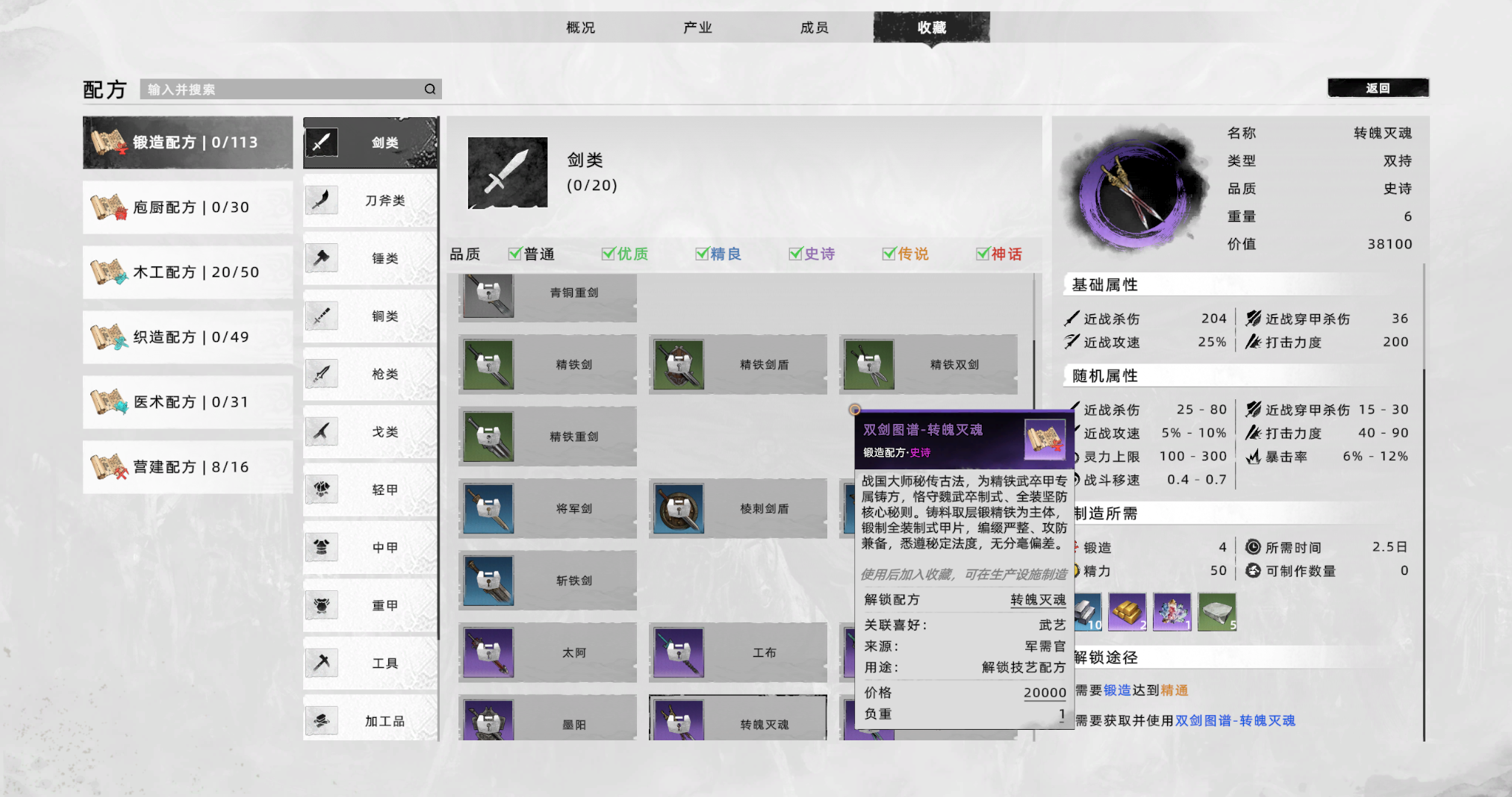
Everything craftable is held as a recipe in the clan collection, split into six sets. The Early Access build's collection screen lists 113 forging recipes, 50 woodworking, 49 weaving, 31 medicine, 30 cooking, and 16 construction. Forging is the set that matters for arms and armour, and it breaks down further into swords, blades and axes, hammers, bronze, spears, dagger-axes, light, medium and heavy armour, tools, and processed goods. Swords alone account for twenty recipes.
Recipes and the items they produce are graded on a six-step quality scale, which the collection screen uses as a filter:
Quality | Notes |
|---|---|
Common | Basic bronze and early iron work. |
Fine | The standard tier for most of a first playthrough. |
Superior | Better base numbers and wider random rolls. |
Epic | Named patterns with strong fixed stats and a wide random band. |
Legendary | Includes named historical blades such as Tai-A, Gongbu, and Moyang. |
Mythic | The top of the scale. |
A weapon entry separates base attributes from random attributes. Base numbers are fixed for the pattern, covering melee damage, armour-piercing damage, attack speed, and impact force. The random band is rolled per item and can add melee damage, armour piercing, attack speed, impact force, a spiritual power ceiling, critical hit chance, and combat movement speed, so two copies of the same pattern are rarely identical. See Combat System.
Crafting a pattern needs the right forging level, a materials list, a block of days on the clock, and a chunk of energy. Unlocking one is a separate step: the diagram has to be bought or found, then used, and the corresponding art has to have reached the required grade. An epic dual-sword pattern in the Early Access build, for instance, wanted forging at mastery, cost 20,000 to buy from a quartermaster, and took two and a half days plus 50 energy to produce. Exact recipe counts and costs move between patches, so treat the figures here as a snapshot of the Early Access build rather than fixed values.
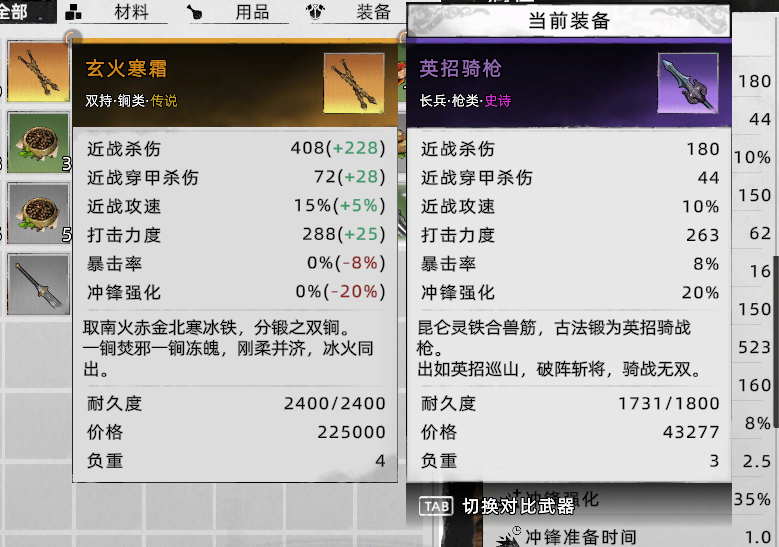
The studio announced an equipment comparison view on July 31, 2026 for reading stat differences side by side, and a August 2026 revision separates aim from movement while riding, so a mounted archer can shoot in one direction while travelling in another. Both shipped to the main build on August 28, 2026: the comparison panel shows the numerical and special-effect differences between a target item and the gear equipped in that slot, and mounted archery now fires in any direction toward the cursor. The same update added melee attacks from horseback for one-handed and two-handed short-handled weapons only, with a September 8 patch adding two-handed polearms, axes and hammers; other weapon families were still listed as in development. See Early Access Roadmap.
Equipment Durability
Weapons and armor lose durability as they are used and need repair over time. A June 2026 update softened this so maintenance is less constant. Per-hit durability consumption was cut substantially, in the range of roughly 80 percent to 50 percent less per strike depending on the item (for example, a value that previously dropped by 1 per attack now drops by about 0.2 to 0.5), which roughly doubles how long a piece lasts before needing repair.
The same update raised the starting condition of looted gear: the initial random durability ceiling on dropped equipment went up from 70 percent to 90 percent, so found weapons and armor arrive closer to full. Durability consumption can also be tuned in the difficulty settings, and that setting can be changed at any time after a run begins for players who prefer faster wear or none at all.
Weapons in Strategic Battles
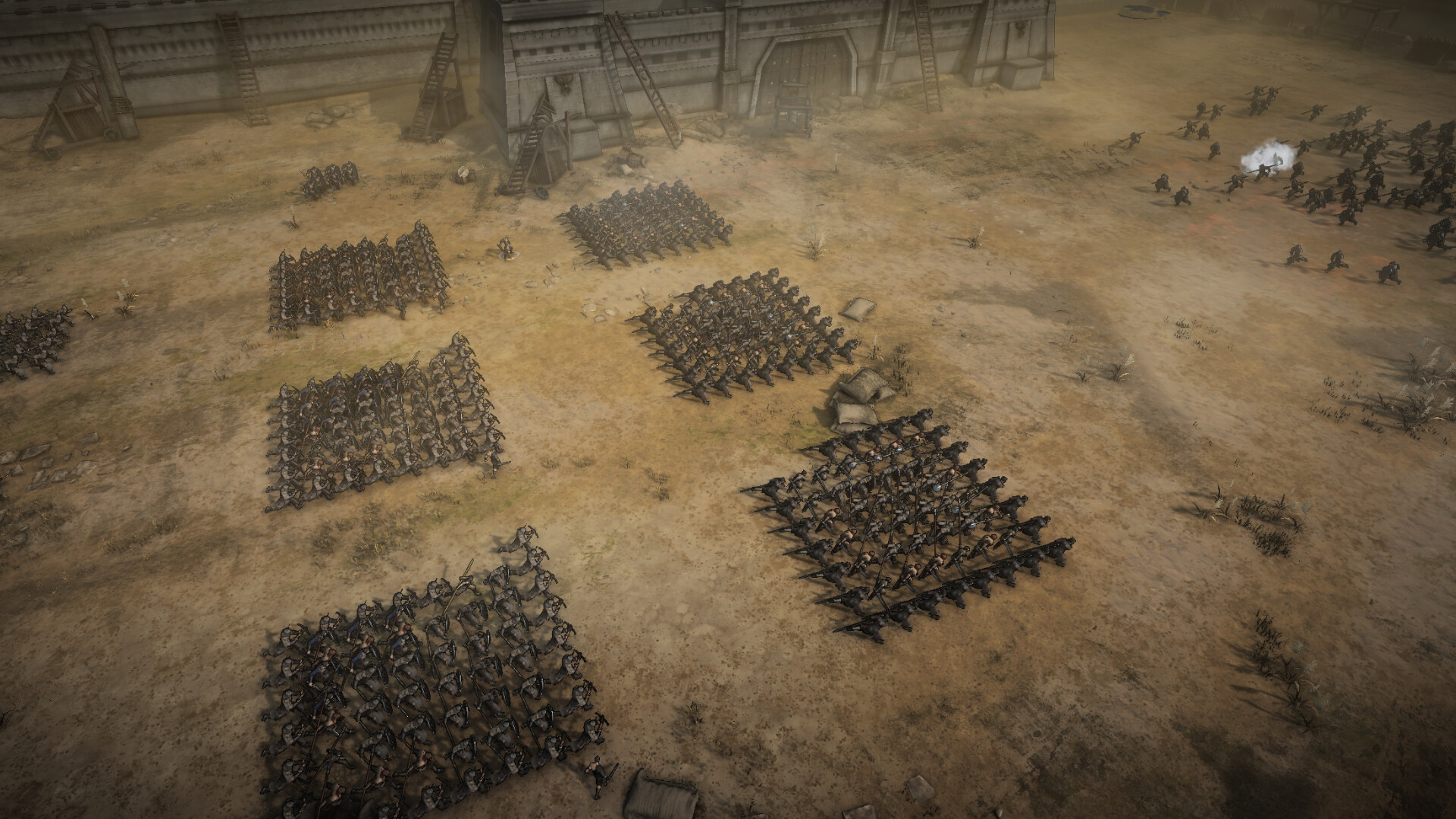
On the strategic battle layer the personal weapon matters less than unit composition. Bows favour ranged units, polearms favour spearmen, heavy weapons favour shock infantry. The player's personal weapon still matters when they enter a wing as a leader; a spear-wielding commander leading spear infantry produces different results than the same commander wielding a sword.
Related Pages
Martial Arts: studied techniques that pair with weapon families.
Cultivation Paths: internal progression that boosts the weapon-art pairing.
Combat System: the wider melee and strategic combat overview.
Clans and Homesteads: where most weapon crafting happens.