

Town restoration is a major pillar of Graveyard Keeper 2 and a structural change from the first game. The sequel expands the playable space beyond the cemetery to include an entire ruined medieval town, and putting that settlement back together is a long-running project that runs in parallel with corpse handling, automation, and combat preparation. See the overview for how the systems fit together.
Three Functions Of The Town
The town is not just a side project. It plays three roles simultaneously, each tied into a different pillar of the game. The table below summarises how restoration feeds into the rest of the economy.
Function | Effect | Pillar It Feeds |
|---|---|---|
Revenue Hub | Each rebuilt building unlocks residents and services whose ongoing needs convert into recurring income. | Economy, funds the cemetery and the automation chain. |
Garrison Source | Returning residents and trained townsfolk fight alongside the player's undead troops. | Combat, supplements the frontline party. |
Fortification Site | Walls, towers, and perimeter works become available as the rebuild progresses. | Tower defence, hardens the settlement against waves. |
Beyond the Graveyard
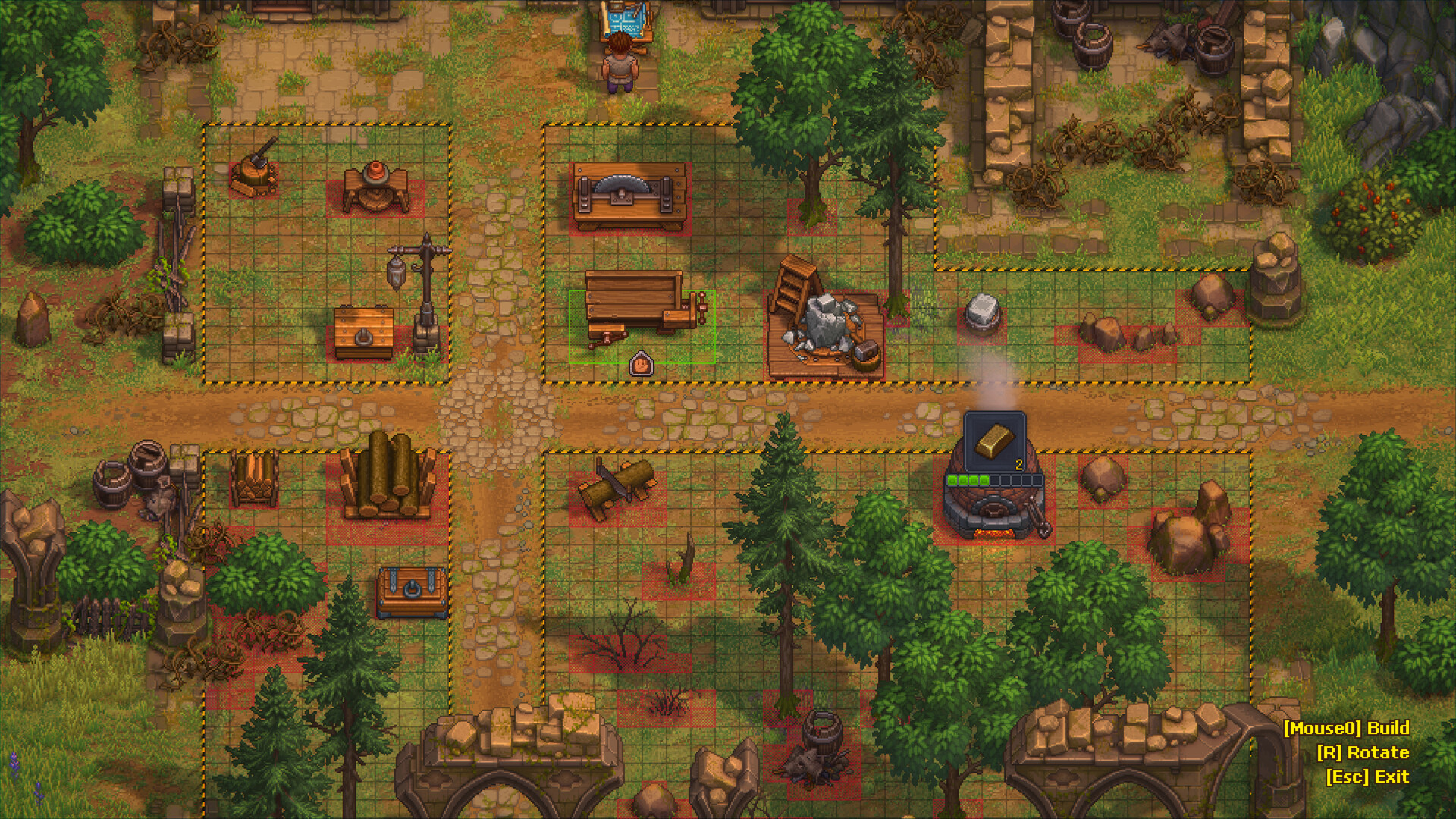
The cemetery is no longer the whole map. It is one piece of a larger settlement that has been hollowed out by the zombie crisis, and the rest is the player's to repair. Houses, workshops, stores, and other civic buildings sit in some state of ruin, and their visible state changes over time as the player works through the rebuild. The town is a project the player is responsible for, and the cemetery is the economic base that funds it.
Reclaiming The Town District by District
The June 2026 developer log filled in how the rebuild actually plays out. The Town has been overrun by townsfolk who turned into zombies, and the player reclaims it one district at a time rather than all at once. Clearing an area is only the first step. After that the district has to be brought back to life: restore comfortable housing, reopen cafes and shops, and rebuild the local infrastructure. At any given point the player chooses from several buildings and businesses to restore, and those choices are described as mattering rather than being cosmetic.
The developers also reframed what the player is really fighting. With proper defenses, ordinary people can coexist with the remaining zombies, so the undead are not the settlement's core problem. The deeper threats are hopelessness and a lack of consumer goods, and the rebuild is the answer to both. Restoring a district is as much an economic project as a military one.
Buildings as Markets
Restored buildings do more than improve the look and morale of a district. Each one can open up a new market for the player's goods and unlock valuable products and resources to buy in return. That makes the rebuild a two-way economic loop: the player supplies the reviving town, and the reviving town supplies the player with new inputs for crafting and automation. The size and prosperity of the settlement feed directly back into the wider operation.
There is a grim feedback loop attached to that prosperity. As The Town grows, the player receives more corpses to handle, and the better supplied and more prosperous (and therefore more sinful) the settlement becomes, the better those corpses get. A more prosperous town yields corpses with more skulls, which connects the rebuild straight back to the graveyard economy and the red-skull goal that drives corpse processing.
Graveyard Modules and the Tech Tree
The rebuild is not the only thing that expands in the sequel. The graveyard itself gains a new layer of management. It sits in a quiet, attractive area outside the city walls, near the keeper's base, so the player is not forced to live inside the reclaimed town. The core idea of tending graves is unchanged, but the developers have added more depth on top of it.
Through the game's tech tree the player unlocks special graveyard modules that can be placed in the graveyard. Each module provides space for different useful objects, with the developers naming tombs, benches, columbaries, monuments, and graves. Alongside the modules the sequel adds many new grave designs and decorations so a graveyard can be laid out and styled to the player's taste.
Economic Engine
Town development doubles as the primary economic loop. The rebuild is pitched as serving the residents and turning their needs into profit. Repairing buildings unlocks the residents who lived or worked in them, and serving those residents converts their needs into revenue that funds the next stage of the rebuild.
Buildings are revenue points. Each restored structure attaches a resident or service to it as a recurring hook rather than a one-shot reward.
The cemetery feeds the town. Income from corpse processing, crafting, and graveyard upgrades pays for the rebuild work above ground.
The town feeds the cemetery. Revenue from town services flows back into the player's wider operation, including better gear and bigger automation chains.
Quests and NPCs
Progression through the rebuild is gated by helping residents solve problems. Quests come from the people who used to live and work in the ruined buildings, and completing them unlocks the next building, the next service, or the next tier of access on a given site. Specific NPC names and the full quest catalogue have not been publicly detailed before launch.
Powered by Undead Labor
The rebuild is not done by hand. Undead workers handle the heavy lifting behind the scenes, which plugs town restoration directly into the game's automation chain. Captured zombies that drive workstations in the cemetery are the same labor pool that keeps the rebuild moving on the surface. Investing in zombie throughput pays off on both sides at once: more reanimated labor means more goods coming out of the workshops and more progress on buildings being repaired in town.
Townsfolk Welfare As Workforce Supply
Beyond revenue and garrisoning, the rebuild has a less obvious connection to the rest of the game. The May 2026 developer log made it explicit: making townsfolk's lives easier and more comfortable through restored buildings and services produces a steady flow of sinners, whose corpses convert into higher-quality labour for the cemetery. In the game's terms, well-served townsfolk become more corrupted over their lives, and more corrupted corpses make better-skilled zombie workers when the Inquisitor reanimates them. The economic engine therefore loops back into the production system documented under automation: town quality feeds workforce quality, and workforce quality feeds town quality.
Restoration as Defense
Rebuilding the town is also a defensive system. Restored fortifications close gaps in the perimeter, and a town that has its residents back is a town that can field a garrison. The game pitches a defense made up of trained townsfolk fighting alongside the player's undead troops, and that mixed force only exists if the rebuild is far enough along to support it. Town restoration therefore feeds straight into combat preparation, and the player's ability to hold the line against the zombie apocalypse depends on how many walls have been repaired and how many residents have been armed.
Confirmed District: The Port Area
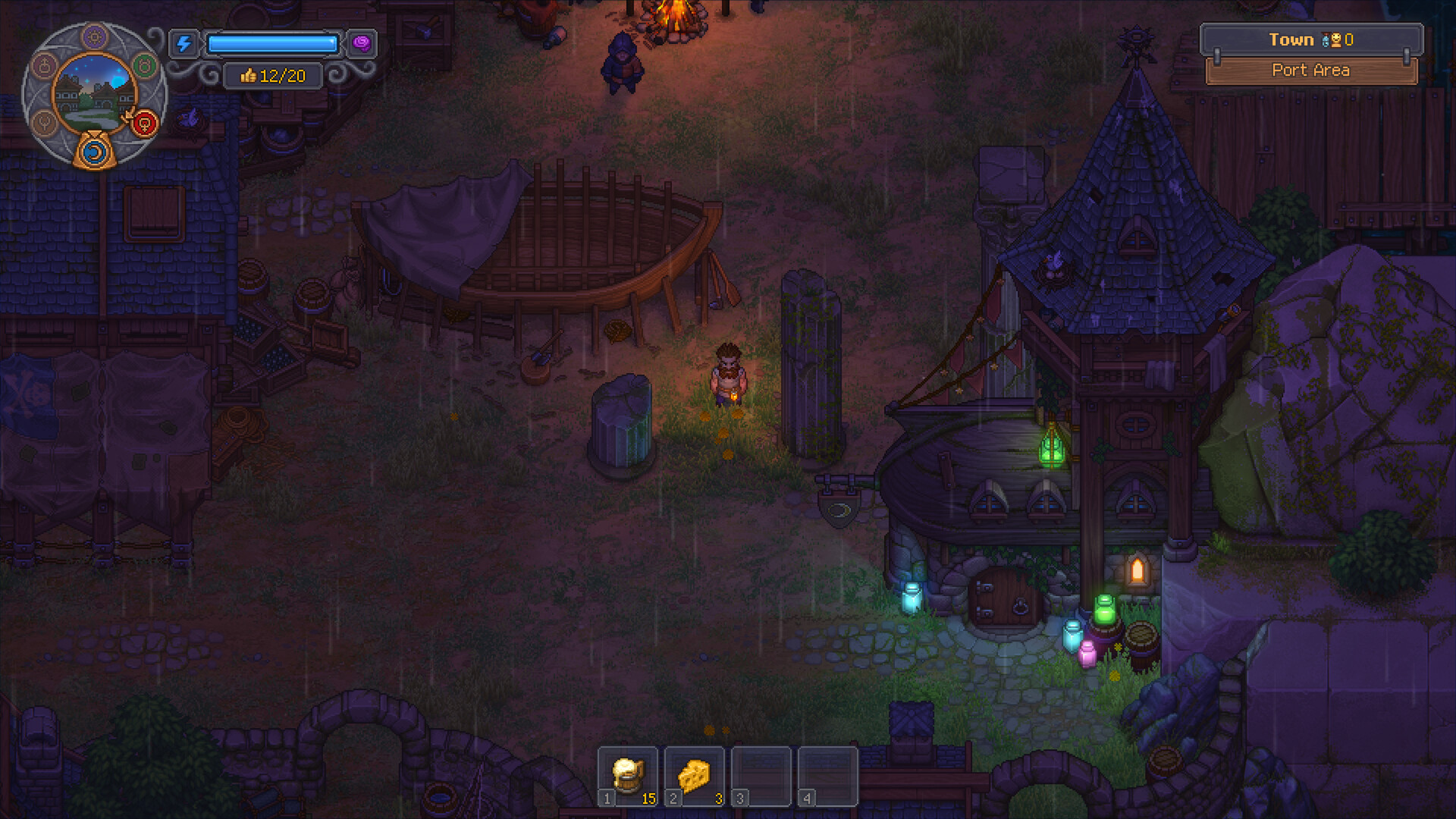
The first individually named district to appear in official screenshots is the Port Area, a waterfront quarter with a shipyard and a hull under construction in a dry dock. It is a concrete example of the district-by-district reclamation described above, and it sits alongside the other named areas catalogued on the Locations page. Costs, unlock order, and what rebuilding the Port Area provides are not yet detailed in official material.
Unconfirmed Details
Pre-release material establishes the shape of town restoration but not its full inventory. The following points have not been publicly detailed and should not be assumed:
In-world names for the individual districts and landmarks inside The Town (the settlement itself is now named).
The full roster of residents or named NPCs the player works with.
Named tiers, levels, or upgrades for individual buildings.
The full quest catalogue tied to the rebuild.
Hard limits on how large the town can get or how many buildings can be active at once.
The specific currency or currencies used in the new markets that restored buildings open up.
The structure of the town-management UI, including any planning, blueprint, or oversight screens.