

Automation is one of the central pillars of Graveyard Keeper 2 and the system that most clearly separates it from its predecessor. Promotional copy frames the goal as letting players automate your production like never before, a major leap in scope rather than a small quality-of-life pass. Where the original game leaned heavily on manual crafting, the sequel pushes routine production work onto a network of conveyor belts and reanimated workers. For a wider tour of how this fits with the rest of the game, see the overview.
The reanimated workforce also plugs into the wider economy: as The Town is rebuilt it opens new markets and supplies for the goods these production lines turn out, tying automation to the settlement's recovery rather than running in isolation.
Two Layers
The automation pillar resolves into two layers working together. The first is mechanical: conveyor belts that move items between fixed workstations. The second is labour: reanimated corpses that perform tasks at those workstations and along the belts. Both layers were demonstrated in the announcement trailer; neither was a feature of the first game.
Layer | Role | Shown In Reveal |
|---|---|---|
Conveyor belts | Move raw materials and intermediate goods between crafting benches without manual hauling. | Yes, threading between multiple stations and delivering items into the next stage of a chain. |
Zombie labour | Perform repetitive work at stations and along the lines, including driving machinery from beneath the floor. | Yes, including underground wheel-walkers physically powering surface machines. |
Conveyor Belts
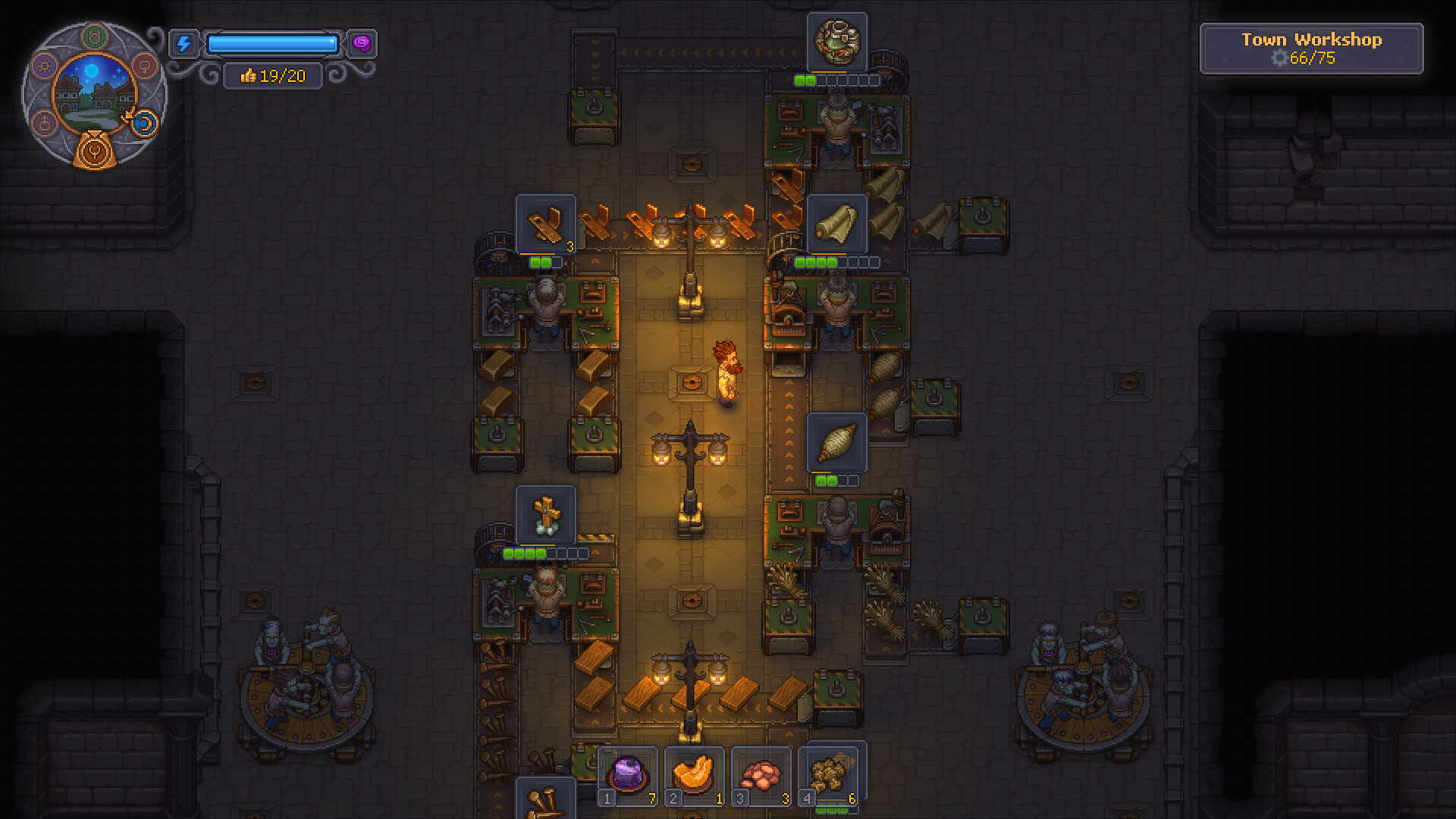
Conveyor belts are the visible backbone of the production layout. They carry resources between crafting benches so a player no longer has to ferry every input by hand from storage to a workstation. In the announcement trailer, belts thread between multiple stations, moving items along the floor and feeding them directly into the next stage of a chain. Because belts deliver items whenever supplies arrive, a single chain can keep running long after the player has left the area, and workshop layouts can be planned the way a small factory might be.
Zombie Labor
The other half of the system is workforce. Captured and reanimated corpses are placed at workstations and on belts, where they act as permanent workers. Once a zombie is correctly positioned, it keeps performing its assigned task indefinitely, freeing the player from having to drive each animation by hand.
The trailer makes this point in unusually literal fashion. Some workstations are powered from below by reanimated corpses physically walking in circles underground, driving the machinery on the surface as if turning a millstone. Others ride the conveyor belts to perform cottage-industry tasks along the line. The visual gag doubles as the actual mechanic: the undead are the labor force that keeps the workshop ticking, including against the broader threat described in zombie apocalypse.
Zombie Skill Progression
The first Graveyard Keeper 2 developer log, posted by Lazy Bear Games in May 2026, firmed up several details about how the reanimated workforce evolves over time. The undead workforce is no longer a flat pool of identical labourers. Each zombie has its own skill progression, and roles in the production chain are specialized rather than interchangeable. A worker that has been on the same job long enough may even earn a name as a reward for ten years of loyal service, a small narrative touch that doubles as confirmation that the game tracks individual workers rather than treating them as anonymous units.
The studio also gave the labour-quality system its own engine. Zombies are graded on corruption, with red skulls in place of the original game's white-skull goal. The more corrupted a corpse is when reanimated, the better the skills the resulting zombie can develop. Corruption flows downstream from the rest of the economy: making townsfolk's lives easier and more comfortable through town restoration secures a steady supply of sinners, whose corpses convert into higher-grade workforce stock. When a body is still not corrupted enough on its own, the player can take the most corrupted parts from different corpses and apply corruption embalming to top up its red-skull count before reanimation.
The same devlog confirmed the in-fiction term for the player's labour pool: the underground workshops are referred to as underground factories, and the zombies that staff them are identified as Possession-Free Zombies, each carrying a special mark distinguishing them from the hostile undead documented under zombie apocalypse. The naming matters for the production layout because the friendly zombies are crafted by the player from corpses on the player's terms, while the hostile undead are sourced from elsewhere and cannot be redirected onto the supply line.
Inputs and Outputs
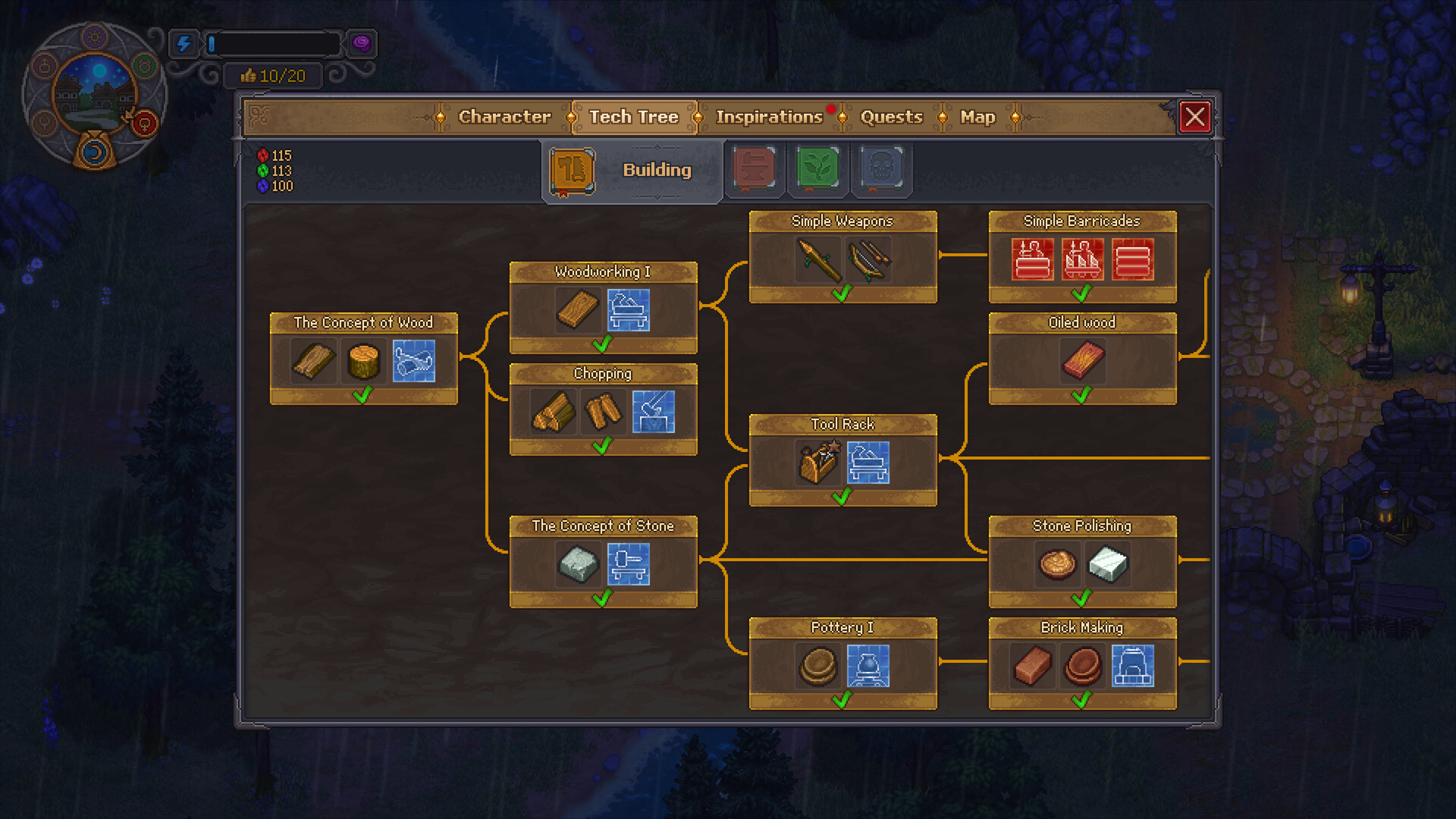
Automation sits at the middle of a single supply chain. The table below summarises what feeds into the production lines and what they produce, based on what has been shown so far. Specific item names and recipe lists have not been revealed.
Stage | Examples |
|---|---|
Raw inputs | Flora and fauna gathered from the world, plus human remains harvested from graveyard work |
Production layer | Crafting benches connected by conveyor belts, with reanimated workers driving stations and carrying intermediate goods |
Economic outputs | Profit-bearing goods for trade and materials the player invests into rebuilding the town |
Combat outputs | Weapons, armor, and fortification components that arm the player and undead troops against zombie waves |
Shared Supply Chain
Graveyard work, town development, and combat preparation are not separate economies. They draw from the same automated supply chain. A row of belts and benches might be turning out salable goods for one quest, weapons for an upcoming wave, and materials for a building the townsfolk asked the player to repair, all through the same set of stations. Improving any part of the chain lifts every downstream activity at once.
Why it Matters
The shift toward automation marks a clear tonal change from the first game, which leaned heavily on manual, hands-on crafting. The sequel invites the player to scale far beyond that pace. Outfitting troops for combat against a kingdom-wide undead threat, and rebuilding an entire ruined town through town restoration, both demand far more output than a single keeper could realistically hand-craft. Automation is what closes that gap.
A Named Mechanic
The September 2026 developer log listed the sequel's completely new mechanics by name. Conveyor belt factories is one of the two the studio gave, alongside zombie battles, which puts the automation layer on the same footing as the combat layer rather than treating it as a convenience feature.
Conveyor Belt Factories
The underground production hall shown in the pre-release screenshots is labelled Town Workshop on the on-screen location banner. Pale zombie workers stand at crafting stations arranged along a central hall, with the stations linked by belt-like flows that carry goods between them, each marked by a small progress bar. A meter on the banner tracks the workshop's output against a cap (66 of 75 in one screenshot). This is the confirmed in-game home of the zombie-run production described above, and it sits among the named areas on the Locations page.
Building and Placement
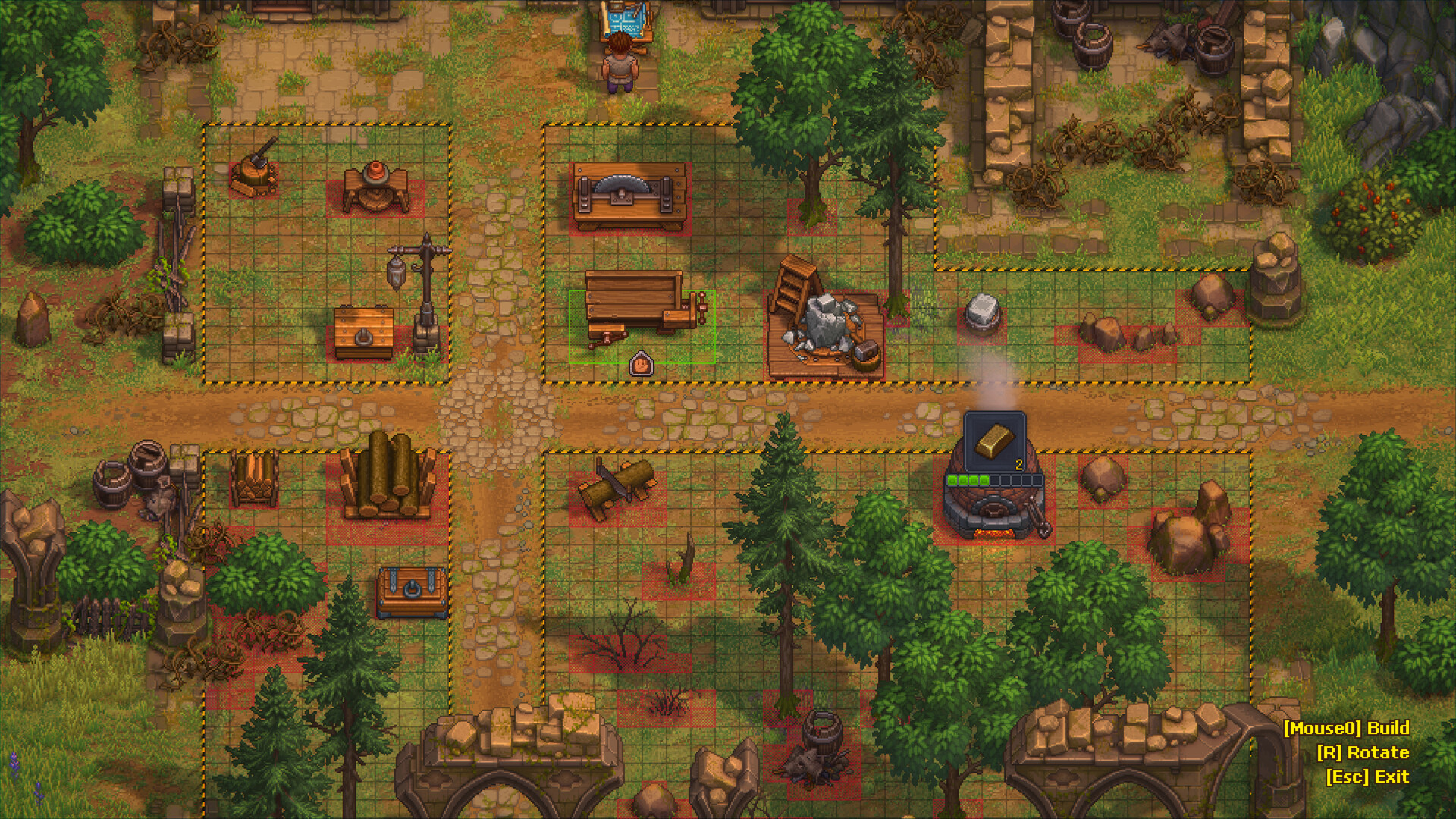
Construction uses a grid-based placement mode. When it is active the screen tiles the ground into a grid and highlights valid squares in green and blocked squares in red, and an on-screen prompt lists the controls: Mouse button to build, R to rotate, and Escape to exit. Stations visible in build mode include a sawmill, a stone-cutting bench, a smelter that produces metal ingots, log storage, and a water pump.
Confirmed vs. Unconfirmed
The shape of the automation layer is well attested in the reveal materials, but most of the specifics remain to be disclosed. The table below separates what has been shown from what has not.
Aspect | Confirmed By Reveal | Still Unconfirmed |
|---|---|---|
Belts | Visible carrying items between benches in the trailer. | Belt tiers, throughput rates, junction or splitter mechanics. |
Zombie workers | Visible at stations and underground. | Worker tiers, training, fatigue, or upkeep rules. |
Power source | Underground wheel-walkers driving surface machines. | Whether other power sources (water, wind, electrical) exist. |
Inputs | Flora, fauna, and human remains. | Full input list and any seasonal or biome restrictions. |
Outputs | Trade goods, weapons, armour, building materials. | Recipe lists, ingredient ratios, production timings. |
Tech tree | Implied progression as the player scales. | How deep the automation tree runs and what gates each unlock. |
Unconfirmed Details
Several aspects of the automation layer have not been confirmed publicly and should not be treated as known. This article will be updated as more information is released.
Specific names or types of conveyor belts and their throughput rates
Named buildings, workshop blueprints, or facility tiers within the underground factories
Recipe lists, ingredient ratios, or production timings
Specific tiers, named ranks, or quantitative effects of zombie skill progression on work speed
How deep the automation tech tree runs and what gates each unlock
Whether stations can be toggled between manual and automatic operation, and any fuel, upkeep, or breakdown rules
The named recipe, facility, or inputs required to perform corruption embalming on a corpse
What the Workshop Screenshot Shows
The published Town Workshop capture is the clearest look at the production layer running. The hall is underground and built from stone, lit by gear topped lamp posts, with benches arranged down both long walls and a central aisle between them. Conveyor belts run the length of that aisle carrying items. At the outer edges, pairs of zombie workers turn large capstan wheels, which is the power source the studio has shown for the surface machinery. Each bench displays a small segmented progress bar and a floating preview tile of what it is producing, and input and output crates sit at the ends of the lines. The area banner reads Town Workshop with a gear icon and a value of 66 against a cap of 75.
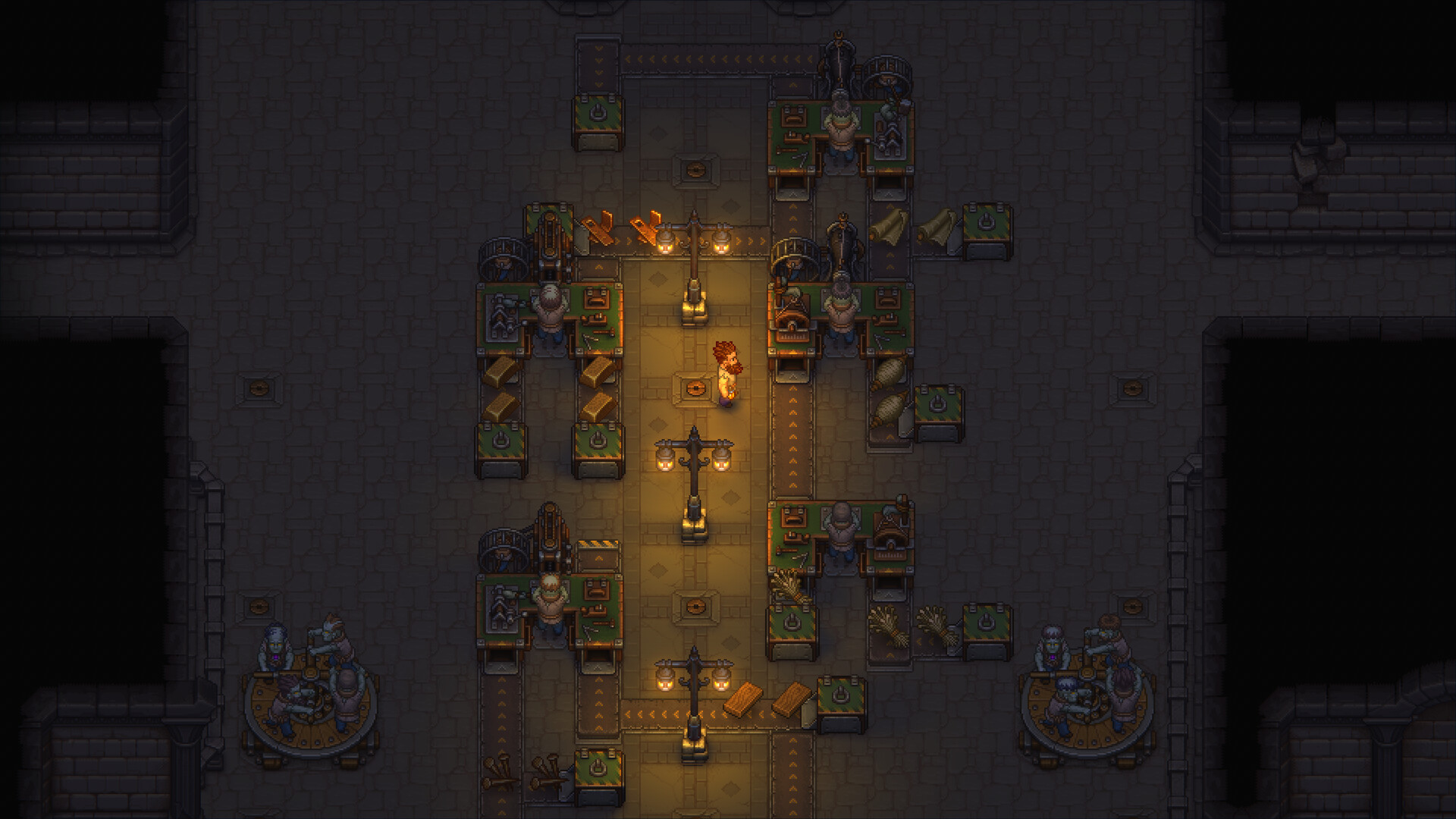
A second capture of the same hall arrived with the demo store screenshots on 14 September 2026. It shows the Keeper standing in the central aisle between lamp posts, with belts marked by directional arrows running down both sides, zombie workers at benches to the left and right, pairs of zombies turning capstan wheels in the lower corners, and goods on the belts that read as ingots, planks, tools and bundled materials.
Grid placement for all of this is covered on Buildings and Construction, and the materials that move along the belts are on Resources and Materials.