

The Town
The Town is the ruined medieval settlement at the centre of Graveyard Keeper 2, glimpsed but never entered in the first game. This page covers its history under the Old Mighty God, the zombie outbreak that emptied it, the district-by-district reclamation the player leads as Grand Inquisitor, and how its prosperity feeds back into the graveyard.
On This Page
The Town is the central settlement of Graveyard Keeper 2 and the place the player works to rebuild across the campaign. In the world of the series it is a famous, almost mythical location: every keeper has heard of it, but for a long time nobody could reach it or describe it. The June 2026 developer log confirmed that the sequel lets the player not only see The Town but restore it, district by district. For how the rebuild works as a system, see town restoration. For the crisis that left it in ruins, see the zombie apocalypse.
A Legendary Place
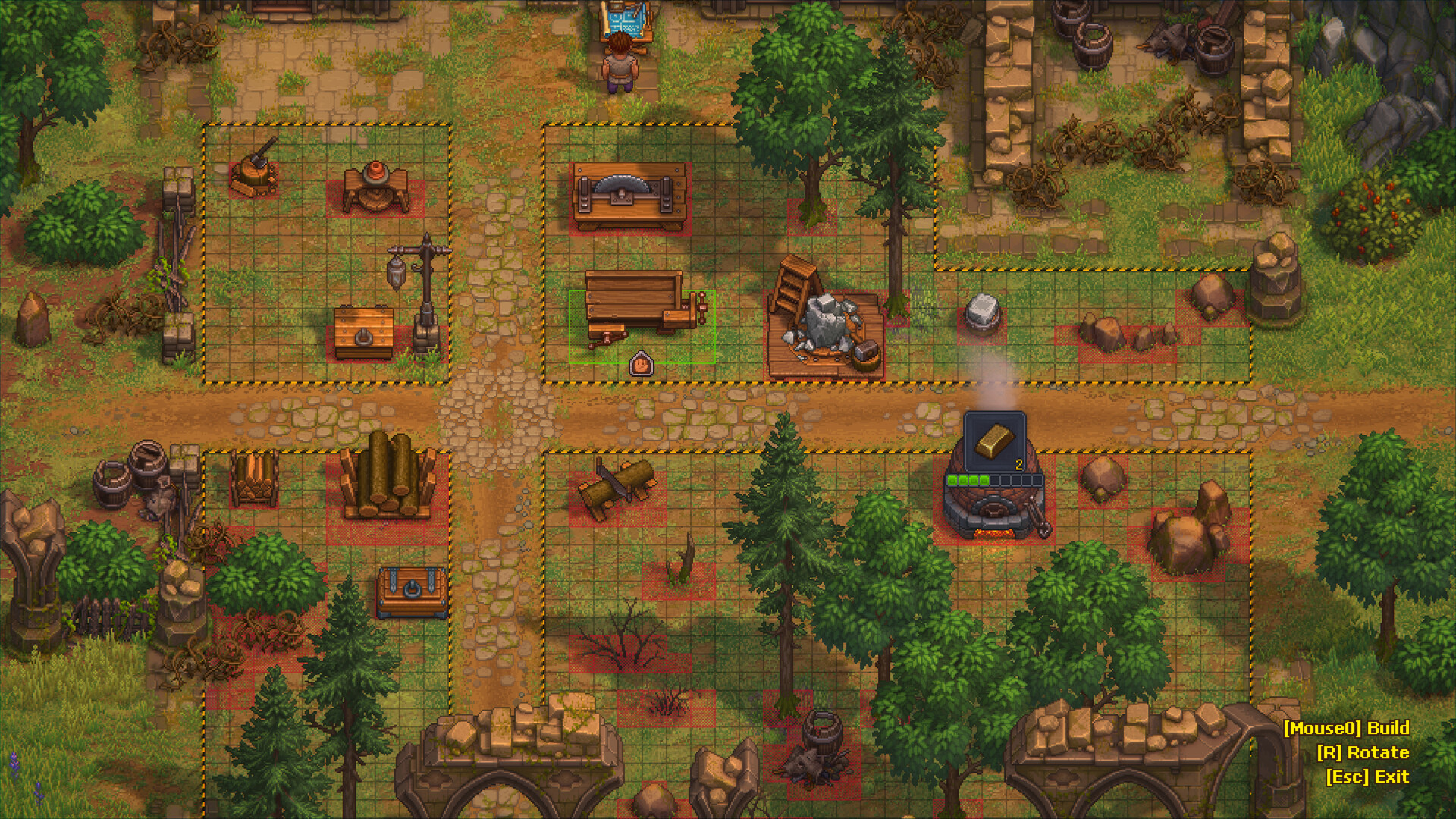
From a keeper's first day on the job there were rumours and hints about The Town, but never any real detail. The way the developers describe it, you would see its heavily guarded gate and spend your effort chasing the precious Town Pass that was supposed to get you inside, only for something to go wrong at the last moment. That running disappointment left players wondering whether The Town was real at all or just a phantom, a joke set up by the design. In the sequel that question is answered: The Town is a real, explorable place, and rebuilding it is one of the game's core projects.
History
The Town the player arrives at is far from its glory days. By the developers' account it was founded centuries ago, during the era of the Old Mighty God. In that age the Old God provided people with everything they needed, which left them free to build a beautiful ancient city. Traces of that grandeur survive, hidden underneath the later medieval settlement that was built on top of the old foundations. By the time of the sequel even that medieval layer has eroded, and The Town lies nearly abandoned.
That layered history is part of the setting's texture. As the player rebuilds, glimpses of the older city show through the medieval ruins, and the place is framed as a living organism with a long past rather than a static backdrop.
Condition at the Start
Most of The Town has been overrun. The townsfolk who lived there turned into undead zombies, and reclaiming the settlement means taking it back one district at a time. The player character, the Grand Inquisitor (the devlog also calls the role the Lord Inquisitor, and simply the Graveyard Keeper), is presented as the last person able to save the place, rebuild it, and lead it into a new era.
The September 2026 combat log sets out how that reclamation happens. The player's house, church and graveyard come without a fight, but The Town has to be liberated in battle, and the battles take place on its streets rather than in separate arenas. Each part of the city is a distinct arena with its own layout and win conditions: the Town Square has to be held against waves arriving from every direction, while the central streets are taken by pushing forward on several fronts and capturing control points. Once a street is won it fills with townsfolk and market stalls, and the rebuilding begins. City battles are only available on one day of the week; on the other days the sewers beneath the Town, which are full of zombies of their own, stay open. The log also teases that something called the Sewrena lies deep beneath the Town, without saying what it is. The fighting is covered on Combat.
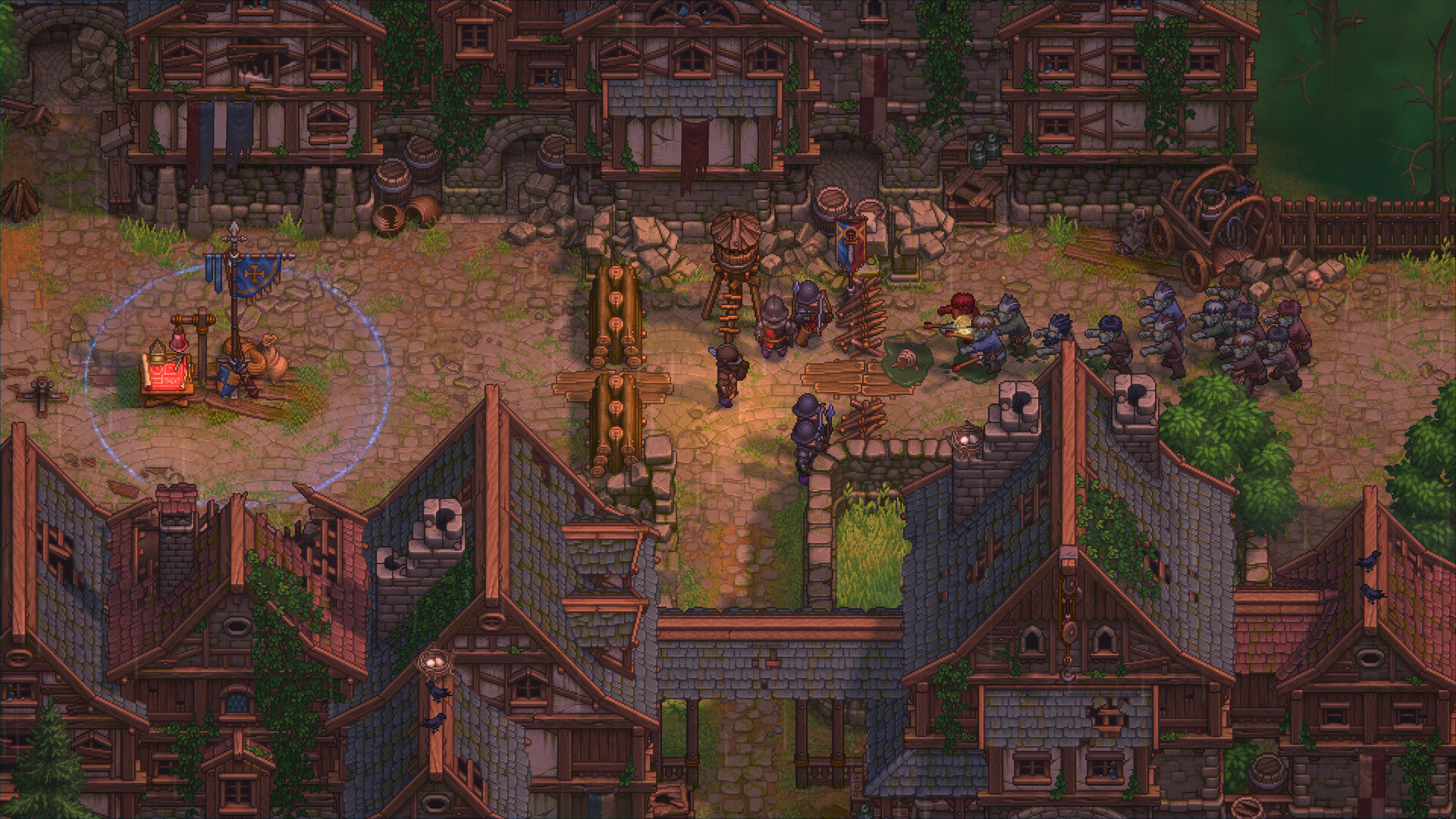
A twist the developers highlight is that the zombies are not actually The Town's biggest problem. With proper defenses in place, ordinary people can live alongside them, and the undead can even become a local tourist attraction. The deeper threats are hopelessness and a shortage of consumer goods, which the rebuild is meant to address by restoring housing, reopening shops and cafes, and getting infrastructure running again.
The Era of Zombie Capitalism
The developers frame the sequel's version of The Town as entering what they call the era of Zombie Capitalism. The comparison they draw is to Europe stepping into the Renaissance after the Great Plague: a battered settlement moving into an age of restoration, mass production, and mass consumption. The undead are folded into that economy as a labour pool rather than treated only as a threat, which is the thread tying the lore to the game's automation and rebuilding systems.
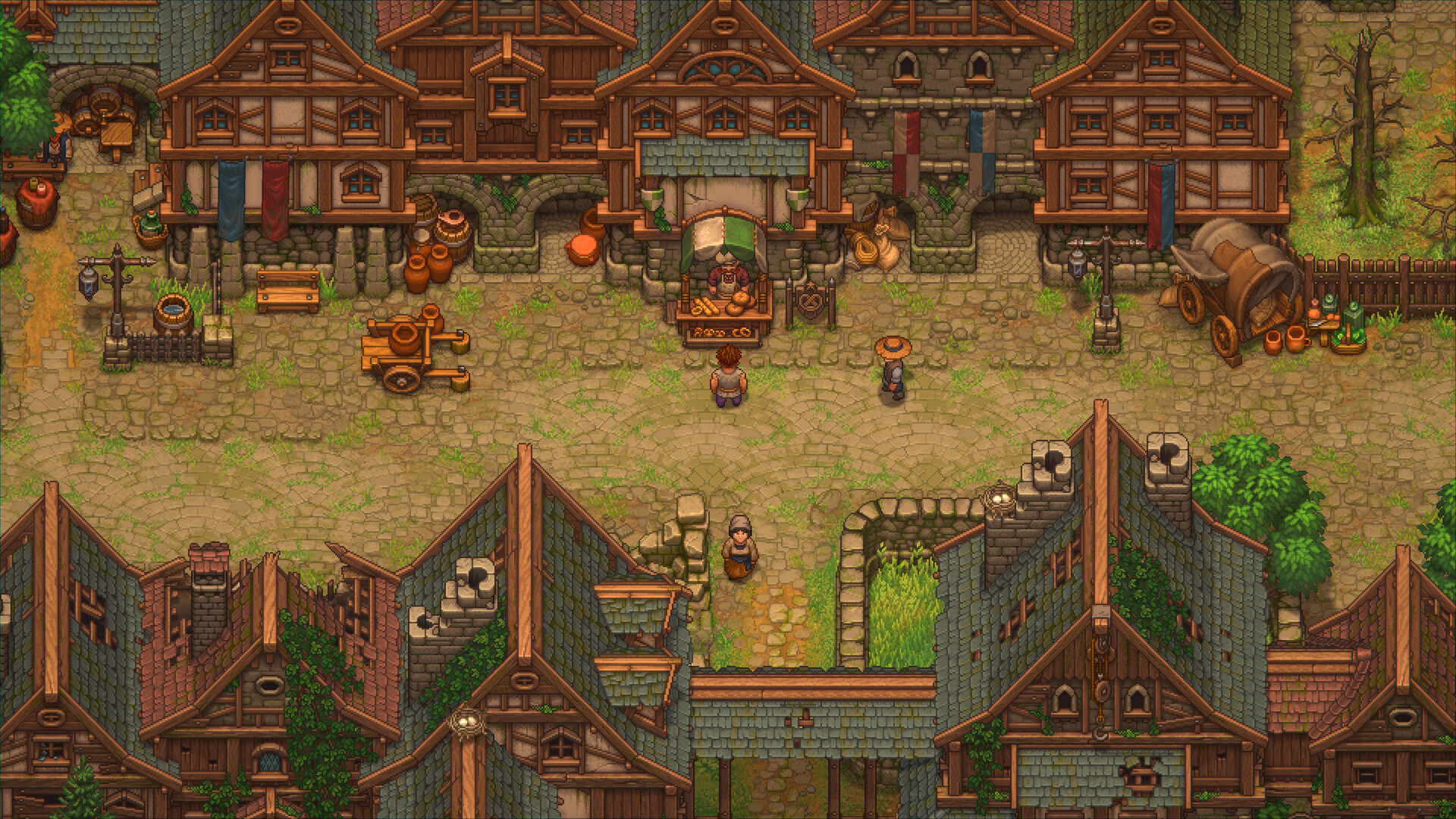
The Town is also written to outlast the player's story. The developers say that even long after the events of the sequel conclude, The Town will keep existing and evolving on its own.
A Named District: The Port Area
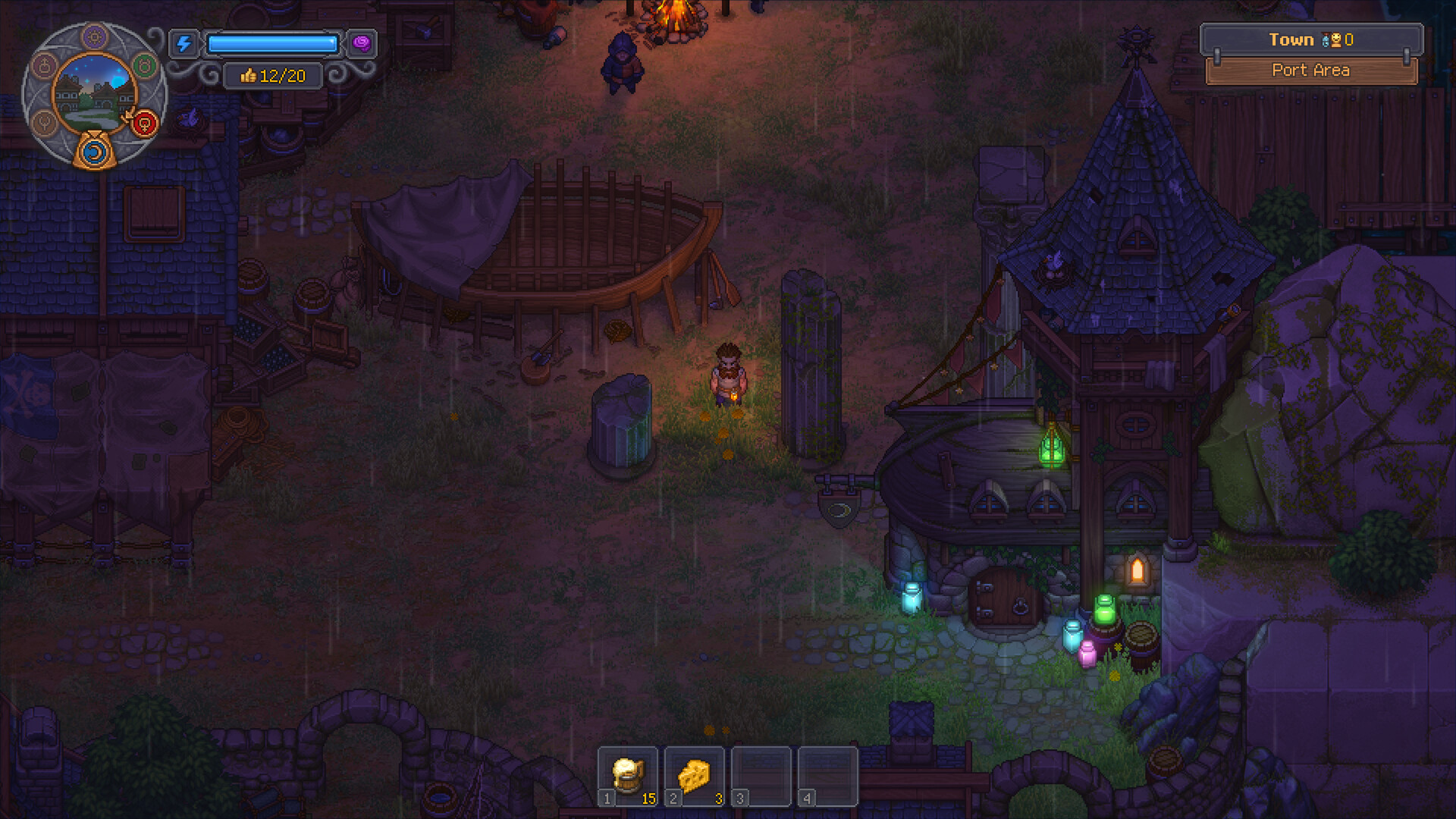
The pre-release screenshots put a name to the district structure. One waterfront district is labelled Town / Port Area on the location banner and shows a shipyard with a wooden hull under construction in a dry dock. It is the first individually named district of The Town to appear in official material, and it lines up with the district-by-district rebuilding the developers describe. The wider catalogue of named areas, including the Port Area, is on the Locations page.
Beyond the Walls
The September 2026 developer log extended the map past the settlement itself. The player will also explore The Town's southern outskirts, which hold another village, another tavern, another forest, another swamp, another church and another graveyard. The studio describes them as different yet somehow familiar, and frames the whole region as a way of suggesting a much larger world beyond what the player can reach. The catalogue is on Locations.
Who Comes to The Town
The same log named two groups moving into the settlement while it is still being reclaimed.
Group | Studio's description |
|---|---|
Traders | Bring goods from foreign lands into The Town |
Refugees | Search for new homes in a city infested with zombies |
The studio's own comment on the second is that apparently, even a zombie infested Town can look attractive when the rent is low enough. Traders connect the settlement to the commerce loop covered on Farming, Fishing and Trade, and both groups are catalogued on Townsfolk and NPCs.
Eight Years Later
The sequel is set eight years after the first game, both in release terms and inside the fiction. The studio says that without its Keeper the world continued moving in its own direction, and that nothing particularly good happened in the meantime. The state The Town is in when the player arrives is the result of those eight years rather than of a single recent event. More on the timeline is on Story and Setting.
Continuity in the Series
The developers have described The Town as a place with its own running history in the wider series. By their account its ancient streets had been glimpsed before in earlier franchise material, and during the events of the first game it was still a functioning medieval city somewhere beyond the horizon, never directly visited. The sequel is the first entry to make it a place the player actually enters and shapes. This is the developers' own framing of the continuity rather than a confirmed in-game crossover of specific content, so prior-game locations and mechanics do not carry over automatically.
The Town at Launch
The launch achievement list adds a few confirmed details. The south part of The Town is cleared of zombies as a milestone of its own, every house and every market stall can be restored or built, the Town and its merchants place orders for the player to fill, and the story includes an election, after which the future has been decided. Linda gives a concert that the player can attend. The restoration milestones are set out on Town Restoration.
Named in Patch Notes
Patch notes since launch name more of The Town and what reclaiming it earns. The Central Districts are cleared in a two-part quest called Central Districts Purge. The Town Warehouse takes iron supply deliveries and has an upper floor and an entrance down into a dungeon, and the port has a tavern. Winning battles earns Town Gratitude, which update 1.008 increased, and filling town orders earns likes. Save slots show a happiness icon, which update 1.008 corrected, and update 1.010 on PC lets the number of order slots rise to five depending on the number of villagers.
Unconfirmed Details
The Town is now a confirmed, named location with disclosed history, but a great deal about it has not been shown:
In-world names for the individual districts, neighbourhoods, or landmarks within The Town beyond the Port Area, the Town Square and the central streets.
The names of specific buildings and businesses the player can restore, beyond the general categories of housing, cafes, shops, and infrastructure.
Roles for named residents. The launch achievement list says Jack finds his way to the town and names a concert by Linda, but gives no further detail on either; patch notes add that Jack asks for tools and has a house and a workshop, and that Linda has a quest called Linda's Ball and plays the violin at a Port Concert.
Any map, size limit, or cap on how far the rebuild can go.
The exact nature of the disaster that emptied The Town, which the developers have deliberately held back as a story spoiler.
The currency or pricing used in the markets that restored buildings open up.