

Overview
High-level overview of Graveyard Keeper 2: developer, publisher, the 22 September 2026 release date, platforms, the three pillars, the tonal shift from the first game, the eight official community posts, the free demo, early reception, and confirmed interface and area names.
On This Page
Graveyard Keeper 2 is the direct sequel to the 2018 mortuary management sim Graveyard Keeper, the cult cemetery-economy game that turned digging graves and rendering corpses into a comedy of medieval small-business management. The sequel is developed by Lazy Bear Games and published by tinyBuild, the same pairing behind the original. It releases on 22 September 2026 across PC, PlayStation 5, Xbox Series X|S, Nintendo Switch, and Nintendo Switch 2, and the PlayStation and Xbox storefronts also list PlayStation 4 and Xbox One.
The first game leaned heavily into a slow, contemplative loop of corpse handling, crafting, and townsfolk relationships. The sequel keeps that loop and stacks two new layers on top: factory-style automation powered by reanimated zombies, and a kingdom-scale zombie apocalypse that drives the world's combat and restoration arcs. The result is a much broader sim than its predecessor, one that asks the player to be mortician, foreman, town planner, and undead general all at once.
Quick Facts
Field | Detail |
|---|---|
Developer | |
Publisher | |
Engine | Unreal Engine 5 |
Genres | Adventure, Role Playing, Simulation on the PC storefront |
Platforms | PC, PlayStation 5, Xbox Series X and Series S, Nintendo Switch, Nintendo Switch 2; the console storefronts also list PlayStation 4 and Xbox One. See Platforms and Release |
Reveal date | April 9, 2026 |
Release date | September 22, 2026, unlocking at 17:00 UTC on consoles |
Price | 24.99 US dollars, discounted to 19.99 during pre-orders. See Editions and Pre-Orders |
Languages | 11 at launch, all with interface and subtitles, English alone with full audio |
Players | Single-player |
Store App ID | 4358690 |
Demo | Free, since 14 September 2026; around three to four hours; saves carry into the full game |
Early reception | Reviews published from 14 September 2026, clustering around seven out of ten |
Premise
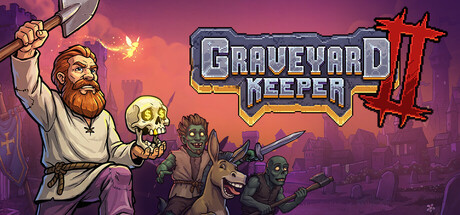
Players take the role of the Grand Inquisitor of a medieval kingdom in the middle of a zombie apocalypse. The country has been pushed to the edge by an undead invasion, the kingdom's heartland town lies in ruins, and the graveyard at the heart of it has gone from a quiet side industry to the realm's most strategically important property. The player has to keep that graveyard running, push back against the constant pressure of the dead, and slowly drag the surrounding settlement back into shape.
Where the first Graveyard Keeper kept its dark humour pinned to small-time corruption and morally questionable business decisions, the sequel scales the joke up. The Inquisitor presides over the burial rites of a dying kingdom, captures the very monsters threatening it, and turns them into a workforce. The cosy mortuary sim is still in there, but it has been welded onto a tower-defence layer and an automation factory.
The Three Pillars
Lazy Bear has framed Graveyard Keeper 2 around three connected systems. Each gets its own dedicated guide, and each plays into the others. Spending time on one pillar makes the next two easier.
Pillar | What It Covers |
|---|---|
Conveyor belts, processing chains, and reanimated corpses physically powering workstations underground. Replaces hours of manual hauling from the original. | |
Rebuilding the ruined medieval town, helping individual residents back on their feet, and unlocking new buildings and services as the settlement recovers. | |
Crafting weapons and armour, building defensive towers and fortifications, and leading an undead army of trained but not-so-smart troops against zombie hordes. |
These pillars sit on top of the returning sim foundation. The graveyard itself is still the economic backbone: plots get built and upgraded, flora and fauna get harvested, and human remains keep flowing through the workshop. The developer has mentioned crafting, ability progression, and storyline quests as carrying over from the first game, with the visuals rebuilt in 3D rather than redrawn as 2D art. The studio has said it tried to preserve the spirit and art style of the original while making major technical changes underneath it.
The sequel's visual technology is covered in detail on the Art and Visual Design page. In the game's own fact sheet the studio files it as a management simulation RPG with a casual lean, and the official trailer describes it as a narrative-driven crafting RPG set in a medieval fantasy world.
Defining Innovations vs the First Game
The clearest way to summarise the sequel is in terms of what it adds to the first game's core loop. The cemetery-management foundation carries forward; the right column lists what is genuinely new at reveal. Some individual systems from the first game have not yet been confirmed to return in their old form.
Foundation From the First Game | New in the Sequel |
|---|---|
Cemetery management as the economic backbone | Production automation powered by reanimated corpses and conveyor belts |
Harvesting flora, fauna, and human remains | A kingdom-wide zombie apocalypse as the central narrative engine |
Crafting and storyline quests | An entire ruined town to rebuild outside the cemetery walls |
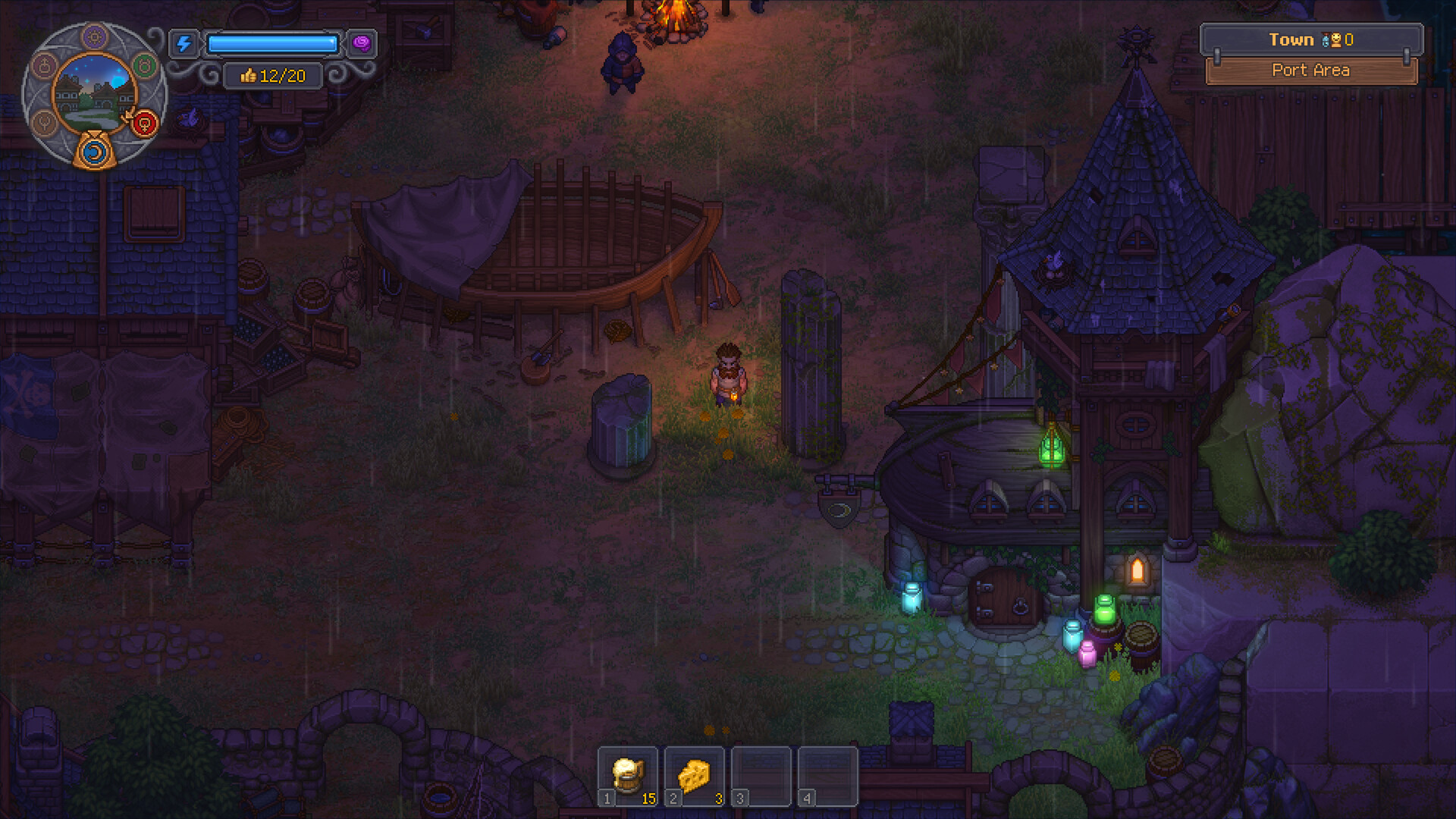
Fully 3D scenes with a fixed camera, a moving sun, dynamic night shadows and weather-driven foliage | Party-based combat with the player joining troops on the frontline |
Building and upgrading graveyard plots | A tower-defence layer protecting the settlement from undead waves |
Dark medieval-fantasy humour | Five-platform launch, including Switch 2 as a day-one SKU |
Tonal Shift From the Original
The biggest change between Graveyard Keeper and Graveyard Keeper 2 is the framing. The first game had no apocalyptic threat. The town was strange and the player's neighbours were unhinged, but the world around the cemetery was stable. The sequel removes that stability. The kingdom is collapsing, the dead outnumber the living, and the player's daily routine of digging, crafting, and trading now happens against a backdrop of constant invasion.
Mechanically, that shift turns into the new pillars. Combat is no longer a footnote: hordes hit the town in waves, and a party of armed allies has to meet them. Town restoration is no longer flavour: the settlement is genuinely ruined, and pulling it back into shape is a long-term project that funds everything else. Automation is no longer a quality-of-life add-on: it is the only way to keep production running while the player handles a kingdom-scale crisis. The unhinged humour and grotesque cast of the original are still present, but the stakes around them are larger.
Reveal and Reception
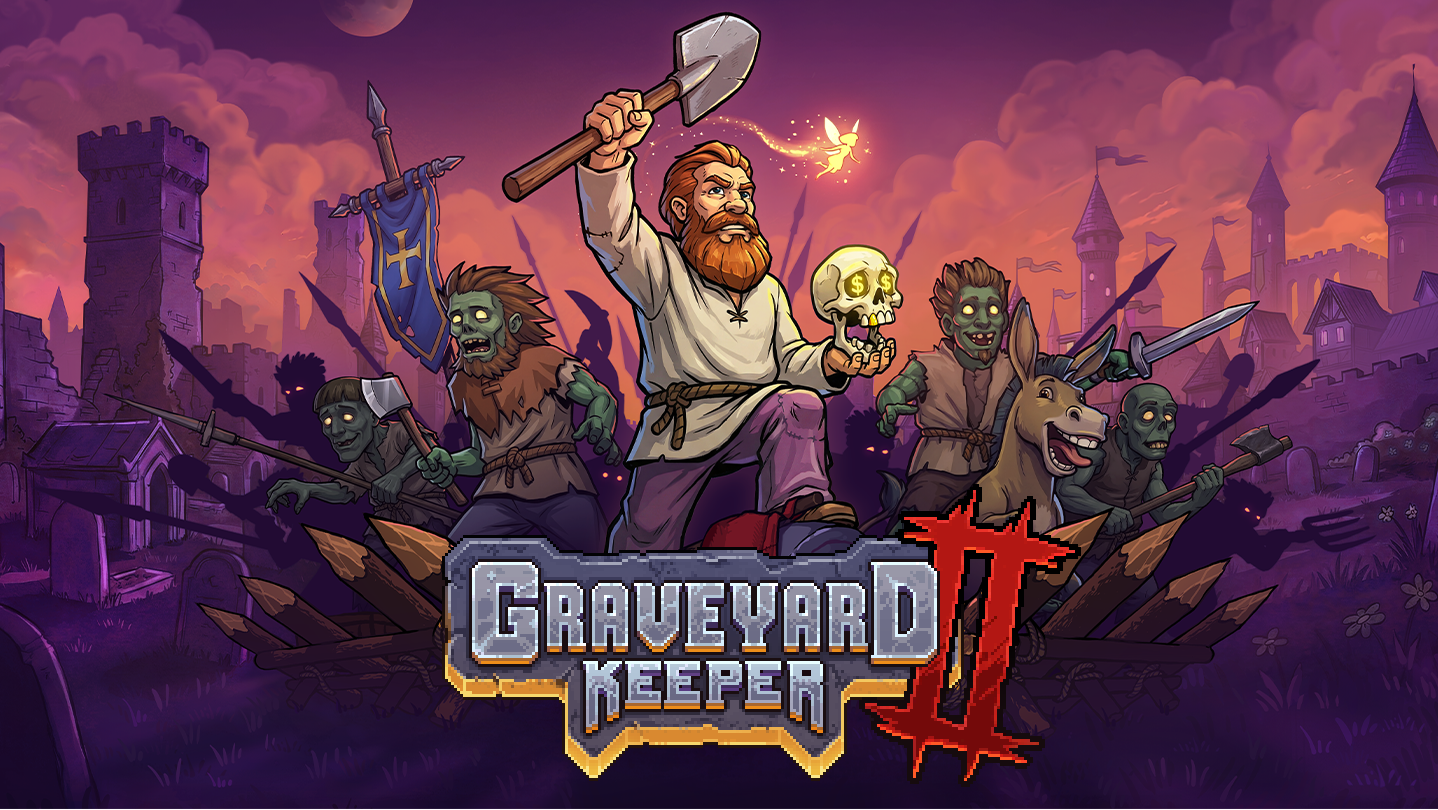
Graveyard Keeper 2 was announced on April 9, 2026 during the Triple-I Initiative Reveal, the indie publisher coalition event that has become one of the year's bigger reveal stages. As part of the launch promotion, the original Graveyard Keeper was made free-to-keep on PC and consoles for a limited window through April 13, 2026, which drew renewed attention to the first game ahead of the sequel.
Wishlist signal on the sequel itself was unusually quick. The publisher reported over 120,000 Steam wishlists in the first twelve hours, and the count climbed to approximately 400,000 by the end of the first week, placing the sequel around the #110 spot on Steam's most-anticipated games list. Those numbers exclude wishlists from PlayStation, Xbox, and Nintendo storefronts, so the cross-platform interest is higher still. That signal, plus the strong response to the free-to-keep promotion, gives Graveyard Keeper 2 one of the more visible launches on the 2026 indie sim calendar.
Current Status
Graveyard Keeper 2 is in pre-release. The Platforms and Release page tracks the confirmed targets, the storefront pricing, and the pre-order bonuses. The release date is 22 September 2026, announced on 26 August alongside a release-date trailer and the opening of pre-orders. A free demo has been available since 14 September 2026 on PC, PlayStation, Xbox and Nintendo Switch 2, covering the opening of the game up to the introduction of The Town, with saves that carry into the full release. There is no early-access programme. The System Requirements page covers both the minimum and the recommended PC tier as published on the storefront. The store page lists the game as single-player only with a generous language slate at launch.
The game runs on Unreal Engine 5. The September 2026 developer log settled several questions about what carries over. The Technology Tree returns as the backbone of progression, joined by a new talent system, and the studio says there will be less grinding this time. The publisher's launch announcement names fishing, trading, character customisation, ability upgrades and livestock among the returning activities, covered on Farming, Fishing and Trade. The first game's fast travel item is gone, replaced by Milestones between unlocked locations. Anything not on that confirmed list, including the original game's recipes, item stats, quest chains and named characters, is still unconfirmed for the sequel and is not recorded here as fact.
First Developer Log
Lazy Bear Games published the first Graveyard Keeper 2 developer log on the Steam community in May 2026, titled around the role of zombies in the sequel. The update firmed up several points that had been generic at reveal: the underground production area is referred to as underground factories, each zombie has its own skill progression and can earn a name after long service, and the labour-quality system runs on corruption (red skulls) rather than the white-skull purity the first game asked players to chase. The same post drew the factional line between the player's Possession-Free Zombies and the hostile undead threatening the realm, both of which are covered in greater depth on zombie apocalypse and automation. The studio framed the post as the start of an ongoing devlog series, so further entries are expected in the run up to launch.
Second Developer Log
A second developer log in June 2026 turned to The Town, the long-rumoured settlement at the centre of the game. It confirmed that the player can not only see The Town but rebuild it district by district, restoring housing, shops, and infrastructure so the place can move into what the developers call an era of Zombie Capitalism. The same log detailed a new layer of graveyard management, with tech-tree modules that hold tombs, benches, columbaries, monuments, and graves, plus new grave designs to decorate the plot. How the rebuild functions is covered on the Town Restoration page.
Third Developer Log
A third log in July 2026 covered the move from the original's 2D presentation to a fully 3D world, along with the lighting, weather, and modular town-building technology that came with it. That material is covered on the Art and Visual Design page.
Release Date Announcement
On 26 August 2026 the studio dated the game to 22 September 2026 and put out a release-date trailer. Pre-orders opened the same day on Steam, PlayStation, and Xbox, each carrying a discount and two bonus items, a personal sauna building and an outfit for the player character. The official site now links an eShop product page for both the Switch and the Switch 2 version, and the publisher's launch announcement lists a pre-order on Nintendo Switch. Pricing and the full pre-order breakdown are on the Platforms and Release page.
Fourth Developer Log
The fourth log, posted on 2 September 2026 and updated on 7 September, is the densest of the series. It opened the map south of The Town to a set of southern outskirts holding another village, tavern, forest, swamp, church and graveyard, and introduced traders bringing goods from foreign lands along with refugees looking for homes in a zombie infested city. It put eight in-world years between the two games, confirmed that the Technology Tree returns alongside a new talent system, replaced the first game's fast travel stone with Milestones, and changed how quest characters behave so that they stay at their regular locations instead of visiting once a week. It also stated plainly that the talking skull companion is not the first game's skull, and that several iconic characters do return. The full breakdown is on Story and Setting and Developer Logs.
Fifth Developer Log
The fifth log, posted on 18 September 2026, is about combat. It makes the fighting part of the story: the player's house, church and graveyard come without a fight, but The Town has to be liberated in battle, district by district, and city battles are only available on one day of the week, with the sewers beneath the settlement open on the others. Battles take place on the actual streets, which fill with townsfolk and market stalls after a victory, and different parts of the city are distinct arenas with their own win conditions. The player prepares by building barricades and towers from their own materials and by raising squads of zombie fighters, which can be positioned freely or led in person. The studio puts the number of hostile zombies put down over the course of the game at a little over 4,000, and says mouse and keyboard combat can be played with one hand.
Free Demo
A free demo went live on 14 September 2026, the day of the publisher's tinyBuild Connect 2026 showcase. It runs from the first steps of the game to the introduction of The Town, around three to four hours by the studio's estimate, and its save carries into the full game at launch. The studio lists it on Steam, Xbox, PlayStation and Nintendo Switch 2; the publisher's press release also names Nintendo Switch and says the demo stays playable until 22 September. Storefront detail is on Platforms and Release and a walkthrough of what it covers is on Getting Started.
Early Reception
Review coverage began on 14 September 2026, eight days before release and the same day the demo went live. Across the first seven scored reviews collected by 21 September, verdicts split three positive, three mixed and one negative, and the scores cluster around seven out of ten. Praise centres on the story, the voice acting, the rebuilt 3D world and the tower-defence and automation additions; criticism centres on grind, micromanagement and multi-step crafting chains that some reviewers found deliberately tedious, with the lowest verdict calling the grind unoptimised. User reviews were not yet open on the PC storefront as of 21 September 2026.
Confirmed Areas and Interface
The official store screenshots name several distinct areas through an on-screen location banner and show the game's menu layout. Confirmed named areas include the Garden (the keeper's outdoor base), the Astrologer's Tower, the Graveyard, the underground Town Workshop, and the Port Area district of The Town. The full catalogue with what each screenshot shows is on the Locations page.
On screen, a top menu bar carries five tabs (Character, Tech Tree, Inspirations, Quests, and Map), and a persistent display tracks energy, three colour-coded research points, and an approval gauge shown out of 20. The research screen, the Getting Started guide covers in more detail, including the named Building nodes visible in the Tech Tree.
Where to Begin
If you are arriving at this wiki to plan ahead for the launch, the Getting Started guide is the natural next step. It walks through the early-game graveyard loop, the order in which the new pillars unlock, and how to prioritise the first hours so that automation, combat, and restoration each get off the ground in time to support each other.
If you are coming in cold from the original Graveyard Keeper and want a sense of what is genuinely new, the Automation, Combat, and Town Restoration pages are the three most useful entry points. Together they cover roughly everything that did not exist in the first game.