

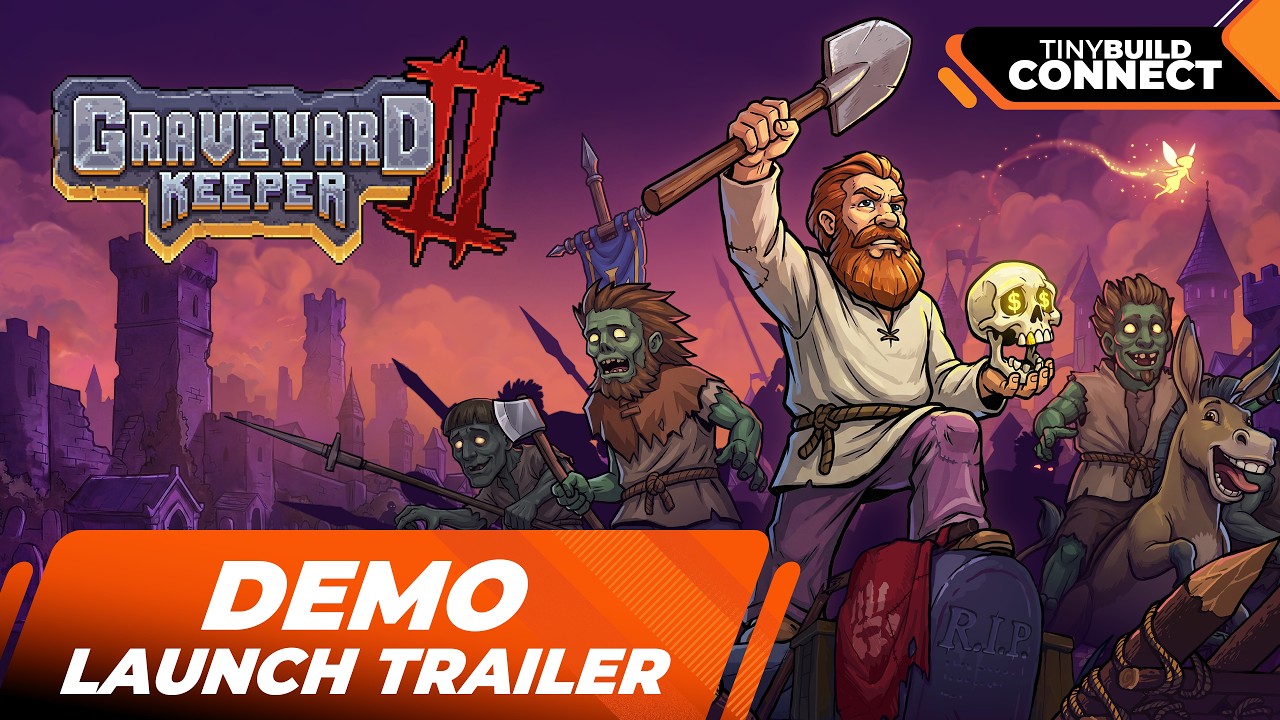
Graveyard Keeper 2 is the announced sequel to the 2018 management sim Graveyard Keeper. It was revealed at the Triple-I Initiative Reveal in April 2026 and releases on 22 September 2026. Since 14 September 2026 a free demo covering the opening hours has been playable, and demo saves carry into the full game; there is no early access programme. This page is the practical onboarding guide for players who want to follow along now. For the broader pitch, see the main overview.
Recent developer logs have started to flesh out what that work looks like: the cemetery sits just outside the walls of The Town, which the player rebuilds district by district once the launch build is in hand.
Release date: 22 September 2026. Storefront specifics live in the platforms and release article and the dedicated System Requirements page.
How to Play Right Now
The free demo, released on 14 September 2026, is the way to play before launch. It runs from the first steps of the game to the introduction of The Town, about three to four hours by the studio's estimate, and covers crafting, scavenging, digging and decorating graves, and a first battle in defence of the settlement. It is listed on Steam as a separate demo app, on the PlayStation Store as a free demo on the game's product page, on the Xbox store as a trial attached to the base product, and on Nintendo Switch 2 according to the studio's own post; the publisher's press release also names Nintendo Switch and says the demo stays playable until 22 September. Progress carries over into the full game at launch. Pre-orders opened on 26 August 2026 on Steam, PlayStation, and Xbox, each carrying a discount and two bonus items, so the practical decision now is whether to pre-order or wait for launch on 22 September. Wishlisting still works if you would rather hold off and just be reminded. Following the developer and publisher's public channels remains the best way to catch new footage, since that is where gameplay clips and design notes have been landing.
To prepare for the sequel, the original Graveyard Keeper was made free-to-keep on its storefronts around the announcement, with a claim window that ran through April 13, 2026. The demo is the more direct preparation now that it exists, but the original is still worth a look, because the underlying graveyard-management loop, the dark humour, and the medieval-fantasy framing all carry over. Studying its production chains will leave you better oriented when the sequel ships.
What You'll Be Doing
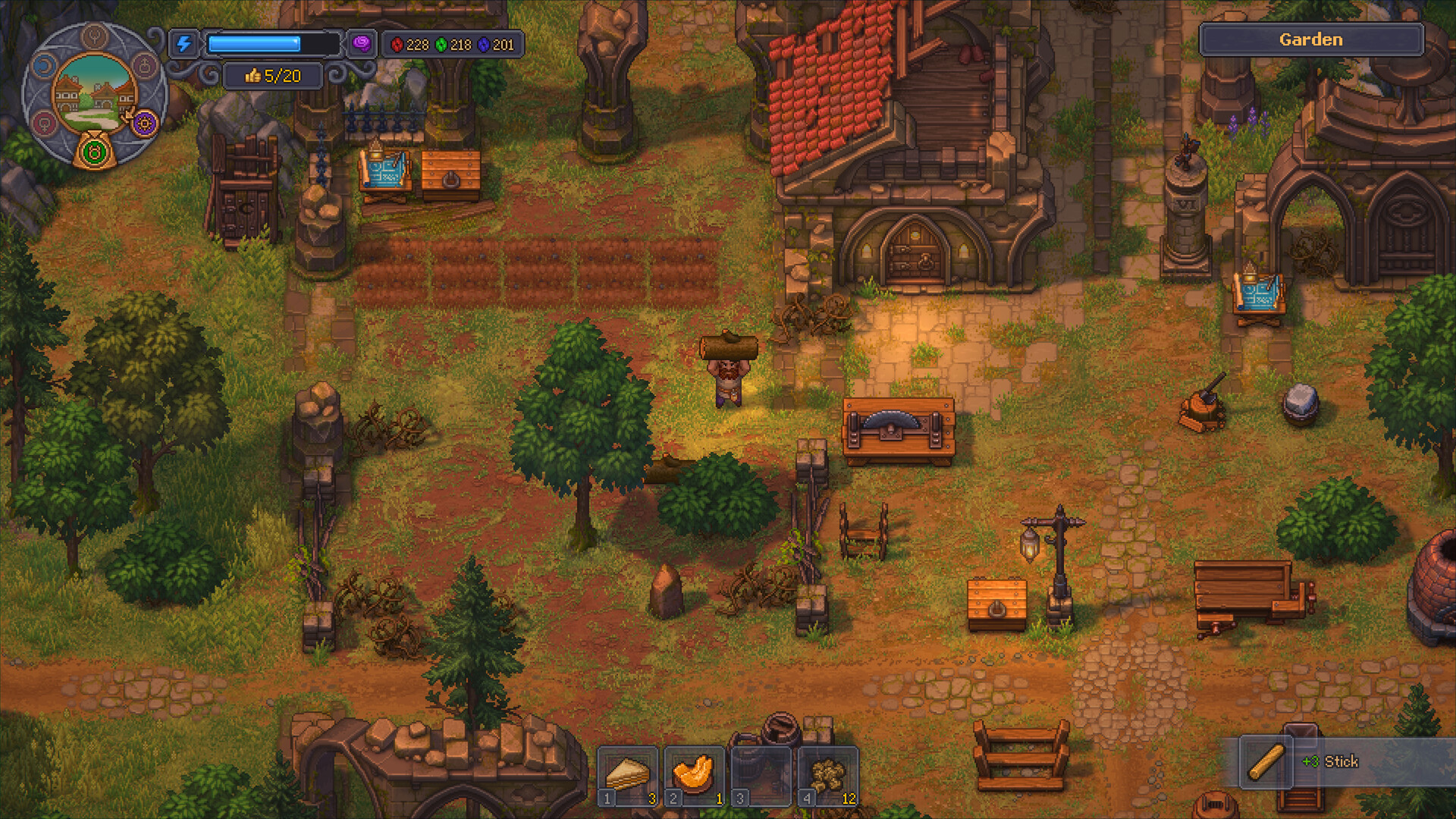
On launch, you play as the Grand Inquisitor of a medieval kingdom in the middle of a zombie apocalypse. The role layers four broad activities on top of each other:
Manage a graveyard. Build and upgrade plots, handle remains, and run the production chains that grow out from the cemetery.
Automate production with zombie labour. Captured zombies physically power workstations and conveyor systems, freeing the player from repetitive manual work.
Rebuild a town. Restore a ruined medieval settlement, help the residents who survive, and unlock the buildings and services that come with a working community.
Defend against zombie hordes. Build fortifications, equip troops, and lead an undead army into engagements with the larger apocalypse.
Three (Or Four) Pillars
The sequel is best understood as three intertwined pillars, with combat sometimes broken out as its own fourth pillar depending on how you slice it.
Pillar | What It Covers |
|---|---|
Graveyard Management & Automation | The cemetery economy and the zombie-powered conveyor systems that chain into it. |
Rebuilding the ruined town, working with surviving residents, and unlocking new structures. | |
Combat & Defence | Crafting weapons and armour, raising fortifications, training troops, and leading the undead army into the field. |
Tonal Shift From the First Game
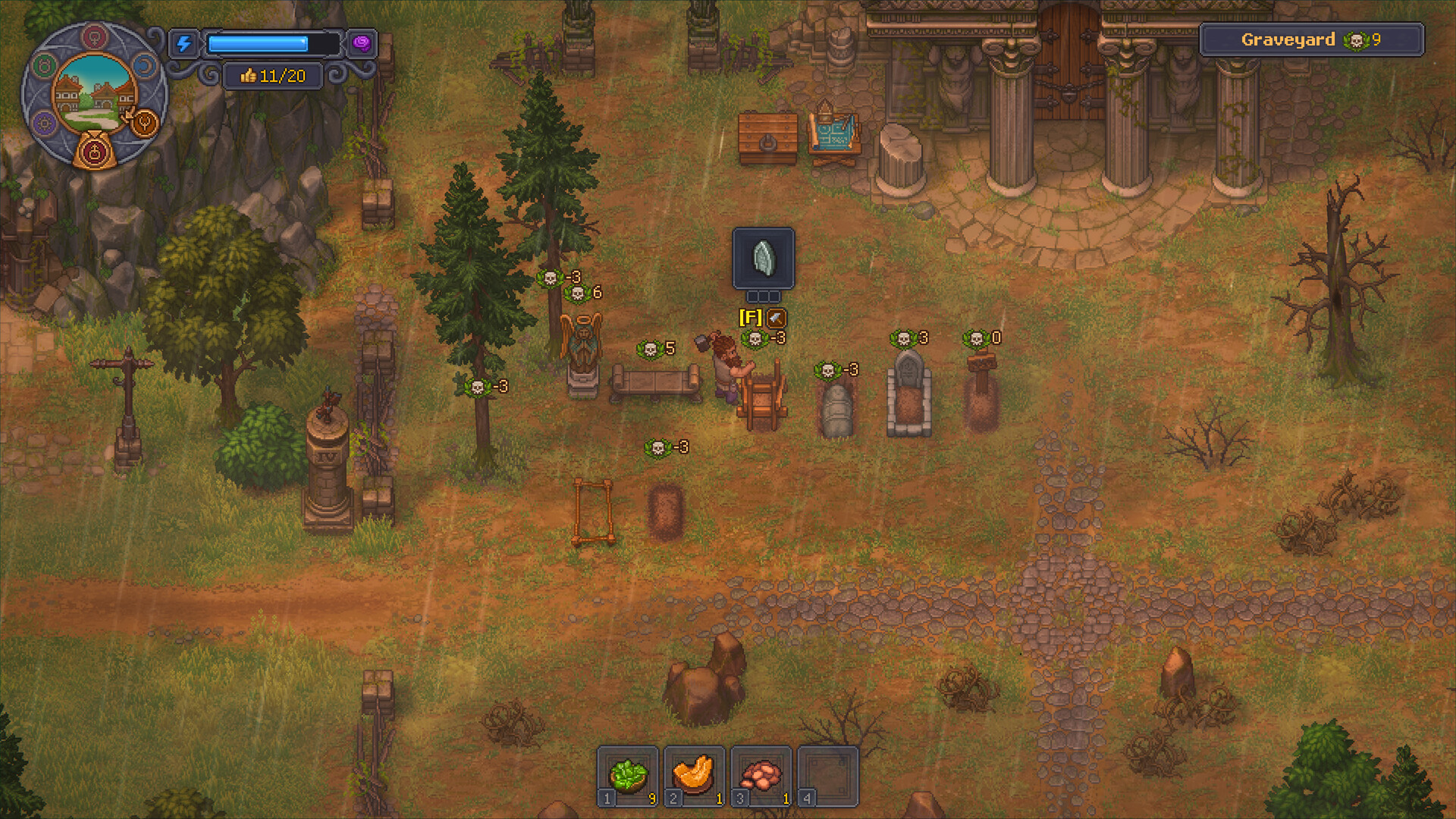
The first Graveyard Keeper was a cozy mortuary sim with a slow production-chain rhythm and no apocalyptic threat hanging over the village. The sequel keeps that mortuary-sim core and stacks two louder genres on top: an automation-factory layer where zombies replace the player's hands on the production line, and a tower-defence layer where the town has to be physically defended from horde attacks. The dark humour and grotesque cast carry over; the pacing does not.
Story Setup
The kingdom is in the middle of a zombie apocalypse, and the player character is the Grand Inquisitor tasked with holding the line. The undead are simultaneously the central threat and the central labour pool: the same zombies that menace the town in waves can be captured and put to work underground. That tension is the narrative spine.
What We Know Vs. What We Don't
The reveal materials draw a clear picture of the four big systems and the genre framing. They are also unusually disciplined about leaving specifics open. The table below splits what is publicly confirmed from what has not been described yet, so newcomers know where to trust the wiki and where to wait.
Area | Confirmed | Not Yet Confirmed |
|---|---|---|
Genre framing | Management sim with automation and tower-defence layers, single-player. | Exact pacing, day-night structure, save model. |
Story setup | Grand Inquisitor in a zombie-overrun kingdom rebuilding a ruined town. | Named NPCs, faction names, place names, ending state. |
Platforms | PC, PS5, Xbox Series X|S, Switch, Switch 2, with PS4 and Xbox One also listed on the console storefronts. | Cross-save, cross-buy, handheld verification tier, Switch demo availability. |
Hardware | Minimum and recommended PC tier on Steam. | GPU model, VRAM, console frame rate targets. |
Release | Releases 22 September 2026 at 17:00 UTC on consoles. Pre-orders open on every storefront that carries the game, with pricing published. | Which outfit each platform's pre-order bonus grants, and the eShop price. Both Nintendo product pages are now linked from the official site. |
Interface and Menus
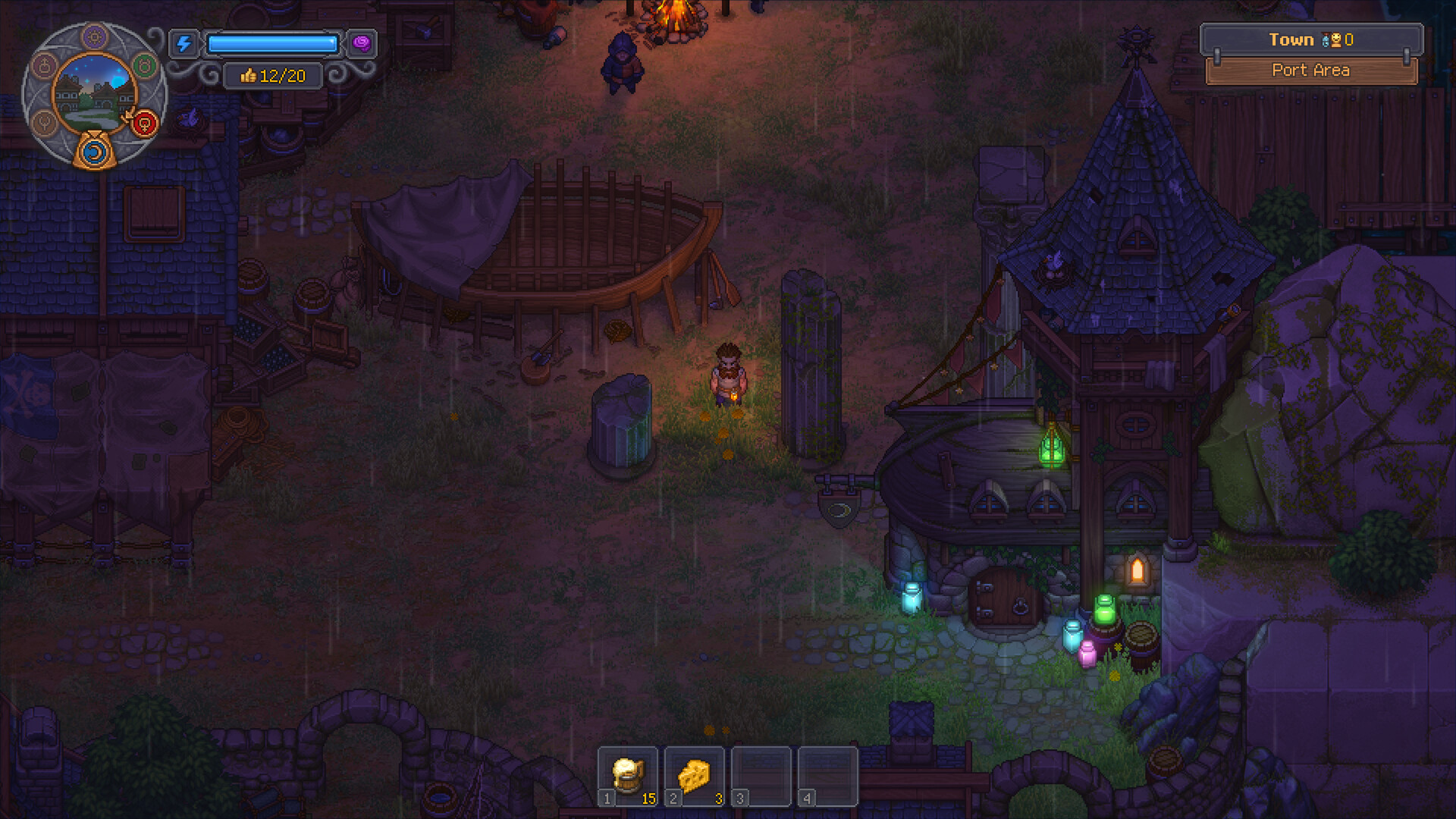
The pre-release screenshots show how the game is laid out on screen. A top menu bar carries five tabs, and a persistent heads-up display tracks the Inquisitor's resources and standing with the living.
Menu Tab | What It Opens |
|---|---|
Character | The Inquisitor's own stats and progression. |
Tech Tree | The research screen that unlocks buildings, tools, and other recipes. See below. |
Inspirations | A separate screen with its own notification marker; its contents are not yet legible in current material. |
Quests | The active objective and storyline log. |
Map | The world map covering the keeper's grounds and The Town. |
The heads-up display also shows an energy bar, a small stock of a pink resource, three colour-coded point types (red, green, and blue) spent on research, and an approval gauge shown as a value out of 20 that appears to track standing with the townsfolk. A catalogue of the named areas the game shows in its location banner lives on the Locations page.
The Tech Tree
Progression runs through a Tech Tree split into several categories. Screenshots show a Building category open alongside three more category tabs marked by a book, a plant, and a skull icon. Unlocking a node spends the three coloured points and grants its blueprint. These Building-category nodes are legible in pre-release footage:
Building Node | What It Covers |
|---|---|
The Concept of Wood | Opening node for basic woodcutting and lumber. |
Woodworking I | First tier of processed-wood recipes. |
Chopping | Turns logs into firewood and boards. |
The Concept of Stone | Opening node for stone gathering. |
Pottery I | First tier of clay and pottery work. |
Brick Making | Fired bricks for construction. |
Stone Polishing | Refined stone for higher-tier building. |
Oiled Wood | Treated wood, a mid-tier material. |
Tool Rack | A workshop fixture for tools. |
Simple Weapons | Early armaments, tying the crafting tree to the Combat layer. |
Simple Barricades | Basic defensive structures for the tower-defence layer. |
Only the Building category is readable in current material, so the full node list across the book, plant, and skull categories is not yet known. Costs, prerequisites, and the exact unlock order shown on screen may change before launch.
Building Nodes Visible in Screenshots
The Building category is the only tech tree branch shown clearly in pre-release material. The nodes legible in it are listed below, in roughly the order the connecting lines run. They give a sense of the early progression rather than a complete tree, and unlock costs are not shown.
Node | Leads Toward |
|---|---|
The Concept of Wood | Woodworking I and Chopping |
Woodworking I | Simple Weapons and Simple Barricades |
Chopping | Timber processing |
The Concept of Stone | Stone Polishing, Pottery I and Brick Making |
Simple Weapons | Early armament for the troops |
Simple Barricades | Early defensive placements |
Tool Rack | Tool storage and Oiled wood |
Oiled wood | Improved timber output |
Stone Polishing | Refined stone goods |
Pottery I | Ceramics production |
Brick Making | Masonry for construction |
Every node shown in that screenshot already carries a completion tick, so the capture is from a save with the early Building branch finished rather than from a fresh start.
Changes for Returning Players
The September 2026 developer log listed a set of deliberate changes from the first game. They are the clearest guide to what a returning player should unlearn.
Change | Detail |
|---|---|
Fast travel | The first game's teleport stone is gone. Travel between unlocked locations uses Milestones instead |
Grind | The studio says there will be less grinding this time, softened further by a new talent system |
Progression | The Technology Tree returns in a familiar form, with talents layered on top |
Quest characters | They no longer arrive from the Town once a week. They stay at their regular locations, though some mechanics tied to them are only available on their designated days |
The Keeper | The studio says it is the same Keeper, then qualifies that it is not exactly the same one. See Grand Inquisitor |
The skull | The talking skull companion is not the first game's skull. See The Skull Companion |
Scale | The map now includes The Town and a set of southern outskirts. See Story and Setting |
Pre-Launch Checklist
Decide between pre-ordering and waiting. Pre-orders on Steam, PlayStation, and Xbox carry a discount plus a sauna building and a character outfit; a wishlist instead still gets you a launch-day reminder.
Follow Lazy Bear Games and tinyBuild on their public channels. New gameplay footage and design notes have been landing there.
Play the demo. It went live on 14 September 2026, runs three to four hours up to the introduction of The Town, and its save carries into the full game.
Optionally pick up the original Graveyard Keeper. It was made free-to-keep around the announcement, and its production chains and management rhythm are useful background, though the demo is the more direct preparation.
Bookmark this wiki. Pages are updated as official information is verified.
Several specifics have not been disclosed yet: exact controls and default keybinds, and any named NPCs, towns, items, or zombie types. Verified information will be folded into the automation, combat, and town restoration pages as it lands.