
Loading...
Loading...
Reviews and Reception
June 26, 2026 at 03:11 PM
Updated player and critic review standing: rose to a mostly positive user standing and refreshed the critic review count
The Adventures of Elliot: The Millennium Tales drew steady interest across its pre-launch cycle, helped by the pedigree of its HD-2D presentation and the free Prologue Demo that let players sample the opening chapter with save-data carry-over. This page tracks confirmed critical reception. The full review embargo lifted at the June 18, 2026 launch, and the aggregate critical standing is recorded below.
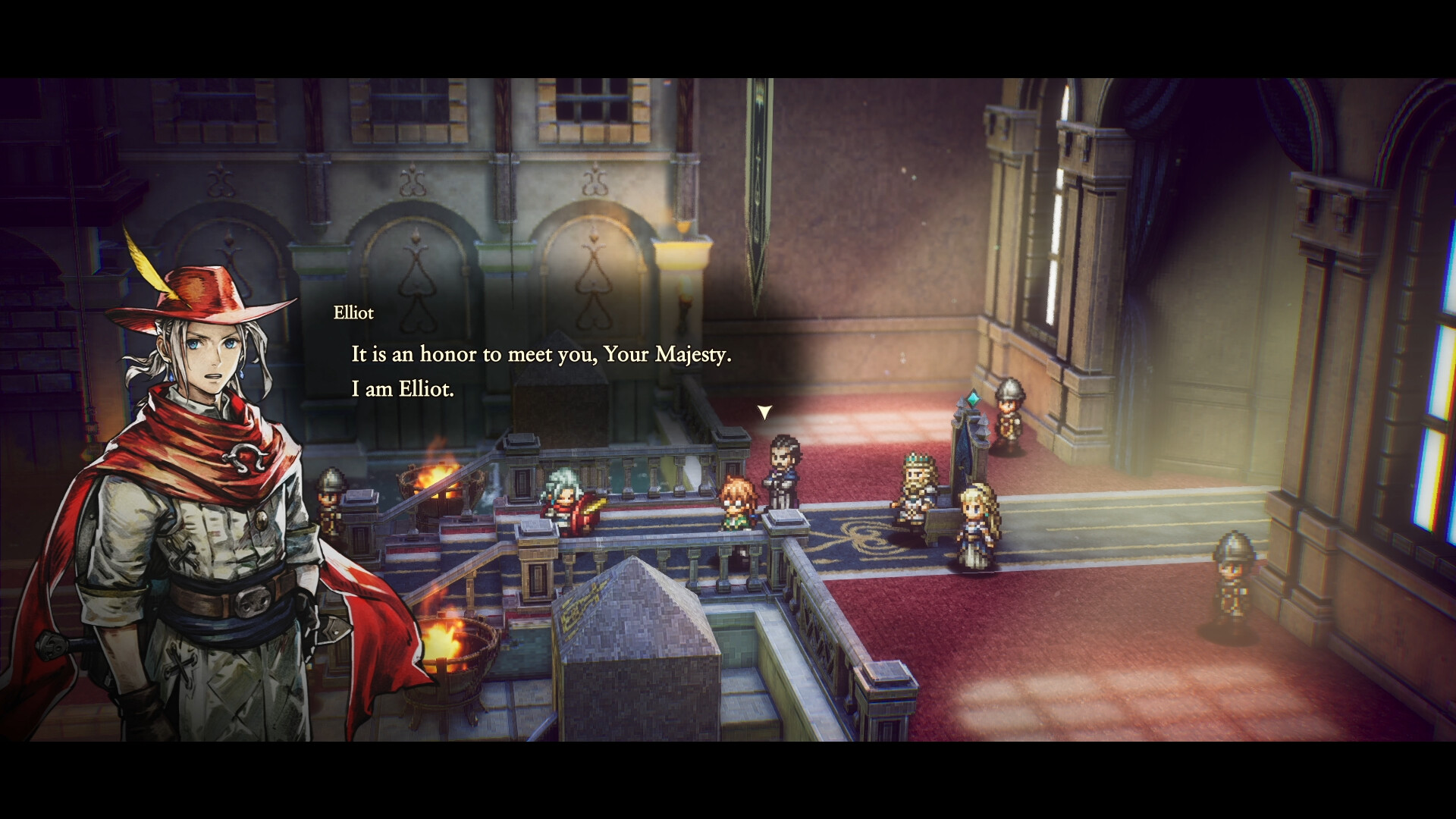
The game received its first published critic score ahead of the wider review embargo, when a leading Japanese games publication awarded it 34 out of 40 in mid-June 2026. The score came from a four-reviewer panel in which two reviewers gave it 8 out of 10 and two gave it 9 out of 10. The exact split between the two scores has been reported slightly differently across outlets, but the total of 34/40 is consistent.
The review praised the beautiful HD-2D visuals, the 2D Zelda-style action and exploration loop, and the satisfying real-time combat. See Combat System and Exploration and Puzzles for the systems behind those impressions.
After the broad review embargo lifted at launch, aggregated critic scores settled in the low 80s. One major review aggregator rated the reception as strong, drawing a top-critic average in the low 80s from more than 80 reviews, with around 85% of critics recommending the game. Compiled platform-by-platform scores landed in the same range, with the PlayStation 5 version scoring highest.
The critical consensus was generally positive. Reviewers praised the HD-2D visuals, the story that carries Elliot across the four ages, the real-time combat, and the exploration loop. The most common reservation was that the game stays close to classic action-RPG and top-down adventure conventions rather than reinventing them. The early 34/40 score noted above lines up with that broadly favorable reception.
Player and community reception has been more mixed than the critical response. In the first days after launch the user-review standing sat at "mixed," running roughly 69% positive, then rose over the following week to a mostly positive standing of about 72% positive across more than 1,100 player reviews as the review pool grew. The gap between strong critic scores and the cooler early player verdict became one of the most-discussed aspects of the launch, and the criticisms below recur as community themes rather than the view of any single player.
Three reservations come up most often. First, several players feel the full $59.99 price is high relative to the game's length and the amount of content on offer. Second, the fairy companion Faie talks very frequently and tends to over-explain or outright spoil puzzle solutions, which some players find intrusive; the menu setting that lowers her dialogue frequency, documented on the Accessibility and Options page, is the game's answer to this complaint. Third, the same map is reused across the four ages, with recolored, tougher versions of the same enemies appearing in later eras, and several players feel enemy variety is limited as a result.
Some players have reported performance dips on certain PC hardware. On difficulty, many players recommend starting on a higher setting for a more engaging challenge, though reviewers note the bosses ramp up sharply in the later ages regardless of the chosen level.
Reception of the Prologue Demo shaped several launch-version changes. The most-discussed piece of feedback was that Faie, the fairy companion, spoke too often. The producer said the team had grown fond of her over the long development and may have leaned into her chatter as a result, and in response they added a menu option to lower the frequency of her dialogue. Other demo-driven adjustments included separating the map buttons, streamlining access to the Magicite menu, and increasing Elliot’s base movement speed. These options are detailed on the Accessibility and Options page.
Community reception of the free demo was broadly positive, with players highlighting the art direction and the moment-to-moment action. Because demo impressions are early and volatile, they are noted here only as context and not as a measure of the finished game.
