Loading...
Loading...
Between-Match Preparation
September 16, 2026 at 03:03 PM
Set out the turn and Motivation economy explicitly: three steps of movement per turn, turns spent one at a time, the weekly reset, and Motivation as the separate resource Dagsion activities draw on
Between matches of the Heroic Games, Fire Emblem: Fortune's Weave hands the player an open stretch of time to get ready for what is coming. You receive useful intel about the next opponent, then use it while exploring Dagsion or venturing off to improve your team's prowess in battle. Nintendo sums the arrangement up in one line: the time is yours to spend.
Each free stretch sits between two scheduled fights. When a main story mission or a Heroic Games match is on the schedule, the game tells you how many turns will pass before the day arrives, and previews describe a card of information about the coming match carrying insights and recommendations for preparing your units. Time is the constraint. It passes when you move on the world map, and it passes when you rest at an inn on purpose. Quests expire on their deadlines, and several activities can only be used a set number of times in a week, so the order you work through them changes what fits.
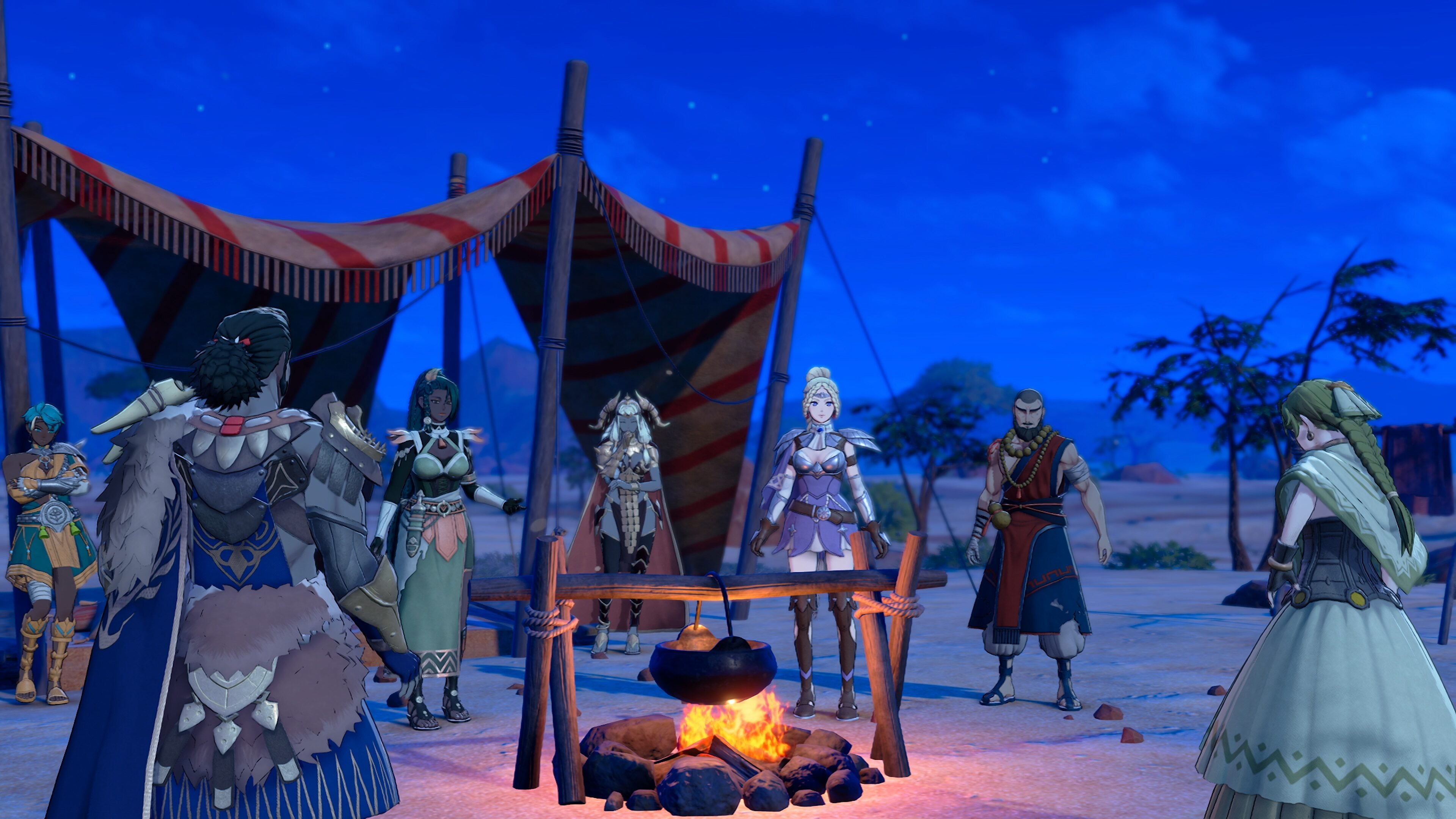
At the Pale Raven's Perch you swap between the four Heroes, with progress saved separately for each. Hands-on accounts from before launch describe a tool there called Foresight, which previews the shape of the next main battle so you can buy weapons or arrange training for what it will demand. They also describe a hint track called the Adventure Guide, presented by Anna, that explains the game's systems and pays out Renown for engaging with them. Accounts from the preview build additionally mention a calendar screen in the menus, used for checking scheduled events in advance.
The capital holds the facilities that stretch of time is spent in. Nintendo showed the following in its August presentation, and noted that more open up as the journey continues.
Facility | What It Offers |
|---|---|
Arena plaza | Additional training once per week. Improving a unit's skills teaches new moves and raises the weapon tiers that unit can wield. |
Arena on match days | Watch battles between other participants unfold, to research the opponents you will face. |
Shopping arcade | Buy weapons and tools, or enhance weapons using materials you have collected. |
Temple row | Volunteer at one of the seven temples to acquire a blessing for use in battle. |
Exam Proctor | Sit a certification exam to move a unit into a new class. Success is not guaranteed. |
Townsfolk | Take on quests with set deadlines. Rewards include gold and Renown, a standing level the game tracks and checks in several places. |
Inns | Lodge and eat, let time pass to gain experience and gather materials automatically, and hold support conversations between characters who have grown close. |
Recruiting | Win over warriors you meet in the city with gifts and shared meals. Recruitment covers the requirements. |
Swap to a different Hero, with each Hero's progress kept separately. |
Not everything is repeatable on demand. Arena training, temple service, shared meals and gift-giving each have a fixed number of uses within a week, and visiting Eshmel in bird form is also a once-a-week action. Temple service raises a level that widens the range of blessings you can call on in battle, so it rewards steady attention across a run rather than a single visit. Shop stock and discounts turn over when a new week starts, which is reason enough to keep an eye on the date.
Training has a price attached. Previews describe the arena menu as pairing two characters against each other and running a chosen program, paid for in gold and in a resource called Motivation. One observed session cost 300 gold out of 550 on hand, taught Cai the Raging Tempest combat art, and pushed up his spear rank.
A turn is reported to cover six in-game hours, and the number of turns before a match varies by Hero and by chapter. One hands-on account counted 52 turns in a single stretch and called that a short allowance, noting that other stretches run considerably longer. Quests that pass their deadline are gone. When the day of a main story mission arrives, the game takes you straight to it rather than making you travel back to the capital first.
What you actually spend is turns. The map screen does carry a date, a weekday and a clock, but the budget the game hands you before a match is counted in turns, and a turn is spent one at a time rather than committed in blocks. On the road a turn buys three steps of movement, less across desert ground, and posthouses sell carriage travel to anyone who would rather pay than walk. The week is the other unit that matters, because the week, not the turn, is what resets the caps on arena training, temple service, gifts and shared meals.
Activities inside the capital are paid for in Motivation rather than in turns. It is a separate resource with a supply of its own, so working through the city's facilities is not the same drain as walking somewhere, and running Motivation down does not give any time back. The two economies sit side by side, and a stretch of free time can end with one exhausted and the other barely touched.
If you would rather not spend the time at all, previews describe an option to set your party to train for a set number of days and jump directly to the next main fight. The trade is that you miss the scenes that would have played out along the way.
For the seven temples the volunteering slot feeds, see Temple Blessings, and for what happens at the Exam Proctor's desk, see Certification Exams. World Map and Exploration covers what the same clock buys once you leave the city.