

Combat in Fable (2027) is built around a system called style weaving, which lets players blend melee, ranged, and magic attacks into fluid combinations without animation delays or style-switching menus. The goal, as described during the Xbox Developer Direct, is that "you should be able to strike with a sword and then hurl a fireball in a smooth movement." This approach evolves the classic Fable triad of Strength, Skill, and Will into a single unified combat system.
Style Weaving
Style weaving is the core design philosophy behind Fable's combat. Rather than locking players into a melee build, a ranged build, or a magic build, the system encourages constant switching between all three during encounters. You might open with a crossbow shot to stagger a distant enemy, close the gap with a melee combo, and finish with a fireball that catches nearby enemies in the blast radius.
There is no cooldown or penalty for switching styles. The transitions are seamless, built into the animation system so that moving from a sword swing to a spell cast feels like one continuous motion. The developers have emphasized that this fluidity was a primary design goal, not an afterthought layered on top of separate systems.
Melee Combat
Fable has a vast arsenal of melee weapons, each with different characteristics. Melee combat focuses on positioning, stagger, and stylish finishers. Confirmed weapon types from previews and the Developer Direct include:
Weapon Type | Combat Style |
|---|---|
Swords | Balanced speed and damage, good all-around choice |
Axes | Heavy strikes, good stagger potential |
Hammers | Slow but powerful, high impact damage |
Maces | Blunt force with crowd control capability |
Cleavers | Aggressive close-range slashing |
Melee weapons range from "super precise" options to "blunt force" instruments, as confirmed at the Developer Direct. The choice between weapon types matters beyond aesthetics, as different enemies have strengths and weaknesses that certain weapon types exploit more effectively.
The first playable build narrowed the arsenal to three weapons the Hero actually carried. The Bower Hammer is a two-handed weapon, slow and heavy, that one-shots weak enemies, does its best work against armour and sweeps a whole group with one swing; its charge attack spins the Hero across the room through several strikes. The Deepwood Bow draws slowly but shoots accurately enough to take a skeleton's head off at range. The Repeater Crossbow throws out a hail of weak, fast bolts, a couple of which are enough to put down a Wraith. Melee itself runs on dodges, parries, charge attacks and weapon-specific finishers.
Parrying carries more weight than a simple block. A clean parry can take a skeleton's head clean off, which staggers it and opens a counter, and it degrades the enemy's accuracy afterwards even if the counter never lands.
Ranged Combat
Ranged weapons complement melee and magic by allowing players to engage enemies at a distance. Confirmed ranged weapon types include crossbows and longbows. Ranged attacks are particularly effective against flying enemies or shielded targets that are difficult to engage in melee.
The style-weaving system means ranged attacks can be woven into melee combos. A player might knock an enemy back with a sword strike, fire a crossbow bolt while the enemy staggers, and then close in for a finishing blow. This encourages experimentation rather than relying on a single approach.
Magic
Magic in Fable carries on the tradition of Will abilities from the original series. Spells range from big damage spells to tactical crowd control, according to the Developer Direct. Fireballs and other offensive spells have been shown in gameplay footage, with the emphasis on integrating magic seamlessly into physical combat rather than treating it as a separate discipline.
Magic adds a layer of tactical decision-making. When facing a group of enemies, a crowd-control spell might scatter them, giving you time to pick off individuals with melee. Against a single tough enemy, direct damage spells supplement your physical attacks. The system is designed so that magic never feels like a standalone path but rather a tool in a broader arsenal.
Spells are cast from four equipped slots by holding the right trigger and pressing a face button, and each spell then runs its own cooldown. Charge length is part of the system rather than a damage multiplier: held longer, a spell takes a different form. A tapped fireball is a quick interrupt, a charged one is a room-clearing explosion. See Will and Magic for the seven spells named so far.
Enemy Design
All enemies have exploitable strengths and weaknesses. Part of the combat challenge is reading each encounter and choosing the right combination of styles. The Developer Direct showed encounters where different enemy types appeared together, forcing players to cycle through styles rapidly. Confirmed enemy types include:
Hollow Folk: The collective name for the game's skeleton enemies, in melee, ranged and armoured variants. Armoured ones shrug off ranged attacks entirely
Balverines: Werewolf-like predators, fast and aggressive
Trolls: Massive, environment-formed monstrosities with exposed weak points
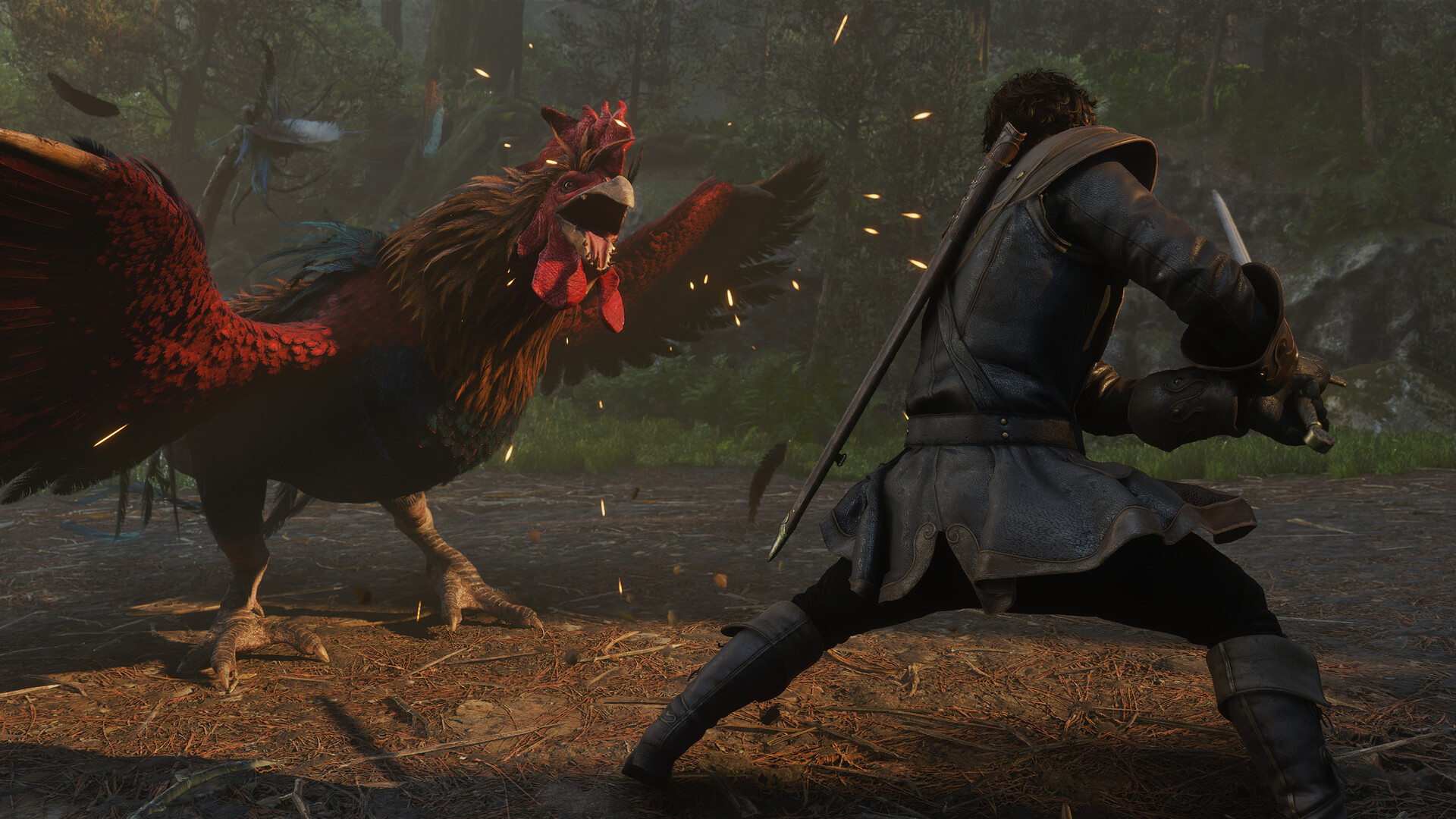
Cockatrice: A fire-breathing chicken boss. This shows Fable's signature humor
Bandits: Human enemies encountered throughout Albion
The Developer Direct demonstrated emergent combat moments, including a scene where a Hobbe accidentally killed an ally during a fight. Friendly fire mechanics exist among enemies, adding chaos and tactical opportunity to group encounters.
Hands-on play filled in how that reads moment to moment. Hollow Folk can be dismembered anywhere except on an armoured body part, and they keep coming while impaired: shoot the head off one and the body flails blindly, take a leg and it crawls at you. Enemies picking themselves up after a Lift or shaking off a Befowl stagger as they recover, which is another counter window.
Encounter Design
Ralph Fulton has summed the studio's approach to encounters up in a phrase: "one-to-many has very much been our mantra." Fights are built around one Hero against a group, and most enemy types can bring in more enemies, so a fight that starts small grows if it is handled badly. One-on-one duels do exist, but Fulton frames them as rare set pieces, "really big set-piece jewels" reserved for larger creatures and for other heroes, rather than the everyday shape of combat.
Combat Intensity
How hard any of this hits is a player choice. William Kennedy, an Associate Game Director at Playground Games, has written that the game "allows players to choose the combat intensity that's right for them", and the first hands-on session at gamescom 2026 ran the same quest twice at two different difficulty levels with two different loadouts. See Combat Intensity for the settings named so far.
Build Flexibility
Build flexibility is a stated priority for Playground Games. Players can align their hero with preferred combat styles or roleplay archetypes without being locked into rigid skill trees. The progression systems are built around this flexible approach, so that investing in melee does not lock you out of magic or vice versa.
This design choice means that respeccing or shifting your playstyle mid-game should be viable. Whether you start as a melee brawler and discover you enjoy magic, or begin as a mage and want to incorporate more sword work, the system accommodates that evolution.
Comparison to Previous Fable Games
The original Fable trilogy separated combat into three disciplines: Strength (melee), Skill (ranged), and Will (magic). Players could invest in all three but typically specialized. The reboot keeps the three-pillar structure but removes the separation, encouraging players to use all three in every fight rather than picking one.
The result is combat that feels faster and more dynamic than previous entries. Where the original games might have you casting one spell, waiting, then swinging a sword, the reboot's style-weaving system makes those actions flow into each other without pauses or menu interactions.