

At the heart of combat
"Melee is at the heart of our Close Quarters combat." That is how the Associate Game Director described Fable's approach. Melee is the Strength pillar, one of the three combat disciplines alongside Skill (ranged) and Will (magic). In practice, it is the pillar that anchors most combat encounters.
Even players who lean heavily into ranged or Will will find themselves in melee frequently. The Style Weaving system encourages constant switching between all three pillars, and melee is usually where the close-range action starts.
Confirmed weapon types
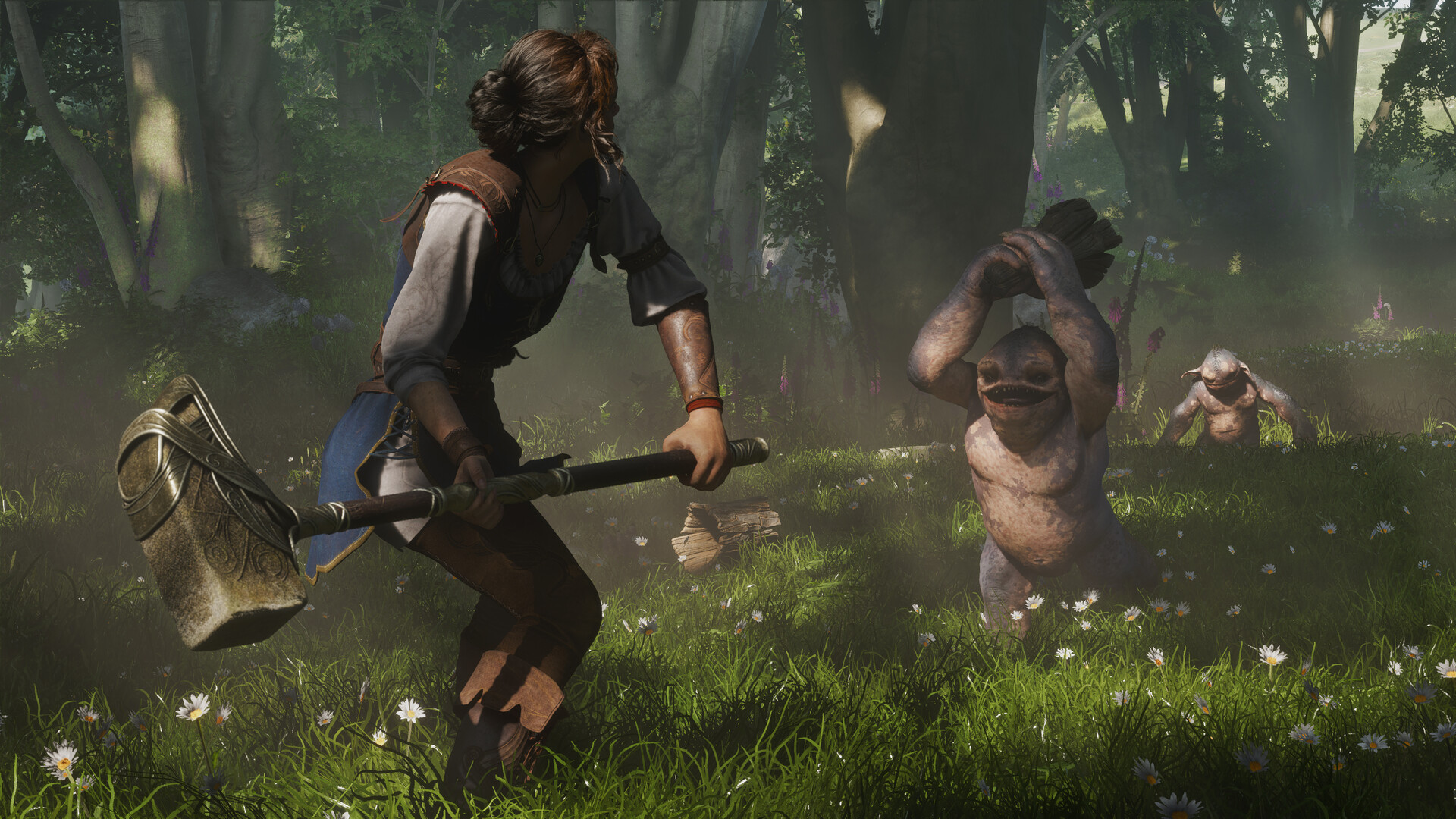
The following melee weapons have been shown or confirmed:
Weapon | What Is Confirmed |
|---|---|
Bower Hammer | A two-handed hammer, and the first melee weapon named for this game. Slower and more powerful, it can take out weaker enemies in a single hit and comes into its own once armored enemies appear. Its swing is wide enough to catch several enemies at once. |
Swords | The most frequently shown melee weapon. Standard one-handed swords appear in most combat footage. |
Hammers | Heavy, slow, high-damage weapons, and a franchise staple. The Bower Hammer is the named example. |
Weapon choice is read by the world as well as by the combat system. In the first hands-on demo the Hero carried a Bower Hammer, and Humphry the Golden remarked on that choice on the way into the mine.
Previous Fable games included axes, maces, katanas, and cleavers alongside swords and hammers. The reboot has not confirmed whether any of those return.
Parries, Charges and Finishers
Alongside ordinary strikes the Hero can dodge and parry. A successful parry can take a skeleton's head clean off, which staggers it, leaves it open to a counter and makes it markedly less accurate even if the Hero never follows up with a killing blow.
Heavy weapons also carry a charge attack. The Bower Hammer's sends the Hero spinning across the room delivering multiple strikes, which is the clearest confirmed example of a melee option built for crowds rather than single targets. Weapon-specific finisher moves round the set out.
Combo System
Melee combat features both light and heavy attacks that chain into combos. The combo system is designed around two primary outcomes: dealing damage and knocking enemies off balance.
Combo | Description |
|---|---|
Light attacks | Fast strikes that chain together quickly. Good for building combo momentum. |
Heavy attacks | Slower, more powerful strikes that can stagger enemies. |
Stagger | Knocking an enemy off balance, creating an opening for a finisher. |
Finishers | "Stylish finishers" that trigger after staggering an enemy. These are visually dramatic moves that deal heavy damage. |
Enemy Reactions
Each enemy type has unique behaviors and weak points that "cause specific reactions when hit." This means melee combat is not just about mashing attack buttons. Different enemies respond differently to the same attacks. A heavy hammer strike might stagger a Hobbe but barely faze a Troll.
A Developer Direct moment highlighted this: a Hobbe accidentally killed one of its own allies during a melee fight. Friendly fire between enemies is possible, adding chaos and humor to group encounters. Playground Games kept this moment in the footage because it felt like classic Fable.
Flowing Into Other Styles
Melee is designed to flow directly into ranged and magic as part of Style Weaving. The goal is "strike with a sword and then hurl a fireball in a smooth movement." There is no animation lock that traps you in melee. Mid-combo, you can switch to a bow, cast a spell, and come back to the sword without losing momentum.
This means melee is not a standalone system. It is one part of a continuous combat flow. A typical engagement might start with melee combos, switch to a quick ranged shot at a flanking enemy, drop a crowd control spell on an approaching group, and return to melee for finishers. The transitions are instant.
Melee Progression
Melee falls under the Strength pillar in Fable's progression system. In previous games, using melee attacks earned Strength experience that unlocked stronger melee abilities. Whether the reboot uses a similar use-based progression or a different system has not been confirmed.
What is clear is that there are no class restrictions. A player who focuses entirely on Will magic can still pick up a sword and use it. They just will not have invested in Strength upgrades. The game lets you play however you want without locking you out of any combat pillar.