

Overview
Player choice is at the heart of The Expanse: Osiris Reborn. As a studio built on narrative-driven CRPGs like Pathfinder: Wrath of the Righteous and Warhammer 40,000: Rogue Trader, Owlcat Games has a deep track record with branching storylines and meaningful decisions. Osiris Reborn carries that philosophy into its action RPG format. Decisions made early in the campaign ripple throughout the entire experience, affecting companion fates, faction relationships, mission outcomes, and the state of the world around you.
The developers have been direct about what this means in practice: The Expanse universe is cruel, and some characters might die because of your choices. There is companion permadeath. There are no warnings before pivotal decisions. And once a consequence plays out, there is no option to reverse it.
The Etude System
Under the hood, Osiris Reborn tracks player choices and narrative states using what Owlcat calls the "etude system." This is a proprietary tool originally created for the Pathfinder games, where it handled the enormous branching narratives those titles are known for. For Osiris Reborn, the entire system was rebuilt from scratch in Unreal Engine 5, along with the studio's dialogue editor.
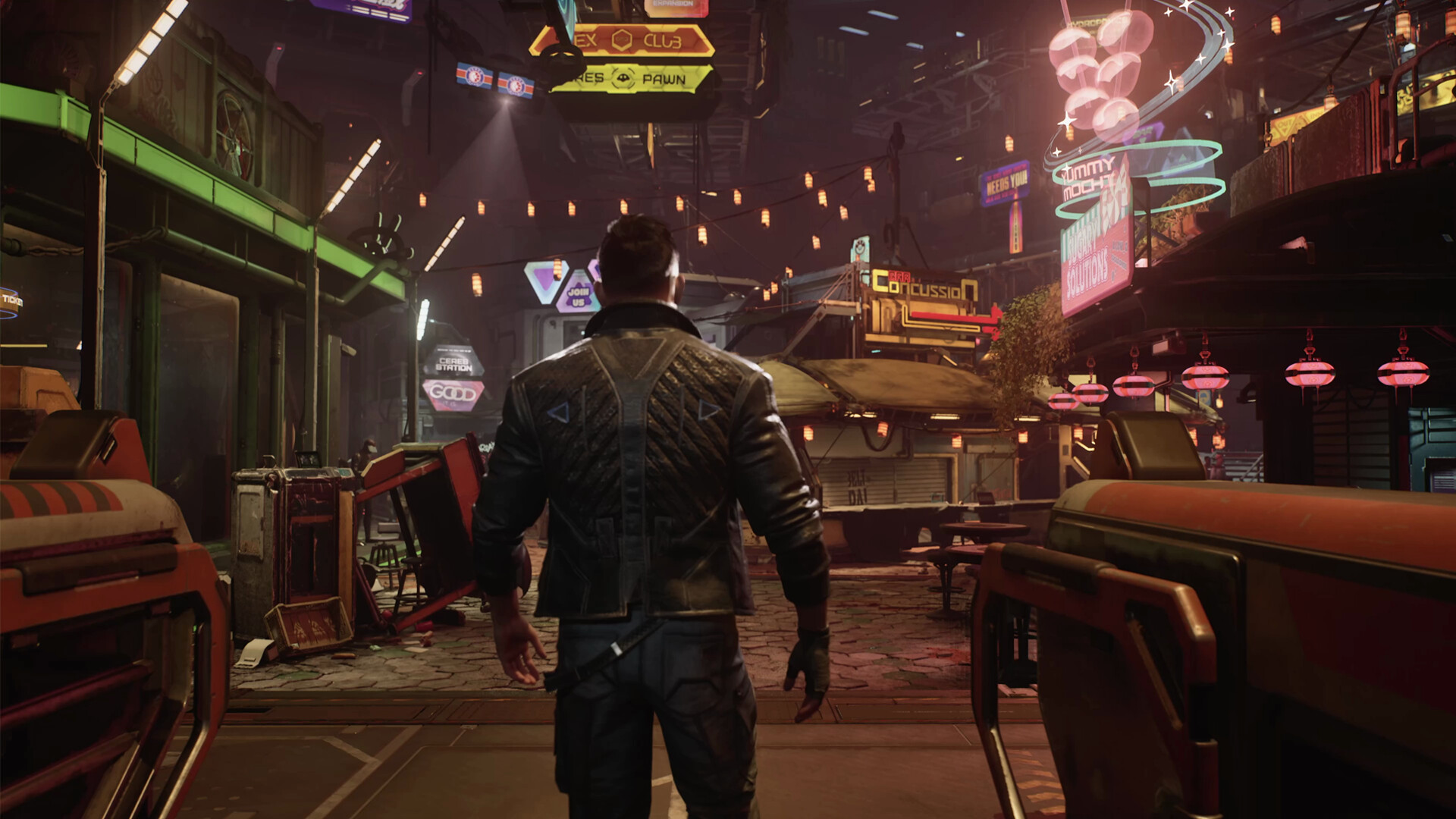
The etude system records every decision, conversation outcome, and narrative flag the player triggers. It then references those flags throughout the rest of the game to determine how characters react to you, which dialogue options are available, which missions become accessible, and how story events resolve. This is the technology that allows early-game decisions to have consequences dozens of hours later.
Companion Permadeath
Certain companions can die permanently based on player choices, and once they are gone, they are gone for the rest of the playthrough. The developers have confirmed this system draws direct inspiration from Mass Effect 2's suicide mission, where every squad member's survival depended on the choices the player made throughout the entire game.
Companion permadeath in Osiris Reborn is not limited to a single climactic mission. The risk exists throughout the campaign. Decisions about how you treat your crew, which missions you prioritize, and how you handle critical story moments all feed into whether companions survive. Each companion has their own background, personal struggles, and opinions that influence major plot events. Helping a companion through their personal problems (or ignoring them entirely) can determine their fate later.
Unsignposted Decisions
One of the most striking elements of the choice system is that many important decisions are not flagged or highlighted. There is no on-screen prompt warning you that a conversation option will lock in a major consequence. The game trusts the player to weigh their words and actions the same way they would in a real situation, without the safety net of knowing which choices "matter" and which do not.
This design means that side conversations, seemingly minor mission decisions, and offhand remarks to crew members can carry real weight. The game does not separate "main story decisions" from "side content decisions." Everything feeds into the etude system and can produce consequences down the line.
Faction Alignment
The game's three major factions (Earth, Mars, and the Belt) respond to the player's actions and origin. Choosing an Earther, Martian, or Belter origin during character creation determines your initial reception with each faction. An Earther visiting Ceres will face hostility from Belters. A Belter may find doors open on the Belt's stations that are closed to others.
Faction alignment is not permanent. The developers have confirmed that players can shift their allegiances during the campaign. This opens up paths like becoming a double agent, switching ideological alignment entirely, or playing factions against each other. Your actions, not just your words, determine where each faction stands on you.
The Pinkwater Station Example
The clearest example of the choice system in action comes from the Gamescom 2025 demo, set on Pinkwater Station. During a Protogen attack on the station, the player must decide whether to ask the civilian population to resist or to surrender. If you ask them to stand down, the civilians survive and the station's armory remains stocked, giving you access to much-needed supplies and equipment. If you encourage resistance, groups of civilians are killed, their bodies litter the station corridors, and the armory may be depleted.
This single decision affects the environment you walk through (bodies vs. intact station), the resources available to you (stocked armory vs. empty one), your relationship with the station's population, and potentially your standing with the station's administrator. The developers used this example to illustrate how choices reshape not just the story but the physical world and gameplay resources.
Companion Relationships and Romance
Your relationships with companions develop over time based on your choices and leadership style. Companions are not simple approval meters. Each crew member has their own perspective on events, and during significant story moments they will offer opinions, suggest courses of action, and sometimes provide contacts or support that can change the outcome of a situation.
Romance is confirmed as part of the companion system, though the developers have not specified which companions are romanceable. Creative Director Alexander Mishulin noted that the crew lives together on a small ship for a long time, and the close quarters naturally create interpersonal dynamics. The game follows a character-focused development philosophy the developers have compared to Persona 5, where characters are at the center of the story and evolve throughout the entire experience.
Companion Activity During Missions
Even companions who are not in the player's active two-person squad remain engaged in the story. They contact the player over the radio to give advice, may appear in specific locations during a mission, and can be assigned their own tasks elsewhere. The design ensures that no companion ever feels like they are sitting idle on the Gemini while the player is in the field. Crew members who are not brought on a mission can embark on their own operations, adding a layer of strategic decision-making about how to deploy your team.
Skill Checks
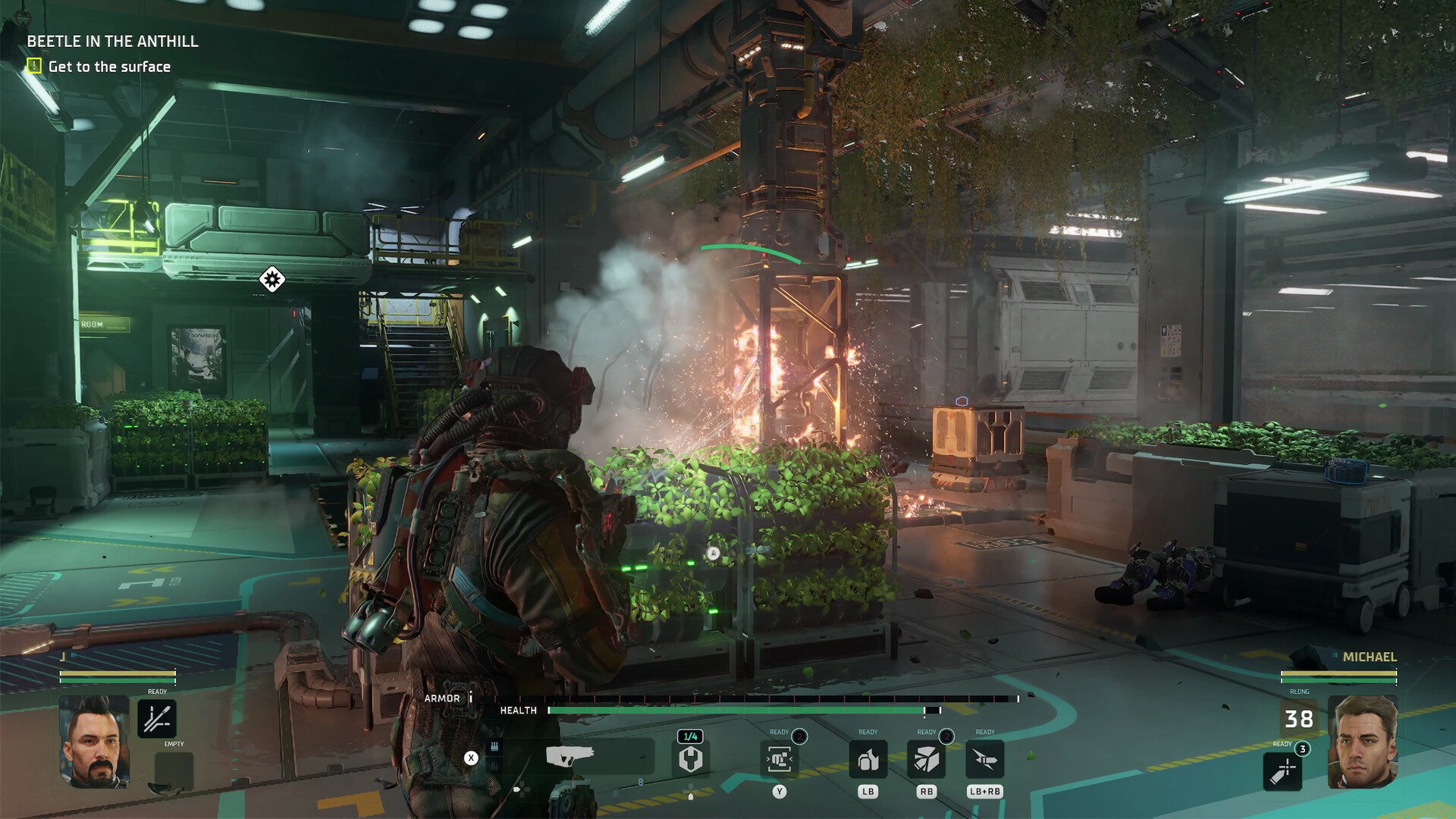
The game includes skill checks in dialogue and exploration that gate optional content. Failed checks do not block the main story, but they can deny access to bonus areas, additional loot, alternate mission approaches, or information that changes how you understand a situation. This means that character build decisions intersect with the choice system: a player who invested in social skills might talk their way past a guard, while a combat-focused player would need to find another route.
Summary of Confirmed Choice Mechanics
Mechanic | Details |
|---|---|
Companion permadeath | Companions can die permanently based on player choices. No reversals. |
Unsignposted decisions | Many important choices are not flagged or highlighted. Side content and offhand remarks can carry real weight. |
Etude system | Proprietary narrative tracking tool recording every decision and flag. Rebuilt from scratch in UE5. |
Faction alignment shifts | Player actions can change standing with Earth, Mars, and Belt factions. Double-agent and alignment-switch paths are possible. |
Origin effects | Earther, Martian, or Belter origin affects initial faction reception and available dialogue. |
Environmental consequences | Decisions change the physical state of locations (e.g., Pinkwater Station after civilian surrender vs. resistance). |
Resource consequences | Choices affect equipment and supply availability (e.g., stocked vs. depleted armory). |
Romance | Available with select companions. Development is organic based on choices and crew dynamics. |
Skill checks | Gate optional content and alternate approaches. Failed checks do not block main story progression. |
No Morality Meter
The developers have been explicit that The Expanse: Osiris Reborn does not include a morality meter or alignment track. There is no hidden paragon/renegade counter, no karma score, and no alignment label that shifts with each decision. Bad and even outright evil choices are available to the player and will be allowed to play out. The point of the choice system is to create divergent paths and lasting reactivity, not to score moral points or to gate content behind a specific ideological label.
This pairs with the unsignposted-decisions design described above: there is no meter ticking up or down on screen to tell the player which option was the "right" one. Outcomes are judged by their consequences in the world, not by a numeric alignment.
No Automatic Right Answer
The dialogue UI surfaces a persuasion option the instant the player's stacked skill score is high enough to trigger it. Picking that persuasion option, however, is not automatically the best outcome. In the closed beta in particular, the biggest branching decision is structured so that the obvious persuasion path produces the worse long-term result, while the quieter option in which the player stands down preserves far more NPCs. The beta uses this specifically to teach players not to reflexively spam persuasion just because the button is lit up.
Companion Approval in Real Time
Decisions are tracked per companion rather than through a single global meter. The player's ongoing standing with Zafar is the clearest example that the closed beta exposes. Zafar is present over the radio during the station-exterior spacewalk escape, and he reacts live to the player's route choices. Ignoring his recommended path sours the relationship audibly in the moment, rather than silently ticking a meter. Developer commentary describes this as an evolution of the traditional approval/disapproval pattern used by earlier companion-driven RPGs, with the emphasis placed on audible, in-fiction reactions instead of invisible bookkeeping.
Because the same crew ship is shared for the whole campaign, these per-companion reactions are expected to compound across the game's planned destinations, including Ceres Station, Ganymede, Mars, Luna, and the asteroid-belt bunker complexes hinted at for the full game.
The Pinkwater Four Encounter
Spoiler warning for the closed beta's central decision.
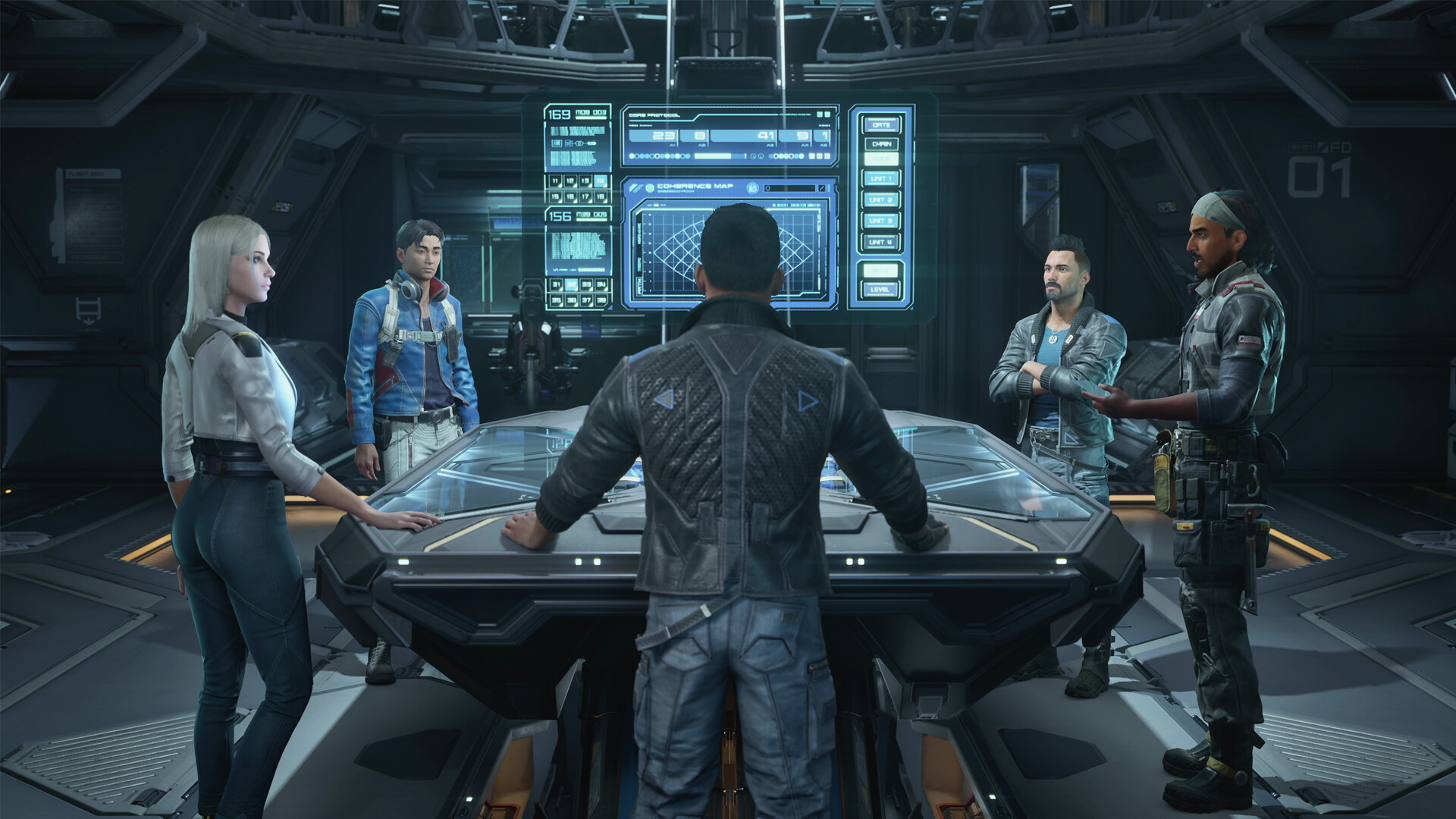
Shortly after the twins report in to Oscar O'Connell, the director of Pinkwater Four Station, a Protogen ship boards and demands that the station turn the twins over. The player is given a decision during the conversation with Oscar. The two outcomes seen in the beta are dramatically asymmetric both in the moment and in their expected long-term ripples.
Choice | Short-Term Outcome | Long-Term Outcome |
|---|---|---|
Persuade Oscar O'Connell to resist Protogen | A handful of station mercenaries fight alongside the twins as NPC allies during the escape firefight. | Protogen executes Oscar and detonates a nuclear device that destroys the entire station and everyone met on it, including Luciana, Larry, and the rest of the Pinkwater Four crew. |
Tell Oscar to cooperate with Protogen and hand over no one | The twins slip out of the station on their own while Pinkwater submits to the boarding party. Station NPCs survive the mission. | Protogen walks off with a cache of private servers containing encrypted personal data on the twins, a thread the developers have confirmed will come back later in the campaign. |
The station's armory state tracks the same choice midway through the level. Standing down keeps the armory stocked, so the player can pull a sniper rifle and other equipment out of it before leaving. Calling for resistance empties the armory in exchange for the station mercenaries who come to help. This is the same branching logic described in earlier sections of this page, now tied explicitly to the decision made with Oscar.
An August 2026 developer post extended that branch further down the campaign. An organised defence gives the player valuable support during the escape but also escalates the attack, while asking the station to stand down leaves a much harder route out yet may keep the conflict from igniting at all. Neither ending is contained to the station: the player may later meet the families of station personnel and see directly how the decision landed on them, and the fallout can reach the people behind the unauthorised raid, particularly where the player's actions let the situation spiral past what those people intended.
Side-Quest Gating: Larry's Painting
Larry, an overworked colleague on Pinkwater Four Station, offers a side quest asking the player to deliver a painting to his mother elsewhere in the solar system. Whether this side quest continues into the later game is gated on the Pinkwater Four encounter: if Larry is killed when Protogen detonates the station, the painting delivery line is expected to change in tone or be locked off entirely. The developers called this out as an example of how short-term decisions ripple into the quest content the player sees dozens of hours later.
The Spacewalk Airlock Fork
During the station-exterior escape sequence, Zafar offers to distract a nearby Protogen ship with the ship's point-defense fire and directs the player to a specific airlock that will be safe once his window opens. The player can instead rush a closer airlock without waiting for the distraction.
Wait for Zafar. The recommended airlock opens cleanly once his distraction lands. Zafar's standing with the player is preserved and the sequence rolls straight into the next combat beat.
Rush the near airlock. An alarm triggers on entry. The player takes a detour to disable the alarm before combat re-engages, and the relationship with Zafar takes a noticeable hit in the moment. This is flagged as a seed for longer-term companion reactivity in the full game.
Skill-Gated Missable Content
Skill checks gate more than dialogue. The closed beta demonstrates four exploration checks and one dialogue check that each yield meaningful missable content. Each check combines the player's own score with the accompanying companion's score, and a consumable focus drug can temporarily raise a non-combat skill by one point on top of that stack. Character creation and progression covers the underlying skill list in detail.
Skill | Check | Reward |
|---|---|---|
Engineering | Opens a broken door early in the station. Failing the check with the baseline score can still be passed by consuming a focus drug to scrape past the threshold, or by bringing a companion whose score stacks with the player's. | A hidden subsystem gear cache behind the sealed door. |
Athletics | Clears a blocked corridor obstacle in the Pinkwater Four interior. | A unique wrist-mounted rocket gadget. |
Perception | Triggers a gaze-reticle mini-check where the player must hold focus on a fixed point without looking away. | Reveals hidden compartments containing a handgun perk set that is meaningfully stronger than anything offered on the standard path. |
Cyber Sabotage (Hacking) | A 15-second number-alignment mini-game on a terminal. Player and companion scores stack, and a focus drug can be applied on top of that stack. | A subsystem blueprint that can be crafted at the nearby fabrication bench on the workbench. |
Persuasion | Opens additional branches in dialogue with station NPCs, in particular with the vendor Luciana, whose gossip unlocks progressively juicier leads across repeated successful checks. | Bonus XP, faction gossip that feeds later content, and occasional extra skill rewards. |
Conversation-Shaped Investigations
Persuasion is not only a gate for information. In the closed beta, successful persuasion checks on the vendor Luciana open progressively deeper layers of gossip: her initial reluctant disclosures expose more leads on continued prodding, turning a single NPC conversation into a mini-investigation rather than a single binary check. Each persuasion success also awards XP, so there is a direct build incentive to exhaust the dialogue rather than walk away at the first answer.
Dialogue Memory
NPCs remember what the player said earlier. Conversations that feel incidental on a first pass can be referenced back by the same NPC after later story beats, and a casually ignored dispatcher during the opening exploration segment is explicitly callbacked later in the beta with different lines. This is a visible application of the article's earlier note that side conversations and offhand remarks carry real weight: the same etude-style tracking that drives major consequences also drives small-scale line variation in repeat conversations.
Shaping a Crew Member: The Mentorship Path
Not every consequential choice is about a station or a faction. An August 2026 developer post singled out Polly, the youngest member of the crew, as a case where the player shapes a person rather than an outcome. At one point the player picks someone from the crew to mentor her, and that pick determines the profession she pursues, unlocks a unique non-combat skill line, changes the role she can play during missions, and influences her appearance.
The named outcomes have her becoming a cautious hacker, a capable engineer, or moving into medicine. The influence itself accrues quietly through conversations, reactions and advice, without the game flagging which moments will matter. It is the unsignposted-decision design described above, applied to a character arc instead of a mission branch.
Faction Relationships and Their Rewards
Earth, Mars and the Belt each weigh the player's actions across the whole campaign rather than at a single checkpoint. Helping one side can create problems for another, and a decision that benefits Earth's supply lines can read as a threat to Mars regardless of intent.
The player can work with different factions at different points, but those decisions become part of the standing relationship with each of them. Keeping everyone content is deliberately difficult, and the developer has said there is only one chance to stay on everyone's good side.
Relationship Outcome | Effect |
|---|---|
Strong standing with a faction | Opens unique rewards, including exclusive items and a faction-specific quest. |
Mission-level support | A faction on good terms can provide direct support during missions. |
Story outcomes | How the player deals with Earth, Mars and the Belt affects how each faction's story resolves, including the fates of important characters. |
See Factions for the political shape those relationships sit inside.
The Archetype System and Epilogues
The game does not ask the player to pick a personality from a list at character creation. Instead an archetype system tracks choices as they are made and builds an identity out of the pattern. Consistently putting other people first, chasing profit, defending a faction, or simply doing whatever keeps the crew alive each pull the character in a different direction.
That accumulated identity is reflected in how certain characters react to the player through the story, and most concretely in the epilogues, which lay out the final destination of the captain and the crew. Because nothing is selected up front, the archetype is a readout of behaviour rather than a declaration made in advance.
Scale of Reactivity in the Full Game
The developers have confirmed that the pattern demonstrated in the beta, per-companion reactivity, skill-gated branches, dialogue memory, and nuclear long-term consequences for short-term choices, will continue through the full campaign. The planned destinations span the Pinkwater Four crew's surviving members (where they survive) and a wider set of locations including Ceres Station, Ganymede, Mars, Luna, and asteroid-belt bunker complexes. Each of these areas is expected to pick up threads seeded in the earlier mission, including the private-server data cache Protogen may walk off with, Larry's painting, and the standing built up with each companion over time. See story and setting and combat and gameplay for related systems that plug into the same reactivity layer.