

Story and Setting
Owlcat has placed the game's events alongside the in-universe timeframe of the first two source-material novels, which roughly correspond to seasons one through three of the source-material television adaptation. This is a period of escalating tension between Earth, Mars, and the Belt, with the discovery of the protomolecule acting as the catalyst for a solar-system-wide crisis. The game tells an original story that runs parallel to the adventures of James Holden and the Rocinante crew rather than retelling those events.
The World of the Expanse
By the time of the game's events, humanity has colonized the solar system but has not left it. There is no faster-than-light travel and no contact with alien civilizations (yet). Human civilization is divided into three major factions: Earth's United Nations, the Martian Congressional Republic, and the Outer Planets Alliance representing the Belt. These three groups are locked in a cold war that threatens to turn hot at any moment.
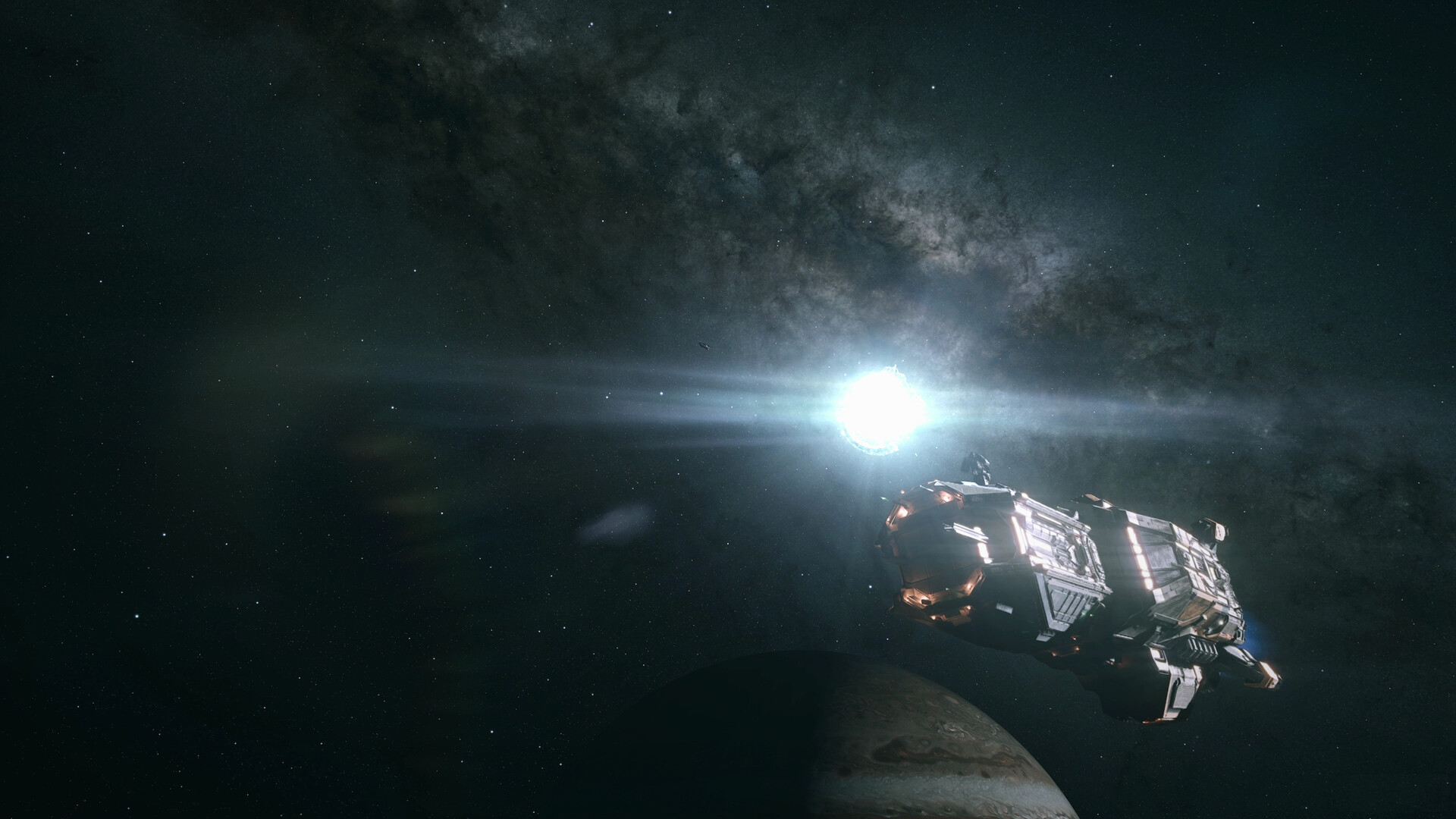
Life in the solar system is governed by physics. Travel between planets takes weeks or months, not hours. Acceleration is measured in g-forces that can crush the unprepared. Gravity on stations is generated by spin, not magic. Resources are scarce, especially in the Belt, where water and air are commodities that people kill for. This grounding in realistic science fiction is what sets The Expanse apart from most space opera settings, and the game reflects that tone throughout.
The Player Character
The player takes on the role of a Pinkwater Security mercenary stationed on Eros Station. Pinkwater Security is a private military company that contracts with corporations and governments across the solar system. The player character's background is determined by their chosen origin (Earther, Martian, or Belter), which affects both the narrative context and how other characters react throughout the game. The player is on shore leave at Eros when the protomolecule incident hits, turning a routine break into a desperate fight for survival.
Story Pacing
The story begins linearly for the first few hours, guiding the player through the Eros incident and the initial escape aboard the Gemini. After this opening sequence, the game opens into a semi-open solar system where the player can choose which locations to visit and in what order. Main story missions provide direction, but players are free to pursue side content, companion personal quests, and exploration between critical story beats. This structure mirrors the pacing of the source material, where the investigation drives the plot forward but detours and character moments fill out the experience.
The Eros Escape
The game opens with the player on Eros when the protomolecule incident begins. The station descends into chaos, and the player barely escapes alive aboard a stolen Protogen vessel: the Gemini, claimed under the legal principle of "right of salvage" during the emergency. The player's twin sibling J and the engineer Zafar escape together, forming the nucleus of the crew that will grow over the course of the game. The opening section on Eros is linear by design, establishing the stakes and the player's motivation before the game opens up into a non-linear structure.
The Protomolecule Conspiracy
The main narrative revolves around the protomolecule, an alien substance with the ability to restructure biological matter. The protomolecule was discovered by Protogen, a powerful megacorporation with connections to inner-planet governments. Rather than disclosing the discovery, Protogen began experimenting with the substance in secret, including conducting horrific tests on human subjects.
The developer has stated that the game shows a different branch of Protogen than the one followed in the source material, so the player's investigation leads to a separate network of Protogen facilities, operatives, and experiments. This allows the game to explore the protomolecule conspiracy from a new angle without contradicting source-material canon.
Project Caliban
One of the threads the player uncovers is Project Caliban, Protogen's program to create protomolecule-human hybrids as weapons. These Caliban subjects are encountered during the game as enemies, and they represent some of the most dangerous threats the player will face. The project ties into the events of Caliban's War and connects the game's story to the broader lore.
The Caliban subjects are not mindless monsters. They are the result of deliberate experimentation, and the ethical horror of what was done to create them is a recurring theme. Encountering a Caliban subject feels different from fighting ordinary human enemies; these are something else entirely, and the game's tone shifts when they appear.
Connections to the Books and Show
James Holden, a source-material protagonist, appears in the game only via broadcast message, and not with the voice actor from the television adaptation. These broadcasts provide context for the broader political situation and occasionally intersect with the player's own investigation. Background NPCs reference source-material events, grounding the player's story in the same in-universe timeline.
The game's title, "Osiris Reborn," appears to reference a Protogen stealth frigate from the source material. The connection has not been officially confirmed by the developer, but the naming convention and Protogen ties make it a plausible inference.
TV Series Cast Involvement
Game Design Director Leonid Rastorguev confirmed that some actors from the 2015 Expanse TV series will reprise their roles in Osiris Reborn through voice acting and digital scanning. This means select characters from the show appear in the game with the same actors providing performance capture and voice work. No specific actors have been officially named as of the March 2026 reveal.
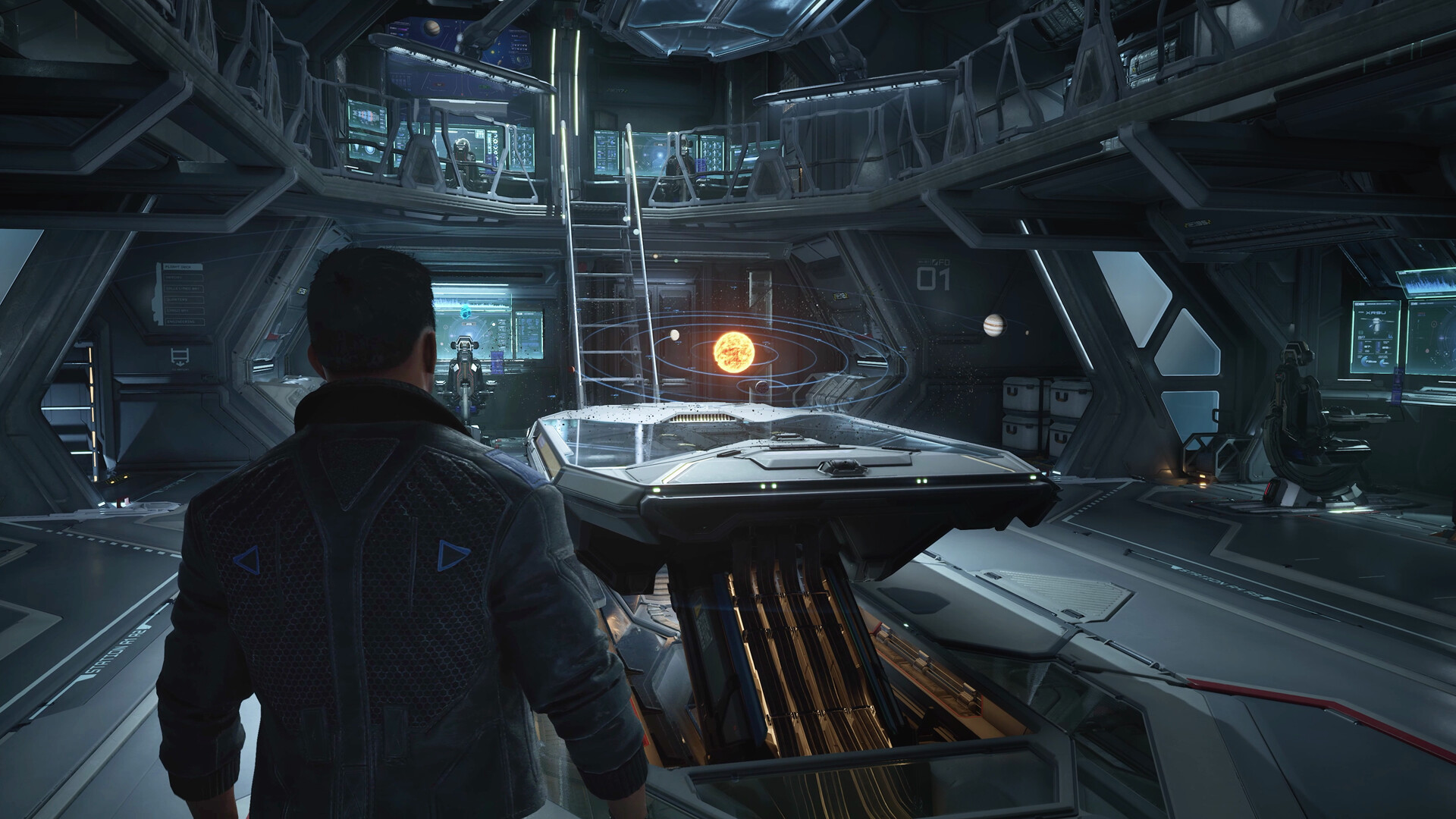
James Holden, a source-material protagonist, appears in the game via broadcast message but without the voice actor from the television adaptation. Holden's presence is contextual rather than interactive, placing the player's story within the same in-universe timeline as the events Holden is involved in without requiring the player to meet him directly.
Player Choice and Consequences
Dialogue choices are a core part of the storytelling. Conversations with NPCs, companions, and faction representatives offer branching options that affect how the story unfolds. Some choices have immediate consequences (angering an NPC, unlocking a side quest, losing access to a vendor), while others have ripple effects that only become apparent hours later. The developers have emphasized that choices are not signposted with obvious moral labels. There is no "good" or "bad" tag on dialogue options.
The Pinkwater Station scenario is a good example of how choices work. The player can convince civilians to resist a Protogen assault: some will die in the fighting, but the player gains allies and resources. Or the player can order a surrender: civilians survive, but the armory stays stocked for Protogen to claim, and the player loses potential support. Neither option is clearly "correct." Both have costs and benefits.
The most significant choices tie into the companion permadeath system. How the player treats their crew, which missions they prioritize, and how they handle critical story junctures all contribute to determining which companions survive the story.
Environmental Storytelling
Beyond dialogue and cutscenes, the game uses environmental storytelling to fill in the world. Encrypted notes found on datapads, audio logs left by station residents, graffiti on walls, and the physical condition of the spaces the player moves through all tell stories. A corridor with blast marks and sealed bulkheads tells you something happened here. An abandoned hab unit with personal effects scattered across the floor tells you someone left in a hurry. The February 2026 developer tease about Luna confirmed that political intrigue would extend into environmental details, with station histories and factional power plays visible in the architecture and signage of Lovell City.
Timeline Placement
For people familiar with the source material, the game's story spans the in-universe period covered by the first two source-material novels and roughly the first half of three seasons of the television adaptation. The player is not any of the established source-material protagonists. Instead, they are an original character operating in the same in-universe period. Source-material events (the Eros incident, the Ganymede crisis, the protomolecule conspiracy) form the backdrop of the game's story without requiring the player to step into the shoes of an established character.
Placement in the Expanse Timeline
The game is an original story set concurrently with roughly the events of the first two novels in the source series and about the first 2.5 to 3 seasons of the television adaptation. The Eros incident is the inciting event. Source-material protagonists exist on the periphery of the game's narrative: their broadcasts, news reports, and reported actions show up as backdrop on station screens and in NPC chatter, but the twins' story is its own arc set against those events. The developer has confirmed room for source-material cameos without committing to which characters those will be.
The choice of timeframe also governs what parts of the Expanse universe show up. The cold standoff between Earth, Mars, and the Belt is already tightening, the Belt's infrastructure is already strained, and the first public ripples of the alien substance at the heart of the larger crisis are already in circulation. The player enters a solar system that is visibly about to go wrong, rather than one still in denial about its own fragility.
One concrete flashpoint anchors that tension. Early in the story, Mars is accused of destroying the ice hauler Canterbury, a freighter that had been carrying ice toward Ceres Station. With its water supply suddenly cut, the Belter population of Ceres turns hostile toward inners, and toward Martians most of all. The accusation pushes the long Earth-Mars rivalry closer to open conflict and gives the player's chosen origin immediate weight, since a Martian arriving on Ceres after the Canterbury is met very differently from a Belter who calls the station home.
The Twins Premise
The protagonists are a pair of biological twins working as Pinkwater Security mercenaries. The player creates one sibling; the other, J (sometimes styled Jay in dialogue), is the only companion available throughout the closed beta. The twins share a single call sign, Gemini, which is also the name of the ship they fly for the rest of the campaign after the opening arc.
In the full character creator, the twin's gender and appearance mirror the player's. A female player character produces a female twin, a male player character produces a male twin, and the twin's face and build are derived from the player's rather than hand-authored. The beta locks this down to two presets per background, with the Belter preset defaulting to female and the Earther preset defaulting to male, though character creation in the full game lifts that restriction.
Mechanically the twin is written as a true peer rather than a silent follower. J has independent dialogue with station NPCs, can initiate conversations the player has not triggered, and frequently says more in a given scene than the player character. This is a deliberate part of the story premise: the twins exist as a joint unit whose perspectives are supposed to back each other up in conversation the way they back each other up in combat.
The Opening Arc at a Glance
The beta's single playable mission covers the immediate aftermath of Eros and sets up the rest of the campaign. The overall shape is a crisis triggered off-screen, a short breathing space on a friendly station, and then an escalating fight to escape before the hostile corporation catches up. The table below summarizes each beat.
Beat | What Happens | What It Sets Up |
|---|---|---|
Eros Disaster | The twins and the crew of the Piranha are aboard Eros Station when the incident hits. The Piranha and her captain are lost in the chaos of the evacuation. | Establishes the twins as survivors of an event the rest of the universe already recognizes from a different angle, and puts them on the back foot before the main story has even started. |
Piranha to Gemini | The twins seize one of the attacking ships to get off Eros alive. That commandeered vessel becomes the Gemini, matching the twins' shared call sign. | Gives the twins a ship with a paper trail back to the hostile corporation and sets an immediate external pressure (recovery of the stolen ship) that will chase them through the opening arc. |
Debrief on Pinkwater Four | The twins dock at Pinkwater Four Station and meet director Oscar O'Connell, the vendor Luciana, and an overworked resident named Larry. They can explore, read station datapads, and pursue optional dialogue and skill checks before the next combat beat. | Populates the opening station with the supporting cast whose fates will be decided during the crisis, and threads in exploration skill checks, persuasion gossip, and side content such as Larry's painting delivery. |
Protogen Arrives | Protogen catches up to the twins at Pinkwater Four and demands the twins and the Gemini be handed over, putting the entire station in their line of fire. | Establishes Protogen as the active antagonist force pursuing the twins personally, not just as an abstract conspiracy in the background. |
The Pinkwater Four Choice | Through Oscar, the player either presses Pinkwater into a defensive fight or tells the station to stand down. Both paths lead to a fighting retreat to the Gemini, but through very different station conditions and armory access. | Drives the beta's central choices and consequences loop: short-term gains or losses in NPC allies and armory stock, and long-term stakes in surviving NPCs, surviving Pinkwater infrastructure, and whether Protogen walks off with the twins' private data. |
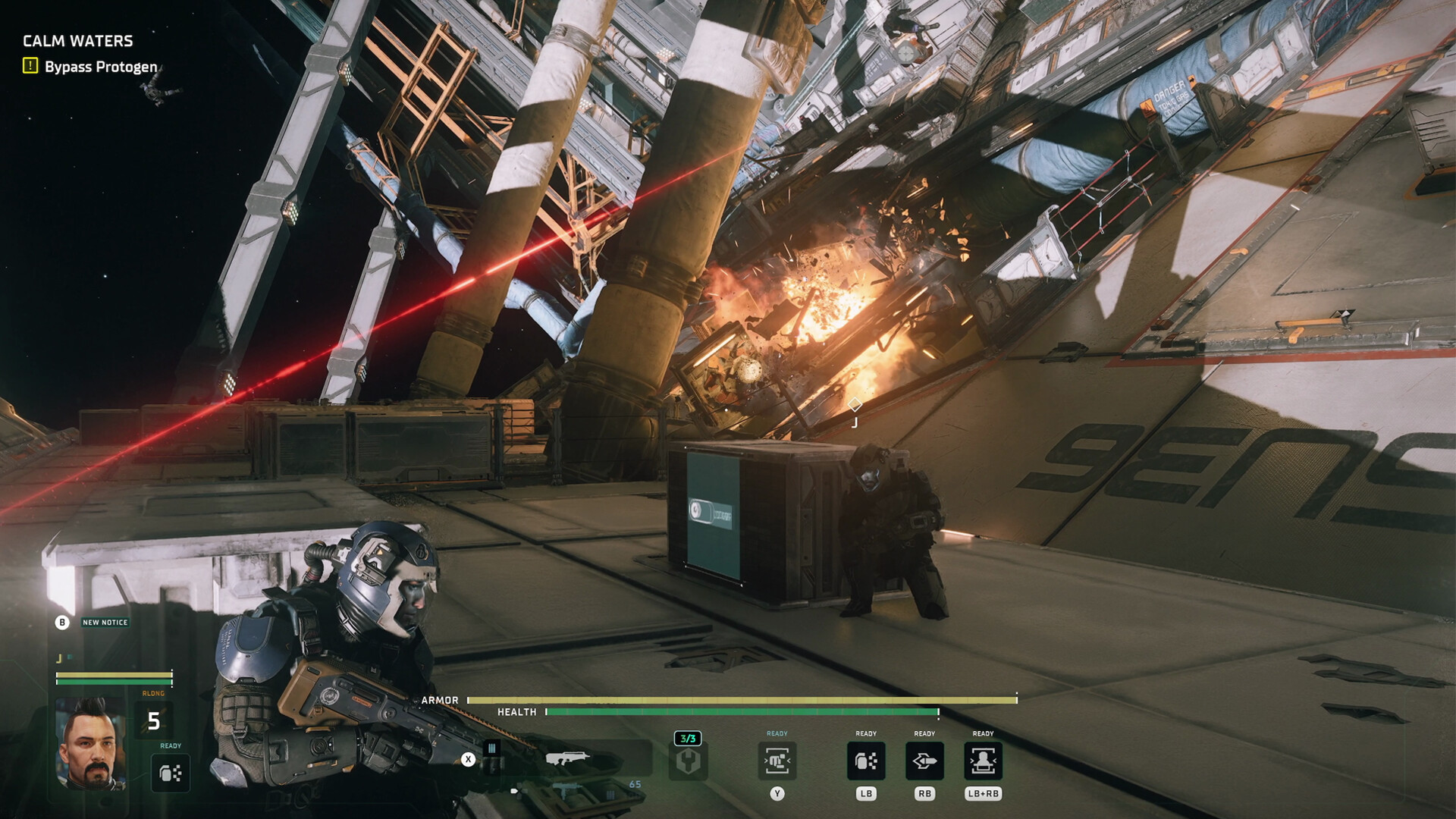
Spacewalk Escape | The twins move to their ship via the station exterior, fighting boarders through magnetic-boot EVA sections while Zafar covers them from the Gemini's PDCs. | shows the grounded vacuum sound design and the kind of choreographed on-foot plus ship-support action the full campaign is built around. |
Supporting Cast on Pinkwater Four
The Pinkwater Four opening leans on a small, handcrafted cast rather than a roaming population of nameless crew. Every named NPC met during the exploration segment has a direct or indirect role in the crisis that follows. The table below captures the ones that have been confirmed in the closed beta.
NPC | Role on Pinkwater Four | Why They Matter To The Story |
|---|---|---|
Oscar O'Connell | Director of Pinkwater Four Station and the twins' boss. | Debriefs the twins on the loss of the Piranha and sits at the center of the beta's major persuasion fork. Persuaded to resist Protogen, he is executed and the station is destroyed. Told to stand down, he lives and the station survives. |
Luciana | Weapons and goods vendor on Pinkwater Four, and a gossip broker. | Successful persuasion checks against her unlock progressively deeper gossip layers that reference figures tied to the Martian Congressional Republic, turning what looks like a flavor conversation into a continuing investigation thread. |
Larry | Overworked colleague on Pinkwater Four. | Hands the player a personal side quest: deliver a painting to his mother elsewhere in the solar system. Whether the side quest survives into the later campaign is gated on the station's fate from the Oscar decision, turning a small errand into a long-tail consequence. |
The twins' pilot and engineer, operating from aboard the Gemini. | Directs the spacewalk escape over radio and operates the ship's PDCs as ranged fire support. He tracks the player's decisions in real time and audibly reacts, seeding the game's longer per-companion reactivity rather than a single global meter. |
Station flavor around these NPCs reinforces the mercenary-life register the writing is targeting. A technician quietly swears at the schedule while rewiring a fuse box, a civilian watches a news broadcast about a survivor rescue and refuses to believe it without another message from Holden, a dispatcher gets snapped at by J during docking and quietly holds a grudge, and a crewmate (Vic) is mentioned by Oscar but never directly present. Small interactions like these carry dialogue callbacks later in the mission, so a throwaway exchange with a dispatcher can change the tone of a later scene.
Protogen as the Active Antagonist
Protogen is not a distant conspiracy in the opening arc. The corporation is the force actively chasing the twins. Their motivation is pragmatic rather than ideological at this stage of the story: the twins stole one of their ships during the Eros disaster, and their data and personnel records are loose ends Protogen would like to recover. Over the course of the beta Protogen demonstrates that they are willing to execute allies and detonate a nuclear device on a Pinkwater installation to recover that ship, setting the stakes for later confrontations.
This positioning also tightens the link between the corporation's public face and its hidden protomolecule research. The same network that the twins are running from has visible above-board operations: mercenary boarding teams, corporate dispatchers, recovery contracts, civilian-facing vendors. The game uses the opening arc to show the ordinary corporate infrastructure behind the catastrophe that the wider universe is only beginning to understand.
Player Agency and Reactivity
Decisions in the opening arc are meant to teach the player how the rest of the campaign will work. There is no morality meter, no paragon or renegade track, and no alignment-colored dialogue options. Instead, choices and consequences work through three layers: per-companion reactions (Zafar tracks approval live during the escape), branched short-term scenes (Pinkwater Four's fate, armory access, spacewalk airlock paths), and seeded long-term consequences (Larry's painting side quest, Protogen's potential acquisition of the twins' private servers, the fates of any surviving station NPCs).
The loop is designed so that the "obvious" dialogue button is not always the best one. In the opening arc, the persuasion option lights up the moment the player has the skill score to trigger it, and selecting it to pressure Oscar into a stand actively makes the long-term outcome worse. The design intent is to make the player stop and read what they are actually agreeing to, rather than treating persuasion as a free win.
Expanse World Textures in the Opening
The opening arc is also a show for the texture of the setting. Visible Inner versus Belter social tension runs through background dialogue and through the Belter character models, which are rendered noticeably taller and more elongated than their Inner counterparts. The game makes this difference legible without dialogue: a Belter protagonist stands head and shoulders above NPCs in cutscenes, and is visibly different when framed next to an Earther companion.
Belter Creole speech patterns, the distinctive blend of accents and loanwords that mark the Belt in the source material, are not yet fully represented in the closed beta. Belter and Earther presets currently deliver near-identical lines with near-identical voice direction, which the studio has flagged as an area still being built out ahead of launch. The rest of the Expanse soundscape is further along: muted gunfire in vacuum, vibrations conducted through the suit rather than through air, and pings off nearby surfaces are all tracked as part of the grounded sound design the full game is targeting.
Everyday mercenary life is layered on top of that political backdrop. Station NPCs grumble about long rotations without shore leave, the vendor trades in gossip and cheap gear alongside her serious merchandise, and the twins pick up a paperwork-grade side quest about delivering a painting for a tired coworker. That ordinariness is the point: the setting is sold as one where grand political crises and petty day-to-day irritations happen in the same corridor.
Full-Game Scope
The developer has publicly described the full campaign as extending well beyond the Pinkwater Four opening. Confirmed destinations include Ceres, Ganymede, Mars, Luna, and asteroid-belt bunker complexes not yet named. Each of these locations is expected to plug into the same reactivity layer the opening arc establishes, so that decisions about Oscar, Larry, and Protogen's data haul compound as the twins move between stations.
The full-game scope also expands the crew. The opening arc's two-person team of the player and J grows across the campaign into a seven-companion roster with romance options and dedicated personal quest lines. Zafar, the pilot and engineer on the Gemini during the beta, is one of those companions, and the real-time approval behavior he demonstrates on the spacewalk is an early sample of how all seven are tracked through the rest of the game. See companions for the roster overview, and the individual companion pages for what is known about each one's personal quest line.
Tone Target
The story is explicitly aimed at the Expanse's grounded register rather than at space-opera power fantasy. The developer has framed the target as political intrigue, personal drama, believable technology, and real danger in vacuum. Combat and narrative design back each other up in support of that register: combat and gameplay keeps the player in cover, lethal, and reliant on the squad; zero-gravity mechanics turn every exterior fight into a deliberate, physics-respecting exchange; and the dialogue system refuses to tell the player when a choice is the virtuous one. The promise of the opening arc is that the rest of the campaign will hold to the same standard, with the same sense that the universe is on the edge of something much larger than the twins' immediate survival.
The Closed Beta as Story Sample
The closed beta is positioned as a vertical slice, not a demo of the full arc. A single story mission (Pinkwater Four) runs roughly one to two and a half hours, depending on how thoroughly the player explores, how many skill-gated pockets they unlock, and whether they replay the mission with a different preset to see alternate dialogue. Main-character creation is reduced to four pre-made slots (Belter Officer, Belter Hacker, Earther Officer, Earther Hacker); the Martian background and the full appearance editor are held for the retail release.
The beta's limited scope is deliberate. The developer's stated intent is to gather feedback on game feel, dialogue flow, mercenary-life tone, and choice reactivity rather than to advance the player through a large fraction of the campaign. Story elements that the opening arc only hints at, including cameo appearances, Protogen's wider operations, and the fate of the twins' private data, are expected to be elaborated in later builds and in the full release.