

Locations
The Expanse: Osiris Reborn takes players across the solar system, from the asteroid belt to the moons of Jupiter to the surfaces of Earth's Moon and Mars. Each location is drawn from the setting established in The Expanse books and TV show, and the developers have focused on making each one feel distinct in atmosphere, population, gravity conditions, and available activities. Every major location has a social hub with bars, gear shops, vendor NPCs, companion downtime activities, and ambient characters providing world-building dialogue.
Creative Director Alexander Mishulin has described the studio's approach to world design: "Every place in The Expanse tells a story. When we recreate locations like Ganymede or Ceres, It covers making them look authentic and capturing the struggles and hopes of the people who live there. That sense of survival and consequence is what we want players to feel as they move through the game."
The opening section on Eros is linear by design, establishing the stakes and the player's motivation. After escaping aboard the Gemini, the game opens up into a non-linear structure where the player chooses their next destination from the ship's navigation console. Confirmed visitable locations include Ceres Station, Ganymede, Mars, Luna, Io, and Pinkwater Station, along with assorted bunker complexes and mining outposts scattered throughout the asteroid belt.
Eros Station
Eros is where the player's story begins. A spinning asteroid station in the Belt, Eros has a reputation as a seedy, overcrowded hub where anything can be bought for the right price. The station's corridors are cramped, poorly maintained, and packed with Belters living in conditions ranging from uncomfortable to squalid. Fans of The Expanse will recognize Eros as the site of the protomolecule incident, one of the most significant events in the series' timeline.
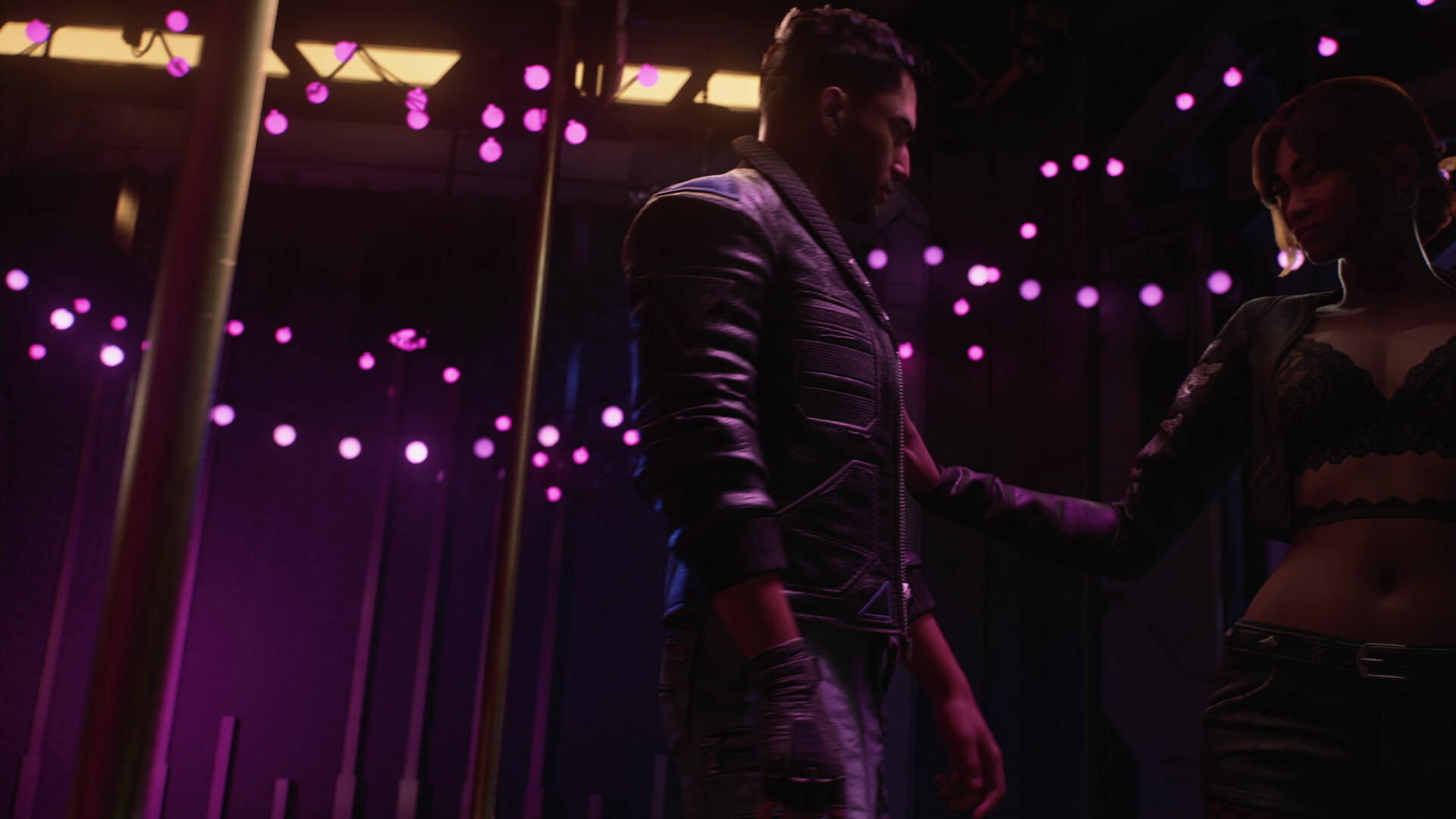
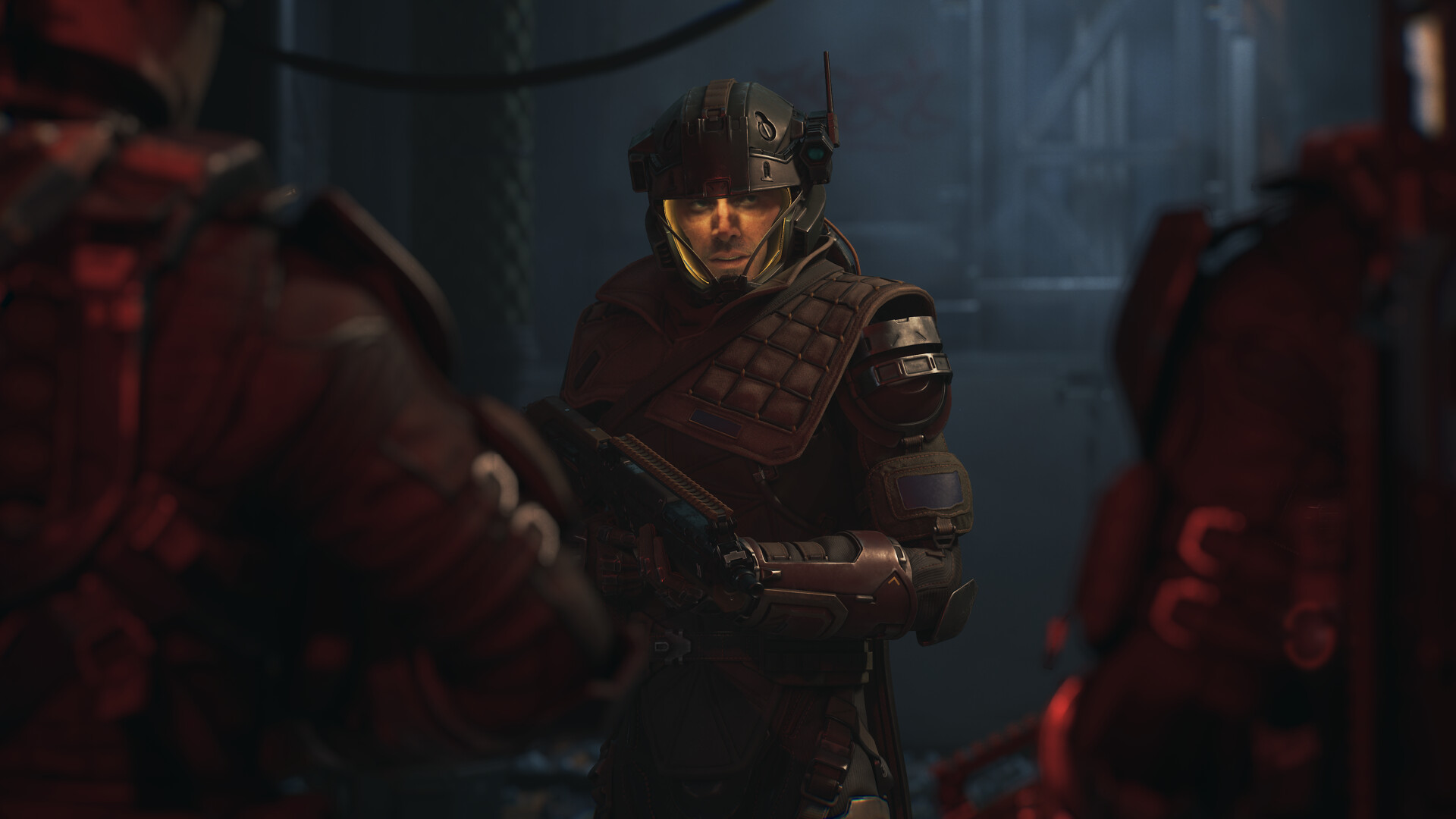
The game begins during this incident, with the player's Pinkwater Security team caught in the chaos as the situation on Eros rapidly deteriorates. The opening sequence is linear by design, funneling the player through the collapse of the station as they fight to escape aboard the Gemini. A widespread massacre of thousands of innocent people unfolds around the player, and this event is the emotional catalyst that drives the rest of the narrative. After the escape, the game opens up into a non-linear structure where the player chooses their next destination.
Before the incident, Eros functions as an early social hub where players can interact with NPCs, visit bars and shops, and get a feel for Belt culture. The station's rotation provides simulated gravity, though it is noticeably lower than Earth standard, and the Coriolis effect is present in gameplay.
Ceres Station
Ceres is the largest station in the Belt and is the game's primary social hub. Carved out of the dwarf planet Ceres, the station is a vast, multi-layered city that houses millions of Belters. It is the de facto capital of the Belt and the political center of the OPA (Outer Planets Alliance). The Gamescom 2025 environments show described Ceres as having "dark corridors" and an "OPA extremist population," where tensions between Belter residents and inner-planet visitors simmer constantly.
As a hub, Ceres offers the widest range of social interactions, shops, side quests, and NPC encounters in the game. Bars, marketplaces, docking bays, and residential tunnels fill out the explorable areas. The station's gravity is generated by its spin, and players will notice differences in how movement feels compared to smaller stations. Belter Creole language is spoken openly on Ceres, and NPCs use the distinctive hand gestures of Belt culture.
Ceres is politically charged. The player's origin heavily influences how the inhabitants react. Earthers and Martians face hostility: prices may be higher, NPCs may refuse to share information, and certain quest givers only work with Belters. A Belter player character receives a warmer welcome and gains access to side content that other origins cannot reach.
Ganymede
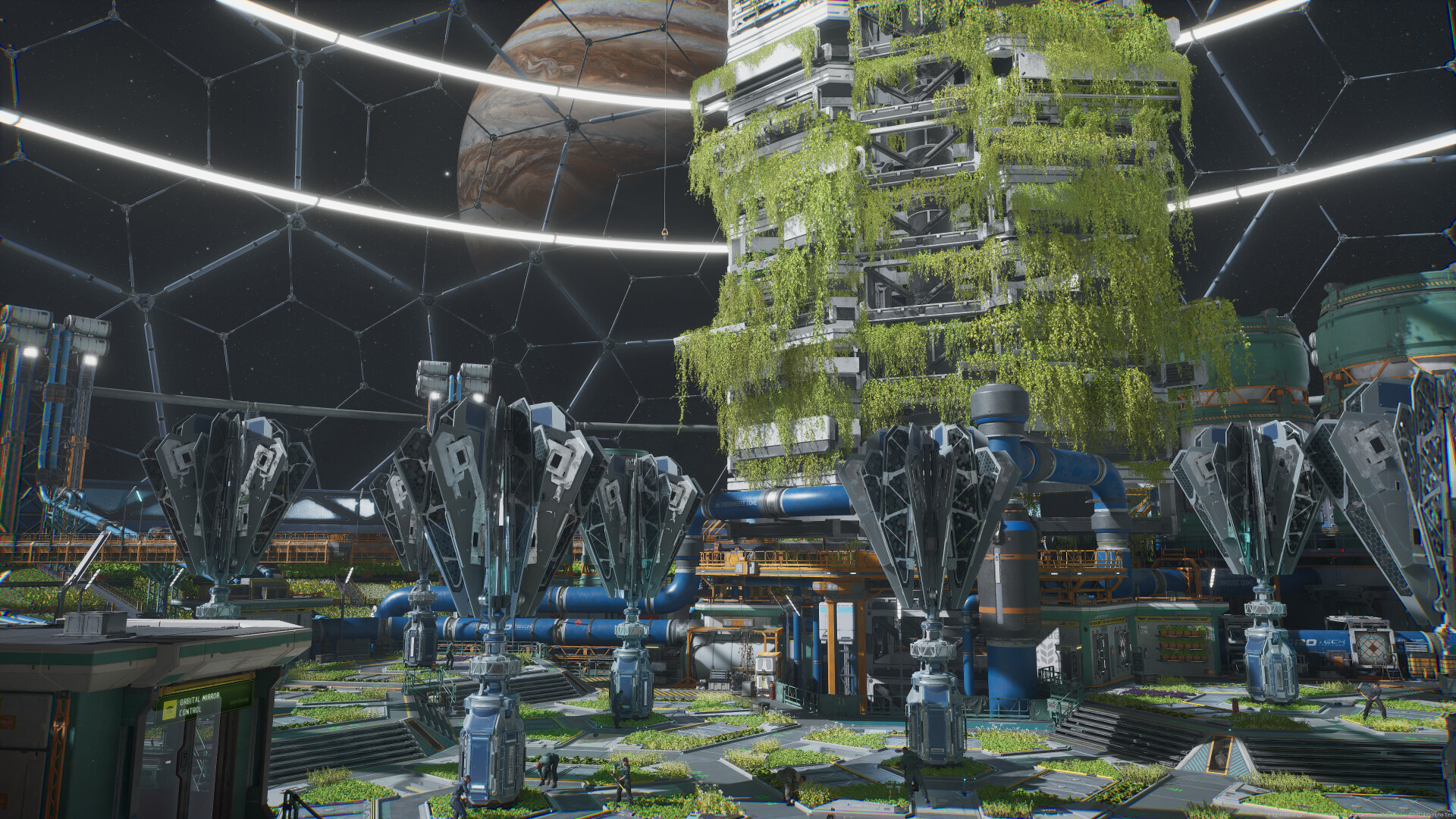
Ganymede, Jupiter's largest moon, is known in The Expanse as the breadbasket of the outer planets. Its surface has the "gardens of Ganymede": vast domed agricultural complexes that use mirrors to direct sunlight onto crops. These gardens are a lifeline for the Belt, producing much of the food that sustains the outer-planet population. The Gamescom 2025 environments trailer highlighted Ganymede's "fragile ecosystems" and "lush gardens," making the domed agricultural zones one of the most visually striking environments in the game. Green plants, artificial sunlight, and open spaces contrast sharply with the metallic industrial aesthetic found elsewhere.
In the game, Ganymede is a location with a mix of above-ground dome environments and underground facilities. Beneath the surface, the station's infrastructure is more typical of Belt construction, with narrow corridors and utilitarian design. A UNN (United Nations Navy) military presence is established on the moon, adding political tension to an already precarious food-production colony.
Ganymede plays an important role in the game's story, connected to events surrounding Project Caliban, the Protogen program to weaponize the protomolecule. Players who have read Caliban's War will recognize the significance of what happens on and around this moon.
Mars
Mars is the homeworld of the Martian Congressional Republic (MCRN) and the second most powerful political entity in the solar system. The planet is in the middle of a centuries-long terraforming project, and Martian society is organized around that generational goal. Discipline, purpose, and military strength define the culture. The Gamescom 2025 environments show described Mars and Luna as "imperious political bastions," reflecting the planet's militaristic governance and its population's collective dedication to the terraforming dream.
Players who chose the Martian origin will feel a sense of homecoming when visiting Mars, while Earthers and Belters encounter varying degrees of suspicion. The MCRN maintains a heavy presence throughout the areas the player can visit. The contrast between Mars's ambitious vision of a green, habitable future and the current reality of a barren world is a recurring theme.
Luna and Lovell City
Earth's Moon (Luna) is home to Lovell City, which is the effective capital of the United Nations in The Expanse universe. Lovell City is a sprawling underground metropolis built into the lunar surface, with artificial skies projected onto the ceiling of its vast caverns to simulate daylight. Alongside Mars, Luna is described as one of the "imperious political bastions" in the solar system, though here the corridors of power represent Earth's diplomatic establishment rather than military authority.
Concept art for Luna was revealed in February 2026 alongside a developer tease about political intrigue and bureaucracy as gameplay elements. The implication is that Lovell City is not just a combat location but a place where the player navigates UN politics through dialogue, skill checks, and factional maneuvering. The city's architecture is more polished than Belt stations, with wide promenades, government buildings, and residential quarters reflecting Earth's wealth and political influence.
Io
Io, one of Jupiter's innermost moons, is a volcanically active world with a surface extremely hostile to human life. In The Expanse lore, Io hosts secret research facilities connected to the protomolecule conspiracy. The moon's remoteness and dangerous conditions make it an ideal hiding place for operations that powerful interests want to keep secret. In the game, Io is expected to serve as a late-game location tied to the main story's climax, with connections to both Project Caliban and Protogen's broader agenda.
The Gemini
The Gemini is the player's ship and mobile hub throughout the game. Commandeered by force during the escape from Eros, it is described as "the most advanced ship in the whole of the solar system." Travel between locations takes place aboard the Gemini, and the ship functions as a home base where crew relationships develop over time. Companions spend their downtime on the ship, and players can interact with crew members between missions to build trust, resolve conflicts, and unlock personal storylines.
Ship combat is described as "primarily cinematic" rather than a direct gameplay mechanic. When hostilities arise during transit, encounters play out through scripted sequences and player decisions rather than a separate ship combat system. The focus remains on ground-based combat and story choices.
Pinkwater Station (Pinkwater 4)
Pinkwater Station, also referred to as Pinkwater 4, is the player's home base outside of the Gemini. It is a spin station associated with Pinkwater Security, the private military company that employs the player character at the start of the game. According to the developers, it "wasn't featured in The Expanse show or books, but we wanted you to learn more about this company, and explore one of its bases." The station has a marketplace with vendors selling weapons, armor, gadgets, and consumables, as well as a station administrator who the player can interact with in meaningful ways.
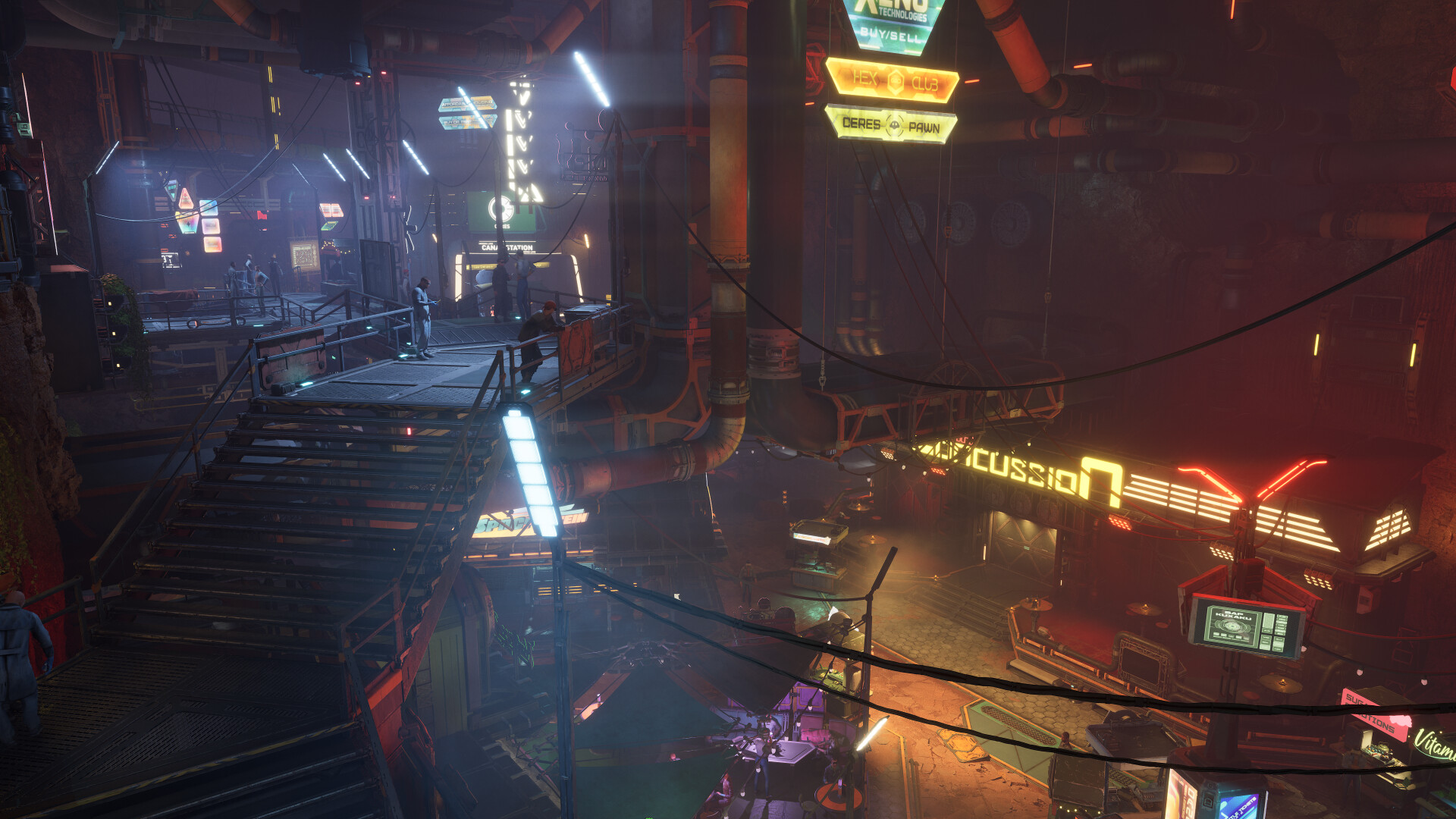
Press previews described Pinkwater Station as packed with environmental detail, with materials and texture work giving the station a genuine, lived-in feel. NPCs gossip about the news, and the atmosphere conveys an operational military facility where people actually live and work. The Gamescom 2025 environments show highlighted the "industrial sprawl" of Pinkwater as a contrast to the agricultural gardens of Ganymede and the political architecture of Mars and Luna.
One of the game's early branching choices involves Pinkwater Station. The player can persuade the station administrator to arm the civilian inhabitants against a Protogen threat. This decision has consequences: armed civilians can help defend the station but some may die in the fighting, whereas leaving them unarmed means fewer casualties but less help and a stocked armory that goes unused. Pinkwater Station is also where the closed beta mission takes place, with players returning from Eros on the commandeered Gemini to confront a powerful enemy and earn the title of captain.
Asteroid Belt
Beyond the named stations, the asteroid belt contains bunker complexes, mining outposts, and hidden facilities that the player visits during various missions. These locations tend to be smaller and more combat-focused than the major social hubs, featuring tight corridors, industrial machinery, and frequent zero-gravity sections. The Gamescom 2025 trailer described these as "whole bunker complexes veiled in the vastness of the Asteroid Belt."
Gravity and Environmental Design
Each location in the game features distinct gravity conditions that affect movement and combat. Belt stations like Eros and Ceres generate simulated gravity through rotation, resulting in lower gravity than planetary surfaces and a noticeable Coriolis effect. Mars and Luna provide partial gravity on their surfaces. Zero-gravity sections appear throughout space stations, ship exteriors, and asteroid belt installations.
The developers implemented magnetic boots as the primary tool for navigating zero-gravity environments, allowing players to anchor to surfaces while preserving responsive movement during combat. This replaced earlier free-flight prototypes that caused motion sickness in testing. Owlcat collaborated with former NASA pilot and ISS commander Leroy Chiao to incorporate realistic details into the environmental design, from muffled sound effects in vacuum to the behavior of grenades equipped with small propulsive jets.
The developers have emphasized that the solar system looks different from every planet and every asteroid. Each location presents a unique view of the surrounding space, with different planets, moons, and stars visible depending on where the player currently is. As the developers put it: "The system looks different from every planet and from every asteroid. Some are falling apart. Others just hide it better." This attention to astronomical accuracy reinforces the grounded science fiction aesthetic that defines The Expanse setting.
Location Summary
Location | Type | Notable Features |
|---|---|---|
Belt station (early game) | Starting location, protomolecule incident, linear opening | |
Belt station (primary hub) | Largest hub, OPA presence, Belter Creole, extensive shops and side quests | |
Jupiter moon | Domed gardens, fragile ecosystems, UNN military presence, Project Caliban connections | |
Planet | Military facilities, terraforming infrastructure, MCRN stronghold | |
Earth's Moon | Underground metropolis, artificial skies, UN capital, political gameplay | |
Jupiter moon | Volcanic surface, secret research stations, late-game location | |
Ship (mobile hub) | Player's ship, crew interactions, cinematic ship combat, navigation console | |
Asteroid belt | Player home base, marketplace, vendors, branching story choices, closed beta mission | |
Asteroid Belt (various) | Bunker complexes | Combat-focused missions, mining outposts, zero-g encounters |
Pinkwater Four Station in the Closed Beta
Pinkwater Station, formally called Pinkwater Four, is the home location of the closed beta and the first hub players actually walk through. It is a spin station operated by Pinkwater Security and orbits within clear view of Jupiter, a framing most visible in the game's main menu art where the station sits against a starfield with Jupiter hanging in the distance. A soft orchestral rendition of the main theme plays over the menu as the station rotates in the background.
The beta's story drops the player and their twin J onto Pinkwater Four immediately after they escape the opening attack on Eros Station. Arriving aboard a ship stolen from their attackers, the twins must debrief their boss, Oscar O'Connell, Director of Pinkwater Four, before Protogen catches up to reclaim both the ship and the siblings themselves. The beta's entire one-story-mission span plays out in and around this station, making Pinkwater Four the most thoroughly documented location so far.
Interior Zones
Pinkwater Four is walked rather than loaded as discrete scenes. The explorable interior flows from the docking bay out into a wide social hub, then branches toward residential bunks, Oscar's office, the station armory, and eventually out onto the exterior hull for EVA. Notable NPCs encountered on the station include Oscar O'Connell (the director), Luciana (the weapons and goods vendor), and Larry (an overworked crewmate who offers a side quest about delivering a painting to his mother). A fourth crewmate, Vic, is referenced by Oscar but is not directly present in the beta's timeframe.
Zone | Role in the Beta |
|---|---|
Docking Bay | The player and Jay arrive here on the ship they commandeered during the Eros escape. The dispatcher scene that opens the beta happens on the walkway out of this area. |
Social Hub | A wide communal concourse with a large news screen near the ceiling that cycles ongoing events, including the situation aboard the Rocinante and other setting-wide developments. NPCs pause in groups to watch and comment. |
Residential Block | Crew bunk rooms, card tables, and personal clutter. A crewmate named Larry can be found here, overworked to the point of needing a favor from the twins. A hidden bottle stashed in a shower and a small cleaner bot with a smiley face are the sort of flavor details that fill the corridors. |
Vendor Stall | Luciana runs the station's weapons and goods counter. Persuasion checks unlock layered gossip about fellow Pinkwater personnel, including information relevant to the Piranha's captain and the MCR. |
Director's Office and Private Server Room | Oscar O'Connell's office, attached to a room of private servers that Protogen forces try to seize during the raid. The fate of these servers depends on the player's choice during the Protogen confrontation. |
Armory | A stocked weapons cache whose contents depend on earlier choices: persuading Oscar to let the civilians fight leaves the armory empty by the time the player reaches it, while telling Pinkwater to stand down leaves it full and available for looting. |
External Hull Corridors | The station exterior can be walked using magnetic boots. Enemies fight on the outside of the hull under the same rules, and the Gemini's point-defense cannons can tear openings through the walls for alternate routes. |
Environmental storytelling fills the corridors. NPCs gossip about the news, chat about how long it has been since their last leave, and debate rumors before the player is even in earshot of the first quest. A news screen near the ceiling of the social hub plays what is effectively a universe-wide broadcast, and smaller props such as a hidden liquor bottle, a collectible beverage jug, and a roaming cleaner bot with a smiley face sell the station as a place where people actually live and work between shifts.
Pinkwater Four Signature Moments
Exterior EVA during the Protogen pursuit: the player uses magnetic boots to walk along the hull, fighting a boarding party in vacuum while Zafar directs support fire from the Gemini's point-defense cannons, which rip openings through the outer plating for alternate routes.
Airlock decision: the player either waits for Zafar to distract an enemy ship and use his recommended airlock, or rushes a nearer airlock and trips a station alarm. Ignoring Zafar's routing registers as disapproval he carries forward.
Station-defense decision: the player can persuade Oscar O'Connell to arm Pinkwater's civilians against Protogen or advise him to stand down. Arming the station sees defenders fight alongside the twins short-term, but long-term the station is destroyed and Oscar is executed. Standing down preserves the station and its people, but Protogen walks away with a cache of private servers that likely contain the twins' data.
Larry's painting: a non-critical side task handed off on Pinkwater Four that exists specifically to set up a reactive beat in a later location. See Choices and Consequences for how this kind of seed pays off downstream.
Full-Game Solar System Destinations
Outside the beta's Pinkwater Four slice, the developer has confirmed a specific short list of named locations the player will travel to aboard the Gemini in the full game. This list is additive to the existing details elsewhere on this page and is the current canonical set for planned destinations.
Destination | Role in the Full Game |
|---|---|
Largest station in the asteroid belt and the cultural heart of Belter life. Confirmed as a full-game destination the player can travel to from the Gemini. | |
Jupiter's largest moon and the outer planets' breadbasket. Confirmed as a full-game destination tied to later events. | |
Homeworld of the Martian Congressional Republic. Confirmed as a full-game destination. Martian origin characters receive a different local reception than Earthers or Belters. | |
Earth's Moon, administrative seat of Earth-aligned politics. Confirmed as a full-game destination. | |
Asteroid-Belt Bunker Complexes | Smaller bunker-style sites scattered across the belt, introduced alongside the named hubs. No individual bunker names have been confirmed yet; listed here as planned destinations rather than a finished roster. |
Bunker-style sites in the belt are described collectively rather than individually. The developer has used phrasing like "whole bunker complexes veiled in the vastness of the Asteroid Belt" to describe these, so this article treats them as a category rather than inventing specific names. As additional sites are confirmed by name, they can be added here as their own rows.
Eros Background
Eros is not a player hub after the opening; the station falls during the Eros incident, in which the Protomolecule wiped out and reanimated the population. The game picks up in the immediate aftermath of that event, with the twins still reeling from having barely survived it aboard the Pinkwater ship Piranha before that ship was destroyed. Eros functions as foundational background rather than a revisitable destination; its events drive the reactions Protogen, Pinkwater, and the inner worlds have to the twins in every subsequent location.
Origin-Tied World Design
Every location in the game has been tuned to read the player's origin the moment they step off the Gemini. A core visual cue is that Belters appear noticeably taller and more elongated than Earthers and Martians, the product of growing up in lower gravity. This height difference is immediately legible standing next to Inners, and it stays consistent across hubs: a Belter twin looks taller than the guards on Mars and the dispatchers on Pinkwater alike. Inners treat the player differently from Belter crowds, with vendor pricing, NPC cooperation, and certain quest givers all branching on that origin.
EVA Sections as a Location Mechanic
Most in-game locations include at least one exterior hull or spacewalk segment. These sections lock the player to surfaces using magnetic boots so that combat still plays as a third-person shooter, just on a three-dimensional orientation where the camera follows curved hull plating. A handful of briefer sections remove the mag boots entirely and run as on-rails zero-G traversal. See Zero-Gravity Mechanics for the full breakdown of how these sections play, including muffled sound in vacuum, free-floating blood and debris, and enemies losing their boot grip when killed.
Location Reactivity
Decisions made at one location carry forward and reshape what later locations look like. This applies most visibly to Pinkwater Four: the fate of Oscar O'Connell, the survival or destruction of the station, the contents of its armory, the fate of the private servers, and side interactions like Larry's painting are all threaded into quests the player picks up on later destinations. The full game's jump between Ceres Station, Ganymede, Mars, and Luna is expected to run on the same kind of delayed reactivity, with earlier beats shifting NPC attitudes, vendor inventory, and available mission routes at the next port of call. See Choices and Consequences and Story and Setting for how this ripple effect is framed narratively.
Traveling Between Locations
All travel between locations happens aboard the Gemini, which doubles as a mobile home base between missions. The ship is the twins' joint call sign as well as their transport, and it is where companions spend downtime between planetside or stationside missions. The navigation console on the Gemini is the actual point at which the player picks a destination; locations are not selected through a map screen overlay but chosen aboard the ship itself, reinforcing the sense that each visit is a deliberate departure rather than a menu warp.
Setting Context
All of the above fits into the broader Expanse universe, which the game hews close to while telling its own original story. The solar system is politically divided among Earth and Luna, Mars, and the Belt, and each of the confirmed destinations sits inside that fault line rather than outside it. Pinkwater Four's independence as a private-military base gives the player a vantage point that is not bound to any one of the big factions at the start, which is why so much of the beta's tension comes from deciding who to help, who to defy, and what to leave behind when the Gemini undocks.