

The Gemini
The Gemini is a stolen Protogen vessel that is the player's mobile base, transportation, and crew hub throughout The Expanse: Osiris Reborn. Described as one of the most advanced ships in the solar system, the Gemini was seized by the player and their twin sibling J during the chaotic escape from Eros Station at the beginning of the game. It is not a ship the player chose; it is a ship the player commandeers because it is the only way out of Eros alive. Whether the in-game justification is framed as right of salvage or as outright piracy has not been spelled out by the developer in publicly available materials.
A Protogen Asset
Before falling into the player's hands, the Gemini was a corporate vessel belonging to Protogen. Its exact original purpose has not been fully disclosed, but given Protogen's involvement in protomolecule research and black-ops military operations, the ship was likely used for transporting research materials, personnel, or worse. The fact that it was docked at Eros during the protomolecule incident is not a coincidence.
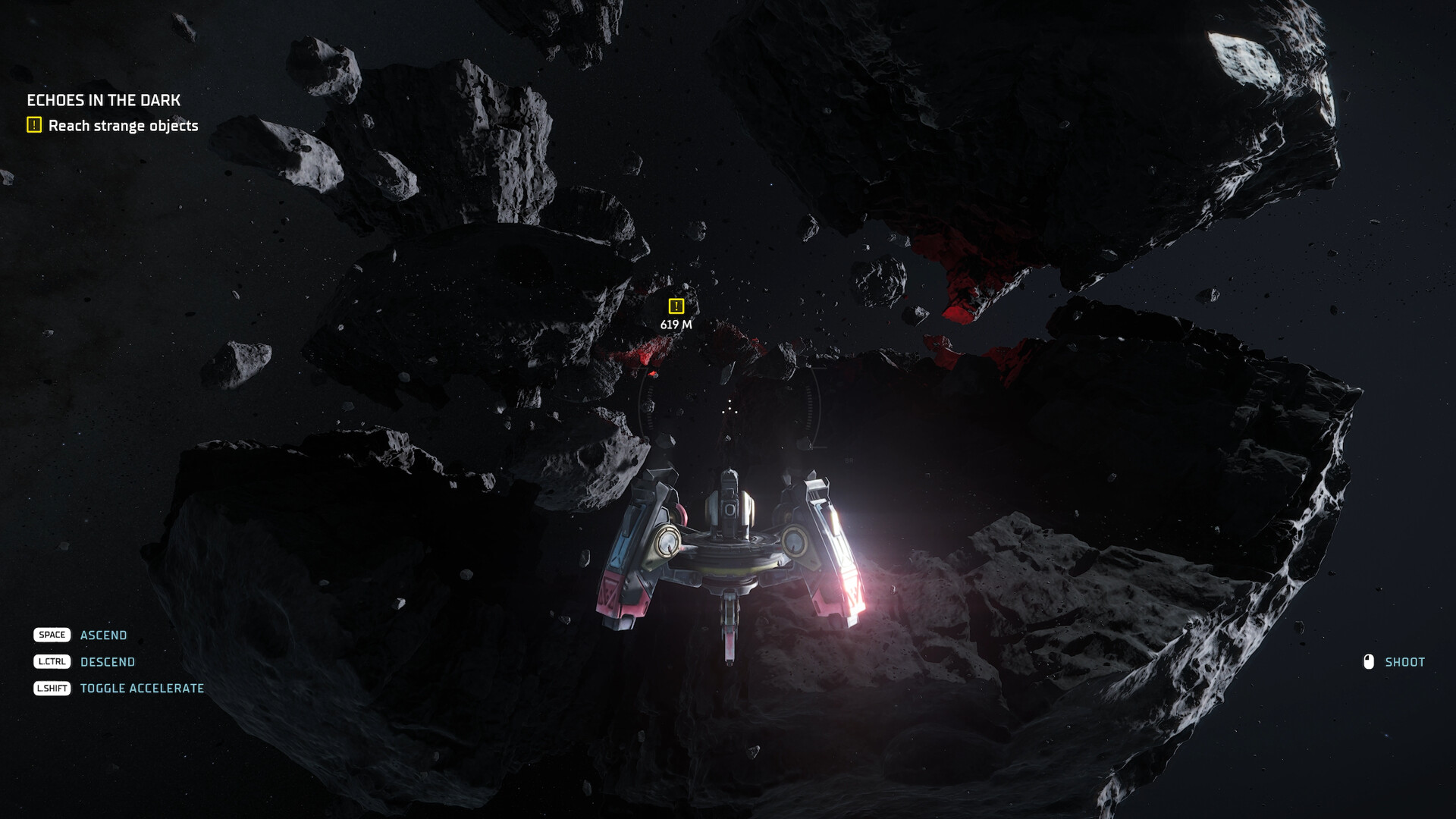
Being a Protogen ship comes with advantages and complications. The Gemini is equipped with technology that surpasses what is available to most civilian vessels and even some military ships. Its engines, sensors, and internal systems are cutting-edge. But it also means that Protogen wants it back, and the ship itself may contain secrets in its data banks or compartments that the player discovers over time. The ship's name may connect to Protogen's fleet naming conventions, which use mythological references (the Amun-Ra class stealth frigates, for instance).
Ship Layout
The developers have emphasized that the Gemini's interior follows the authentic compartment layouts established in The Expanse universe. Ships in The Expanse are not designed like ocean liners with wide hallways and open decks. They are built for efficiency and survival in space, with tight corridors, bulkheads that seal in case of decompression, and compartments arranged along a central axis. The team has described the Gemini's compartments as "more physically realistic than usual sci-fi."
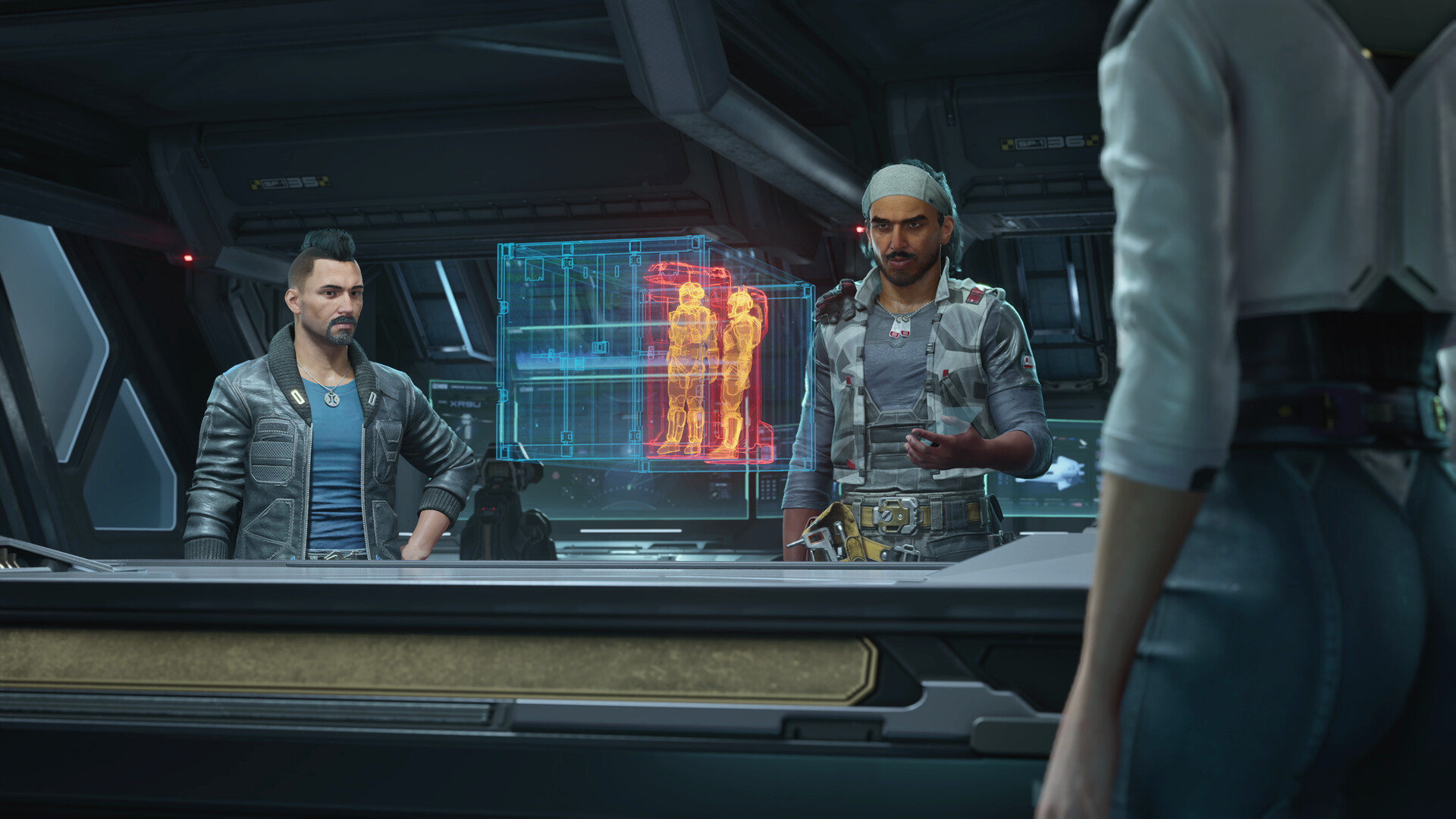
The ship's layout includes functional areas: the command deck for navigation and mission planning, crew quarters where companions rest and can be visited for conversations, an engineering section where Zafar spends much of his time maintaining systems and modifying the ship's transponder, a common area for crew gatherings and social interactions, and storage and armory spaces for managing equipment and loadouts. Walking through the Gemini between missions gives the player a sense of the ship as a lived-in space.
Travel System
Players do not directly pilot the Gemini. Travel between locations is narrative and menu-based, similar to the galaxy map in Mass Effect. The player selects a destination from the command deck's navigation display, and the game transitions to the new location. The Expanse is a setting where travel takes days, weeks, or months depending on distance, and while the game does not make the player sit through those durations, the passage of time is acknowledged through companion dialogue and story progression that occurs during transit.
There is no full ship combat mini-game. However, the developers have mentioned "scenes of space battles with some interactivity," suggesting that certain story sequences put the player in situations where the Gemini is under fire and the player makes decisions (targeting, evasion orders, power allocation) rather than directly controlling the ship in real-time flight. Trailer footage has shown the Gemini blasting through automated turret fire on an asteroid surface, indicating that these sequences are scripted action moments rather than freeform space combat.
Crew Hub
The Gemini's most important role, beyond transportation, is as the social center of the game. This is where the player interacts with companions between missions. Checking in with crew members after a major story event, exploring personal quests, and building relationships (including romances) all happen aboard the ship.
The concept draws directly from the tradition of RPG hub ships: the Normandy in Mass Effect, the Ebon Hawk in Knights of the Old Republic, and the Tempest in Mass Effect: Andromeda. The Gemini fills the same role, with each companion occupying a particular area of the ship and being available for conversation when the player visits.
Companion interactions aboard the Gemini are not limited to the player talking to each crew member individually. Companions interact with each other. Walking into the common area might reveal two companions arguing about politics, sharing a meal, or playing a game. These ambient interactions add texture to the crew dynamic and establish each companion as a person with relationships beyond the player character.
Zafar's Role
Zafar, the former MCRN engineer, is the Gemini's chief mechanic and technical specialist. He keeps the ship's systems running, handles modifications, and manages transponder changes that help the crew avoid detection by Protogen. The transponder system is a real-world element of The Expanse setting: ships broadcast transponder codes that identify them, and changing a transponder is how ships go "dark" or adopt false identities. Zafar's ability to manipulate the Gemini's transponder is a key plot tool that enables the crew to move through hostile territory.
Customization
Ship customization in Osiris Reborn is described as limited. The Gemini is not a ship the player builds from scratch or modifies extensively with interchangeable parts. It is a specific vessel with a fixed design, and the customization options are more about upgrades and internal modifications than wholesale changes to the ship's appearance or layout. The developers have withheld specific details about what can be customized, but the general approach fits The Expanse's aesthetic where ships are functional machines rather than customizable toys.
Story Significance
The Gemini is more than a gameplay convenience. It is a story element in its own right. The ship's Protogen origins mean it carries data, technology, and possibly physical evidence related to the protomolecule conspiracy. Discovering what the ship was used for before the player stole it is a thread that weaves through the narrative.
The ship also represents the player's independence. A Pinkwater mercenary who steals a Protogen ship and goes rogue is someone who has stepped outside the system. The Gemini is the physical embodiment of that choice: it gives the player the ability to go anywhere in the solar system and pursue the truth on their own terms, answering to no faction unless they choose to.
Additional Details From the Closed Beta
The closed beta build frames the Gemini not just as the player's travel vessel but as an active character in the story and in combat. The sections below fold beta-confirmed details into the broader ship description above. The ship is the arrival vehicle for the opening mission, it is the home base for any companion the player is not currently fielding on the ground, and it carries a weapon system that reaches down into ground engagements in a way most RPG hub ships do not.
Name and Call Sign
The ship's name, Gemini, is a direct reference to the twin crew. Gemini is also the shared call sign used for the player character and their sibling, J. In radio traffic and mission comms, the twins are addressed jointly as Gemini, and the ship carrying them shares the name. That shared identifier is part of how Pinkwater dispatch addresses them on arrival at Pinkwater Four Station, before their boss has even laid eyes on the unfamiliar craft in his docking bay.
Origin in the Story
At the start of the closed beta, the twins have just arrived at Pinkwater Four Station aboard the Gemini. The ship is not one Pinkwater assigned to them. They took it from attacking forces while fleeing the Eros incident, and they rode it out of the chaos because it was the only vessel left to them. The previous Pinkwater ship the twins had served aboard, the Piranha, was destroyed in the opening events with the rest of its crew. When the twins dock, Pinkwater Four's director, Oscar O'Connell, openly reacts to the unfamiliar craft in his docking bay. His questions about where the Piranha is and what exactly this new ship is doing in his stable set the tone for the whole debrief that follows.
The Gemini is therefore a ship the twins acquired under duress. It is their lifeboat out of the opening catastrophe and simultaneously a conspicuous asset that will draw the attention of Protogen, the mercenary corporation whose forces the twins took it from. The beta's main mission is built around the consequences of that acquisition: Protogen catches up, the station becomes the flashpoint, and the Gemini waits in its berth as the crew's one way out.
Ship-Support Role in Combat
The Gemini is more than a travel vessel. Companions aboard her contribute to ground combat through environmental-exploit-style abilities that originate from the ship itself. In the closed beta, Zafar operates the Gemini's PDCs (point-defense cannons) as a directed offensive weapon against ground targets on Pinkwater Four. From his station aboard the ship, he tears through station walls, destroys cover that ground enemies are hiding behind, and obliterates tightly grouped squads caught in the line of fire.
In the broader Expanse setting, PDCs are ballistic defense arrays designed to intercept incoming torpedoes and small projectiles. In the Pinkwater Four beta sequence they are used offensively against structural walls and personnel on a station, rather than against inbound munitions in the void. That repurposing is a deliberate show of how the developers are translating Expanse ship weapons into moment-to-moment RPG combat. The PDCs do not hum politely in the background; they are a visible tool the player can call for at specific scripted beats, and the camera treats each call as a set piece.
Ship-support calls slot into the same slot the ground team uses for other battlefield tricks. They are contextual and keyed to scripted beats in the mission rather than available at will, but they give the Gemini a direct influence on ground combat that a silent hub ship would not have. Crews aboard the Gemini are expected to contribute through variants of this mechanic as more companions come online in the full game.
The Gemini as a Second Class
In practice, the Gemini effectively functions as a second character class alongside the ground squad. The ship's crew contributes to the four-way environmental-exploit type system the rest of combat and gameplay is built around. Those four types are Precision, Demolitions, Malfunction, and Cyber Attack, all detailed in the exploit system. The ship's combat support layers on top of the two ground companions the player brings along on any given mission, expanding the number of angles available to the squad without requiring a third body on the ground. The practical effect is that picking who stays aboard the Gemini matters almost as much as picking who comes with you.
Crew Dynamics and Comms
The Gemini grounds the game's ship life in Expanse-style crew dynamics. Conversations between the ship crew and the boots-on-ground twins echo moments from the source material, where the crew aboard the ship keeps in touch with the away team via comms and offers whatever help they can from where they are. Radio chatter during beta missions carries crew banter, status updates, and tactical suggestions from the Gemini to the ground, and the ground team can talk back. Zafar in particular is a near-constant voice over the radio during the beta, warning about threats ahead, calling out which airlock to take, and noting disapproval when the player ignores his recommended route in a way that feeds back into the choices and consequences system.
This comms-first relationship is how the game introduces the idea that the Gemini and its crew are part of combat even when they are not physically on screen. Voice work on the ship side is present in the beta in meaningful quantities, which is a strong signal that the crew-back-home pattern is planned to continue across later missions in other parts of the system.
Companion Home Base
The Gemini is the hub where companions who are not on the current ground team remain between missions. Only one companion, J, is fielded alongside the player in the beta build, and Zafar is the first companion fully seen in the ship-home-base context, operating systems from aboard rather than walking the ground. The pattern the developers are establishing is that the rest of the roster will rotate through the Gemini in the same way as the full game comes online. Crew members not on the current mission will be aboard, available to be visited between missions, and potentially callable for support in the way Zafar is in this beta.
Signature Beta Moment
One beta sequence is worth noting in its own right. During the final firefight on Pinkwater Four, Zafar uses the Gemini's cannons to literally shoot through the station's hull from outside. An entire wall section becomes drifting debris, enemies that had been in hard cover are suddenly standing in open space, and the player walks into the resulting breach to finish the fight. The developers highlight moments like this as signature Expanse-style combat set pieces, and they have framed them as something the full game intends to feature across its solar-system destinations. Named future destinations include Ceres Station, Ganymede, Mars, Luna, and asteroid-belt bunker complexes, each of which is expected to show its own version of ship-to-ground combat theatrics.
Taken together, these beta-era additions reframe the Gemini as both the home the twins live in and the weapon they bring to the field. It is the wreck they escaped on, the hub they return to between missions, the comm channel to the rest of their crew, and the cannon platform that can crack open an enemy position when the ground team needs a breach. The rest of this article's description of layout, travel, and longer-term story significance still applies. The closed beta simply gives that description its first hands-on confirmation.