

Overview
The construction system in The Bustling World provides nearly 2,000 building components for players to use when creating structures. Every component has been "realistically restored from paintings and classics since the Tang and Song dynasties," according to the developers. This gives the system an architectural vocabulary rooted in historical Chinese building traditions.
Building Freely
Players can combine these components to build any style of structure they want. The system is not limited to preset templates or house blueprints. Instead, individual pieces (walls, pillars, roofing tiles, doors, windows, railings, and more) snap together to form custom buildings. This allows everything from simple roadside stalls to elaborate multi-story compounds.
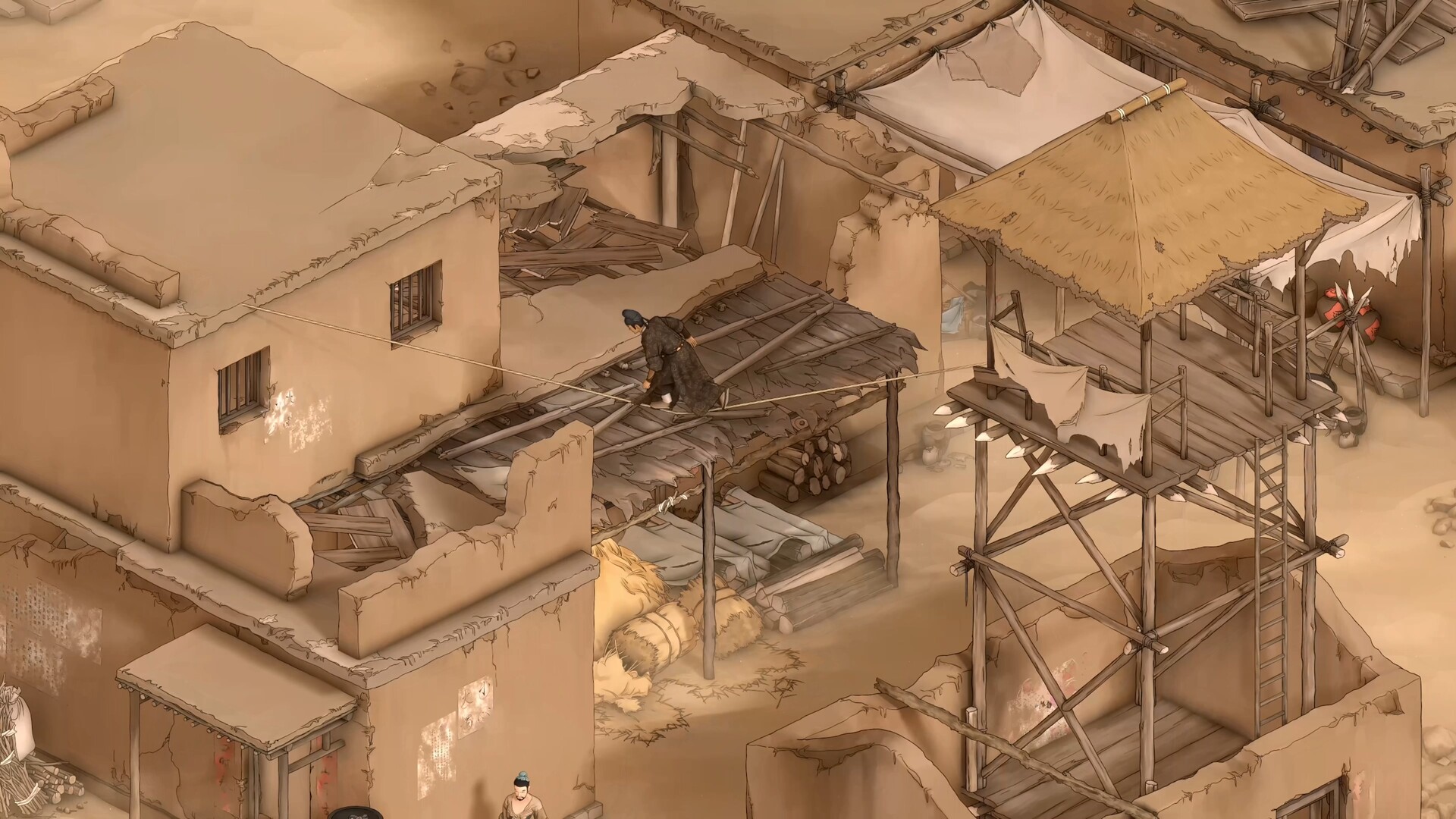
The construction tools support the creation of complete custom cityscapes. When combined with the city management system, players who become faction leaders can plan entire districts and build the structures that define their territory.
City Planning
Players who reach the rank of faction steward gain access to land planning tools. This lets them designate areas for specific purposes, such as residential zones, market districts, or military installations. Once zones are designated, NPCs will independently begin building in those areas, with their construction quality matching their skill level.
Luban Building Contests
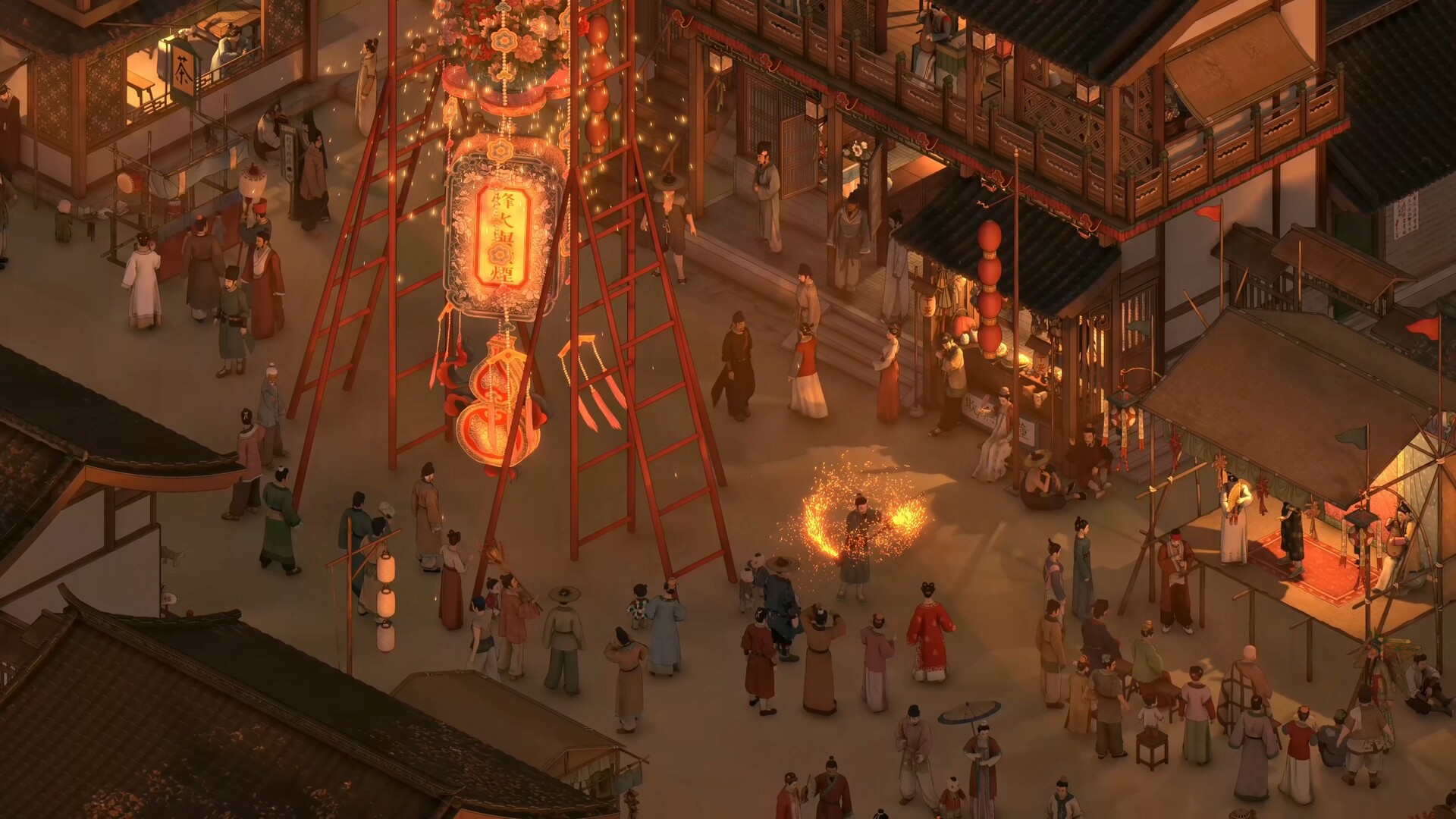
Construction skills can be tested in Luban building contests, competitive events named after Lu Ban, the legendary ancient Chinese master craftsman and engineer. These contests challenge players to build under specific constraints and reward winners with honor and money.
Decoration vs. Construction
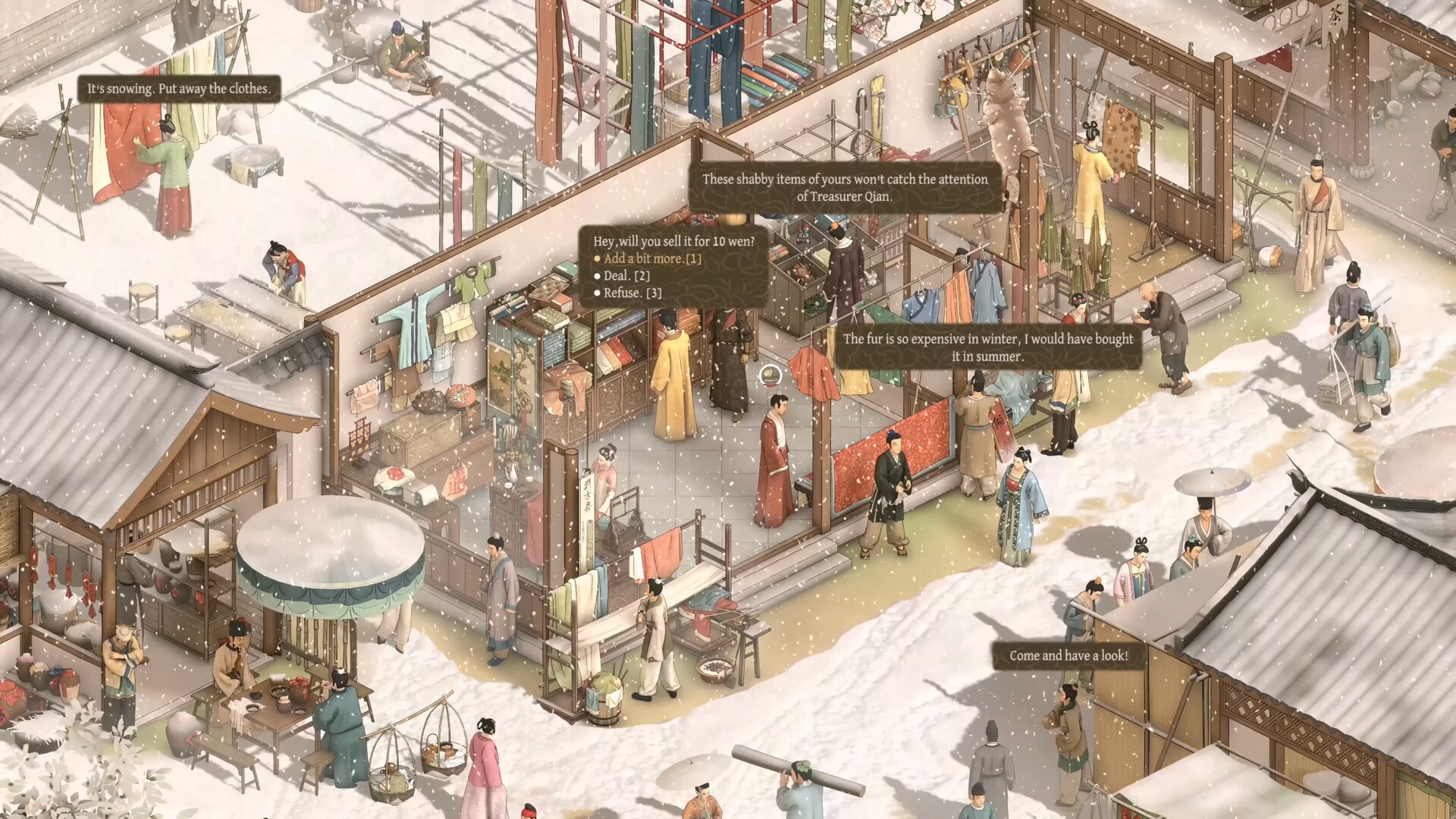
The nearly 2,000 building components are separate from the approximately 1,000 decorative items available for interior furnishing through the Property and Housing system. Building components define the structure itself (walls, roofs, columns), while decorative items fill the interior (furniture, paintings, vases). Together, the two systems offer roughly 3,000 distinct objects for players to work with.
Component Library
The game's construction system is built around a large library of building components: roughly 2,000 components have been stated by the developers. The library spans foundations, walls, beams, columns, roofs, doors, windows, staircases, fences, paving, ornamental panels, garden features, and signage. Each component slot supports multiple style choices drawn from regional Chinese architectural traditions, so the same structural piece can be expressed as a northern fortified wall, a central plain courtyard wall, or a southern garden screen.
Building a Structure
Players lay out structures on owned plots through a grid-and-snap interface. The developers have shown footage where a builder places foundations first, then walls, roofs, and interior furnishings, with components snapping to consistent dimensions. Construction consumes materials gathered through agriculture, animal husbandry, mining, logging, and trade, so a non-trivial build implies a working supply chain. See crafting and business for how raw resources flow into finished components, and property and housing for how a finished structure becomes a usable home or business.
Scales of Construction
Single buildings. The minimum unit. Useful for small farmhouses, isolated workshops, or shrines.
Compounds. A walled courtyard with multiple buildings inside (residence, kitchen, storehouse, stable). The traditional courtyard layout is a default for family estates.
Districts. Players who run a city can plan and direct the construction of entire neighborhoods, including residential blocks, market streets, and ritual spaces.
City scale. At the highest tier, players who hold political power through city management can commission roads, walls, gates, temples, granaries, and military barracks that change the city's footprint and economy.
Construction Contests
Luban building contests are one of the recurring festivals and events. Themed builds are judged on creativity, regional authenticity, and skill, with prize purses and reputation rewards.
Notes
Specific component names, snap-grid measurements, and the exact total of build components will be documented once the game ships and the build interface is observable in-build. The 2,000 component figure is a planned content target stated by the developers.