
Geography
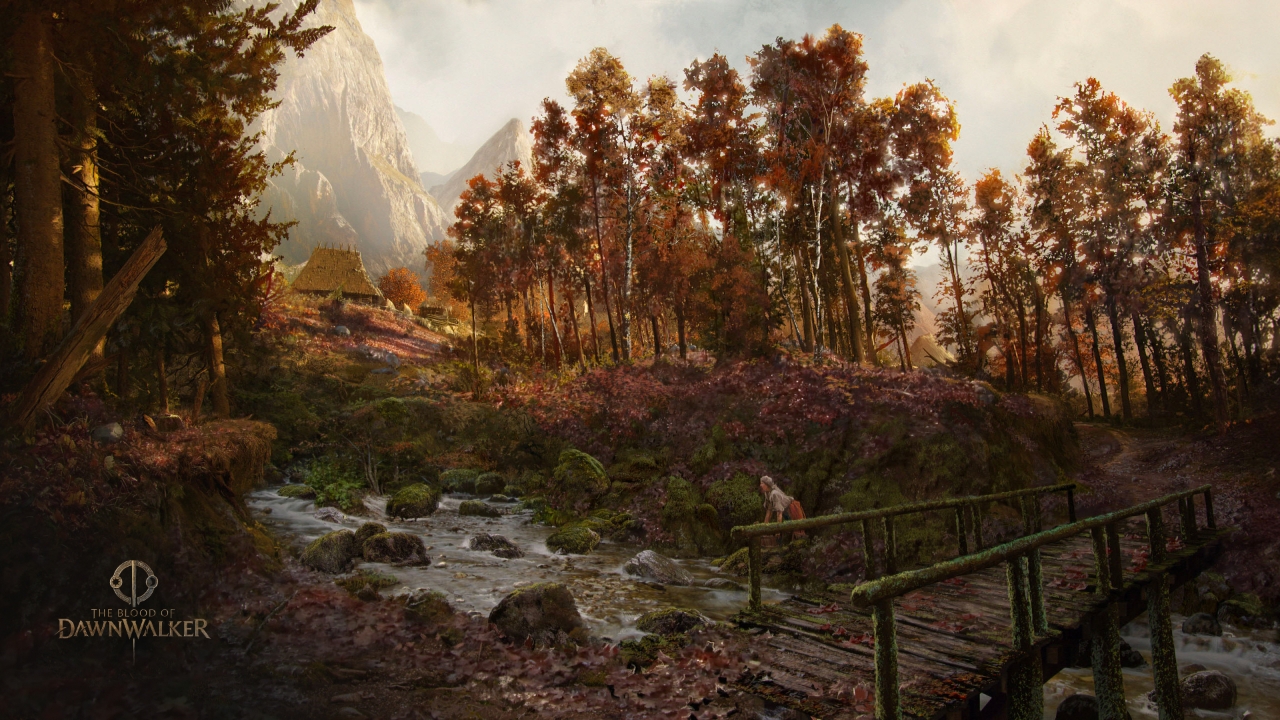
Vale Sangora is a valley in the Carpathian Mountains, surrounded on all sides by mountains and accessible solely through narrow gorges that are only passable during summer months. This isolation is fundamental to the story. It explains why vampires can rule openly without attracting attention from larger kingdoms, and it constrains the game world into a defined space where every location matters.
The setting draws from Polish, Romanian, Ukrainian, and Balkan architectural styles and cultures. The surrounding mountains were historically rich with silver, and rocky slopes are pockmarked with mine entrances, including the mines where Coen grew up working alongside his father.
Multiple biomes fill the valley: dense forests, mountain passes, swamps, meadows, peat bogs, cave systems, medieval settlements, and the ruins of ancient civilizations. The southern regions are more dangerous, with difficulty generally increasing as you move south. Each region's difficulty locks on your first entry based on your level.
Real-World Basis
Rebel Wolves has been specific about where the valley comes from. The environment team drew predominantly on Romania and the territory around it, deliberately staying inside the Carpathian region because building styles are shaped by the weather and terrain they sit in, and pulling from flatter regions would have read as wrong. The intent was that a player with any familiarity with that part of the world could look at a settlement and place themselves roughly on the map.
The real mountain range the valley sits in, and the 14th-century history around it, are covered separately on Carpathian Mountains and Vale Sangora. This page stays inside the valley: its geography, its politics and the places on its map.
The result is meant to feel recognisable without being a reproduction. Svartrau in particular has no real-world counterpart; it was designed around the story and the quests rather than modelled on an existing city. The studio has described the goal as a place that feels real but cannot be visited, a valley lost to time, with the sense of enclosure reinforcing how thoroughly Brencis has sealed it off.
Political Situation
Two years before the game begins, Brencis and the Vrakhiri eliminated the valley's previous ruler, Skender Dragosti. Skender had been a tyrant who expanded dungeon torture chambers and wiped out plague-afflicted villages. The vampire takeover was, for many, an improvement.
Brencis cures the plague with vampire blood, and in the 14th century that is an almost unimaginable power. Many humans worship the vampires as religious saviors. They pay the blood tax (regular contributions of blood to the vampire overlords) and consider it a fair trade. The valley is divided among the four Vrakhiri, each controlling their own territory with their own governing style.
Not everyone agrees with vampire rule. Factions exist that resist, cooperate, or pursue their own agendas. The game lets Coen navigate this landscape however the player chooses.
Day and Night
The valley transforms between day and night. During the day, it functions as a medieval society. People work, trade, and travel. At night, the vampires emerge. The streets of Svartrau become dangerous. Guards patrol. For Coen, the night opens new traversal using Vampiric Powers (wall-walking, short-range teleportation and a wolf form for travel; there is no bat form in the base game as of September 2026) but he must avoid being seen.

The Plague
The Black Death reached Vale Sangora from the coastal city of Constanta, where the outbreak first exploded and spread "like a forest fire." Outside the valley, the plague is killing millions across Europe. Inside, Brencis's blood cure keeps the worst at bay, but the cure creates dependency. The people can't leave without losing protection, and they can't rebel without risking the vampires withdrawing the cure.
Known Locations
Location | Description |
|---|---|
The capital city, center of Brencis's power | |
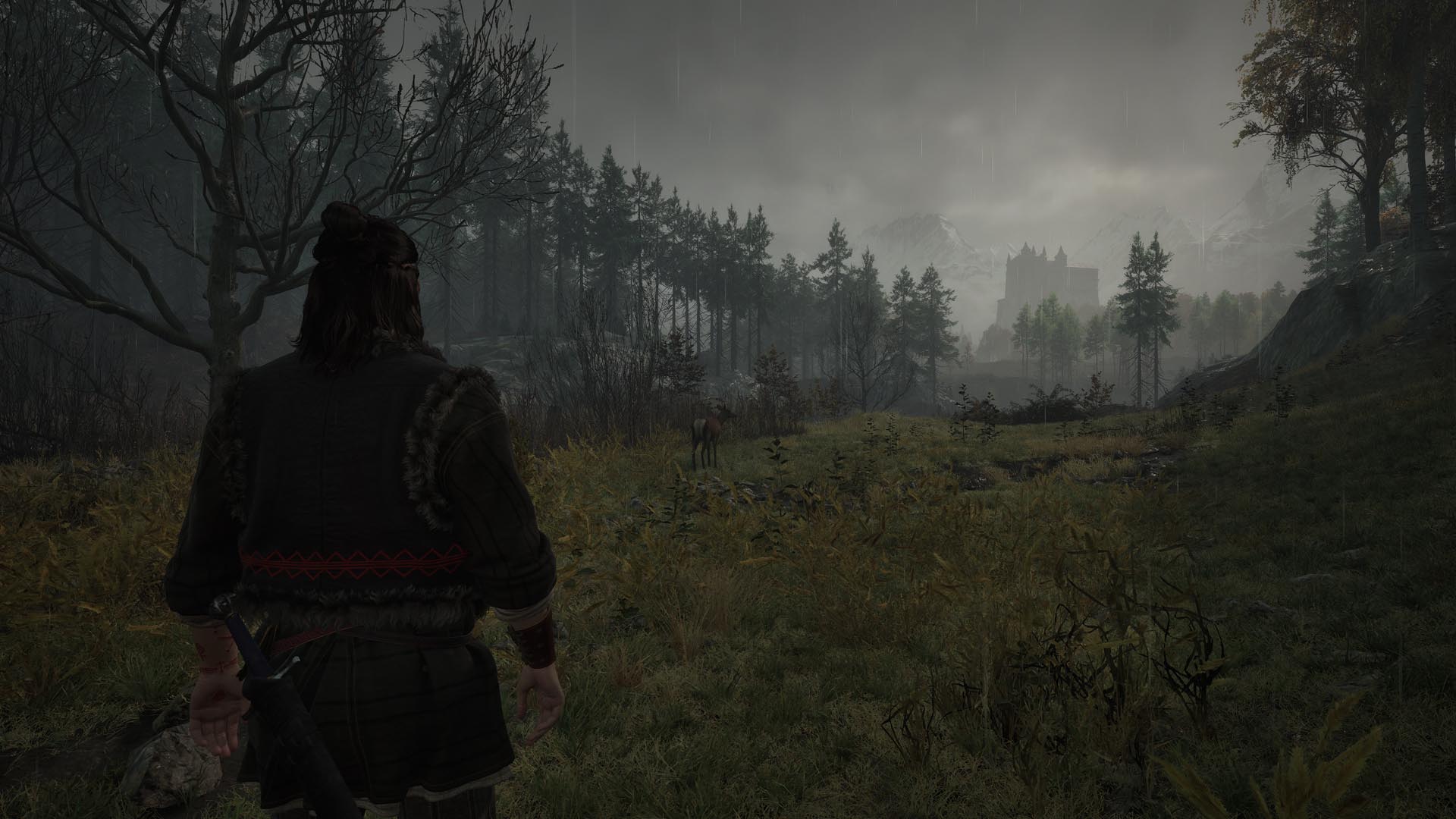
Greifberg Castle | Brencis's seat of power, overlooking Svartrau. Former castle of Skender Dragosti |
A grand structure containing the crypt of Saint Mihai | |
Laslea | A village, home to elder Zdislav |
St. Tyna's Convent | Religious site established by Saint Tyna, still visited by pilgrims seeking healing |
Constanta | A coastal trading city outside the valley, epicenter of the plague outbreak |
Scattered throughout the mountains, now inhabited by kobolds | |
Ancient stone monuments | Massive hewn blocks among dwarf pines, remnants of a civilization the locals refuse to discuss |
Regions and Districts
Coverage of the shipped game works from a map split into named regions, and uses those names throughout its directions. They are the practical unit of travel in the valley: each locks to Coen's level on first entry, and each holds its own shrines, camps and quests.
Region | Where it sits |
|---|---|
Briar Sloughs | Swampland south-west of Coen's home village, and the region holding the broken bridge and the chasm below it. |
Maragir Wealds | South-east of the village, around the settlement of Maragir. |
St. Tyna's Grove | South of the Wealds and east of the capital, around the convent and the crossroads inn. |
Boar's Back | The western side of the valley, forested in its north. |
The Silts | Marshland in the south of the valley. |
Tantari Woods | Woodland in the valley's south, with a tower of the same name at its edge. |
The Rockfalls | Broken ground near the settlement of Parlita. |
Svartrau Outskirts | The approach to the capital, and the setting of one of the Sanzhana encounters. |
Laslea Glen | The starting area around Coen's home village of Laslea, including the old silver mine caverns. |
Svartrau City | The capital itself, treated as a region on the map, with the cathedral complex and four districts. |
The capital is divided in turn, into four districts by the game's own account. Silberkreis, the wealthy quarter nearest the castle, is called Silberstein in the shipped game's text; The Middens is the ruined quarter in the west; Altenmarkt is the crowded market district; and Neustadt is a small Jewish district. The map treats the city as a region of its own.
The valley's isolation has one documented gap. A road leads north-west out of the swamp region to a pass that is still open, reachable only by crossing a collapsed bridge with a fully upgraded Shadowstep. Two independent accounts of the shipped game describe taking it as a way to end the story early, by leaving the valley and everyone in it behind. See 30-Day Cycle for how that fits the deadline.
Recorded History
The valley's pre-vampire history was documented by Albertus Taurinus, a chronicler from Turin summoned by Skender Dragosti. His sixteen-part Secret History of Vale Sangora records the valley's culture, folklore, religious traditions, and the events leading to the vampire takeover.