
Faction System
Vale Sangora is not a place with clear heroes and villains. Multiple factions exist in the valley, each with their own goals, and Coen can choose to ally with, oppose, or ignore any of them. The game director has stated that you can finish the entire game without ever meeting the human rebellion. You can also try siding with the vampire rulers, though the developers declined to spoil how far that option goes. Coen belongs to none of these groups by birth: as one of the
Dawnwalkers, he is an outsider to every side of the valley's politics.The Vrakhiri
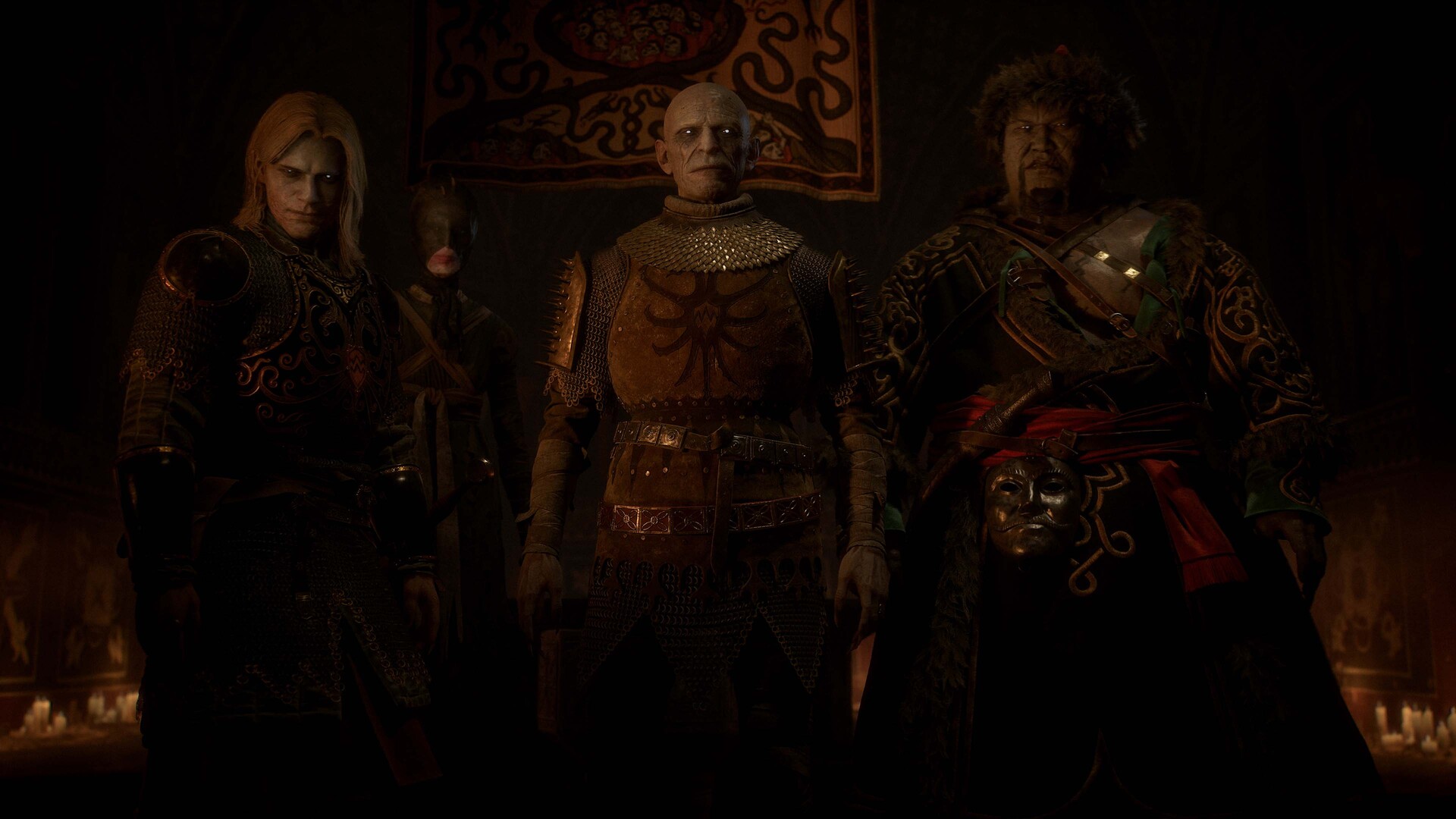
The valley is divided among the four Vrakhiri, the ancient vampire lords who rule under Brencis's leadership. Each Vrakhiri controls their own territory with their own style of governance. Bakir rules through fear and force. Ambrus uses charm and manipulation. Xanthe holds mysteries that the others do not understand. The political dynamics between these four are themselves a faction system, and their tensions can be exploited.
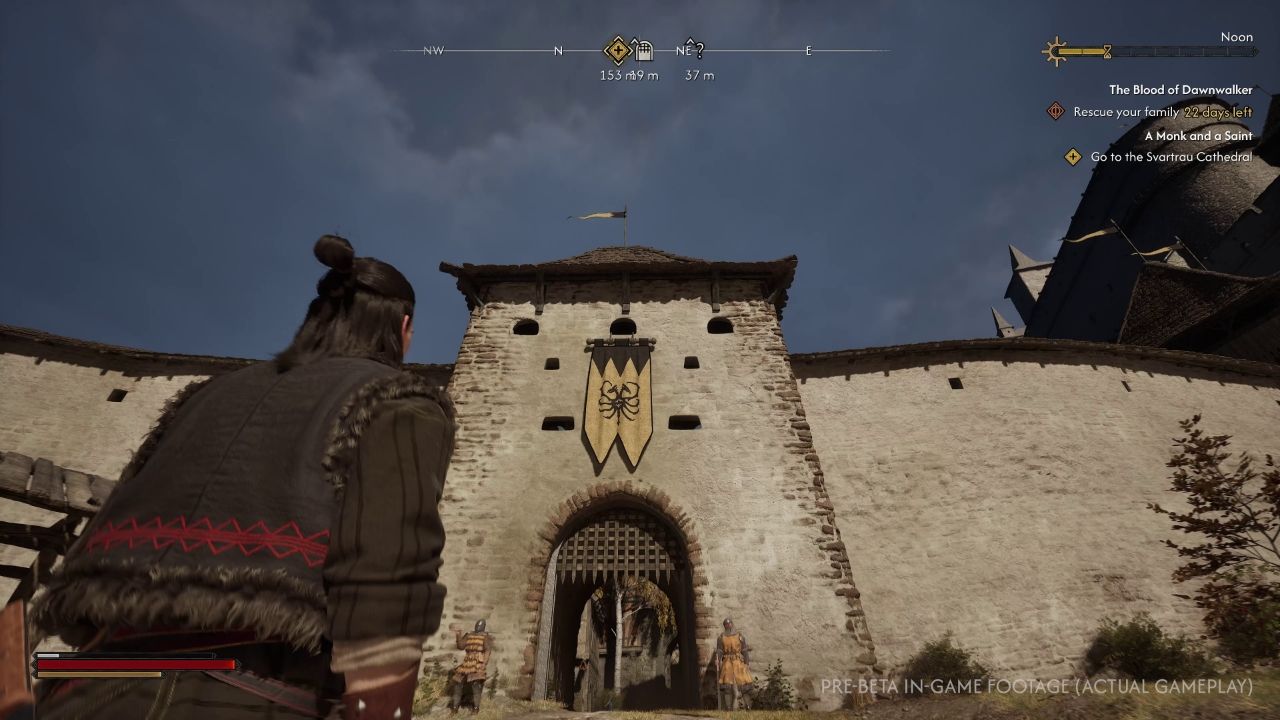
The shipped game calls them boyars and gathers them into a screen called the Court, where each one's portrait carries a reading of how angry Coen has made them. Each holds named operations across the regions they control, cellars and transports and collectors and prisoners, and dismantling those operations is what drives that reading up. See Notoriety System.
The developers have noted that the Vrakhiri are not automatically hostile. Some can potentially become allies depending on player choices. The vampire power structure is not monolithic. There are cracks, and a smart player can widen them.
The Manumits
The organized human resistance fighting vampire rule is called the Manumits in the shipped game. They operate in secret because open defiance means death, and their hideout is in the capital. Their leader is Marat, who goes by Crake in play.
Coen reaches them through a chain of quests rather than by finding a recruiter. Guide coverage of the released game gives the route as The Firebrand, picked up during or just after the prologue, then Shadows in the Woods, where a contact named Sara makes the introduction, and finally Where Loyalty Lies, which is where the actual joining happens. That last step is gated: the rebels will not accept Coen until his infamy has climbed to a named rank, so the price of admission is a demonstrated record of hurting the regime.
Their method is attrition rather than open siege. They target vampire infrastructure: blood storage warehouses, supply convoys, and officer routes. Disrupting these weakens the vampire operation and shifts the balance of power in the valley before the coronation deadline. The questline continues well beyond joining and is one of the routes that produces a distinct outcome at the end of the game.
Rebel Wolves confirmed in late April 2026 that the resistance is a fully optional faction with its own membership, leadership, and questline. The player can fight alongside it, ignore it entirely, or work against it.
Vampire Loyalists
Many humans in Vale Sangora genuinely support vampire rule because Brencis cured the plague. These loyalists view the vampires as protectors and the rebellion as a destabilizing threat. They pay the blood tax willingly. For Coen, they represent an obstacle: human allies of his enemies who believe they are on the right side.
Independent Groups
Beyond the vampire and human binary, other factions pursue their own agendas. These groups do not fit neatly into either camp and might cooperate with vampires on one issue and humans on another, depending on what benefits them.
The Uriashi are mountain folk with curled horns who inhabit the high peaks of Vale Sangora. Some have been corrupted by vampiric influence, but as a group they operate independently of both vampire authority and the human rebellion, following their own ancient traditions. One of their smiths, a hermit working a rune-powered forge in the north-west, is the only person in the valley documented as able to reforge the saint's silver sword. See Saint Mihai.
There is also at least one interested party operating from outside the valley. A smuggler reaches Coen with a letter from an unnamed benefactor listing the components of a legendary armour set, which is the only contact the player has with them. One guide account of the endings names this outside power as the Arbiters and credits it with eventually bringing the regime down in a particular epilogue. That naming is single-sourced and spoiler-bearing, so it is recorded here and not built on.
Reactive World
Faction relationships are not static. Undermining Brencis's operations triggers escalation: increased soldier patrols, city lockdowns that restrict movement, and more aggressive responses to Coen's presence. The world pushes back against what you do, and the 30-day clock means you cannot just wait out the consequences.
Helping one faction takes time from the 30-Day Cycle. Every alliance built is time not spent on something else. A faction you ignored early on might refuse to help when you need them later. A faction you betrayed might actively work against your rescue plan.
The faction system reacts to specific actions rather than a binary alignment slider. Killing a local blacksmith for the gold in his shop closes the forge for the rest of the playthrough, removes the equipment that would have been crafted there, and cuts off the related questline. Faction relationships, in other words, are stitched into the same consequence layer as individual NPC choices.