
Loading...
Combat System
August 6, 2026 at 04:36 PM
Documented the reworked combat system: parries, executions, synchronised swaps, weakened states and Casual Mode
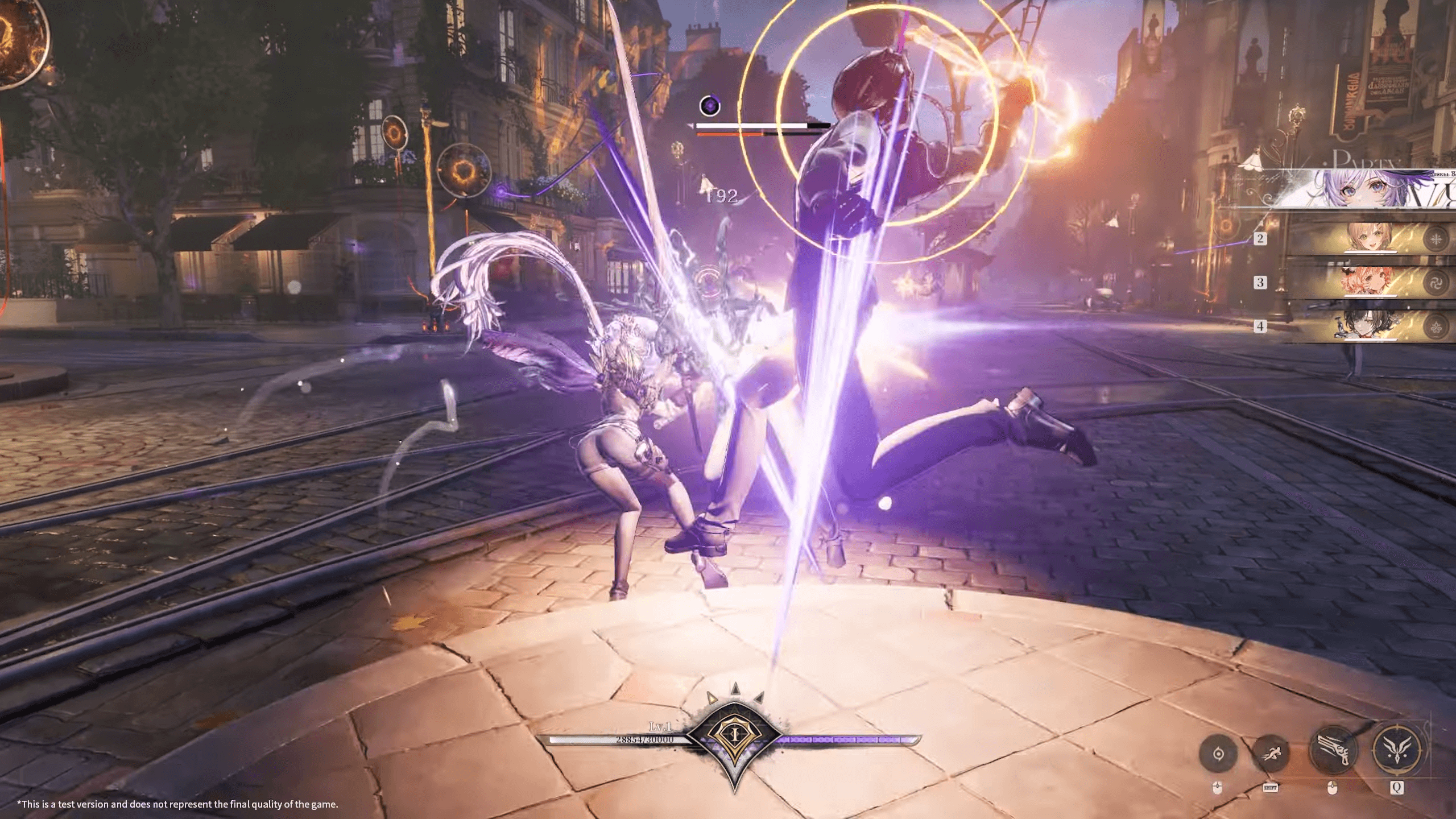
Combat in Silver Palace is a real-time action system built around party switching, a stun-and-execute loop, and the Silverdrip resource mechanic. The combat is unexpectedly visceral for an anime-styled action RPG, with execution animations that include skull-bashing and dismemberment.
Players field a party of up to four characters. Any character can be controlled directly, and switching between them is instant. Each character has unique attack chains, active skills, a passive trait, and an ultimate ability. Switching at the right moment chains the outgoing character's combo into the incoming character's abilities.
Enemies display a stun gauge beneath their health bar. Landing attacks fills this gauge progressively. Once the gauge is full, the enemy becomes stunned and vulnerable to an Execution, a high-damage finisher move with a unique animation per character. Executions deal significantly more damage than normal attacks and also charge Silverdrip segments.
Dealing damage fills the Reactor and Silverdrip segments, shown as triangular indicators between the HP and skill bars. Each filled segment equals one stack. One stack enables an Ambush skill when swapping to another character. Ambush attacks trigger the incoming character's equipped Catalyst attribute, which provides different effects depending on the Catalyst: elemental damage, buffs, shields, or healing.
The Silverdrip system creates a rhythm of building stacks through sustained combat, then spending them on character swaps to trigger powerful Ambush attacks. This rewards active play and discourages sitting on a single character for the entire fight.
Catalysts are equippable items, up to three per character. Each Catalyst has a unique attribute that activates when spending a Silverdrip segment or using an Ambush attack. The variety of Catalyst effects means the same character can fill different tactical roles depending on their equipped Catalysts.
Quick Time Events are triggered during boss fights, executions, and certain stealth sequences. Successful QTE inputs produce cinematic attack sequences that deal heavy damage. Each character has their own QTE animations. Firtho, for example, jabs syringes into enemies during her QTE sequences.
Parrying and perfect dodging are both rewarded. A successful parry creates an opening for a counter-combo. A perfectly timed dodge triggers a slow-motion window where the player can land free hits. The Detective can also switch between melee (sword) and ranged (pistol) stances; ranged attacks fill the enemy's stun gauge from a safe distance.
Three options are available when approaching enemies from behind undetected:
Knock them unconscious
Interrogate them for intelligence
Use a syringe (consumable anesthetic) to incapacitate them silently
Building a team with characters sharing the same element unlocks Resonance effects, which are team-wide AoE damage bonuses. This provides a team-building incentive beyond just picking favorite characters.
The second closed beta shipped a rebuilt combat system rather than a tuning pass. The mechanics below were described in detail by the game's team ahead of that test and sit alongside, or in some cases replace, the first beta's behaviour documented above. A set of new enemies with their own mechanics arrived at the same time.
A yellow circle appears as an enemy winds up an attack. Parrying just before the blow lands cuts the damage taken and deals damage back. Successful parries chain into combos, so a defensive read converts directly into offensive pressure rather than just buying breathing room.
Executions remain the payoff for filling an enemy's stun gauge, and they now leave the target in a temporary weakened state afterwards. That window is the intended moment to commit an uninterrupted damage rotation.
Switching characters mid-action no longer cancels the outgoing character. When a character is performing a Charged Attack or a Charged Skill, swapping leaves them on the field until that action resolves, so two or more party members can be fighting at once. Overlapping charged actions deliberately is the skill ceiling of the new character switching model.
Characters build a Resonance meter as they attack. When it fills, a Resonance Effect fires based on that character's Reactor attribute and sharply raises their damage output.
Casual Mode is an optional simplified control scheme. Repeatedly clicking the left mouse button produces full combo strings without manual input timing. With it enabled, characters also trigger a time dilation effect and an on-screen prompt when they are about to be hit, giving a much wider reaction window. It exists so that players who want the story and the city are not gated behind execution-heavy combat.
These systems describe the second closed beta build. The first beta's Silverdrip, Catalyst and Ambush behaviour documented above has not been formally retired, but it has not been restated for this build either, so treat the older material as first-beta history where the two disagree.