

Overview
The character switching system in Silver Palace allows players to build a team of up to four characters and swap between them instantly during real-time combat. The mechanic encourages active rotation through the roster to chain abilities, manage cooldowns, and maximise damage output.
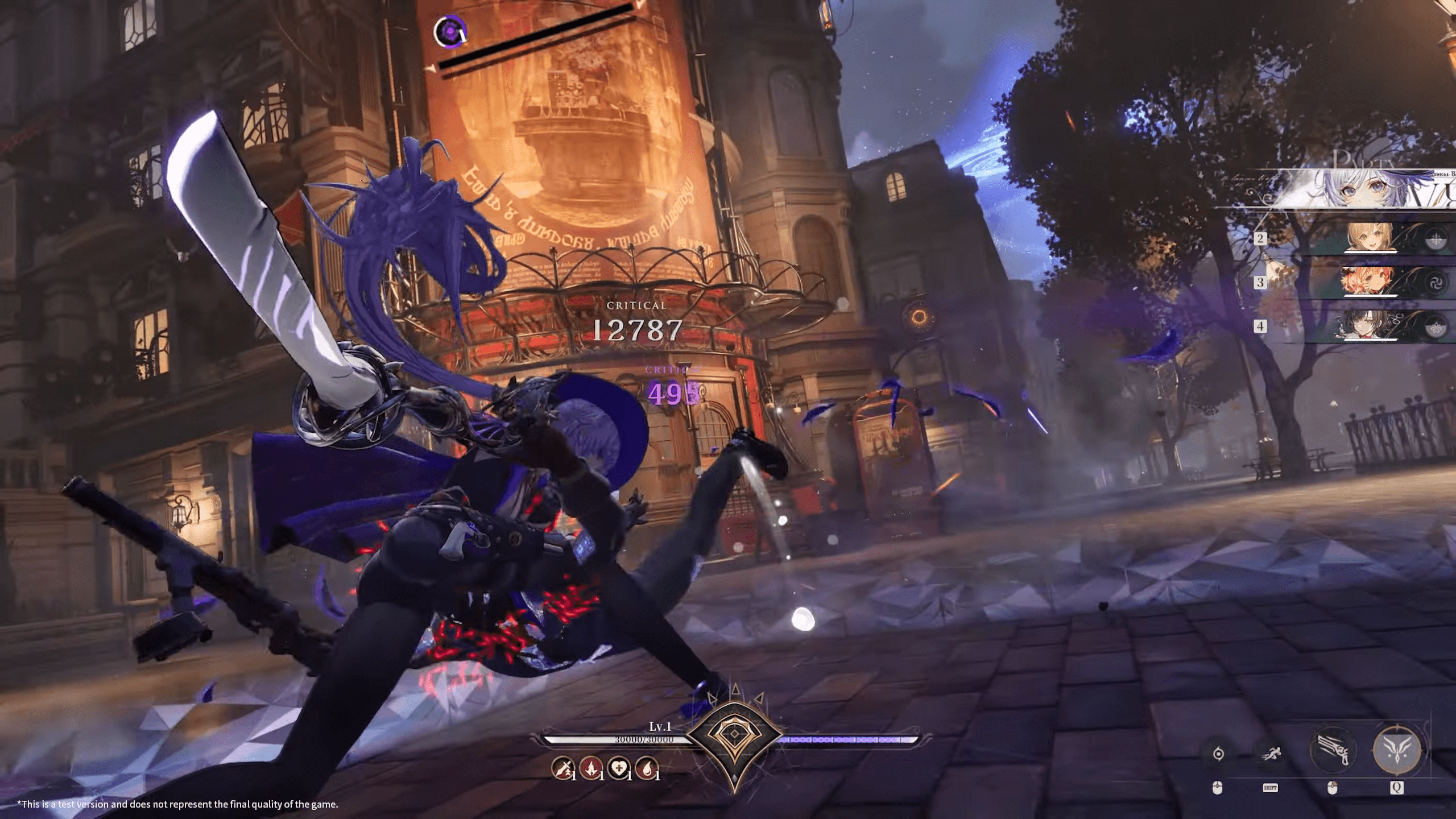
Team Composition
Players select four characters to bring into combat. Each character occupies a slot and can be swapped to at any time with no mandatory cooldown between switches. Team composition decisions involve balancing elemental coverage, weapon variety, and role distribution (DPS, support, crowd control). Element choice is a coverage question rather than a Resonance one, because each character's Resonance Effect fires off their own Reactor attribute regardless of what the rest of the party carries, so a mixed team gives nothing up and a single-element team unlocks no shared bonus.
The four-character maximum is confirmed by the game's team, which describes combat as real-time action for a party of up to four with parry and dodge as its axis. Each station at the August 2026 convention demo ran a build with four playable characters, and switching between them behaved the way it had in both closed betas.
Real-Time Switching
Switching between characters happens instantly in real time. When a player triggers a swap, the active character exits and the new character enters with their weapon drawn and ready to fight. There is no loading screen, transition animation lock, or forced delay. This fluidity allows for rapid combo extensions where players chain one character's attack string into another's, maintaining pressure on enemies without downtime.
What a swap produces depends on what is banked and on what the outgoing character is doing:
Swap type | Condition | Result |
|---|---|---|
Plain swap | No Silverdrip stacks banked | The incoming character enters with their weapon drawn, with no delay and no entry attack |
Ambush swap | One or more Silverdrip stacks banked | The incoming character opens with an Ambush skill, and their equipped Catalyst attribute fires with it |
Synchronised swap | The outgoing character is mid Charged Attack or Charged Skill | The outgoing character stays on the field until that action resolves, so two characters are fighting at once |
Synchronised Combat
The second closed beta added a rule that changes what a swap means. When a character performs a Charged Attack or unleashes a Charged Skill, switching to another character causes the outgoing character to remain on the field until their current action is complete. Used deliberately, this puts multiple characters on the field fighting at once, and their skills can be combined for effects that neither produces alone. It turns a swap from a hand-off into an overlap: the outgoing character's charged action keeps resolving while the incoming character is already attacking.
The Detective's Dual Stances
The Detective (the player's protagonist) has a unique mechanic within the switching system: two combat stances. The Detective can toggle between a ranged stance (using a firearm) and a melee stance (using a sword). While other characters are locked to their weapon type, the Detective's dual-stance design effectively gives the player two fighting styles within a single character slot, adding versatility to any team composition.
Silverdrip Mechanic
At the heart of the character switching system is the Silverdrip resource. Silverdrip is represented on the HUD as a series of triangle-shaped segments. Dealing damage to enemies fills these segments over time. Each filled Silverdrip segment enables a powerful Ambush skill that triggers when the player swaps characters.
The stack economy itself, including how the Reactor gauge charges and how Executions accelerate it, is covered on Silverdrip System, and the prompts that appear during swaps and Ambush attacks are covered on QTE Combat.
The Silverdrip cycle works as follows:
Deal damage with the active character to fill Silverdrip segments.
When one or more segments are full, swap to another character.
The incoming character performs an Ambush attack, spending the filled segments for a burst of damage.
Resume attacking with the new character to refill Silverdrip for the next swap.
This creates a natural rotation rhythm. Players are rewarded for actively cycling through their team rather than staying on a single character. Spending Silverdrip on Ambush attacks means every character swap has offensive value, not just utility.
Ambush Attacks
Ambush attacks are the payoff for managing Silverdrip well. When a character enters the field with available Silverdrip segments, they perform a unique Ambush skill before entering their normal attack pattern. Each character has a distinct Ambush animation and damage profile. Some Ambush attacks deal area damage, others focus on a single target, and some apply elemental debuffs. The strength of the Ambush scales with the number of Silverdrip segments spent.
Catalyst Interaction
Catalysts (equippable items) have attributes that trigger specifically when Silverdrip segments are spent. This means the character switching and Silverdrip system is deeply connected to the equipment layer. A Catalyst that grants a damage buff on Silverdrip consumption, for example, makes each character swap even more powerful. Building a loadout around Silverdrip spending can create exponential damage scaling during team rotations.
Resonance and Switching
Every character carries their own Resonance meter, filled by that character's own attacks, and it fires a Resonance Effect based on their element type when full. Because the meter belongs to the character rather than the party, which character is holding the field decides which meter is advancing, and swapping away from a nearly-full character leaves that meter where it stands. Rotation therefore has a cost that a single-character playstyle does not pay, and balancing it against the Silverdrip and Ambush payoff for swapping is the core sequencing decision of a fight.
Ultimate Abilities
Each character has a unique ultimate ability with its own cinematic animation. Ultimates charge through combat actions and are independent of the Silverdrip system. Players must decide when to deploy ultimates within their rotation: using an ultimate before swapping means the current character deals their biggest hit, but the incoming character misses the Ambush opportunity from a quick swap. Managing this timing is part of high-level play.
Comparison to Similar Games
Among action RPGs that build their combat around a four-character party with instant real-time switching, Silver Palace's distinct identity comes from the Silverdrip and Ambush system, which turns each swap into a damage event rather than just a character change. The QTE combat system adds another layer on top, as QTE prompts can appear during Ambush attacks and swap transitions.