

Overview
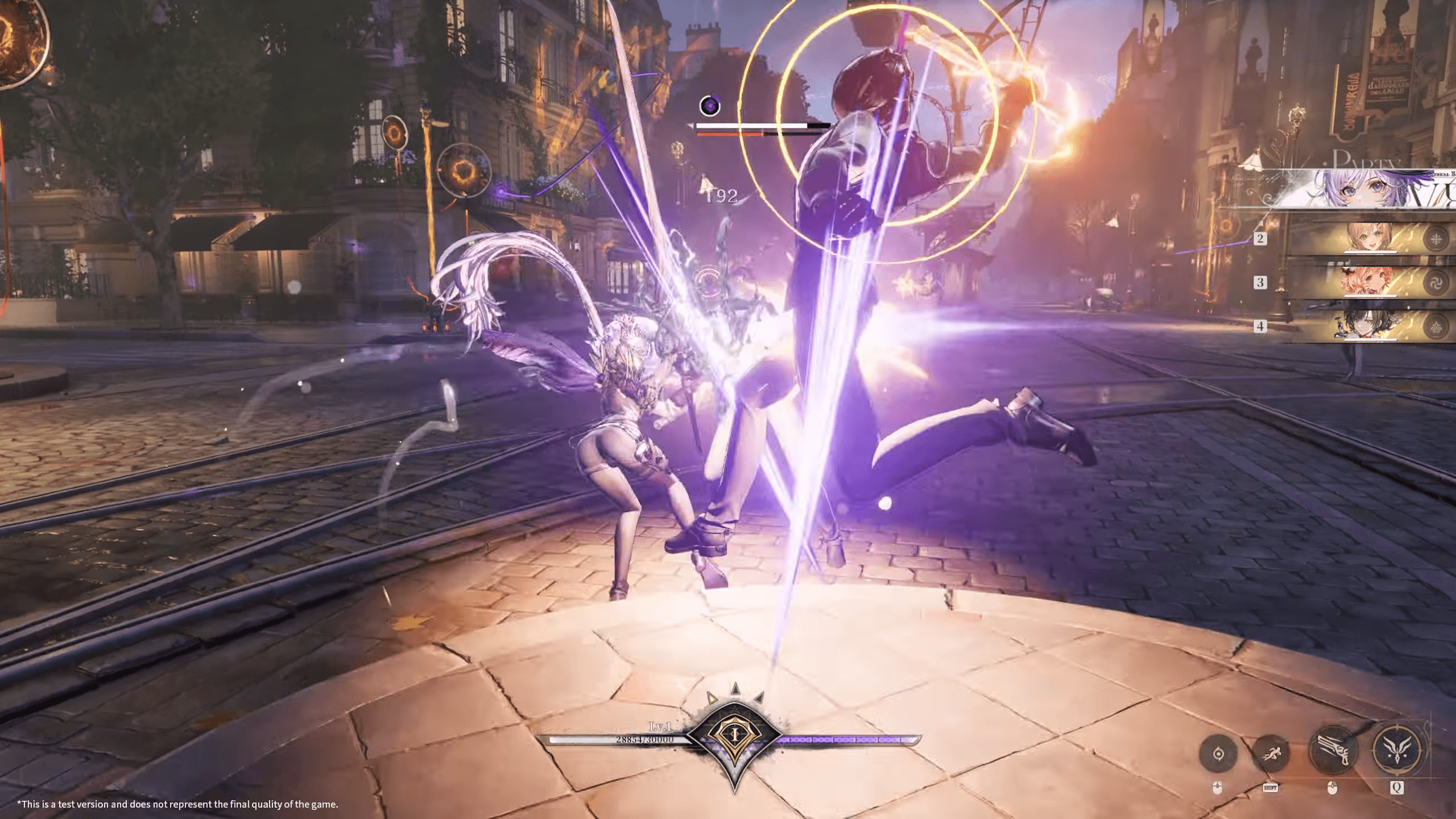
Combat in Silver Palace is a real-time action system built around party switching, a stun-and-execute loop, and the Silverdrip resource mechanic. It is unexpectedly visceral for an anime-styled action RPG, with execution animations that include skull-bashing and dismemberment. The system was described as entirely overhauled for the second closed beta, rebuilt around dodging, parrying, Stamina management and a Stun buildup mechanic, which raises the skill ceiling; a combat-assist system was added at the same time for players who would rather not clear that bar. The sections below cover the first test's model first and the rebuilt systems after it.
Party and Character Switching
Players field a party of up to four characters. Any character can be controlled directly, and switching between them is instant. Each character has unique attack chains, active skills, a passive trait, and an ultimate ability. Switching at the right moment chains the outgoing character's combo into the incoming character's abilities.
The four-character maximum is confirmed by the game's team, which describes combat as real-time action for a party of up to four with parry and dodge as its axis. Each station at the August 2026 convention demo ran a build with four playable characters, so the cap has held from the first closed beta through to the most recent public build.
Stun Gauge and Executions
Enemies display a stun gauge beneath their health bar. Landing attacks fills this gauge progressively. Once the gauge is full, the enemy becomes stunned and vulnerable to an Execution, a high-damage finisher move with a unique animation per character. Executions deal significantly more damage than normal attacks and also charge Silverdrip segments.
Silverdrip System
Dealing damage fills the Reactor and Silverdrip segments, shown as triangular indicators between the HP and skill bars. Each filled segment equals one stack. One stack enables an Ambush skill when swapping to another character. Ambush attacks trigger the incoming character's equipped Catalyst attribute, which provides different effects depending on the Catalyst: elemental damage, buffs, shields, or healing.
The Silverdrip system creates a rhythm of building stacks through sustained combat, then spending them on character swaps to trigger powerful Ambush attacks. This rewards active play and discourages sitting on a single character for the entire fight.
Catalysts
Catalysts are equippable items, up to three per character. Each Catalyst has a unique attribute that activates when spending a Silverdrip segment or using an Ambush attack. The variety of Catalyst effects means the same character can fill different tactical roles depending on their equipped Catalysts.
QTE Combos
Quick Time Events are triggered during boss fights, executions, and certain stealth sequences. Successful QTE inputs produce cinematic attack sequences that deal heavy damage. Each character has their own QTE animations. Firtho, for example, jabs syringes into enemies during her QTE sequences.
Defensive Mechanics
Parrying and perfect dodging are both rewarded. A successful parry creates an opening for a counter-combo. A perfectly timed dodge triggers a slow-motion window where the player can land free hits. The Detective can also switch between melee (sword) and ranged (pistol) stances; ranged attacks fill the enemy's stun gauge from a safe distance.
Stealth
Three options are available when approaching enemies from behind undetected:
Option | What it does | Cost |
|---|---|---|
Knock unconscious | Physical takedown. A QTE prompt appears if the approach is spotted at the last moment, and clearing it recovers the takedown | None, but a failed prompt drops the player into open combat |
Interrogate | Yields intelligence on enemy positions, objective locations or clue material | None |
Syringe | Silently incapacitates an unaware target with anaesthetic | Consumes one syringe |
The full account of how these work, including the detection window, is on Stealth Mechanics.
Resonance
Each character builds their own Resonance meter as they attack. When the meter fills, a Resonance Effect is triggered based on that character's Reactor attribute, the game's term for their element, and significantly increases the damage they deal. Resonance is not gated on party composition: a character's effect fires whether or not the rest of the team shares their attribute, so element choice on a team is a coverage decision rather than a Resonance one.
Reworked Combat
The second closed beta shipped a rebuilt combat system rather than a tuning pass. The publisher described the new loop as revolving around dodging, parrying, Stamina management and a Stun buildup mechanic, with certain character skills and ultimates updated alongside it and a set of new enemies, each with their own mechanics, arriving at the same time. The mechanics below were described in detail by the game's team ahead of that test and sit alongside, or in some cases replace, the first beta's behaviour documented above.
Parries
A yellow circle appears as an enemy winds up an attack. Parrying just before the blow lands cuts the damage taken and deals damage back. Successful parries chain into combos, so a defensive read converts directly into offensive pressure rather than just buying breathing room.
Executions and Weakened States
Executions remain the payoff for filling an enemy's Stun gauge, and they now leave the target in a temporary Weakened State afterwards. That window is the intended moment to commit an uninterrupted damage rotation. Boss encounters in this build were built around their own distinct battle mechanics rather than reusing a shared pattern.
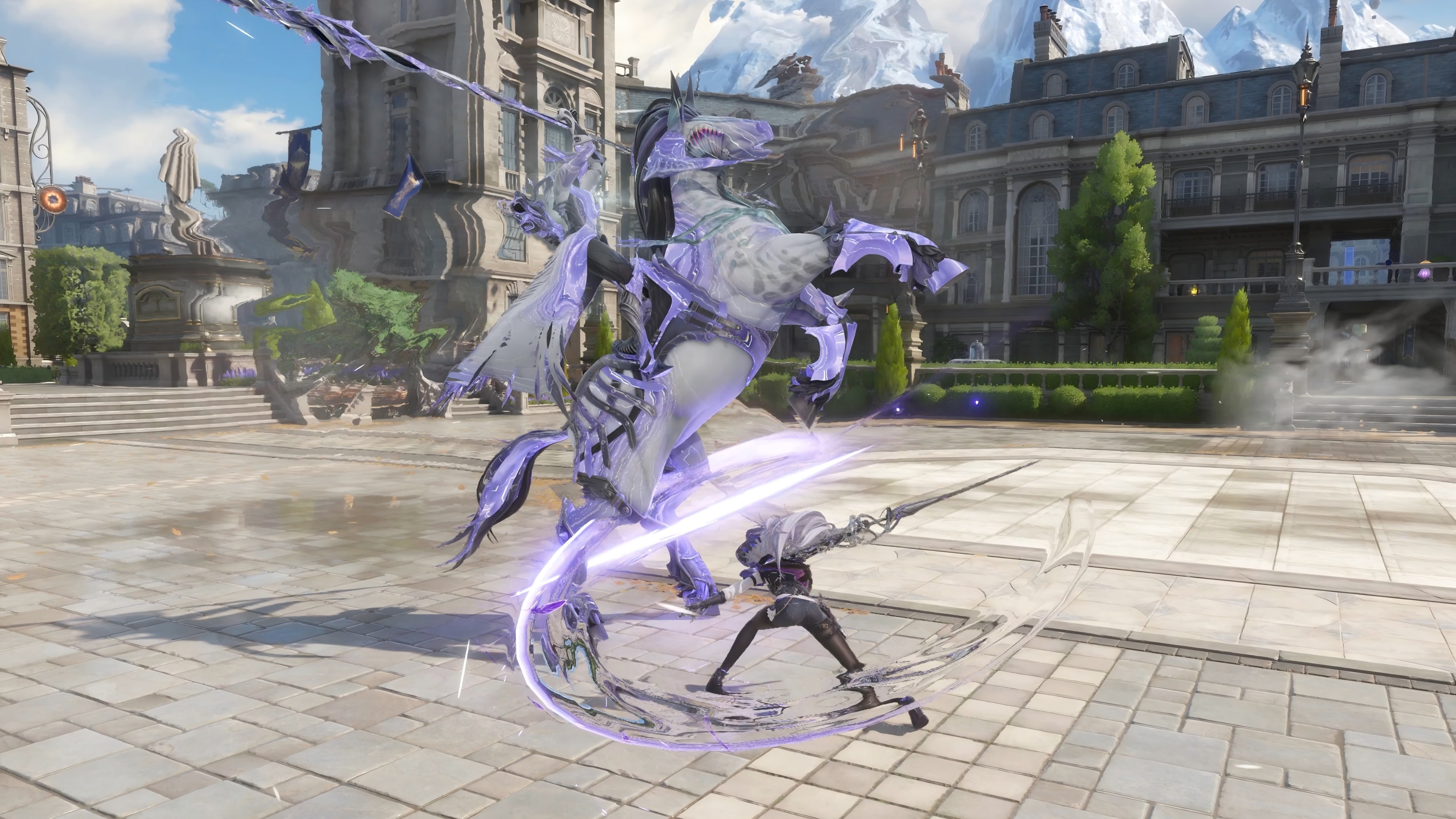
Two boss encounters have been named in official material. The Cinderella fight is documented from the first closed beta, where it ran in two phases across a pumpkin carriage and a dismounted duel. A second, Vita et Mors, was named in August 2026 when footage from it appeared in the official gamescom trailer. It is a pair of massive humanoid figures that attack each other as well as the player, and it was the boss of the hands-on demo built for that show, where it followed the award ceremony that opens the story. Its arena, its full move set and its exact place in the story have not been published.
Synchronised Combat
Switching characters mid-action no longer cancels the outgoing character. When a character is performing a Charged Attack or a Charged Skill, swapping leaves them on the field until that action resolves, so two or more party members can be fighting at once. Overlapping charged actions deliberately is the skill ceiling of the new character switching model.
Resonance Effects
Characters build a Resonance meter as they attack. When it fills, a Resonance Effect fires based on that character's Reactor attribute and sharply raises their damage output.
Casual Mode
Casual Mode is the combat-assist option added in the second closed beta. Repeatedly clicking the left mouse button produces full combo strings without manual input timing, and with the mode enabled a Time Dilation window opens, with an on-screen prompt, just before an incoming hit. It exists so that players who want the story and the city are not gated behind execution-heavy combat.
These systems describe the second closed beta build. The first beta's Silverdrip, Catalyst and Ambush behaviour documented above has not been formally retired, but it has not been restated for this build either, so treat the older material as first-beta history where the two disagree.
The Three Combat Verbs
The official world overview reduces the whole system to three actions, which is a useful way to read everything above.
Verb | Role | What it hangs on |
|---|---|---|
Tactical Assault | The offensive verb: seizing an opening when the enemy gives one | The swap and charge systems, which exist to keep an opening available |
Parry | The defensive verb: holding position and turning an incoming strike back | The yellow circle that telegraphs an enemy wind-up |
Execute | The closer: exploiting a weakness with precision once the target is vulnerable | The Stun gauge, which fills to make an Execution available |
Every mechanic on this page hangs off one of the three.
What the Public Demo Showed
A playable demo ran at the August 2026 convention, built for PC, with the team stating that it is working toward the same parity on every platform. It opens on the award ceremony that starts the story and closes on a boss fight. Four characters were available on each station and could be switched between in real time, the same way they can in the campaign.
The control scheme in that build is small: a regular attack, a special attack and an ultimate. The ultimate is deliberately not spammable and works as a turning point in a boss fight rather than as a rotation filler. Firearm combat also appeared, the first time gun action had been put in front of Western players. Gun action was present in the earlier closed beta stages and was rebuilt into a different form for this build.
Movement between fights is parkour by default, with the Silverium Pegasus and ziplines available on top of it. The mount enters flight from launchpads placed around the city, or by jumping from a high point and calling it during the fall. The wider layer is covered on Traversal and Mounts.
Announced Combat Changes
After the second closed beta the team published the combat work it intends to do next. Three strands were named. Enemy placement and camera rules are being refined so that groups, flying enemies and fast movers stay readable, with better target control during a fight. Animation, visual effects, sound and enemy hit reactions are being polished, with the stated aim of giving individual characters and weapons a more distinct feel on impact. And the combat interface and its tutorials are being rebuilt, because the effects of support-character buffs, of the Reactor, of Catalysts and of buff states were all easy to miss during a fight.
That last item is worth reading twice as documentation rather than as a promise: it confirms that Reactors and Catalysts are both live systems in the current build, which the pre-test system description had not restated.
The team's own reading of the second test's feedback matches that list. What players praised was the reworked battle system and the interface: impact feel, controls and legibility. What they flagged as still needing work was the combat camera, the feel of some weapons and skills, and the handling of guard and dodge.