

This article is incomplete
Some sections are missing or need additional details. Help improve it by contributing.
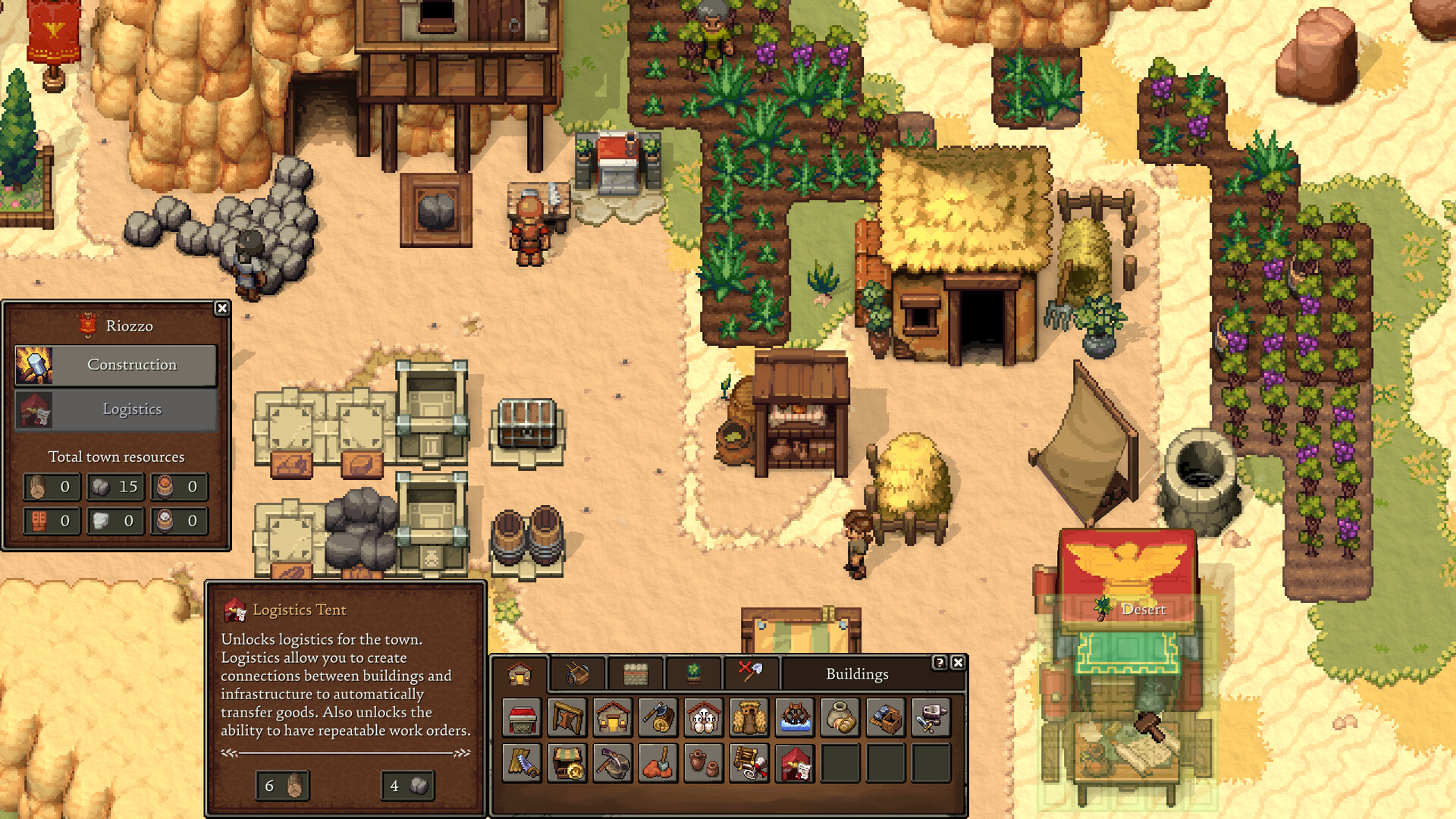
Resource handling is one of Romestead's signature systems. The game has a regular inventory for most items, but heavy resources are treated as physical objects that exist in the world rather than as inventory entries. This changes how players move materials around and even how they fight.
Physical Resources
Heavy materials such as lumber and rocks must be physically handled. Players can pick them up, carry them, throw them, and haul them. Because these resources are physical, moving large quantities is a logistical task rather than a menu action. The system is summarized by the game as requiring no inventory management for these heavy items: an enemy closing in can even be met by chucking a boulder at it.
Lumber: chopped from trees with a Lumber Axe; carried as a log.
Stone: mined from rock veins with a Pickaxe; carried in chunks.
Clay: gathered from clay deposits and the Clay Pit; turns to Ash-Pit material in the volcano.
Brick: processed building block.
Concrete: processed at the concrete mixer added with Early Access.
Marble: high-tier building material.
Carts and Hauling
To bring resources back from the wild in bulk, players can build carts. Carts let a player or group haul lumber, rocks, and other heavy materials over distance, which is central to supplying a growing settlement. Loading the carts is part of preparing for an expedition.
Wooden Cart: starter cart, crafted at the Carpenter's Workshop.
Bronze Cart: upgrade cart added in patch 0.20.1_14 with the World Map 2.0 update. A bug that let it fall through cliffs was fixed in 0.26.1.
Carts can be used to deliver materials directly to construction sites, removing the need to walk loads in by hand. Demolishing a building now returns 100% of resources used. Since the Autumn Update (0.26.1, released 31 August 2026) that includes the materials of an upgraded building's previous tiers, and demolished decorations return their materials as well.
Liquids and Storage
Many recipes need water, wine, oil, or sauce. These are stored and produced in dolium vessels:
Bucket: carried water container; can be emptied onto farmland with the E key.
Well: settlement water source.
Beer Dolium, Wine Dolium, Olive Oil Dolium, Garum Dolium: production and storage vessels.
Inventory and Storage
For lighter items, the game uses a standard inventory. Early Access improved inventory management with the ability to expand player inventory space, an inventory sorting button, and an inventory trash can. Chests and Storage Boxes can be renamed for organization. Patch 0.26.1_4 (2 September 2026) added a Deposit All button to inventories, which 0.26.1_6 made work with the Food Storage, and 0.26.1 gave the Material Storage a drop-off zone that never fills up.
Patch 0.26.2_3 (October 1, 2026) increased chest health.
Throwing as a Tool
Heavy resources can be thrown, including at enemies in combat. The Throwing skill scales damage from thrown objects. Pots (Small, Massive, Explosive, Incendiary, Lightning, Poison) are thrown for area effect. This is how Resource Management feeds directly into Combat.
Currency
Coins are a separate inventory category. From lowest to highest: Quadran, Denarius, Aureus, Electrum. Markets accept any coin; the minimum sale price was set to 1 Quadran in the launch balance pass. See Currency and Economy for trade details.