
Loading...
Loading...
Tom Clancy's Rainbow Six Tactics
September 9, 2026 at 01:16 AM
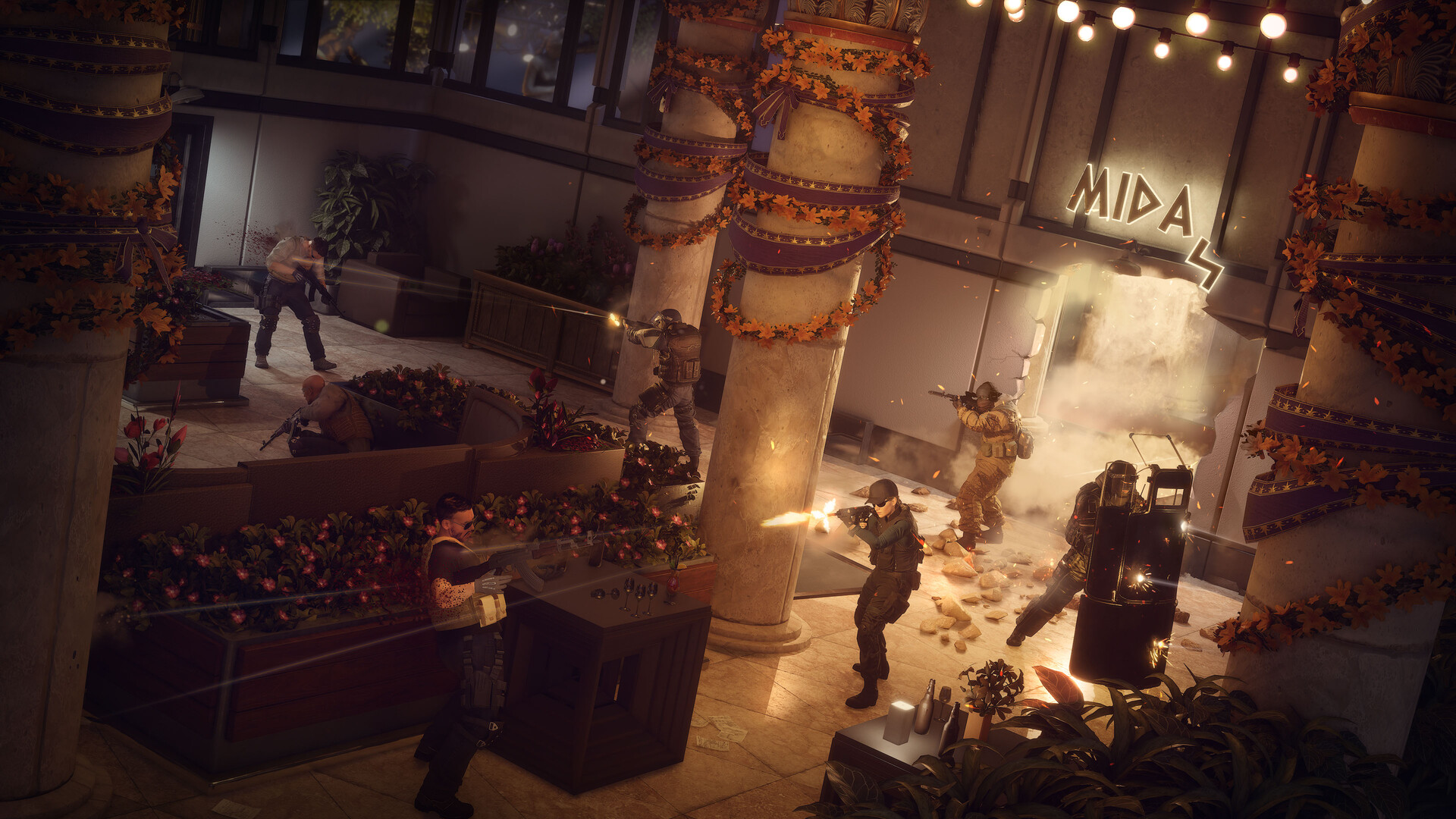
Added official screenshot (2026-09-08)
Tom Clancy's Rainbow Six Tactics is a single-player, turn-based tactical game set in the Rainbow Six universe. It was revealed on 25 August 2026 during gamescom Opening Night Live and is scheduled for 2027. Ubisoft's Paris studio is developing it and Ubisoft is publishing it. There is no multiplayer component, no in-game store and no live-service structure: the game is bought once and played through as a campaign.
You play as Six, the leader of the elite Rainbow squad. The premise is a new global conspiracy that forces Rainbow back into action, and your job as the newly appointed commander is to uncover and dismantle the shadow organisation arming groups around the world. That plays out in two halves. Between deployments you run the unit from a headquarters, reviewing intelligence and building up your people. In the field you take direct control of a squad and fight through the mission turn by turn. See Story and Setting for the narrative frame and Headquarters and Intelligence for the between-mission layer.
The playable cast is drawn from Rainbow Six Siege. Fifteen Operators appear, each carrying their own abilities and specialised gadgets across into a turn-based format, and each gaining a set of skill trees that do not exist in Siege. You take up to four of them into any given mission and pick the four to suit the job in front of you.
Detail | Value |
|---|---|
Full title | Tom Clancy's Rainbow Six Tactics |
Genre | Turn-based tactics, single-player |
Developer | |
Publisher | Ubisoft |
Announced | 25 August 2026, gamescom Opening Night Live |
Release window | 2027, exact date to be announced. See Release Date and Platforms |
Platforms | PC, PlayStation 5, Xbox Series X|S, plus cloud services |
Players | Single-player only |
Squad size | Up to four Operators per mission |
Roster | 15 Operators carried over from Siege |
Locations | Over 45 around the world. See Maps |
Monetisation | None. No in-game store, no live-service structure |
The core loop is a turn-based tactical campaign. Missions run on moves and actions where cover, overwatch and lines of sight decide fights, and where a bad approach gets people killed rather than simply costing you time. What separates it from other games built on that foundation is the amount of Rainbow Six machinery bolted onto the front and the sides of the turn-based part.
Every mission opens with a real-time reconnaissance stage rather than a turn-based one. You send drones ahead to learn the ground, and because interiors are covered by fog of war while open outdoor areas are not, that scouting is the difference between an informed plan and a guess. Once you have the layout, the Breach lets you script every squad member's movement and attacks in advance and then execute them all at once, which is where the game leans hardest on its source material. After that first contact the fight settles into turns. Mission Structure covers the full sequence.
Destruction runs through all of it. Walls, cover and structures come apart under fire and explosives, which means the map you scouted is not the map you finish the mission on. Opening a new sightline through a wall, removing the cover an enemy is relying on, or making an entrance where the level did not provide one are all normal tactical options rather than scripted set pieces.
Gameplay collects the moment-to-moment systems in one place, including the parts of the turn-based layer that were shown at reveal.
Missions are counter-terrorism operations against armed groups, and three objective types have been named.
Mission Type | Objective |
|---|---|
Hostage Rescue | Reach and extract civilians held by the enemy |
Bomb Disposal | Locate and defuse an explosive device |
Target Elimination | Remove a specific high-value individual |
A capture objective, in which a person of interest is taken alive and escorted out rather than killed, was also shown at reveal. A demonstration mission ran a squad across an industrial dock, into a warehouse, and then back out escorting a man on foot to a waiting boat.
An optional mode makes losses permanent: an Operator hurt badly enough is gone for the rest of the campaign, and you continue with whoever is left. It can be switched on at any difficulty, so the tension is available without also committing to the hardest combat settings. That mode is covered on Permadeath Mode, including the caveat that it has not yet appeared in official store or announcement copy.
Field performance also feeds a resource called Order Points, which can be spent mid-mission on short-term boosts such as extra damage or extra movement. Enemies accumulate them too, and a counter on screen shows when the opposition will next spend theirs, which turns the buff economy into something you have to time rather than simply bank.
The story runs alongside Rainbow Six Siege's own timeline, in the gap between that game's tenth and eleventh years, and it was written in collaboration with the Siege narrative team so that the two do not contradict each other. The stated design goal is that each game stands on its own: playing one should never feel like homework for the other, while playing both should surface connecting threads. The player character has been identified as Paul Bishop, the protagonist of the two Rainbow Six Vegas games, now leading Rainbow.
It is also the first Rainbow Six game built purely as a single-player experience since 2008, a gap of roughly nineteen years. That is a fact about the series rather than about this game's content, but it explains a good deal about how the project has been positioned.
An exact release date. Only the 2027 window has been given.
Price, editions and any preorder content.
The identity of most of the fifteen Operators. Only a partial list has ever been named.
Full system requirements. Only a 64-bit processor and Windows 11 are currently listed.
The game engine. No first-party statement has been made.
Any post-launch content plan. Ubisoft has said there is no live-service structure, which is not the same as a statement about downloadable content.
