

Every Operator in Tom Clancy's Rainbow Six Tactics has their own skill tree. Ubisoft has stated this as a headline feature of the roster: fifteen Operators, each with unique abilities, specialised gadgets, and distinct skill trees. It is one of the clearest points of departure from the game the roster is borrowed from, where Operators are fixed loadouts rather than characters you grow.
Why They Exist
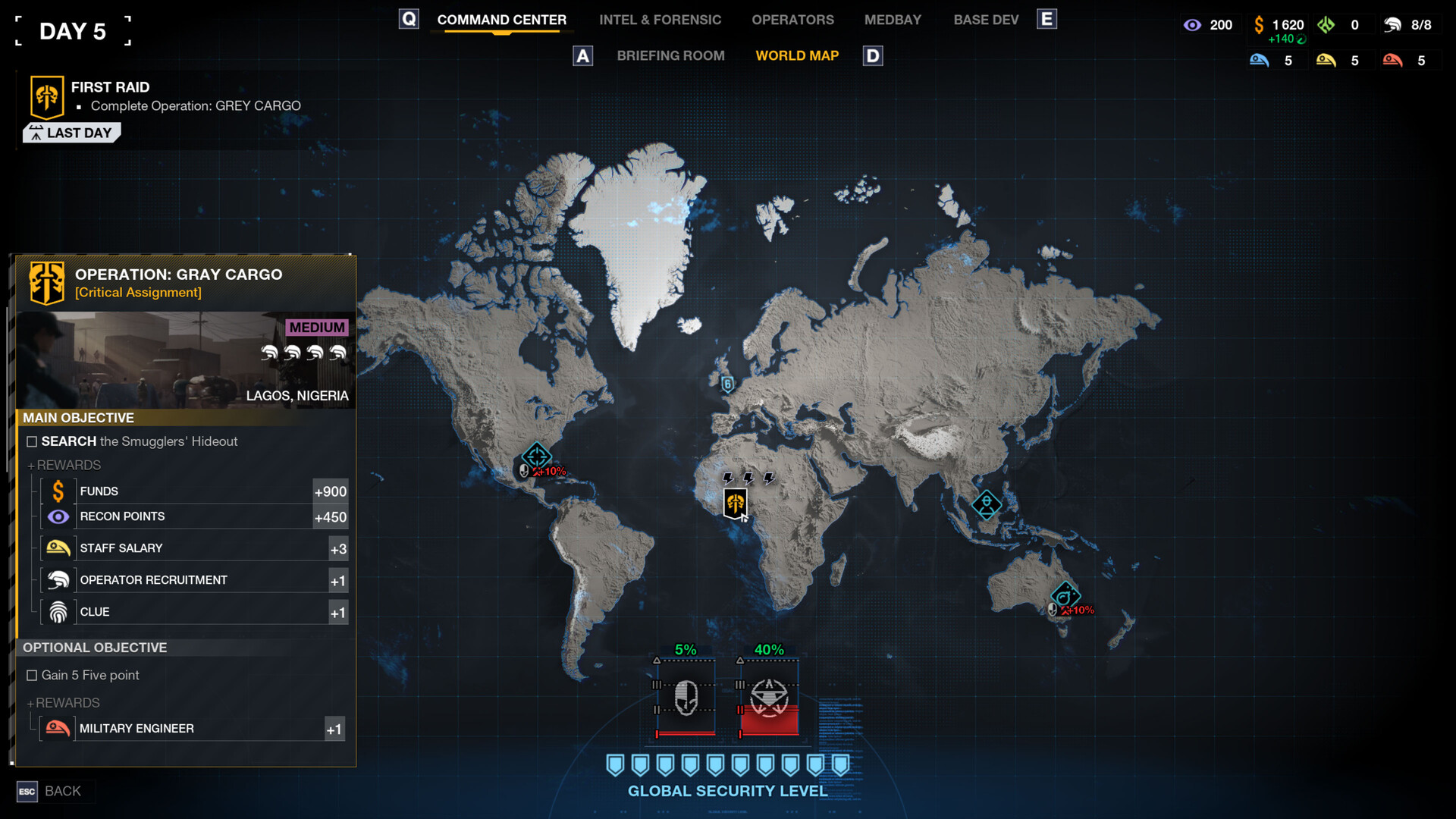
The skill trees are the campaign's answer to a problem the game creates for itself. You take the same small squad through a long campaign, four at a time from a pool of fifteen, so the Operators need to become more capable as the missions get harder. Ubisoft describes the between-mission loop as training your Operators to upgrade their skillset, and the trees are where that upgrade is spent. See Headquarters and Intelligence for the surrounding systems and Gameplay for how abilities behave in the field.
They also give squad selection a second dimension. Choosing who to take on a mission is one decision; choosing who to invest in over the whole campaign is another, and the two interact. An Operator you never deploy is an Operator you never develop, which quietly pushes against always fielding the same four.
What Is Confirmed
Point | Status |
|---|---|
Every Operator has a skill tree | Confirmed |
Trees are distinct per Operator rather than shared | Confirmed |
Trees are developed between missions, not mid-mission | Confirmed |
Development happens through training at headquarters | Confirmed |
Loadouts can be customised alongside training | Confirmed |
Operator health is managed as a separate system | Confirmed |
Specific nodes, tiers or costs | Not announced |
Ubisoft's framing is that abilities, gadgets and trees together are what ensure no two missions play out quite the same way. That is a statement about variety across the roster, not a claim that any single tree branches into wildly different builds, and the material published so far does not settle which of the two it is.
How They Connect to the Rest of the Game
Three systems sit next to the trees and are easy to confuse with them. Training raises an Operator's skillset. Health management deals with the physical state of the Operator between deployments, which matters a great deal when Permadeath Mode is switched on and a badly hurt Operator can be lost for good. Loadout customisation changes the gear an Operator carries. These are described as separate levers, not as one progression bar.
None of this is bought with a currency you buy with money. The game has no in-game store and no live-service structure, so progression is entirely internal to the campaign and paid for with what you recover in the field.
Not Yet Confirmed
The contents of any skill tree. Not one node has been shown or named.
How many tiers or nodes a tree contains, and whether trees branch or run in a line.
What resource pays for skill points, and whether it is experience, recovered intelligence, or something else.
Whether an Operator earns progression only by being deployed, or passively as well.
Whether skill choices can be reset or respecialised.
Whether a tree can be completed in a single campaign, or whether choices are exclusive.
What happens to a tree's investment if that Operator is lost under permadeath rules.
Whether headquarters upgrades gate access to higher tree tiers.