
Loading...
Loading...
Multiplayer and Co-Op
June 4, 2026 at 09:46 PM
Added a player-graves recovery note to world persistence
Romestead is built to be played either as a standalone single-player journey or as a cooperative experience. The world supports one to eight players, and difficulty scales depending on how many players are in the world.
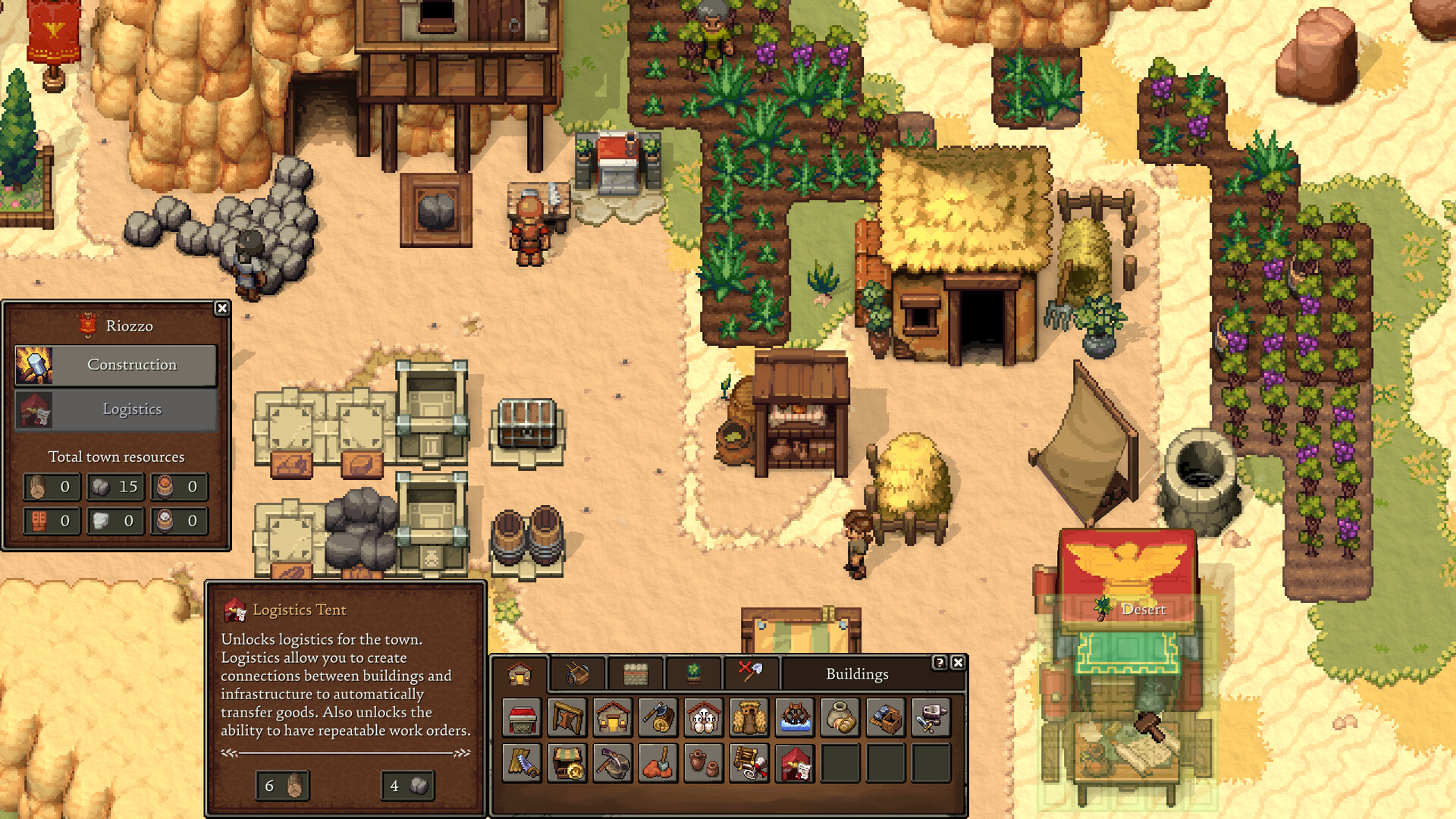
The game is finely tuned for one to four players and scales for groups up to eight. Beartwigs has noted that they balance for up to eight players but do not stop players from inviting more. Steam lists the game as supporting single-player, online co-op, and LAN co-op.
Aspect | Detail |
|---|---|
Players supported | 1 to 8 |
Tuned for | 1 to 4 players |
Co-op types | Online co-op and LAN co-op |
Cross-play | Not applicable (PC-only) |
Difficulty | Scales to the number of players in the world |
Friend invites | Steam friends menu (Steam Friend menu improvements landed in 0.20.2_5) |
Session privacy | Password setting for hosting (added 0.23.3_0) |
Cooperative play is where role specialization shines. While solo players do a bit of everything, a co-op group can divide responsibilities so members focus on:
Fighting the dead and biome bosses.
Gathering and hauling heavy resources.
Crafting at the Workbench, Blacksmith, Leatherworker, and Carpenter's Workshop.
Farming and managing the Farmstead, Beehive, and food chain.
Automating production via the Logistics Tent and Trading Post.
Growing the settlement and recruiting citizens.
Restoring the gods is also a group decision: players choose together which deities to empower. Because each god offers different buffs and technology unlocks, a co-op group usually picks one or two gods to focus on first. See The Gods and Worship.
Standalone dedicated server software was released alongside the Early Access launch, letting players host their own persistent worlds from day one. The dedicated server runs without a player connected. The game also supports Steam Cloud and Family Sharing.
A launch-week hotfix added a SleepThresholdMs config option for dedicated servers. It controls whether the server thread sleeps when load is low: the default of 10 lowers CPU use, accepted values run from 1.0 to 16.5, and setting it to -1 restores the previous behaviour that minimises timing jitter at the cost of using a full CPU core. The server thread also now sleeps while no players are connected, cutting idle CPU usage.
Each world stores its own state, including buildings, citizens, quest progress, and the seed visible via the }worldseed chat command. Players can join an existing world hosted by a friend through Steam, or via a direct IP for LAN play. Demo saves are not compatible with Early Access, so groups returning from the demo should start a new world together.
Player graves: when you die, your gear is left at a grave in the world. A launch-week update made grave recovery more reliable: invalid grave markers are cleaned up when you reconnect, an unreachable grave can be relocated to the start of its dungeon, and if a grave is lost or destroyed the gravestone is recreated at the world spawn point the next time the world loads. This recreation was not applied to graves that were already lost before the fix.
Agree on the chosen first god before lighting the Altar: switching mid-progression wastes Worship Points.
Assign a single player to citizen management; happiness and food are easier to maintain with one set of eyes on them.
Use shared Storage Boxes with renamed labels (added in 0.21.1_3) to avoid confusion over where things go.
In ranged/melee/magic mixed parties, route caster offerings through Diana once Vulcan is reserved for forging.
For getting a group started, see Getting Started.
