
Loading...
Loading...
Combat System
May 9, 2026 at 09:52 AM
Added overview of siege battles, infiltration linkage, and the new in-build pages
Combat in Huaxia: Warring States works at two scales: personal duels and small-scale skirmishes on one hand, and large strategic engagements between armies on the other. Both layers share a single set of cosmological modifiers driven by the Five Elements, Yin-Yang, and Eight Trigrams overlay, but they reward very different play.
On foot, the player controls a single character whose moves are gated by their chosen weapon, martial art, and cultivation path. Demo-era figures listed twenty-two weapon categories, eighteen martial-arts forms, and eight broader combat styles, with the Early Access build retuning balance across all of these. Stamina, posture, and elemental affinity each play a role in trades.
Layer | Role |
|---|---|
Weapon (see Weapons) | Defines reach, attack speed, stagger profile, and which elemental category the weapon falls into |
Martial Art (see Martial Arts) | Selects the move set, special techniques, and unique finishers; advanced forms gate behind specific schools or masters |
Cultivation Path (see Cultivation Paths) | Three internal paths covering Essence, Qi, and Spirit shape long-term cultivation progression |
Elemental Affinity | The elemental category your weapon and form belong to gives you advantage against some elemental types and disadvantage against others, layered with the yin-yang and trigram positions |
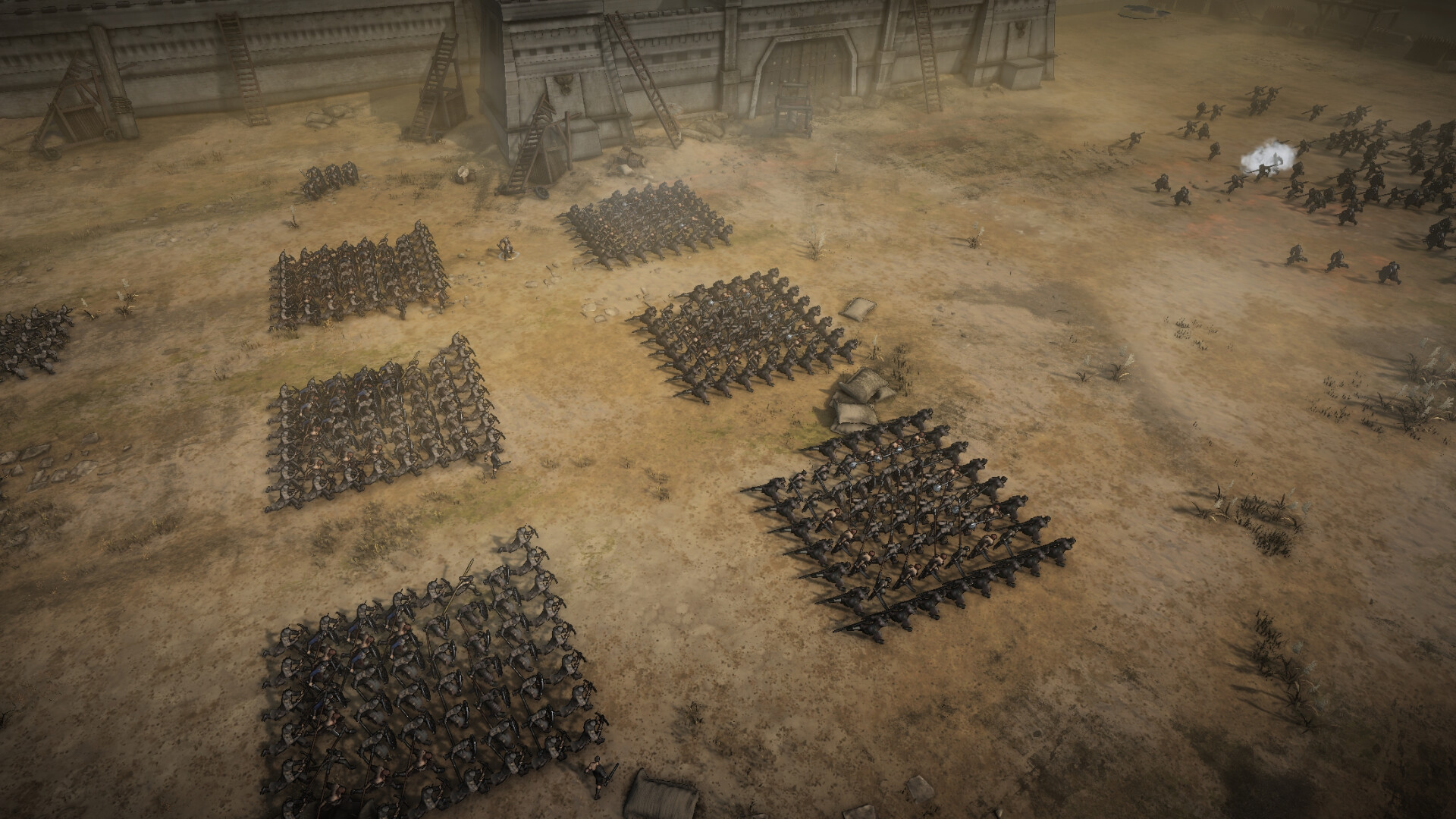
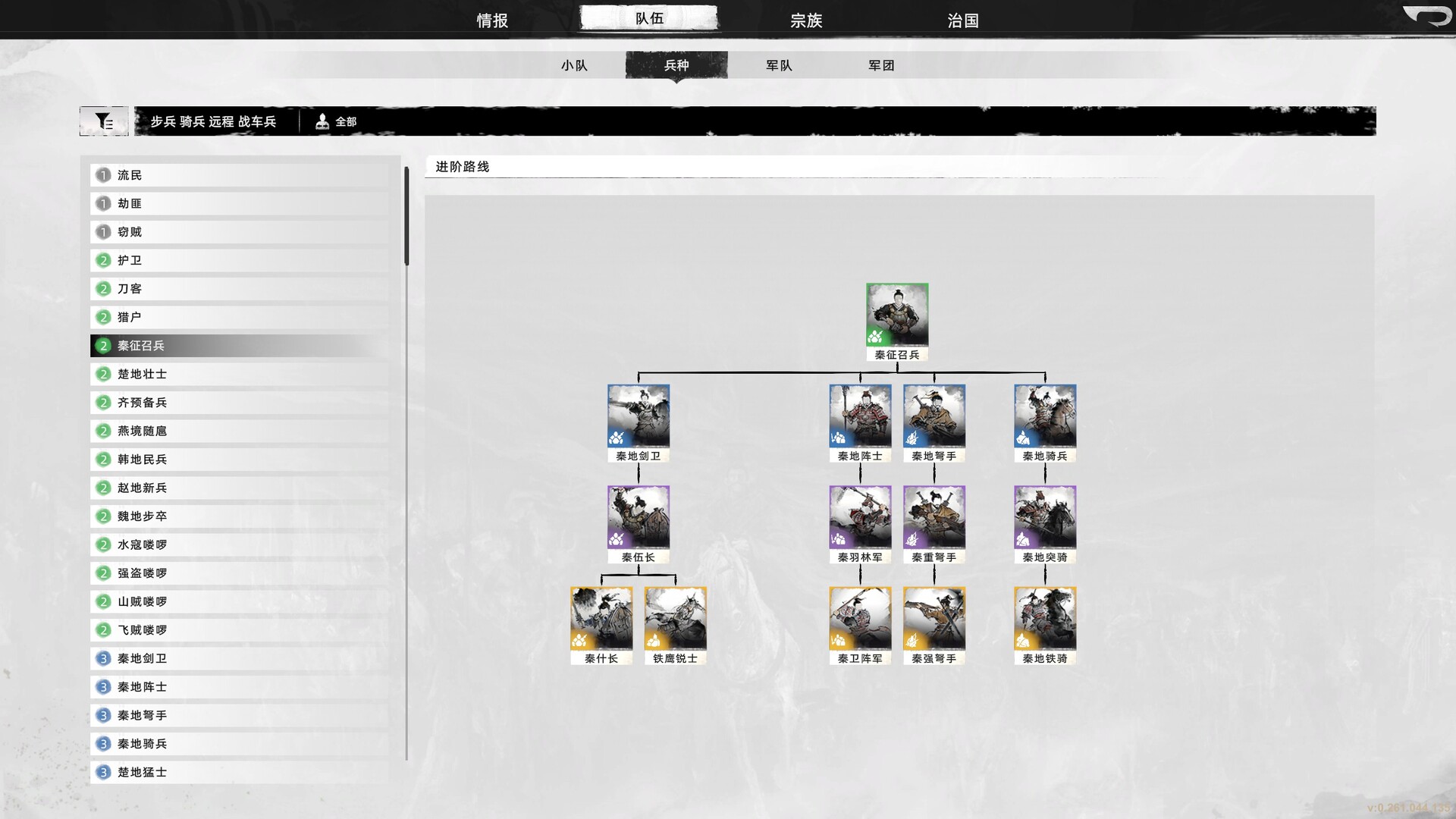
Once you raise an army, battles play out as strategic engagements with sixty or more unit types available across the Warring States factions. Cavalry, infantry, archers, siege engines, and unique national high-tier units each have their own role; formation choice and ground type swing outcomes as much as raw unit count. Strategic battles also respect the elemental and trigram overlay where it applies to special unit abilities.
Formations and angles of approach matter; charging cavalry into prepared spear lines is a classic loss
Sieges are slower, with stronghold defenses, supply lines, and defender retainer skills all in play
Some engagements let you drop into the personal layer to lead a charge or duel an enemy general; the rest are resolved at the army level
Every weapon, martial art, and many unit abilities carry a cosmological tag drawn from the Five Elements, Yin-Yang, and Eight Trigrams framework. The frameworks form a layered rock-paper-scissors: the five-element generation and overcoming cycles act on top of the yin-yang complementary axis, with the eight trigrams adding directional and relational positions on the same elemental wheel.
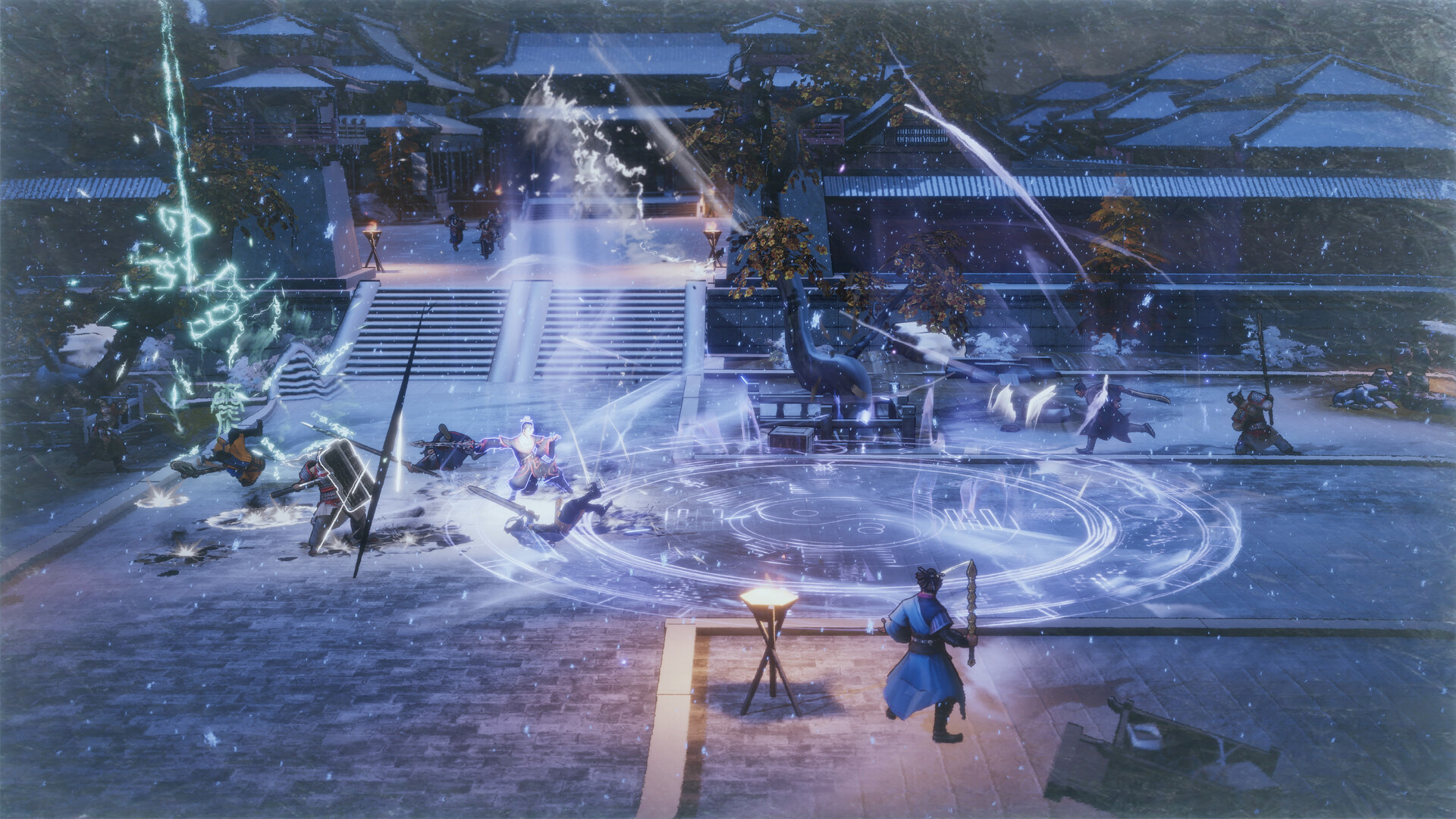
Solo characters cap out at strong but not unbeatable. Recruiting combat-oriented retainers lets you cover gaps in your kit: a ranged retainer for archery roles, a defensive retainer to soak hits, a strategist retainer for pre-battle bonuses on the strategic layer.
Combat numbers are among the most volatile parts of the Early Access build. Damage values, weapon scaling, and unit stat blocks have been retuned in nearly every major patch. This page describes the structural shape of the system; concrete numbers belong on the dedicated weapon, martial-art, and unit pages where each can be timestamped against the build it was measured in.
See also: Weapons, Martial Arts, Unit Types, Five Elements, Yin-Yang, and Eight Trigrams, Cultivation Paths.
Beyond field battles, the strategic combat layer also runs sieges against cities and strongholds. A siege is a dedicated battle scene that uses walls, towers, scaling ladders, and breach attempts at gates. The developer has stated the system is being optimised toward five hundred versus five hundred troop battles, which sets the upper bound for what a siege can hold. The siege battles page covers preparation, the battle itself, and the bug-fix and quality-of-life history during Early Access.
Personal and strategic combat are not the only ways a clan or wanderer presses an advantage. Infiltration and disguise let a small team enter a rival prefecture's city under cover, trade, recruit, and gather information without raising armies. Skilled players soften a target through repeated infiltration before declaring open war, blending combat with diplomacy and espionage.