
This article is incomplete
Some sections are missing or need additional details. Help improve it by contributing.
Alongside farming, Grave Seasons lets the player fish and mine to gather additional resources. Both activities feed the local economy and supply materials used in Crafting and Cooking.
Fishing
Fishing spots are spread across the map: the player can cast at a river, at a lake, or out at the ocean. The player can fish in the waters around Ashenridge, and also in the rest rooms that sit between levels of the mines. Catching fish uses a timing minigame in which a needle moves back and forth across a meter, and the player clicks when it lines up with a sweet spot. The same minigame is reused for the lockpicking system that opens locked doors during investigations. Fish are among the goods that can be sold in town as part of the local economy.
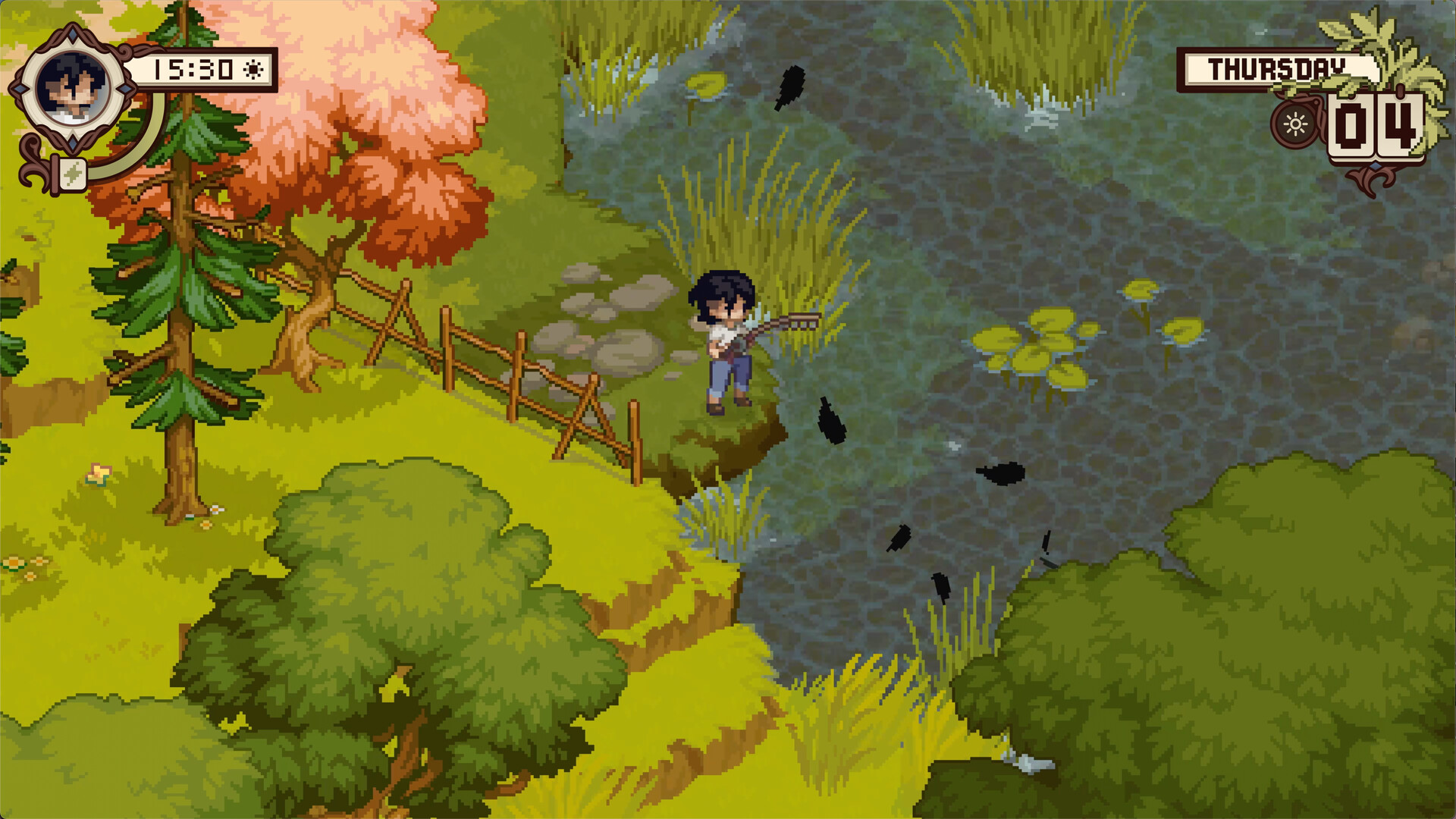
The town's fisherman, Noa, also sells the bait the player needs, and the developers have warned that fishing without it produces distinctly odd catches. He runs a store called The Big Fish by the docks where he sells fish and tackle. See Characters for more on the residents.
Mining
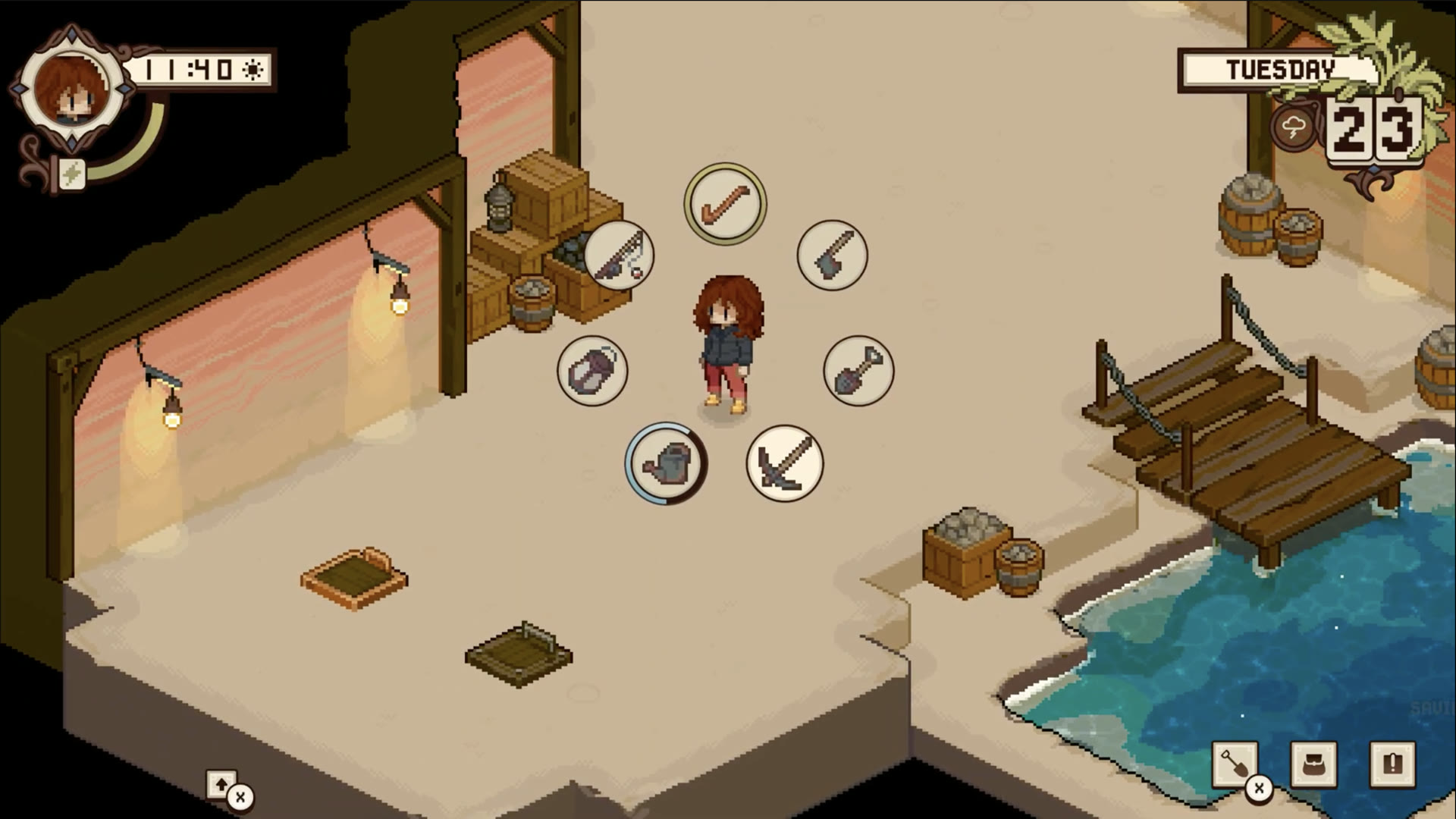
Mining lets the player dig for ore using the pickaxe. Gathered ore can be smelted into ingots, which serve as crafting materials. As with farming and fishing, the materials pulled from mining support both the economy and the items the player crafts to investigate and protect against the threat in town.
The mine sits past a wooden bridge over a waterfall on the way out of town. It was blocked off in the demo build shown publicly at PAX East 2026, and the studio described its interior in detail in a written devlog on November 4, 2026.
How the Mines Work
The studio describes the mines as a roguelike. A trip down runs through a series of levels that are generated in code from hand-made art and modular tilesets, so the layout is not fixed. Simple rules chain corridors into larger chambers while keeping the essentials in place: every level has an escape route and a trapdoor down to the next one.
There is no extensive combat in the mines and no enemies to fight. The risk comes from the player's own time and energy instead, and that time pressure builds as a trip goes on. Preparation is part of the loop: the developers say some team members buy or craft very specific items before a trip to keep their energy up.
Mineable rocks and forageable items are spread through each level using loot tables specific to each biome, with obstacles and other surprises placed on the deeper levels. The developers also promise secrets to uncover. Memorable waypoints between levels are marked by hand-built rest rooms where the player can take a breather and do some fishing, and the player can return to these rooms at any time.
Mine Layers
Depth | What It Looks Like |
|---|---|
First few layers | Modelled on real mines, including salt mines and overgrown or abandoned workings. The salt mine is the first layer, picked for its unusual colour palette and patterns. |
Deeper layers | More natural, cave-like structures. The rock formations increasingly break from reality, and the player starts to find hints of what lies beneath Ashenridge. |
Each set of levels uses its own group of tiles built around a different visual theme, and the mines as a whole are a very large region. To keep long trips from feeling silent, the audio team wrote a source track for mining and then composed variations of it for the different biomes, close enough to belong together but distinct enough that moving into a new area feels fresh.
Why These Activities Matter
Grow crops, fish, mine, and participate in the local economy by selling goods in town. Just as importantly, what the player gathers plays a critical role in unraveling the mysteries of Ashenridge, since raw materials become the crafted items used to ward off whatever is stalking the town. See The Murder Mystery for how investigation ties into resource gathering.