
Loading...
Loading...
Urbus
May 8, 2026 at 08:39 AM
Removed redundant H1 heading from article body
Urbus is the hub city of Floor 2 in Echoes of Aincrad. Once the player clears Floor 1, Urbus takes over as the staging point for the rest of the campaign, with its own quest-givers, vendors, and paths out to the surrounding villages of Marome Village and Taran Village.
Urbus is the central settlement of the second floor of Aincrad and the second of the two playable floors in Echoes of Aincrad. The game is intentionally scoped to Floors 1 and 2, with Urbus filling the same role on the second floor that the Town of Beginnings fills on the first. Once the player and their partner have pushed past the first floor labyrinth and the floor boss has been cleared, Urbus becomes the new home base for the remainder of the campaign. Subsequent main story missions, side content, and floor-spanning preparation all run through this town.
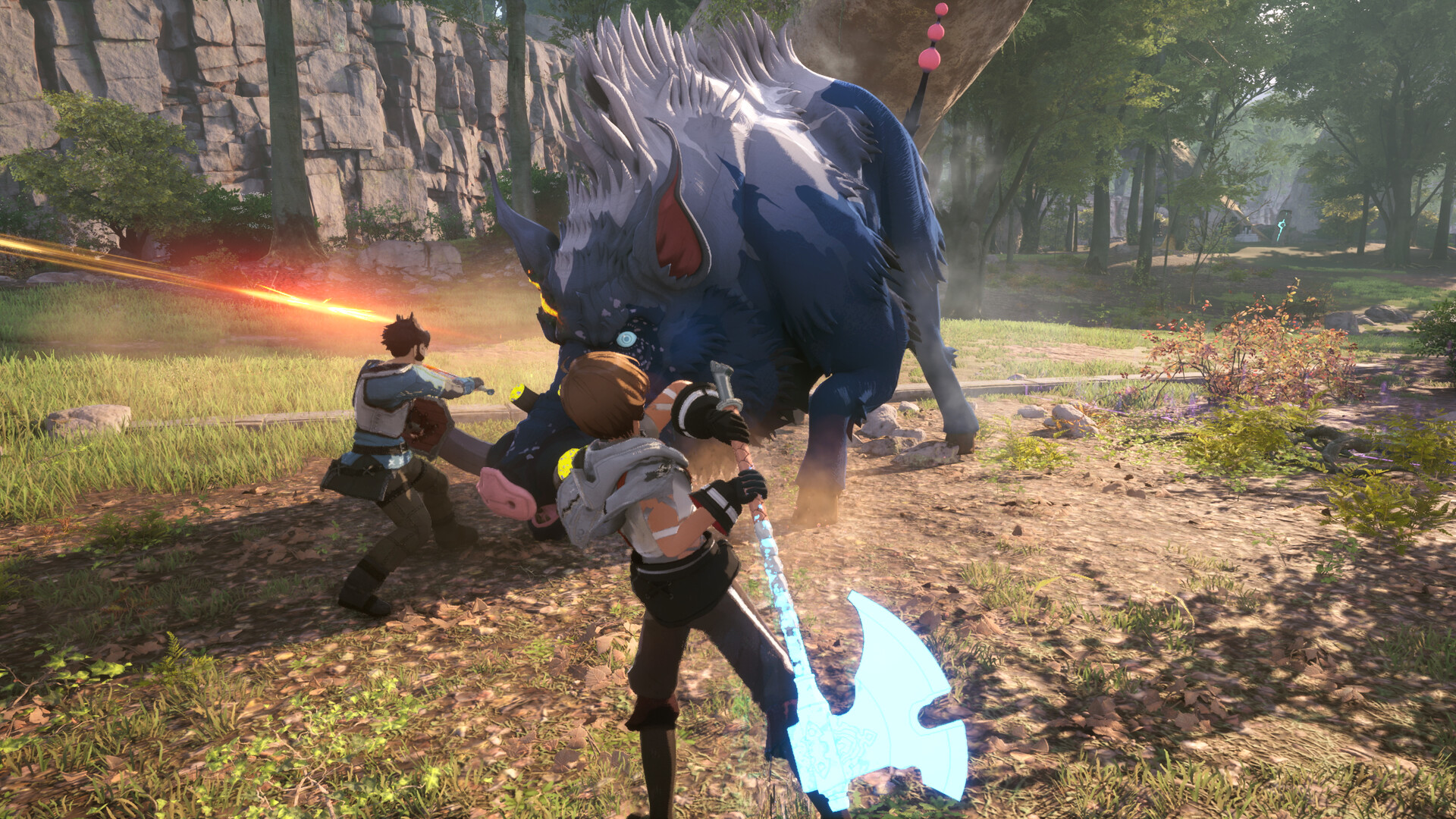
The producer of the game has pointed to Urbus by name as the floor two hub when describing the scope of this entry, which makes it one of the most explicitly confirmed locations in the game outside of the starting town. While many of the smaller villages on Floor 2 are mentioned in passing, Urbus is the floor's anchor: the place every Floor 2 questline funnels back to, and the only Floor 2 settlement framed as a full city.
Functionally, Urbus does for the second leg of the journey what the first floor hub does for the opening act. It houses the smithy where weapons and armor are improved, the merchants where consumables and gear are restocked, and the quest givers who hand out the Floor 2 missions that define the second half of the main campaign. Players who have grown comfortable with the rhythm of returning to a hub between expeditions will find that rhythm carries straight over: prepare in town, warp out to the relevant Floor 2 zone, run the mission, return to Urbus to bank loot, upgrade gear, and pick up the next thread.
The smithy in particular gains importance once the campaign reaches Urbus. Floor 2 enemies hit harder than their Floor 1 counterparts, and the gear upgrades available at the Urbus smithy are framed as part of the expected preparation for pushing toward the Floor 2 labyrinth. Visual changes to upgraded equipment also start to compound at this point in the game, so the trip to the smithy is both a stat decision and a cosmetic one.
Quest givers in Urbus pick up the slack as the player transitions out of the first floor's content. The exact roster of named NPCs at the Urbus terminal is not yet detailed in any first party material, but the structural role the city plays is clear: it is the staging point where Floor 2 main story missions and side quests are picked up, where party preparation happens, and where the player warps back to between excursions into the surrounding wilderness.
In the established Aincrad fiction, Urbus is described as a compact city roughly three hundred meters in diameter, carved into a flat-topped mountain and set inside a crater. That layout, with the city perched in a natural bowl on top of a mesa, is one of the recognizable visual signatures of the second floor. It places Urbus high above the surrounding plains, with the rest of the floor's landscape spilling away in every direction below the city walls.
The in-game implementation has not been formally captioned with these dimensions, so this layout sits in the background as canon context rather than as a confirmed in-game measurement. What can be said with confidence is that Urbus is a city, not a small settlement, and that it is positioned as the main civic and commercial center of Floor 2. Any reader who is already familiar with the broader fiction can expect the broad strokes of the canon Urbus to be recognizable when they reach the floor.
Two smaller settlements share the second floor with Urbus, and both are framed in coverage as outliers that orbit the central city.
Marome Village sits roughly three kilometers southeast of Urbus and is the closer of the two outlying villages. It is a small settlement rather than a service hub, and players who need a smithy or a properly stocked merchant are expected to return to Urbus rather than rely on the village's own facilities.
Taran Village is positioned as the closest settlement to the second floor labyrinth and is the staging point for assaults on the floor's dungeon. Where Urbus is the city for civic recovery, Taran is the forward camp for pushing on the floor boss.
The combination of these three named locations describes the general shape of Floor 2 traffic: Urbus is the hub people return to, Marome is a side trip located in the surrounding plains, and Taran is the launch point for the final raid of the floor. Most Floor 2 expeditions begin and end at Urbus regardless of which of the smaller villages they pass through.
The road to Urbus runs through the labyrinth on the first floor and the fight against Illfang the Kobold Lord at the top of it. Clearing that boss is what opens the stairway up from Floor 1 and lets the player and their partner step onto Floor 2 for the first time. The transition is not just narrative: it is the moment Urbus replaces the first floor town as the game's home base, and most of the systems the player is already familiar with are simply rehoused inside the new city.
Floor 2 is not a brief epilogue. Together with Floor 1, it makes up the full main campaign of this entry, and the developers have framed the two floors as a complete story rather than a sample. The thirty hours of main story plus roughly twenty hours of side content land across the pair of floors, which means a sizeable portion of the entire campaign is spent operating out of Urbus.
From the moment the player first steps into Urbus, the city becomes the center of gravity for the rest of the playthrough. Returning here between missions is how the loop is meant to be played, and the city is set up so that all of the standard hub services sit within easy reach: weapon improvement, party preparation, quest acquisition, and the planning that happens before any push into the wilderness or the labyrinth. Anyone unfamiliar with the broader hub-and-spoke loop can read the getting started article for an introduction, and the combat system article for the second floor expectations on stamina management, parries, and reactive defense.
Players who want to refresh their loadout while passing through Urbus will find that the standard tools available across the game still apply here. The full set of weapon types can be improved at the smithy, and the sword skills loadout can be retuned in town before heading back out into the field. Floor 2 enemies tend to punish underprepared parties more harshly than the early Floor 1 mobs, so the time spent in Urbus is part of the intended difficulty curve rather than a detour from it.
To keep the article accurate ahead of launch, the table below separates what is confirmed in official material from details that have not yet been formally captioned. Anything in the unconfirmed column is canon framing that may or may not match the in-game implementation exactly.
Confirmed: Urbus is the hub city of the second floor and the staging point for Floor 2 content. It hosts the smithy and the quest givers used during the floor two campaign. Marome Village and Taran Village are the named outlying settlements on the same floor.
Confirmed: The player reaches Urbus by clearing Floor 1, including the labyrinth and the floor boss at the top of it.
Canon framing, not yet formally captioned: Urbus is roughly three hundred meters across, carved into a flat-topped mountain, and seated inside a crater. Marome lies about three kilometers southeast of the city. Taran sits closest to the labyrinth on Floor 2.
Not yet detailed in first party material: specific NPC names attached to Urbus, specific shop layouts inside the city, named quests handed out by Urbus quest givers, and the precise warp graph that connects Urbus to the rest of the Floor 2 mission zones.
For the broader floor overview, including biome and the list of Floor 2 settlements, see the floor article. For the sibling Floor 1 hub and its city services, see the dedicated town article. For the boss fight that opens the path up to Urbus, see the Floor 1 raid boss article. For the broader campaign context, including length and structure across the two floors, see the overview article.
