Loading...
Loading...
NPC Companions
July 22, 2026 at 02:08 AM
Replaced the partner roster with the full ten-partner list and unlock conditions, corrected Saayu to a story character, identified the two-handed axe partner, and rewrote the Free Mode and Switch Mode descriptions
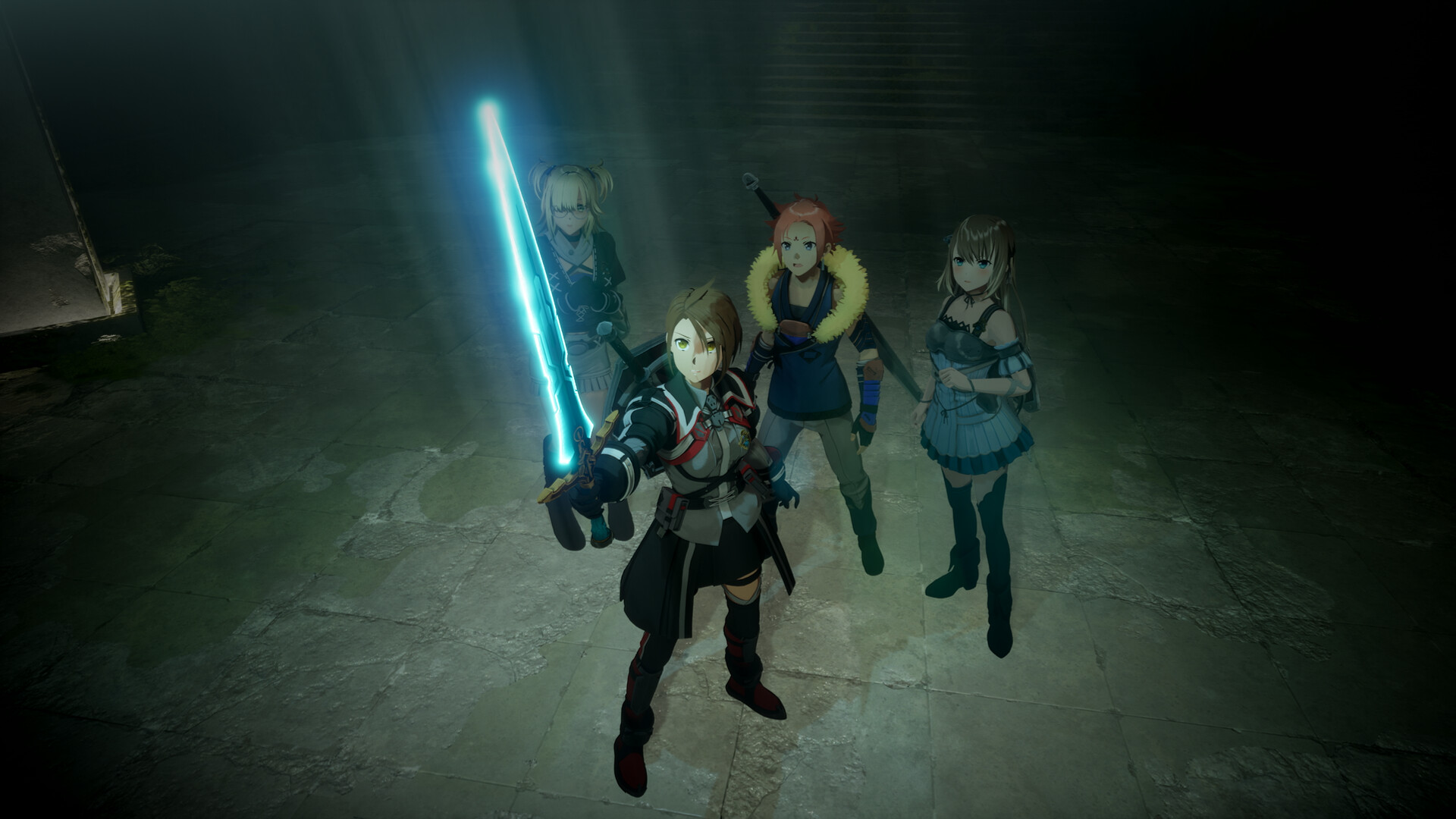
Echoes of Aincrad is a single-player game, but the player never fights alone. From early in the campaign, an NPC companion is always at the hero's side, contributing damage, healing, or crowd-control and participating in the combat system's team-up attacks.
Ten characters can fill the partner slot over the course of the campaign. Iori is available from the prologue and is your only option for a stretch. The rest join through main-story progress, and from Floor 2 onward most of them also require a small set of related side quests to be finished before they will fight alongside you. Those side quests become available once you return to town after the main quest that introduces the character.
Partner | Weapon Type | Unlocks |
|---|---|---|
Swords | Prologue | |
Maces and shields | Floor 1, after the prologue | |
Daggers | Floor 2 | |
Two-handed swords | Floor 1, after a main quest | |
Rapiers | Floor 2, after a set of three side quests | |
Agil | Two-handed axes | Floor 2, after a set of three side quests |
Swords | Floor 2, after a set of three side quests | |
Klein | Swords | Back in the Town of Beginnings, after a set of three side quests |
Stina | Maces and shields | Floor 2, after a specific quest |
Lisbeth | Maces and shields | Marome, after a set of three side quests |
Every one of them brings a named Combination Skill and Support Skill pair, and no two share the same combination. Because a quest takes exactly one partner, choosing who to bring is a genuine loadout decision rather than a cosmetic one.
Note that Saayu is not on this list. She appears on the official character line-up alongside the four original partners, but she is a story character rather than a selectable partner, which is why no weapon type was ever published for her.
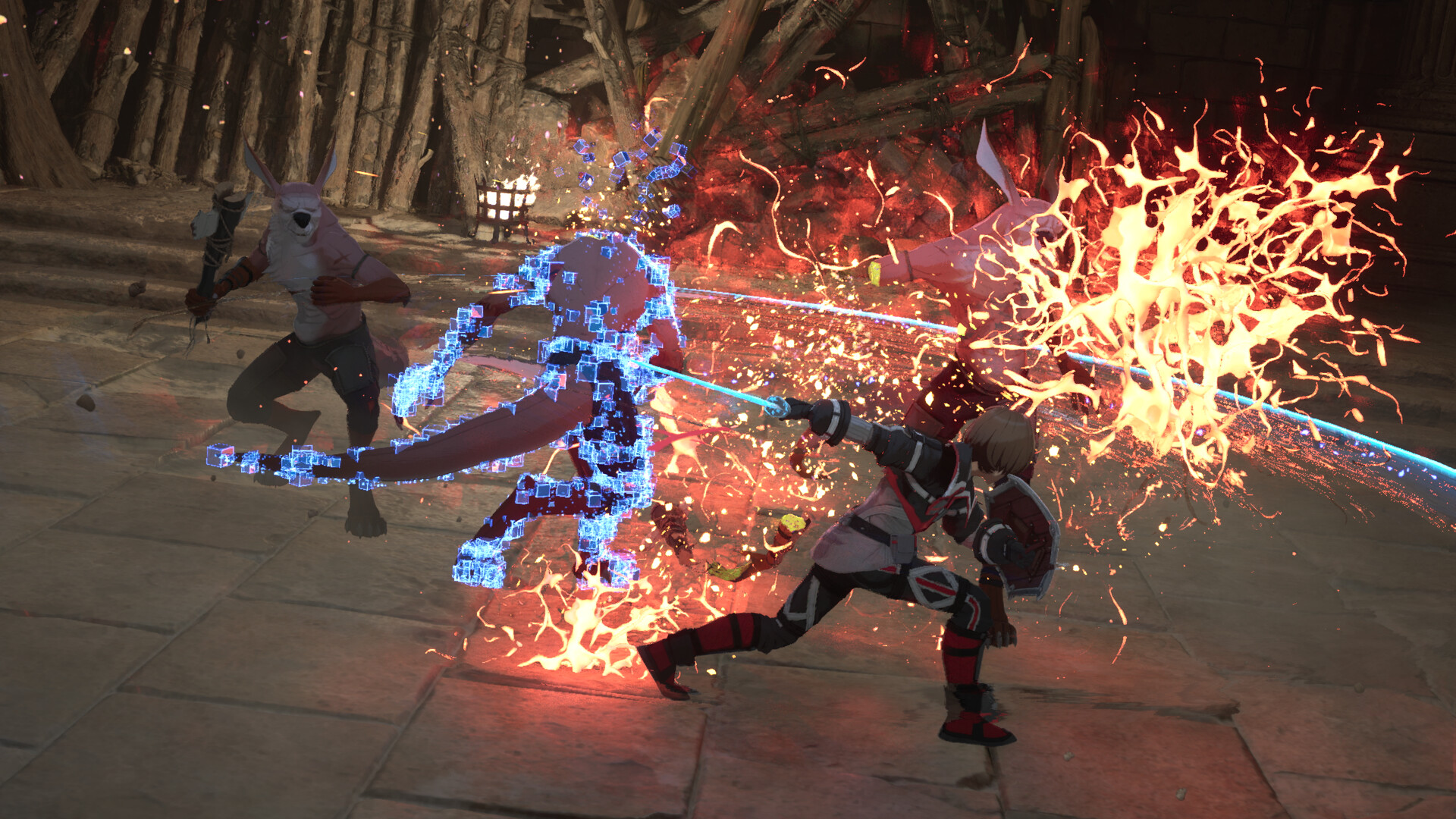
The companion is what turns a successful Parry Slash or Dodge Slash from a counter-attack into a paired strike. They also participate in Reversal Slash when the player reads an enemy opening correctly.
Companions can switch between a support mode, in which they stay close to the player and contribute utility, and an attack mode, in which they cut loose with their full combat kit for a limited time. Managing when to trigger attack mode is a key tactical decision, since it gives the party a significant damage spike but cannot be kept up indefinitely.
Each companion has their own set of skills and their own synergies. Bandai Namco has described the relationship as a bond that deepens over the course of the campaign, unlocking stronger team abilities as the player and companion fight together.
Through most of the campaign the active party is you plus a single partner. Story sequences temporarily add more characters, and the large-scale raid set-pieces put you in a group far bigger than that, but the unit you actually build around is the pair.
Each partner has a fixed weapon category, so swapping who you take changes how the team handles crowds, single-target boss patterns, and narrow corridors. Three of the ten use maces and shields and three use swords, which means the practical differences between same-weapon partners come from their skills rather than their reach.
The two-handed axe slot is filled by Agil, who joins on Floor 2 after a set of side quests. He was introduced before launch only by description, as an easygoing veteran gamer whose true intentions were left unclear, which is why earlier coverage listed the axe partner as unnamed.
The original partners are not the only characters who can fill the partner slot. The pre-launch story trailer confirmed that the player can recruit established Sword Art Online characters as partners, naming Asuna alongside Silica and Argo, who already appears on the original roster, among others. For each recruited character the player chooses a combat role, deciding whether they attack enemies or support the protagonist's recovery, using the same role-swapping the partner system already relies on.
This expands who can stand in the single active partner slot rather than changing the core structure: the player still fights with one partner at a time and deepens a bond with them over the campaign. What the trailer establishes is that the recruitable pool reaches beyond Iori, Wyzeman, Zash, Argo, and Saayu to include familiar series faces. It does not yet detail their weapon types, Support Skills, Combination Skills, or how each one is unlocked, so those specifics stay open until an official source spells them out.
Iori fights with a one-handed sword. Wyzeman wields a mace as his primary blunt weapon. Argo uses a dagger for quick-striking melee. Zash carries a two-handed sword that trades speed for sweeping reach. Because each partner has a fixed weapon category, swapping who you bring on an expedition meaningfully changes how your team approaches crowds, bosses, and narrow corridors.
Every partner brings two slotted abilities into combat: a Support Skill that gives the party an exploration or combat utility on its own, and a Combination Skill that is a tag-team ultimate the two of you activate together. Holding the action-shift button surfaces the partner's Support Skill and Combination Skill alongside the sword-skill shortcuts already bound to the face buttons, so you can trigger a teammate ability from the same menu you use to fire off your own sword skills.
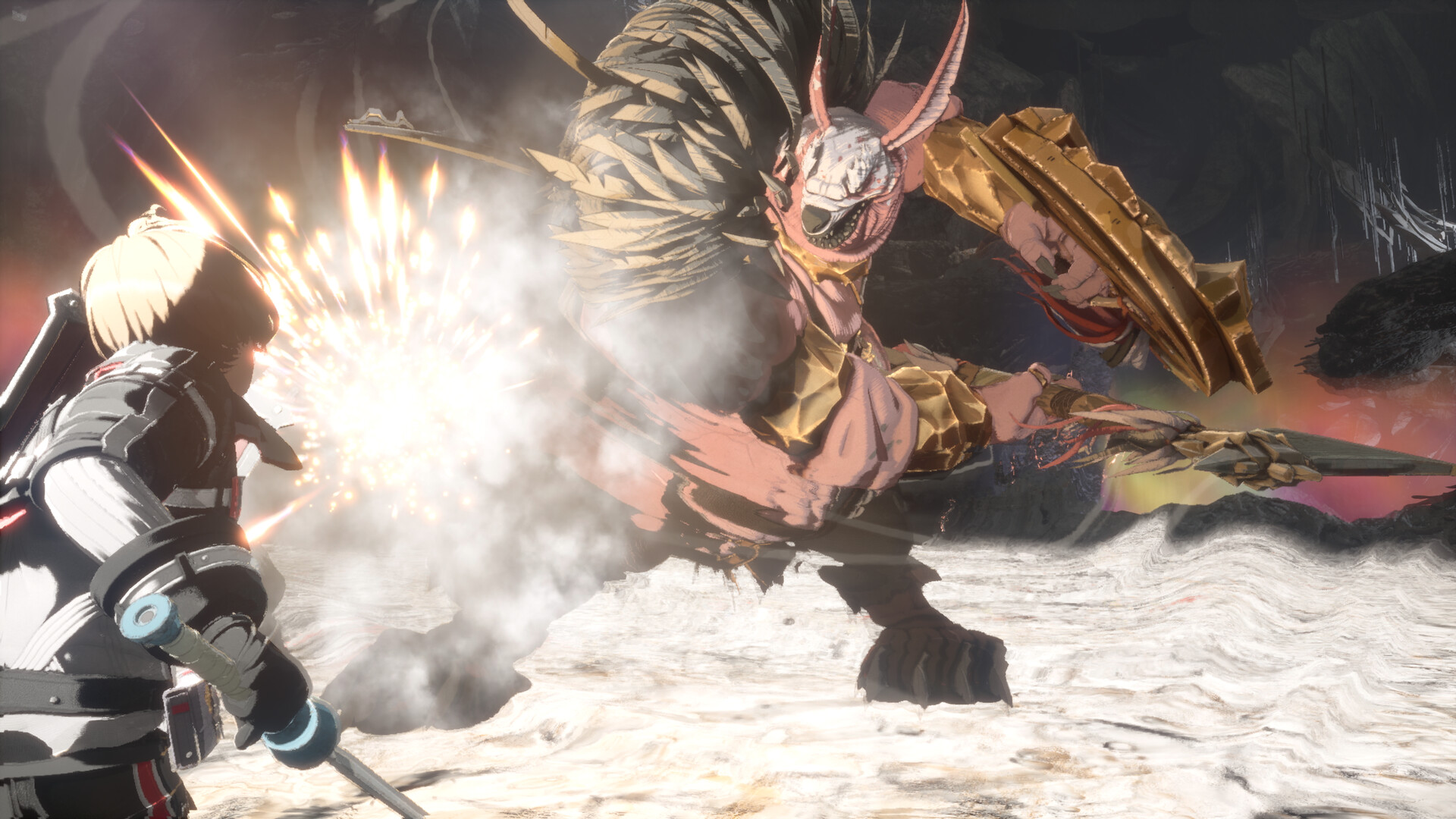
Iori's Healing Circle Support Skill places a zone on the ground that steadily restores HP to any party member standing inside it, which pairs well with her role as the most balanced front-line partner. Wyzeman's Discordant Resonance Support Skill pulses damage into nearby enemies and applies a stacking buildup that gets heavier the longer foes linger in range. Argo's Analysis Support Skill briefly reveals the location of nearby treasure chests and enemies. This shows pings through walls and making her invaluable for clearing new dungeon floors or locating hidden rewards. Zash's Support Skill layers an additional shield on top of your health bar, giving the whole party a safety buffer before incoming damage eats into raw HP.
Combination Skills differ in focus from partner to partner in the same way that Support Skills do. Zash's Combination Skill in particular emphasizes area-of-effect output and is especially effective when you are surrounded, turning an otherwise dangerous encirclement into a cleanup opportunity. Pairing a partner whose Combination Skill matches the threat in front of you, mobile bosses, dense mobs, or a tight chokepoint, is a core part of expedition planning.
The full skill list, with what each Combination Skill and Support Skill actually does, lives on the Combination Skills and Support Skills page. The short version of how to read it:
Self-synergising pairs. Wyzeman and Stina each apply a state with one ability and cash it in with the other, so both of their skills are worth more when used together than apart.
Loadout-dependent. Lisbeth's support buff changes shape based on the weapon you are holding, which makes her value depend on your own build rather than on the fight.
Defensive resets. Agil moves aggro wholesale rather than mitigating damage, and Iori's healing zone is the closest thing in the roster to sustained recovery.
Reconnaissance. Argo is the only partner whose support ability is primarily an exploration tool, revealing enemies through walls and flagging trapped chests.
Partners can be equipped with their own weapons and given customization options separate from your own loadout, so you can tune each companion toward a specific role. As your bond with a partner grows the partner unlocks new skills and stronger abilities, which ties directly into partner-focused side stories and extra scenes that play out between expeditions. Investing in one partner therefore pays off both mechanically, through a wider skill set, and narratively, through side content that explores their personality and past.
There are no dating or likability ratings in this entry, which differs from some prior Sword Art Online titles. Series producer Yosuke Futami has said that because the story is set during the introduction to the death game, a romance progression system would not fit the tone, so companion affinity expresses itself through combat synergy and side stories instead of a relationship meter.
Each partner has their own dedicated side quests that expand on their personality and backstory. These optional missions sit alongside the main story, give you concentrated one-on-one time with a single companion, and typically unlock new Support Skill or Combination Skill upgrades when completed.
Partner behaviour toggles instantly between two commands, and the official descriptions are more specific than the pre-launch shorthand suggested.
Mode | What the Partner Does | Use It When |
|---|---|---|
Switch Mode | The partner attacks the enemy you are locked onto, taking turns with you. Initiative passes to the other character whenever either of you dodges after attacking, and you always get the first swing. | You want a controlled pace, want to split a dangerous enemy's aggro, or do not want the partner engaging before you do. |
Free Mode | The partner prioritises enemies you are not locked onto, and attacks far more often. | You are surrounded and want to clear enemies individually, or you and the partner want to work separate targets at once. |
The cost of Free Mode is Concentration, a partner stat that drains during prolonged free fighting and lowers their dodge and guard success as it falls. Switch Mode restores it. Leaving a partner in Free Mode indefinitely therefore turns them into a liability rather than simply a more aggressive ally.
When a Switch is available you will see Switch Standby under the partner's name. If the partner is not attacking often enough in Switch Mode, performing a step or roll while attacking triggers a Switch and pulls them onto your target. If they are chasing the wrong enemy in Free Mode, clearing the other nearby enemies makes them fall in on yours. The full breakdown is on the Switch System page.
The partners are voiced in both English and Japanese. Iori is voiced by Jessica Peterson in English and Kana Ichinose in Japanese; Argo by Kimberly Ann Campbell and Shiori Izawa; Zash by Keiran Reigan and Yuya Hirose; Wyzeman by Kylen Deporter and Yu Hatanaka; and Saayu by Rebecca Wang and Sayumi Suzushiro. Iori is the partner who fights alongside the player in the free demo.
The official cast list also names two further characters, Stina and Musou, voiced in Japanese by Manaka Iwami and Anri Katsu. Their roles in the story have not been detailed, so they are listed here only as confirmed names rather than as described party members.