

Overview
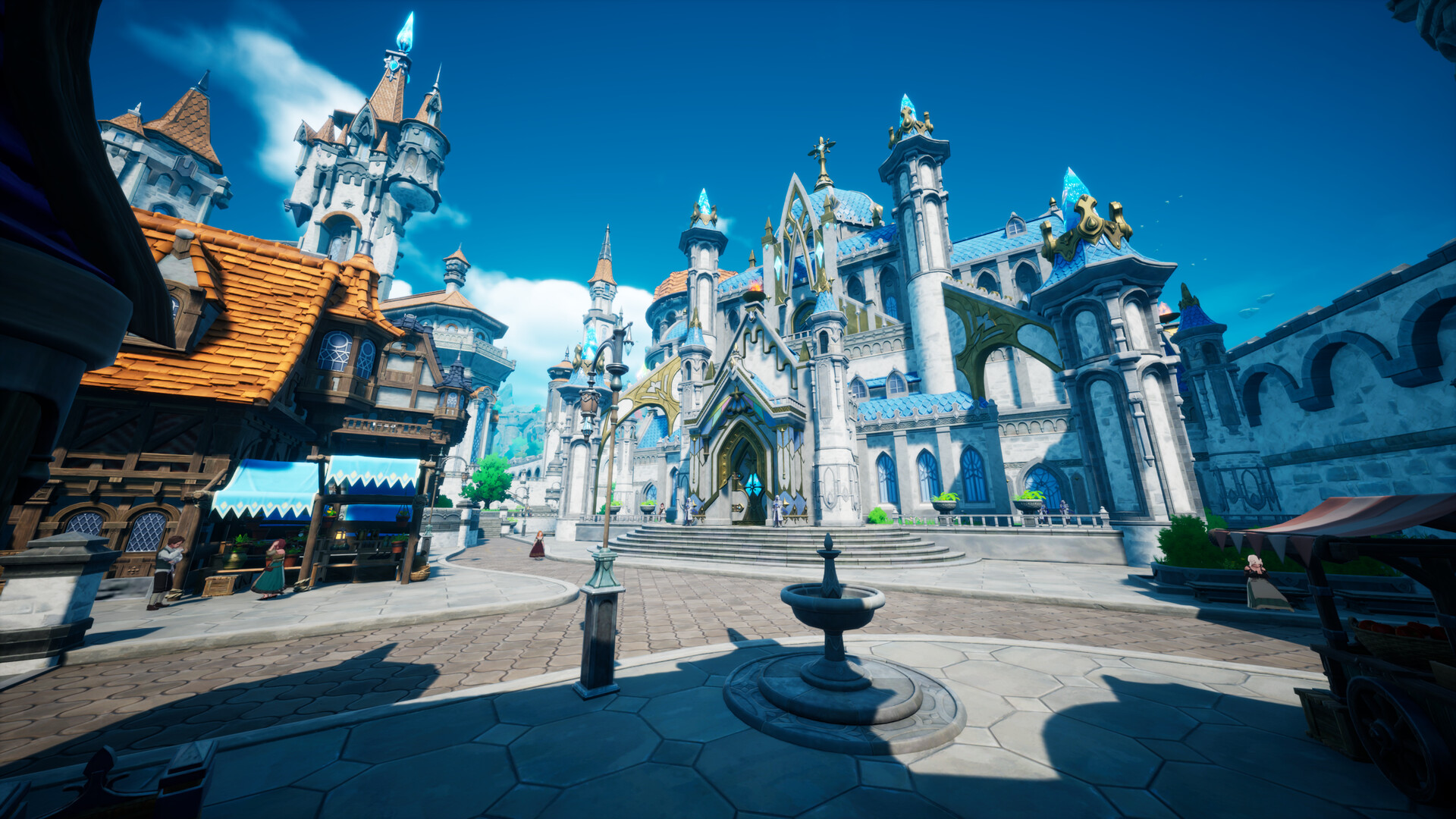
DragonSword: Awakening is a single-player RPG at heart, but Hound13 has built in limited cooperative play for specific content types. The main story and open-world exploration across the Continent of Orbis are solo experiences. Co-op is opt-in for Subjugation boss content (also referred to as Battle) and for Raids, both accessible through invite codes rather than public matchmaking.
Some English-language coverage and the Steam FAQ interchange the words "Subjugation" and "Battle" when referring to the 2-player boss tier. They describe the same content. The rest of this page uses "Battle" for consistency with Steam's own wording.
Player Caps by Mode
Content Type | Max Players | Joining Method |
|---|---|---|
Battle (Subjugation) | 2 players | Invite code |
Raid | 3 players | Invite code |
Main story and open world | Solo only | Not applicable |
Battle Mode (2 Players)
Battle is the 2-player cooperative tier built around named boss encounters, sometimes called Subjugation content in prior builds. A host player opens a session for a specific Battle and shares an invite code with one other player, who drops into the encounter with their own Hero loadout. Both players use their full kit of Active Skills and Signal Skills together against the boss.
Because Battle scales around two players rather than a full party, it sits between the solo main story and the larger Raid tier in terms of difficulty and preparation. Players who prefer to fight these bosses alone can still attempt them in single-player, but the encounter is tuned with the 2-player option in mind.
Hound13 has said the 2-player cap on this tier is deliberate: with three or more players, normal boss combat became too chaotic and hard to follow, so the studio settled on two for the subjugation bosses.
Raid Mode (3 Players)
Raids are the top-tier cooperative content, supporting up to 3 players in one session. Like Battle, Raids are joined with an invite code shared by the host, not through a public matchmaker. The 3-player cap is the largest party size the game supports: there is no 4-player or larger group play anywhere in DragonSword: Awakening.
Raids are designed as the most mechanically demanding encounters in the game. Each player brings their own Hero, Familiars, skill loadout, and gear. Coordinating Signal Skill chains and status-ailment tag-team combos across three players is the intended way to clear the hardest Raid bosses.
The studio has confirmed that the first raid was originally designed for eight players but was reduced to three after testing showed three made for the most enjoyable raid. A scene shown on an early developer stream, in which eight characters open a dragon gate together, is part of the main story rather than an eight-player raid mode.
Raids are the endgame farming activity. They drop Runes, the endgame growth materials, along with items that lower the hurdle for equipment farming. Crucially, raids can also be played solo and offline, and a solo clear awards the same rewards as a co-op clear, so no best-in-slot loot is locked behind mandatory group play. Co-op raids are joined through a Steam lobby.
How Co-Op Works
Invite codes, not matchmaking. Players share a code to pull friends into a session. There is no public lobby browser and no automatic matchmaker.
Host-based peer-to-peer. One player hosts the session; other players connect directly to that host. This is distinct from the server-hosted model used by MMOs.
No regional restrictions. Because the session is host-based, players from different regions can co-op together freely. Significant latency to the host may affect gameplay smoothness, but the game does not block cross-region sessions.
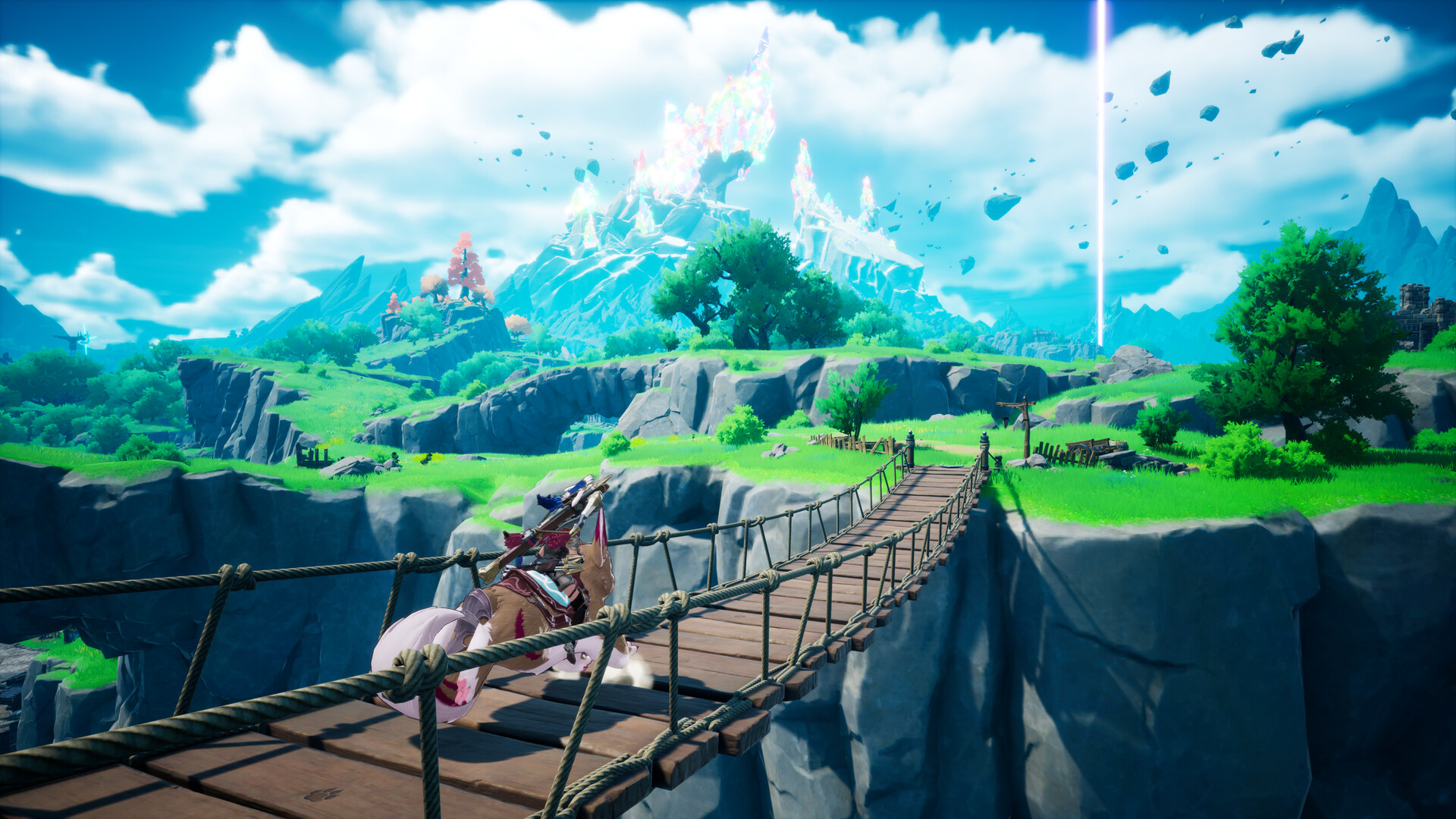
Opt-in for supported content only. Co-op is available for Battle and Raid content. The main campaign, open-world traversal including Dragon Riding, and general exploration stay single-player.
Lobby text chat. The co-op lobby screen supports text chat between players. In-combat interaction features such as emotes are low priority and may not be in the launch build.
Launch scope, with more planned. At launch, co-op is limited to Battle and Raid content. Hound13 has said it plans to add co-op for towns and open-world exploration in a post-launch update.
Rewards and Progression
Alongside co-op raids, the game ships a solo-friendly endgame: the Tower (also shown as the Tower of Trials), a high-difficulty climb where defeating powerful monsters yields key materials that can be exchanged for exclusive Karma. The Tower is single-player content and is available at launch.
Co-op rewards feed back into the same single-player progression systems. Gear, materials, and Hero upgrades earned in Battle and Raid sessions apply to the player's own account regardless of whether they were the host or a guest. Because there is no gacha and no monthly pass under the game's buy-to-play model, co-op exists for the content itself rather than as a funnel into monetisation.
New players can approach co-op content whenever they feel ready. The Getting Started flow does not require co-op, and the full roster of Heroes including Kalien and Lute is earned through story progression rather than through multiplayer drops.
Single-Player vs Co-Op Differences
Aspect | Single-Player | Co-op (Battle or Raid) |
|---|---|---|
Content type | Main story, open world, exploration, Dragon Riding | Battle bosses and Raid encounters only |
Party size | One player with Hero-swap on the fly | 2 players in Battle, 3 players in Raid |
Join method | No join needed | Invite code from the host |
Difficulty tuning | Tuned for a single Hero and their Familiars | Tuned around the coordinated party size |
Progression impact | Feeds back into the same account progression |
Design Intent
The framing Hound13 has used is "single-player package with optional co-op" rather than a live-service MMO structure. In the CEO statement accompanying the self-published Steam release, content that previously supported multiplayer in the Korean free-to-play version, specifically Subjugation and Raids, is preserved here as peer-to-peer play. Everything else has been adapted into a self-contained single-player experience.
Co-Op After Launch
Multiplayer shipped as described and has been iterated on since. Patch 1.0.7 on August 6 added a Quick Entry option and a setting for the lobby search range, the first real convenience work on the mode. A companion Retry feature was announced at the same time but held back to a later patch after problems surfaced during implementation.
The early patches also cleared several multiplayer-specific faults. Achievements had only been unlocking for the host, which 1.0.7 fixed. The guest view showed character slot numbers jumping during multi-mount and abnormal motions when switching characters, both since corrected. Patch 1.0.4 fixed an intermittent failure where a room could not be found after entering by invite code, and 1.0.7 fixed a misdirected shot from a specific position in the Ursula Raid. Dungeon entry and wipe recovery now start the group at full health with every fallen character revived. See Update History for the full log.
Patch 1.0.9 on August 13 continued the run. Lobby loading time when entering a multiplayer session was cut, party members intermittently failing to enter was addressed, a Raid could no longer be started before every member had readied up, Quick Entry no longer occasionally dropped players straight into a session without passing through the lobby, and equipment set effects now apply correctly in multiplayer. Kalien's sixth Awakening effect had not been applying in multiplayer and was fixed in the same patch. The default lobby search range was widened to the broadest setting for new players and for anyone who resets their settings; existing players have to change it by hand.
Patch 1.0.10 on August 20 kept the cleanup going. A lobby now disbands the party when the leader stops responding for a long stretch, an intermittent fault that withheld rewards in multiplayer was fixed, a guest who left a lobby while marked ready no longer carries that ready state back in, and the guest camera no longer zooms in on entering the map. The same patch fixed three faults in the raid Chase Toward the End, the only raid Hound13 has referred to by name in a public update note: a solo entrant wiped in the first phase was being moved into the second phase area, players could move outside the raid map, and stepping backwards immediately after reaching the top floor locked the player out of the combat area.
What Multiplayer Will and Will Not Become
Hound13 was direct about the state of the mode during the August 10, 2026 broadcast, saying that many aspects of multiplayer were rushed to service and remain lacking, and that improvements will continue. It set expectations on the two most-asked requests.
Open-world co-op with friends is wanted by the studio and is included in its final goals, but the workload turned out larger than expected, so it will not arrive quickly.
A Retry option was scheduled to follow Quick Entry in the next weekly patch after 1.0.7.
Region matching improvements are planned on top of the lobby search range setting already shipped.
Host migration is being evaluated but carries real technical complexity.
Storefront friend invitations already work, and the flow around them is being reviewed.
Several requests were declined outright for a single-player-focused game: guild and clan systems, spectator mode, asymmetric modes, save sharing between players, and adjustable player counts for the existing raids. Party sizes stay content-specific by design, though new content may explore other counts. Crossplay is a long-term consideration once the console version exists, not a near-term feature. Multiplayer-specific rewards and community tournaments are both under consideration.
Related
Heroes - the 19 playable characters, each with their own skill kit.
Familiars - collectible companions and mounts that travel with each Hero.
Active Skills and Signal Skills - the two skill tiers that power both solo and co-op combat.
Dragon Riding - the solo-only aerial traversal system.