

Status Ailments
Status Ailments are the combat currency at the heart of DragonSword: Awakening. Each of the nineteen Heroes brings its own distinct ailment kit, and stacking them on a target is the setup step for Active Skills and Signal Skills. Multiple Heroes share Stun as a secondary ailment.
On This Page
Status Ailments are the combat currency at the heart of DragonSword: Awakening's fight system. Hound13 has built the entire tag-team action loop around them: each of the nineteen playable Heroes has a distinct Status Ailment kit, and stacking ailments on a target is the main thing the player is trying to do in any serious encounter. Ailments are what turn a flurry of inputs into the game's advertised endless combo chains.
Overview
The public combat pitch for the Western release is short and specific: stack Status Ailments with Active Skills, then chain devastating combos with powerful Signal Skills. That single line is the shape of every fight. Status Ailments are the setup layer, Active Skills keep the ailment window open, and Signal Skills close the loop.
Because every Hero brings a different ailment, the player's combat identity is defined by which ailment they are stacking at any given moment. Swapping Heroes mid-combo does not just change who is on screen, it changes the debuff being applied, which is why the Switching Signals mechanic feeds directly into ailment variety rather than being a cosmetic flourish.
Confirmed Status Ailments
Rather than one unique ailment per Hero, the nineteen Heroes draw on a shared set of nine Status Ailments (detailed just below), with each Hero applying one or two of them and several Heroes sharing the same ailment. Stun in particular is a recurring secondary across multiple Heroes. The table below records every ailment publicly tied to a Hero through May 2026.
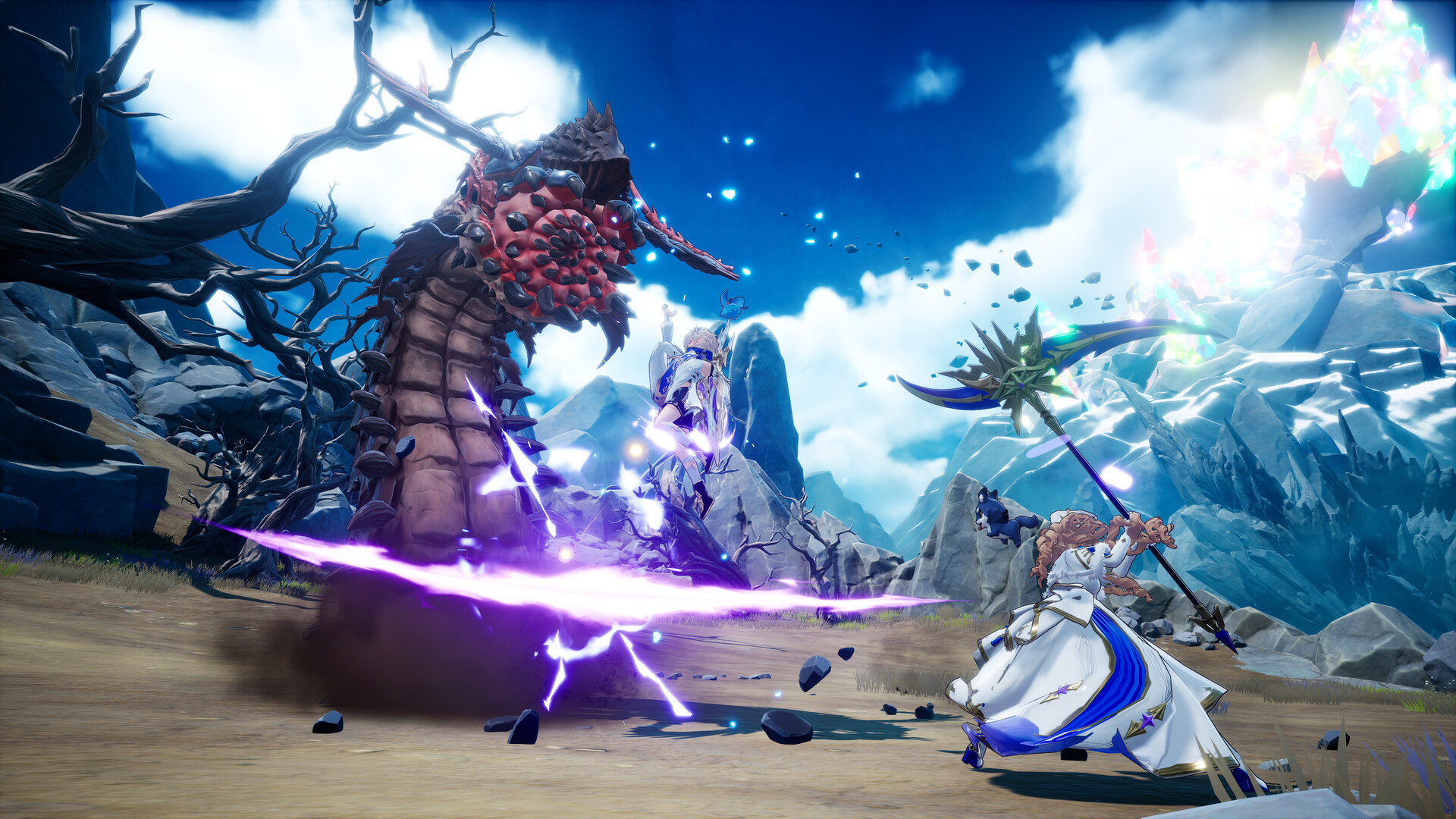
Hound13 has confirmed there are nine Status Ailments in total, split into two groups. Physical ailments are Stun, Down, Airborne, and Break. Elemental ailments are Burn, Chill, Poison, Shock, and Bleed. Every Hero's kit applies one or two of these nine; the per-Hero table below maps the ailments tied to each publicly shown Hero.
Group | Status Ailments |
|---|---|
Physical | Stun, Down, Airborne, Break |
Elemental | Burn, Chill, Poison, Shock, Bleed |
Hero | Primary Ailment | Secondary Ailment | Element / Flavour | Source |
|---|---|---|---|---|
Stun | Down | Greatsword melee with Goddess-power healing | Lute Gameplay Preview | |
Castella | Break | Stun | Elf assault vanguard, frontline melee | Tag Combo Preview |
Burn | Airborne | Bomb-using ranged setup | Tag Combo Preview | |
Stun | (none publicly named) | Fire, channelled through the fox spirit Sur | Kalien Hero Trailer | |
Bleed | Stun | Twin sacred maces, melee | Theresia Hero Trailer | |
Shock | Down | Scythe with sacred-magic effects; shock window pattern | Ornette Hero Trailer | |
Other 13 Heroes | Not yet revealed | Not yet revealed | To be confirmed | Future Hero trailers and Steam Next Fest demo |
Shock is the elemental ailment Hound13 ties to Ornette's scythe and sacred-magic effects. The studio has since confirmed the full ailment taxonomy (see below), so Ornette's primary ailment is the elemental Shock, not a separate "electrocution" category. Earlier pre-launch trailers used flavour wording, but the official ailment names are the nine listed in this article.
Players should treat anything beyond this table as unverified until Hound13 publishes a Hero Trailer or a Tag Combo Preview that names the ailment. The Korean free-to-play predecessor had its own debuff lineup, but the Western buy-to-play release is a rework with its own Hero-tied ailment design, so older element charts do not carry over.
How Ailments Are Applied
Ailments are applied through the Apply step of the game's three-layer combo loop. This is done with the active Hero's basic attacks and their ailment-specific moves, which are the opening tools in any Hero's kit. The goal of the Apply step is to put enough ailment stacks on the target to open a reliable damage window.
Combo Step | What It Does | Typical Input |
|---|---|---|
Apply | Stack the Hero's Status Ailment on the target. | Basic attacks and ailment-specific moves. |
Extend | Keep damage flowing while the ailment is active and the target is locked in combo. | Active Skills from the same Hero, layered on top of the stacked ailment. |
Finish | Close the combo with a payoff move that hits hardest while the ailment is still primed. | Signal Skill from the same Hero, or from a teammate via Switching Signals. |
The Switching Signals tag-team system lets the player rotate Heroes in and out during a single combo. A teammate tagged in can trigger their own Signal Skill against the ailment that the previous Hero put on the target, which is how the endless combo chains shown in pre-launch trailers are produced. Ailments applied by one Hero are consumed by skills from any Hero, making party composition a question of which ailments pair well with which teammates' finishers.
Multi-Hero Ailments
Because Stun appears across at least four publicly named kits (Lute, Castella, Kalien, and Theresia), team building is not just about avoiding overlap. A team that runs three Stun-applying Heroes can keep a target locked indefinitely as each Hero's stack refreshes the others. Down is now confirmed on both Lute and Ornette as a secondary, which gives a roster pairing those two a second shared axis after Stun. The Break, Bleed, Burn, Airborne, and Shock ailments are each currently confirmed on a single Hero, so a roster that carries all of them simultaneously requires picking specific Heroes.
Tag Combo Example
The Tag Combo Preview between Castella, Lute, and Aria is the first publicly documented example of how stacked ailments chain across switching Heroes:
Step | Hero | Ailments Applied | Effect |
|---|---|---|---|
1 | Castella | Break, Stun | Frontline assault breaks the target's stance and locks it down. |
2 | Stun, Down | Greatsword follow-up keeps the target on the ground while extending Stun. | |
3 | Burn, Airborne | Bombs lift the target into a juggle window with Burn ticking underneath. | |
4 | Castella | (switch back) | Combo continues with the chain still primed. |
Breaking Free
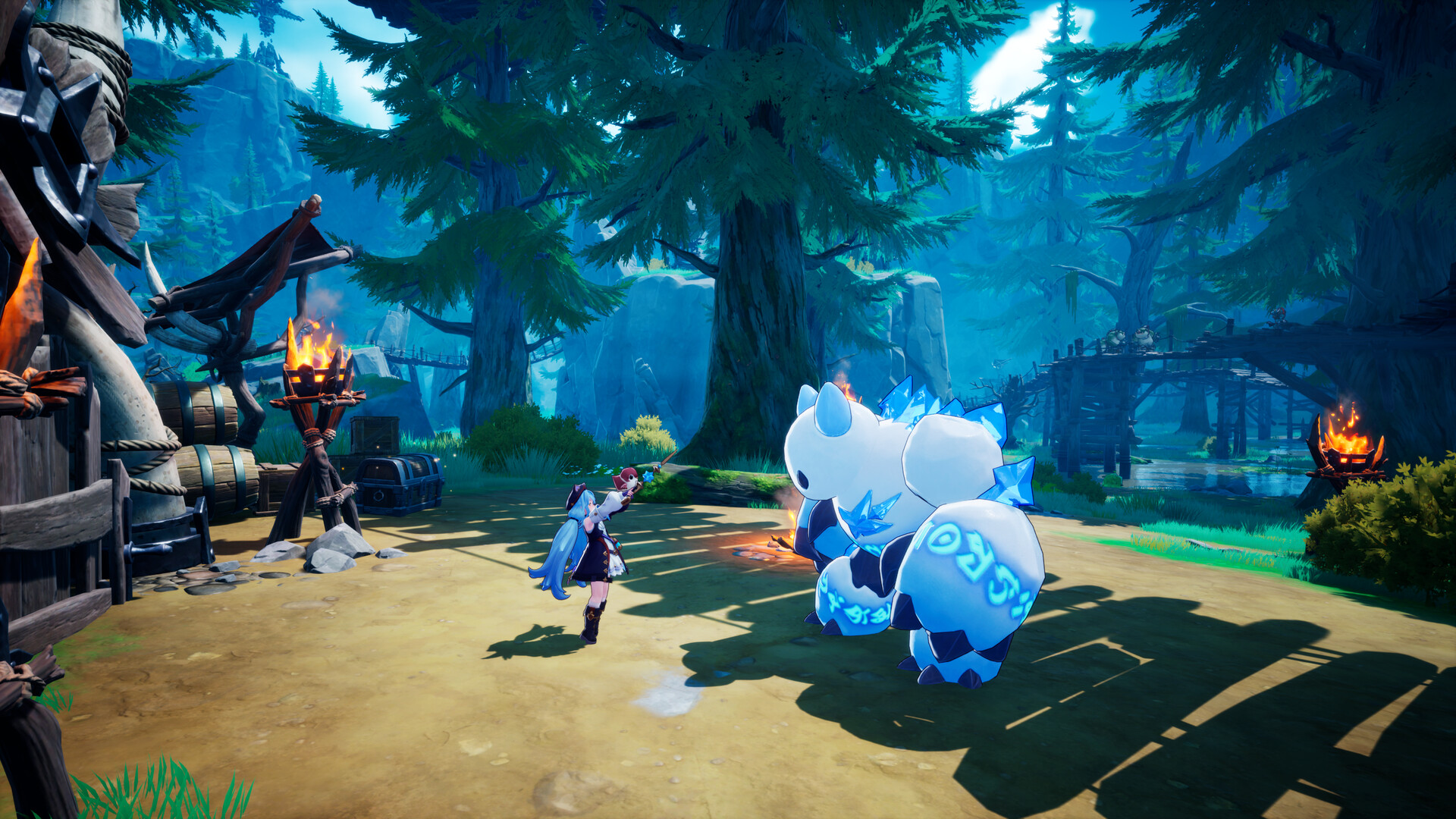
Specific stack counts, ailment durations, resistance formulas, and break thresholds have not been published by Hound13 in pre-launch materials. What has been confirmed is the broad shape of the interaction: ailments create a combo window, Active Skills keep the window open, and if the ailment expires before a Signal Skill lands, the combo ends and the Apply step has to start again. Exact numeric behaviour, including whether enemies have cleanse mechanics, immunity frames, or ailment-specific resistance, has still not been published by Hound13. It was not covered by the Steam Next Fest demo either. What the shipped build does confirm is that the nine names are the live ones: patch 1.0.4 fixed Eileen's Barraging Spear failing to apply Airborne correctly, the first time an ailment has been tied to a named skill outside the Hero trailers.
Hero Resistances
Whether Heroes themselves can suffer Status Ailments from enemies is not something Hound13 has publicly addressed in detail. The combat system, as pitched, revolves around the player applying ailments to enemies rather than the reverse. Any incoming-ailment mechanics would sit in combat tuning details Hound13 has not released. For now the safe reading is that Status Ailments are principally an offensive tool in the player's hands, and that defensive mitigation, if it exists, will be tied to individual Hero kits rather than to a global resistance stat.
Inflicting Ailments on Enemies
Because every Hero's kit is built around one or two specific ailments, the practical decision a player makes in combat is which ailment is most useful against the current target. A tougher elite with a large health pool rewards a Hero whose ailment enables long extend phases, while a pack of weaker enemies rewards a Hero whose ailment triggers area-of-effect Signal Skills. Building an effective team, whether in solo play or in Co-Op subjugation and raid content, comes down to picking three Heroes whose ailments and Signal Skills complement each other.
Why Ailment Variety Matters
Status Ailments are how Hound13 differentiates the nineteen Heroes mechanically. Two Heroes can share a similar weapon style or visual identity, but because each one applies a different mix of ailments, their role in a combo is never quite the same. For new players working through Getting Started in World 1, the recommended approach is to pick a Hero whose ailment feels intuitive, learn the Apply-Extend-Finish loop with that kit, and only then start experimenting with teammates whose ailments can pick up where the first Hero leaves off.
For veterans, the endgame shape of the system is the same idea scaled up: deep Hero mastery means knowing not just your own ailment but every teammate's ailment window, so you can tag in exactly when their Signal Skill will land hardest. That is also why the ailment reveals were paced out one Hero at a time across the pre-launch campaign. Each new ailment is a new combo puzzle for the community to solve.