
Loading...
Loading...
Edicts
September 11, 2026 at 02:02 AM
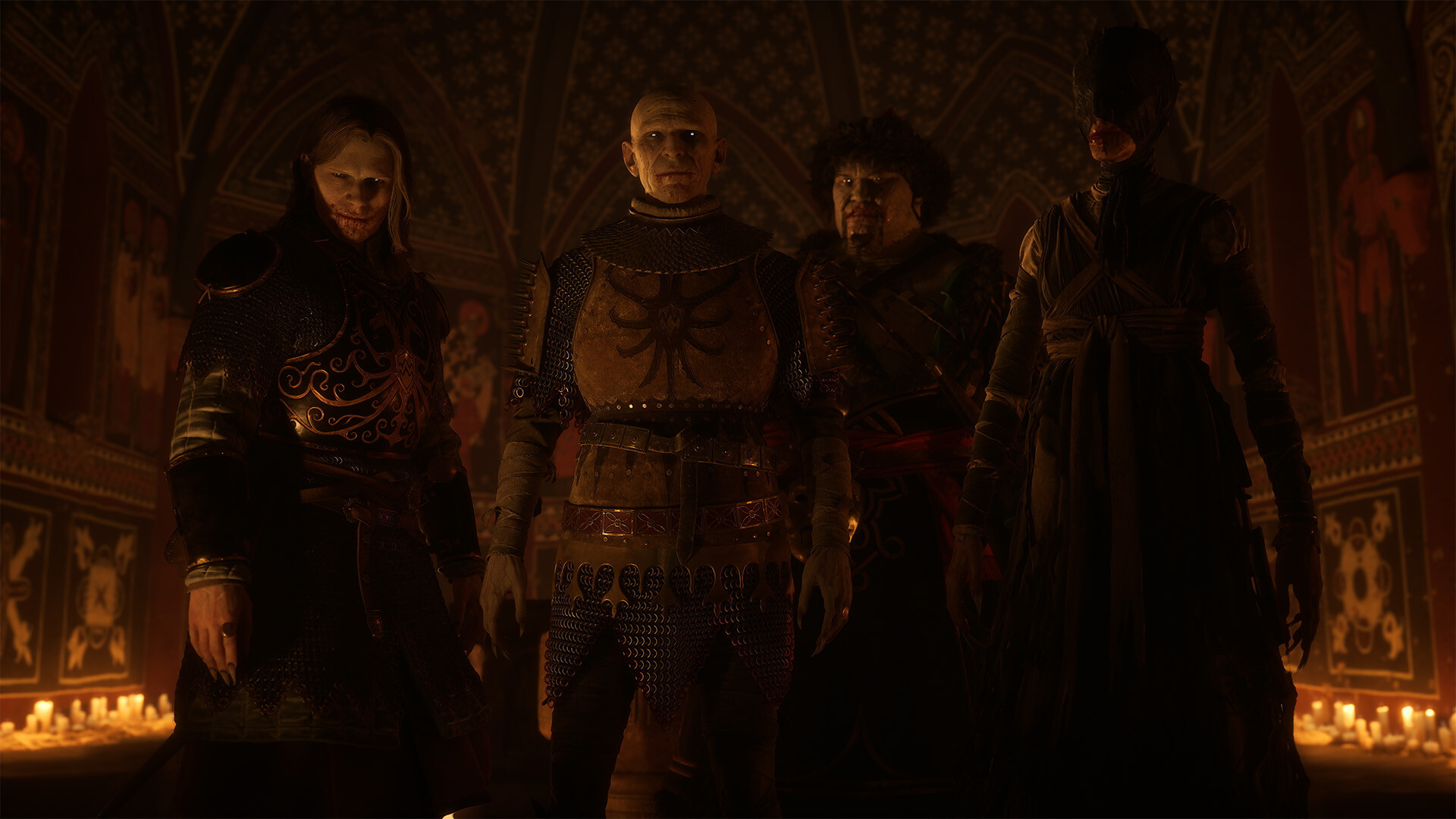
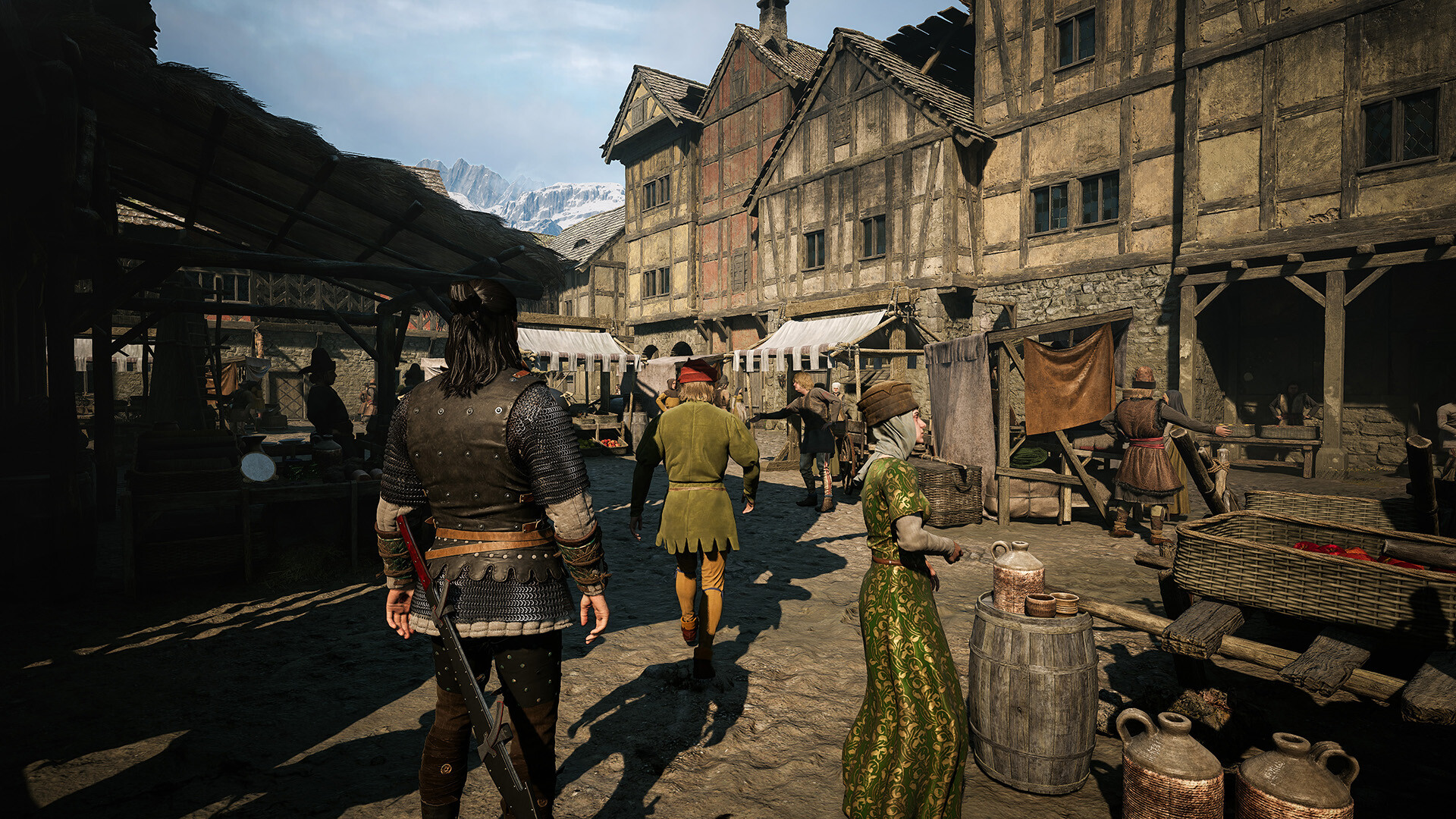
Added screenshots of the vrakhir court and of a patrolled town street to the law and restrictions sections
Edicts are the legal instrument of Brencis's rule over Vale Sangora. They are decrees: rules proclaimed by the vrakhir court and enforced by its soldiers, and in The Blood of Dawnwalker they are the form the antagonist's attention takes. When Coen becomes a problem, Brencis does not simply send assassins. He changes the law.
Vale Sangora is an occupied province rather than a lawless one. The vrakhir court holds the castle at Greifberg and the city of Svartrau, and the valley's people live under terms the court sets. The blood tax is the most concrete of those terms, and it is reported to be the specific concession Brencis can offer Laslea in one of the documented endings: exemption from the tax, and permission to practise Christianity, granted as an exception to rules that otherwise apply to everyone.
The regime's reach is not only legal. Roadside shrines across the valley now carry Brencis's likeness rather than the old saints, which is the same authority working through religion instead of through soldiers.
Edicts are tied directly to the notoriety system. As Coen undermines the regime, his infamy rises, and Brencis answers. A new edict is proclaimed at sunrise, at the start of a fresh day on the 30-day clock, so each cycle of the calendar can carry a new restriction. The higher the meter, the harsher the decree.
Creative director Mateusz Tomaszkiewicz described the mechanism in plain terms before launch: undermining Brencis gains notoriety, and the more notorious Coen becomes, the more edicts Brencis passes in order to thwart him. The intent, in the same account, was that edicts would twist and change the general open world gameplay rather than simply raise enemy counts.
Edict | Effect in Play |
|---|---|
More soldiers on the roads | Patrol density rises across the valley, which makes overland travel between quests slower and louder. See Exploration. |
More soldiers in the villages | Settlements gain garrisons, which narrows where Coen can move openly by day. |
Military checkpoints | Reported as a specific response to clearing camps, gating routes that were previously open. |
Curfew | Movement is restricted during certain hours, and feeding at night becomes harder to do unseen. This presses directly on blood craving. |
City lockdown | In the harshest documented case, Svartrau itself is sealed, and crossing the capital becomes a problem in its own right. |
Because the time cost of a journey is real, an edict is not only an obstacle but a tax on the calendar: routing around a lockdown or waiting out a curfew spends segments that could have gone to a quest.
Edicts are regime wide, but the officers beneath Brencis run their own territories and track Coen's interference with them separately. Ambrus, Bakir and Xanthe each hold operations in the valley, and provoking one of them raises a personal aggression meter alongside the global infamy that drives the edicts. The distinction matters: edicts are the court's answer, while an officer's response is personal and opens a questline of its own. Factions covers the wider political map, including the rebels who read a harsh edict as a recruiting opportunity.
The reported epilogues treat the edicts as the thing that ends when Brencis does. Where the vrakhir are removed, the valley becomes independent and somewhat lawless, with the Manumits keeping the worst opportunists in check and the old religion returning. Where a new ruler takes the castle instead, reports describe fresh impositions rather than freedom: heavy taxation and encouragement to inform on neighbours. Where Brencis survives, the blood tax and the court's rules continue, with Laslea's exemption as the narrow exception. Law changes hands in this story; it does not disappear.
No published source names an individual edict as it appears on screen, so the list above describes effects rather than titles.
How many distinct edicts exist, and whether the set is fixed or generated from the player's actions, is unknown.
Whether an edict can be lifted by lowering infamy, or only expires on its own, has not been documented.
Whether the text of proclamations can be read in the world, in the way the epilogue notices on the tree in Laslea are read, is unstated.