
World Design
The Blood of Dawnwalker's open world covers Vale Sangora, a valley in the Carpathian Mountains. Rebel Wolves has been upfront about wanting a smaller world than many modern open-world games. The reasoning: when the world is smaller, you memorize it. You learn the shortcut through the forest. You recognize the house on the hill. The place becomes familiar.
The game was originally scoped to be roughly the size of The Witcher 3's Blood and Wine DLC, but it grew during development. The entire map is visible from the start, though points of interest are not marked until you discover them through exploration or learn about them from NPCs. Multiple biomes fill the valley: forests, mountains, swamps, meadows, peatbogs, cave systems, medieval settlements, and ruins of ancient civilizations.
Difficulty Scaling
The world gets harder as you move south. Each region's difficulty level locks on your first entry based on your current level, so the challenge stays consistent within an area. This creates a natural flow where early exploration covers the northern, easier parts of the valley, and pushing south means committing to tougher encounters.
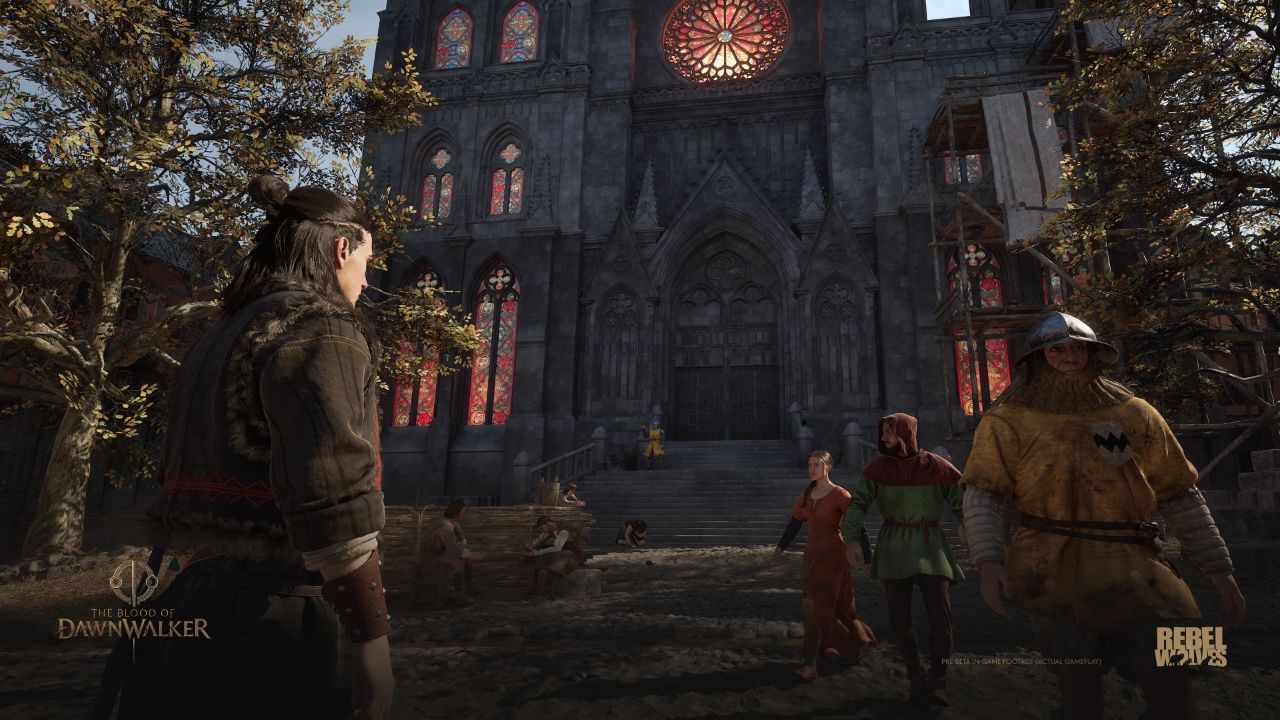
No Horse
There is no horse in the game. Coen traverses the world on foot during the day and using supernatural abilities at night. The developers confirmed this in the January 2026 Q&A, noting that the world's compact size and Coen's Vampiric Powers (Shadowstep, Planeshift and Clawride, plus the Shapeshift wolf form) make a mount unnecessary. Fast travel is also available.
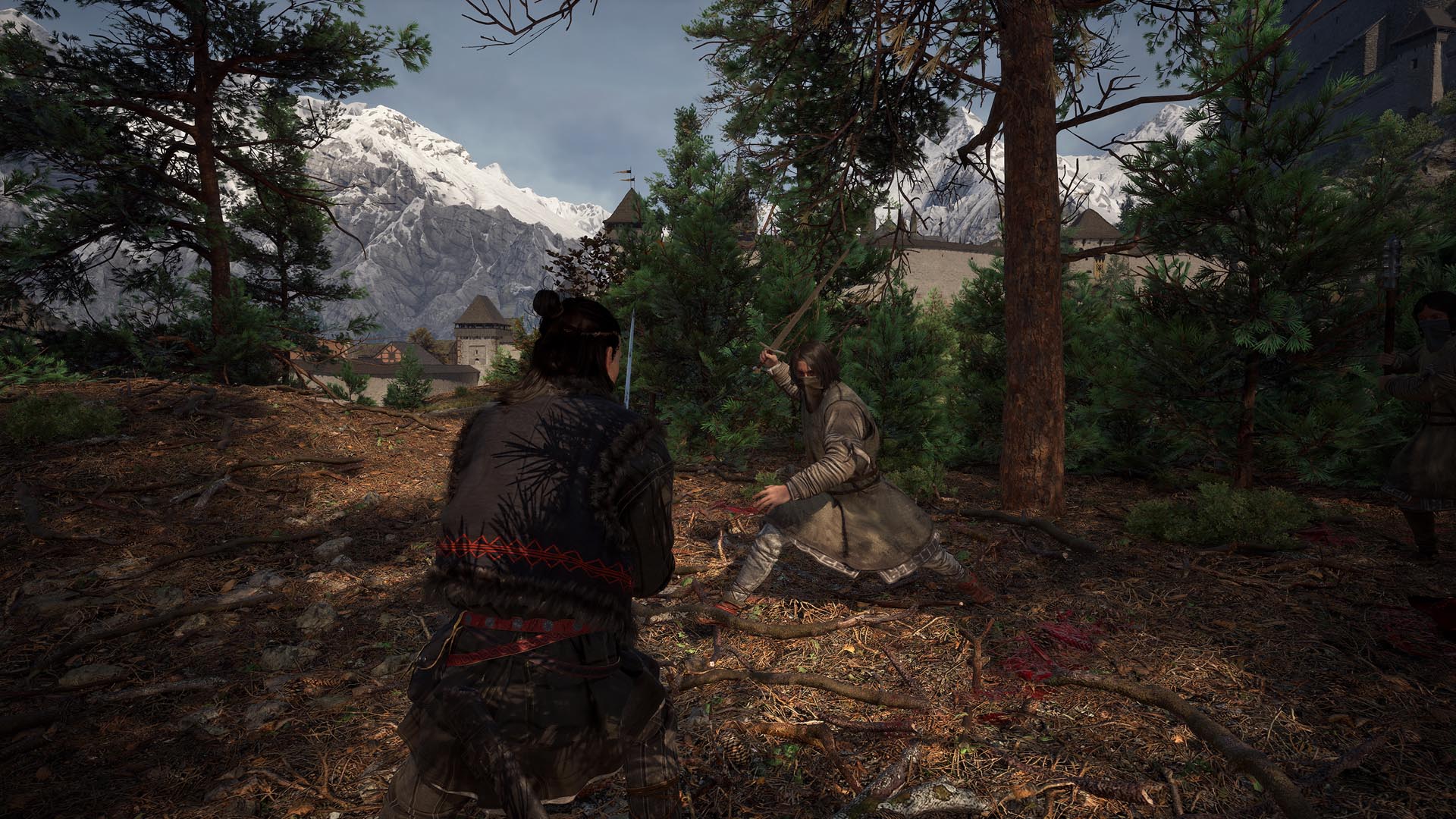
Day/night Traversal Split
During the day, Coen moves through the world as a normal human. Walking, running, climbing where handholds exist. Standard open-world navigation.
At night, everything changes. Planeshift lets Coen walk up walls and across ceilings once he Shadowsteps onto them, at a steady cost in stamina. Shadowstep covers short-distance teleportation. Clawride enables fast vertical drops and rooftop sprinting, and the Shapeshift wolf form covers long distances. There is no bat transformation in the base game as of September 2026; a community mod adds one. Paths that were inaccessible during the day. Cliff faces, building exteriors, the underside of bridges, a rooftop route across Svartrau become viable at night.
Points of Interest
Item | Description |
|---|---|
Religious or ritual sites scattered across the valley | |
Military and bandit camps | Combat encounters with loot and intelligence |
Monster nests | Infested areas that need clearing |
Haunted places | Locations with supernatural activity |
Hidden treasures | Reward off-path exploration |
Ancient ruins | Remnants of civilizations that predate the current inhabitants |
Underground mines | Silver mines where Coen grew up, now inhabited by kobolds |
Scouting Towers
Towers scattered across the valley reveal nearby points of interest when climbed, in the pattern the genre has used for years. The twist is that they cannot be climbed during the day. Reaching the top requires Shadowstep and Planeshift, which are night-form abilities, so a tower spotted mid-afternoon has to be either left alone or reached by deliberately advancing time at a Shrine. That turns a routine map-clearing action into a decision with a cost attached, and it is one of the clearest examples of the day/night split shaping traversal rather than just combat.
Towers are a finite set and are climbed at night, because the climb needs the vampiric wall-walk. Reaching the top scouts the surrounding region and marks its points of interest on the map as question marks rather than as labelled objectives, so the tower tells the player that something is there without saying what.
The same idea appeared before release under the name vantage points, high ground used to survey the valley and mark what is worth visiting. In the shipped game that role belongs to the towers, so the two are best read as one system rather than two.
Each region also has a vrakhir lord whose operations can be attacked. Destroying enough of a lord’s holdings, camps and transports raises that lord’s attention until a questline specific to them opens up, which turns free-roaming sabotage into a route into the story rather than only into infamy.
What There Is to Find
The studio has confirmed four broad categories of discoverable content seeded across the valley, alongside the shrines and camps already listed above.
Category | Notes |
|---|---|
Hidden treasures | Caches placed for players who search rather than follow markers. |
Monster nests | Concentrations of creatures from the Bestiary, clearable for rewards. |
Ancient ruins | Pre-vampire sites, tied to the undead and to the valley's older history. |
Bandit camps | Human opposition, and one of the routes into the Notoriety System. |
Named World Content
Launch coverage of the shipped game gives in-game names to several of those categories, which is worth recording because the names are how the game itself labels them rather than descriptions written from outside. Ancient Circles and Haunted Sites are both cited as places that reward the manuals used to unlock abilities, and haunted locations print with their own titles, in the form of a Haunted prefix followed by the name of whatever happened there.
Category | What it is |
|---|---|
Standing-stone sites, named as one of the places that reward ability manuals. | |
Haunted Sites | Sites of past atrocities, each with its own title. Enterable during the day, and one of them hosts an ending encounter. |
Bandit Camps | Human opposition, with a chest that often holds a sword-technique manual. |
Soldier Camps | Vrakhir-aligned garrisons, also a manual source, and a route into the notoriety layer. |
Blood Cellars | Holdings tied to the vampire lord who runs the blood supply, and one of the things a player can destroy to draw his attention. |
Kobold Dens | Creature lairs, tied to the shards used in one of the legendary weapon chains. |
Climbed at night for a regional scout, covered in full below. | |
Vrakhiri Transports | Convoys moving through the valley that can be destroyed. |
Confirmed Exploration Targets
Several completion targets are confirmed and they map out the shape of the world. Every tower can be climbed and used to scout the surrounding area, and climbing them is night work because it needs the vampiric wall-walk. The City of Svartrau is tracked separately from the valley's villages, which confirms Svartrau is the one true city and that the other settlements are villages. Vrakhiri transports moving through the valley can be destroyed, and Brencis's flags can all be torn down.
Four of those targets carry achievements: Bird's-Eye View for climbing every tower, Capture the Flag for tearing down all of Brencis's banners, Tour Guide Training for visiting every village, and Delivery Delay for destroying eight vrakhiri transports. The achievement text does not give the totals. One walkthrough of the shipped game counts each kind of point of interest that the towers reveal, as below.
Type | Count |
|---|---|
11 | |
Brencis's Banners | 5 |
Villages | 8 |
Vrakhiri Transports | 10 |
More than 100, with counts that differ between sources | |
13 | |
Bandit Camps | 15 |
Curious Houses | 6 |
4 | |
Monster Lairs | 32: kobold nests, murohn lairs, tatzelwurm lairs, bear caves and wolf dens |
14 | |
Soldier Camps | 13 |
Will-o'-the-Wisps | 6 |
Quests carry a displayed difficulty level alongside their time cost, which is the clearest signal of whether a region is worth entering yet. That display was specific enough for a missing one to be treated as a bug and fixed in a post-launch hotfix.
Traversal itself is measured too: an achievement covers travelling 1,000 metres using vampiric abilities, which puts night movement on the same footing as walking the valley by day rather than treating it as a shortcut.
No Time Pressure
The 30-Day Cycle does not tick while exploring. The clock only advances when you make narrative decisions. Movement and searching do not continuously spend the calendar. Individual activity interactions can still carry a time cost, shown before committing. This separation between exploration time and narrative time lets players engage with the world at their own pace.
Fast Travel
Fast travel runs through the Shrines, and only through them. A shrine shows on the map as a grey chapel icon until Coen interacts with it, at which point it turns blue and joins the network. Some have to be cleared of hostiles first. Open the Map menu and select an unlocked blue shrine icon to fast travel to its vicinity. A grey icon must first be activated or restored.
Ruined shrines are a separate case. A desecrated shrine has to be restored before it will work, which means finding its heart somewhere nearby, usually by following the clues the inspect prompt picks out, and carrying it back. Restoring one costs segments from the 30-Day Cycle, so a shrine that would shorten later journeys still has to be paid for now. Player-made modifications that remove either restriction exist, and they are modifications rather than features of the game.
Named Places
Locations confirmed by name in the shipped game include the following, alongside the valley capital and the villages scattered around it.
Coverage of the released game divides the map into named traversable regions, and those names are used throughout its directions. Besides the swamp region already listed below, they include Maragir Wealds to the south-east of Coen's home village, St. Tyna's Grove further south, Boar's Back in the west, The Silts in the south, Tantari Woods, the Rockfalls, and the outskirts of the capital. Each carries its own shrines, camps and quests, and each locks to Coen's level on first entry in the way described above.
Place | Notes |
|---|---|
Laslea | Coen’s home village, a silver-mining settlement. |
Svartrau | The valley’s only city and the seat of vrakhir power. |
Briar Sloughs | A swamp region. The broken bridge in its north-west is where the Cursed Chasm quest leads. |
Stoneward Post | An outpost in the valley. |
St. Tyna's Convent | A religious site in the valley. |
Two nighttime house investigations
Quest and location | What to inspect | Time and reward |
|---|---|---|
Weaves of Rebellion: Curious House north of Altenmarkt | Shadowstep to the upper balcony. Inspect the unfinished banner, letter to the Master Tailor, instructions hidden in the floor and Manumit sashes. | 1 segment; no separate completion reward. |
Working Her Magic: Curious House west of the Cathedral Complex | Enter the upper balcony, move the attic bookshelf and search the hidden room's worktable, books and Note for the Neighbour. | 1 segment; 200 XP and Burning Blood Manual. |
Two attic investigations
Quest | Entry and evidence | Result |
|---|---|---|
Enshrined Obsession | At night, Shadowstep to the upper balcony of the Curious House in Neustadt. Read the Letter from Son near the window, then inspect Breslauer's paper-covered desk and hidden-shrine map. The investigation costs one segment. | 100 XP, Map of Wayside Shrines and Appeal Book. The research can start or progress Destroyed Shrines: Hidden & Safe. |
Faith and Punishment | At night, enter the upper balcony of the Curious House in southern Altenmarkt. Inspect the woman's body and Note from Mother, then read the Proclamation of Treason at the entrance. The investigation costs one segment. | The documents explain the confinement and Widow Zlatna's sentence. No separate completion reward is listed. |
The first tower: From Above
After Smoke and Ashes, leaving Laslea starts From Above. At night, travel southwest to the Briar Sloughs Watchtower, clear its guards and Shadowstep between its platforms and broken sections. Inspect all three distant points of interest from the top to complete the quest for 100 XP. The scouting objective has no listed segment cost.
Activity time costs
Activity | Time rule |
|---|---|
Activating the altar costs 1 segment. | |
Starting the treasure trail costs 1 segment. | |
Brencis's banners | Pulling down a banner costs 1 segment. |
Destroyed shrines | Restoration costs 1 segment. |
Rescue interactions can advance time; check the prompt. |
The five city banners
The banners hang at the Northeast, Northwest, West, Dragosti and South gates of Svartrau. Climb into the guardhouse behind each banner with Shadowstep, defeat the guards and operate the wooden mechanism inside. Removing all five unlocks Capture the Flag.