
Loading...
Loading...
Shovel
April 21, 2026 at 09:40 AM
Added Dig mode plant fiber farming technique
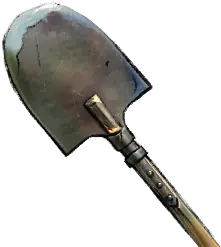
The Shovel is a tool in Windrose, crafted at the Workbench. It is used primarily for buried treasure quests and for digging up worm bait for fishing.
Attribute | Details |
|---|---|
Station | |
Ingredients | 3 Copper Ingots + 10 Wood |
Durability | 140 (degrades with use per the item panel) |
Equip the Shovel from your inventory or hotbar. Press X to toggle Dig mode. While in Dig mode, interact with marked dig sites or valid ground to excavate. Press X again to exit Dig mode and return to normal interaction.
Buried Treasure Quests - the Fifteen Men on a Dead Man's Chest quest requires digging under a leaning dead white tree with a red rag on the starting island
Fishing Bait - dig for worms in damp ground; worms are used as bait on the Fishing Rod
General treasure spots - other Traveller's Camp notes and map hints direct players to Shovel-required dig sites throughout the archipelago
Because the Shovel requires 3 Copper Ingots, it is gated behind the smelting pipeline (Copper Ore cave > Charcoal Kiln > Smelting Furnace). Most players unlock the Shovel during the Islander tutorial once they have reached Copper, but early treasure-hunt triggers (notes in Traveller's Camps) cannot be completed until the Shovel is crafted. Prioritize the smelting pipeline specifically to unlock the Shovel if you are hunting for the Rapier of a Thousand Cuts.
Workbench - crafting station
Buried Treasure - buried treasure mechanic
Fishing - fishing system
Fifteen Men on a Dead Man's Chest - treasure quest
The Shovel is not a single-function tool. Once equipped, it cycles through four distinct modes, each bound to a different interaction with the environment. Only Dig interacts with buried treasure and fishing worms; the other three modes matter for base building and self-defense.
Weapon: swings the shovel as a two-handed bludgeon. Damage is well below a dedicated Saber or Club, so treat it as a last-resort option if the primary weapon is broken, reloading, or out of stamina.
Dig: the mode used for the Fifteen Men on a Dead Man's Chest buried chest, Traveller's Camp dig sites, and Fishing worm bait. Hover over the marked patch of ground and the dig prompt appears.
Raise: builds the terrain up under the cursor. Useful for closing gaps in a base foundation, leveling a shallow pit before placing a building, or extending a cliff edge slightly when a structure footprint overhangs the ground.
Flatten: levels a sloped patch of ground down to a uniform height. The most common use is smoothing rocky or uneven terrain around a Bonfire before placing foundations, since buildings snap cleanly to flat ground but fight the physics on rough surfaces.
Cycle through the four modes with the key bound to Shovel: Next Mode (2 by default on keyboard) or Shovel: Previous Mode (3 by default). The currently selected mode is displayed near the hotbar while the shovel is equipped. Switching modes does not cost stamina and can be done mid-exploration.
Most players never touch Raise or Flatten because the starter beach is already reasonably flat. Two situations bring them back into rotation later in the game.
Building on a new island with rocky or uneven terrain. A quick Flatten pass clears the awkward rises that would otherwise force the build grid to tilt or reject a placement.
Recovering a partially collapsed tile edge, for example when a cliffside ramp erodes below a planned Wharf or Fast Travel Bell placement. Raise restores the lost elevation without needing to relocate the structure.
The Shovel does not appear in the Workbench menu the moment you reach the starting beach. Like several other early tools, its recipe is gated behind a discovery trigger rather than a level or a quest reward, and the trigger is the same step that unlocks most of the early-copper crafting tree.
The trigger is picking up a smelted Copper Ingot. Mine Copper Ore with a Stone Pickaxe inside the starting island's Copper Caves, carry the ore back to a Smelting Furnace with Charcoal loaded as fuel, smelt one ingot, and physically remove the finished Copper Ingot from the furnace's output slot. The moment the ingot enters your inventory, the discovery system fires and the Shovel recipe (along with several other copper-tier recipes) appears in the Workbench menu the next time you open it.
Why this matters for treasure quests. Players who pick up the Blurry Sketch of the Island curio during the very first beach exploration sometimes assume the dig is meant to be done immediately, then sit on the quest waiting for a recipe that never arrives because they never finished a copper smelt. The intended progression is to chase the smelting pipeline first, take the ingot pickup as the implicit recipe unlock, then craft the Shovel and return to the marker. Treat any open buried-treasure quest as a soft prompt to finish a copper batch before circling back.
Tutorial-quest backstop. If you cannot find the Copper Cave on your starting island, follow Doctor Galen's Islander tutorial chain. One of its early steps routes you directly to the cave entrance, and the same chain hands you the Stone Pickaxe recipe on the way. Procedurally generated worlds can place the cave behind dense jungle or up an awkward cliff face, so the tutorial route is the most reliable fallback when a fresh map fails to surface the pickaxe icon on its own.
If you arrive at the Copper Cave without a Torch or Oil Lamp in your hotbar, you do not have to leave the cave and round-trip back to base for a light source. The build menu still works inside the cave, and a placed torch costs only a small amount of wood, so the recovery is cheap.
Procedure. Open the build menu while standing inside the cave. Select the placeable Torch from the lighting category. Drop one or two torches near intersections or against the back wall of the chamber you intend to mine; placed torches stay lit indefinitely and do not need refueling. Coupling this with a stack of spare wood in your inventory means a forgotten lamp turns into a thirty-second pause rather than a full retreat to the surface.
Why this is worth knowing. Inventory slots are tight on the early game, and many players consciously skip carrying a torch on a quick scouting pass. The build-menu fallback is the reason that gamble is safe: even if the cave turns out to be the long, branching kind, you can still light it without hauling lamps back from base. Place torches at every passage junction once Waste Rocks open up the deeper chambers; the marginal wood cost is tiny compared to the time saved when re-entering the cave on a respawn cycle.
In addition to crafting, the Shovel can be recovered from three Highlands POIs. Each surfaced loot-table entry is a guaranteed 1-1 drop, useful mainly as a recovery option if the primary Shovel breaks mid-session.
Source | Type | Quantity | Chance |
|---|---|---|---|
Highlands Dungeon Vase 01 4 | Chest | 1 | 100% |
Highlands Dungeon Vase 02 4 | Chest | 1 | 100% |
Highlands Grove Wolf 01 | Chest | 1 | 100% |
None of these sources requires a respawn or a key; they are static Highlands POI chests. The practical route remains the recipe at a Workbench Lvl 1, but a Highlands-first run can skip the Copper smelting detour entirely by visiting one of these POIs before attempting any buried-treasure quest.
The Shovel is not bought or sold by any vendor. The tool is either crafted at a Workbench Lvl 1 or recovered from the Highlands POI chests listed above.
The Shovel's in-game item panel displays the following values:
Property | Value |
|---|---|
Category | Tool, Shovel |
Rarity | Uncommon |
Durability | 140 |
ATK | 300 (Crude) |
Item Level | 1 |
Weight | 0.8 |
Stack Size | 1 |
The Shovel hits harder than any axe or pickaxe in the roster (300 Crude vs. 255 or 270 elsewhere) but trails the Iron Pickaxe and Swamp Pickaxe on durability. This is why it is tagged as an emergency-only melee fallback rather than a primary weapon: more damage per swing, fewer swings before breaking.
Dig mode has a third high-value use beyond buried treasure and fishing worms: it is the fastest way in the game to farm Plant Fiber. Standing inside a patch of bushes or ground foliage and triggering Dig mode drops Plant Fiber pickups on the ground directly, skipping the slow per-bush sword or axe routine every new captain tries first. A single dig cycle in a dense foliage patch produces a handful of Plant Fiber drops at once, and repeating the cycle across a row of bushes compounds the yield into the tens of units per minute.
The technique matters because the opening hours of the game burn through Plant Fiber on nearly every essential craft at once: tents, bandages, rope, coarse fabric, bags, and low-tier building pieces all pull from the same pool. Chopping bushes one at a time with a sword also damages the sword's durability, and early-game sabers and clubs lose meaningful condition over a long fiber farming pass. The shovel in Dig mode produces fiber without wearing down any weapon, and its own Crude damage durability is spent on far fewer strikes per unit of fiber because each dig cycle covers a whole foliage cluster at once.
The practical loop is to map the densest bush patches inside the bonfire radius of the starter base first, then sweep them in Dig mode before every long exploration run. Fiber drops stay on the ground for the usual despawn window, so a single pass can be chained with the inventory return to camp rather than interrupting the session to pick up each individual drop. This is the reason veteran players treat the shovel as a day-one craft even on characters that have no interest in buried treasure: the Plant Fiber throughput alone justifies the three Copper Ingot and ten Wood recipe cost several times over.
