Loading...
Loading...
The Hiss
September 27, 2026 at 06:27 AM
Reworded the note on the Hiss variant list
The Hiss are the returning hostile faction in Control Resonant. Originally introduced in the first Control as a paranatural infection that turned ordinary FBC personnel into hostile entities, they return in Resonant with a wider variety of behaviours and a stronger presence outside the Oldest House. They share open-air Manhattan with the Mold. For wider context, see the Overview and the Manhattan world page.
Field | Detail |
|---|---|
Type | Paranatural hostile faction |
Returning from | Control (2019) |
Current habitat | Outdoor Manhattan, including the West Incursion Zone and Central; heaviest in the Evacuation Zone |
Behaviour change | More complex, more aggressive, more unpredictable than in the first game |
Variety | Wider roster of enemy roles than the first game's catalog |
Remedy's commentary on the Hiss before release was blunt about how they have evolved. Three changes are publicly stated and load-bearing.
Change | Detail |
|---|---|
Complexity | Hiss encounters draw on a wider behaviour pool. Attack patterns are less predictable than the first game's standard set, and groups mix roles within a single engagement. |
Aggression | The Hiss push forward harder. They are tuned for the same forward-pressure combat loop the player is on, so encounters trade pressure rather than waiting on Dylan. |
Variety | Multiple enemy roles operate inside a single Hiss group: heavy front-line attackers, ranged support, mobile harassers, and bigger encounter-anchoring variants such as the Breaker (see Enemy Types in the Released Game below). |
The reframing matters because the Hiss are no longer confined to a single shifting building. They operate at street level across Manhattan zones, and the combat geometry is open enough that they can converge on Dylan from multiple sightlines at once.
The Hiss fight inside the same combat loop as the rest of the game. Melee strings against Hiss enemies build the combat ability resource; combat ability spends stun Hiss targets and open them up for executions; executions grant a temporary damage buff. See the Melee Combat page for the full mechanical breakdown.
Where the Hiss differ from the Mold is in how the engagement flows. Hiss groups are presented as encounters in the conventional sense: identifiable enemies, identifiable attack patterns, and the standard combat-loop response. The aggression dial is turned up, but the player is still solving a familiar problem.
The Hiss and the Mold are hostile to each other rather than allied. A June 2026 hands-on described a Resonant entity removing every Hiss from its surroundings, and a full-game review published on September 18, 2026 describes Mold entities as forces that oppose the Hiss. Remedy has not published whether the two factions fight each other dynamically during play; this page will add it from the released game.
The Hiss are loose in Manhattan because the lockdown at the Oldest House failed. Paranatural threats that had been contained inside the headquarters have spilled into the streets, and the Hiss are one of the two factions making that spread visible. The other is the Mold.
This is a meaningful change from the first game's containment story. Inside the Oldest House, the building's own paranatural properties helped seal the threat. In Manhattan, those properties are gone. The Federal Bureau of Control has no architectural ally, so it has deployed Dylan into the city to push back.
The Hiss are not a new threat for the player. The material published before release consistently positioned them as the familiar problem reframed: same name, same paranatural origin, more dangerous setup. Newcomers do not need to have played the first game to follow Resonant's story, and the in-game material introduces the Hiss in context rather than assuming prior knowledge.
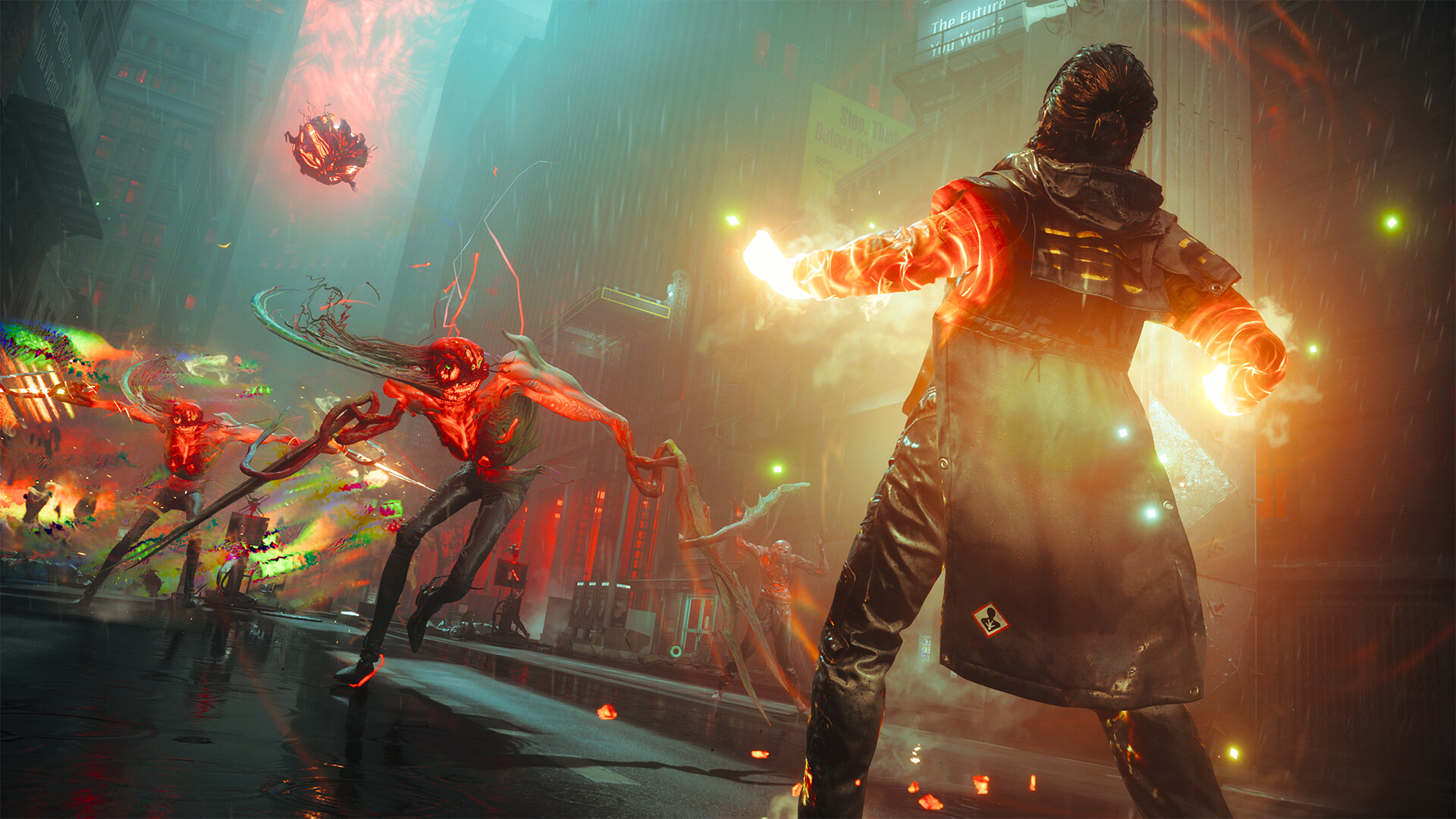
Remedy has stated publicly that the Hiss are not the same enemy population they were in the original Control. The roster is broader, more diverse in shape and size, and the individual enemy roles within the faction are more clearly differentiated. Designers describe the goal as forcing the player to read each Hiss variant and pick the right approach rather than relying on one universal combat answer. Environmental conditions inside warped Manhattan sectors also feed into Hiss behaviour, with the Pattern's influence making them more aggressive and harder to predict in certain zones.
Remedy has not published a complete list of Hiss variants for the released game. The types below are the ones the game's own achievement text names or that coverage of the released game describes consistently.
Type | Detail |
|---|---|
Breaker | A large Hiss enemy named in the game's own achievement list ("Psychic Domination: Command a Breaker enemy."). Guides describe Breakers as oversized Hiss built out of smaller Hiss. |
Flying Hiss | Airborne enemies that launch explosive projectiles, and sometimes themselves, at Dylan. |
Named minibosses | Tougher, higher-health versions of standard enemies. Many World Feats, the repeatable open-world challenges, are built around one. |
Hiss hazards | Hiss spikes and laser hazards guard some routes and have to be avoided or cleared. |
The signature Hiss movement, the body-distorting twitch and glitch that gives the faction its visual identity, is performed by motion-capture actor Tomas Nielsen for Resonant. The mo-cap work is split across multiple Hiss variants and gives the faction a consistent kinetic language regardless of which enemy archetype is on screen at any given moment.
A cosmetic named after the faction, the Hiss Corruption Outfit, was the bonus for digital pre-orders on every platform, paired with the Pickpocket's Tool Artifact. Remedy's editions page stated that both unlock at the end of Act 1 rather than immediately, and the pre-order bonus was dropped from the edition listings when the game launched on September 24, 2026. See Editions and Pre-Orders for the full breakdown.
The following were not covered by first-party material before release and have not yet been checked against the released game:
The full roster of Hiss variants in Resonant.
Whether new Hiss enemy types are introduced or whether the evolved behaviour applies to the existing types.
Specific tells and attack timings for individual Hiss variants.
Whether Hiss groups interact with the Mold dynamically (faction-on-faction combat) or remain segregated.
Boss-class Hiss enemies, if any, beyond the named minibosses and separate from the Resonant boss class.
This page will be updated as more is revealed.