
Loading...
Loading...
Melee Combat
May 30, 2026 at 07:26 PM
Removed duplicate in-body wikilinks
Melee Combat is the load-bearing pillar of Fatekeeper's Combat loop. The first-person camera puts every swing inside arm's reach; every weapon class has its own timing, reach, and recovery, and the player is expected to read each fight rather than fall back on a single safe combo. Weapon classes are housed under Weapons, with the cadence of each class detailed on its individual page.
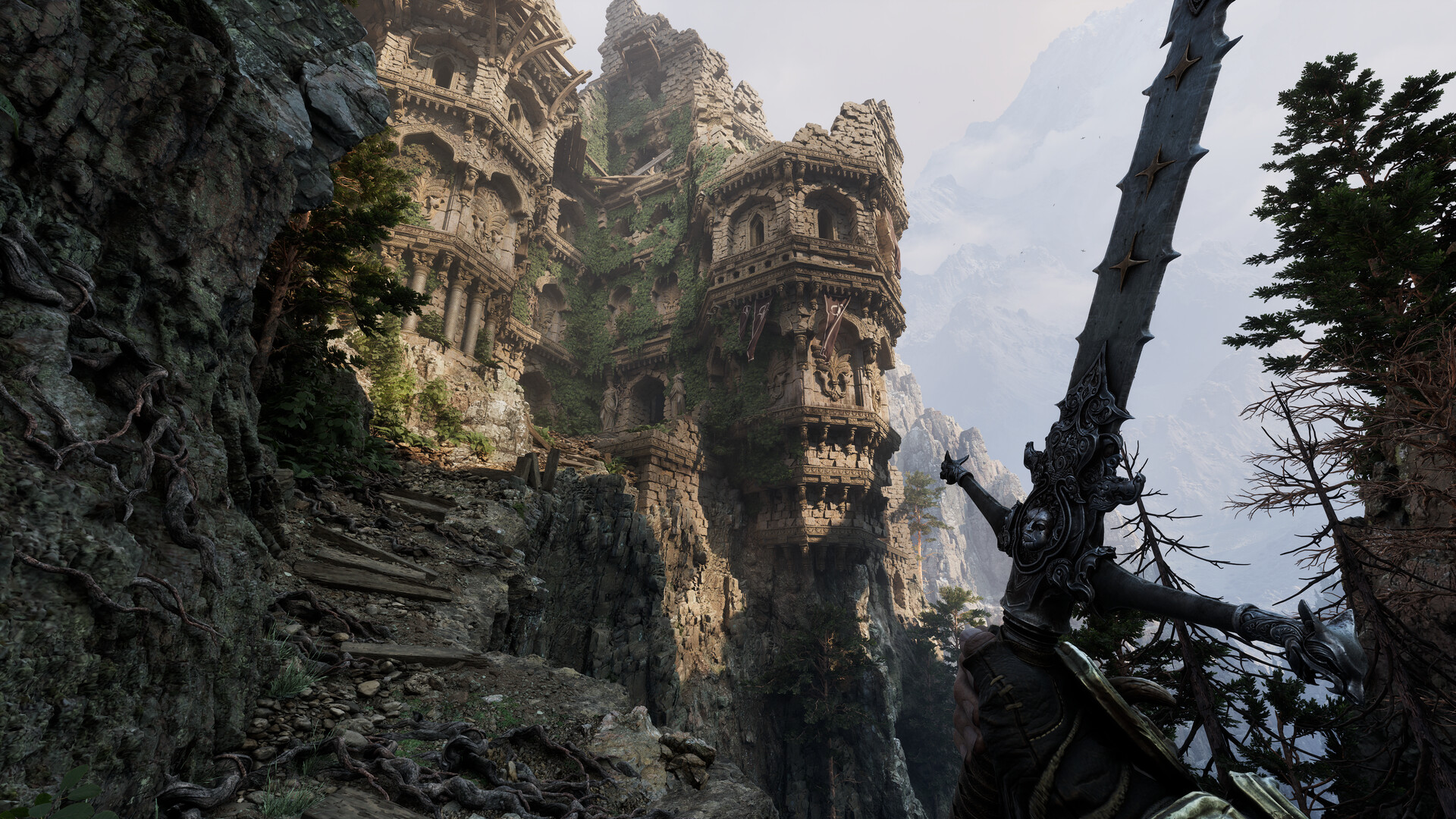
A melee exchange is a triangle of anticipation, commit, and recovery. Anticipation is the windup; commit is the active hitbox; recovery is the open window that follows. The Nov 2025 reveal showed every weapon class respecting that cadence, no fight reads as button-mash spam. Punishes happen on enemy recovery; the player's own recovery is where parry-baits and counter-strikes come from.
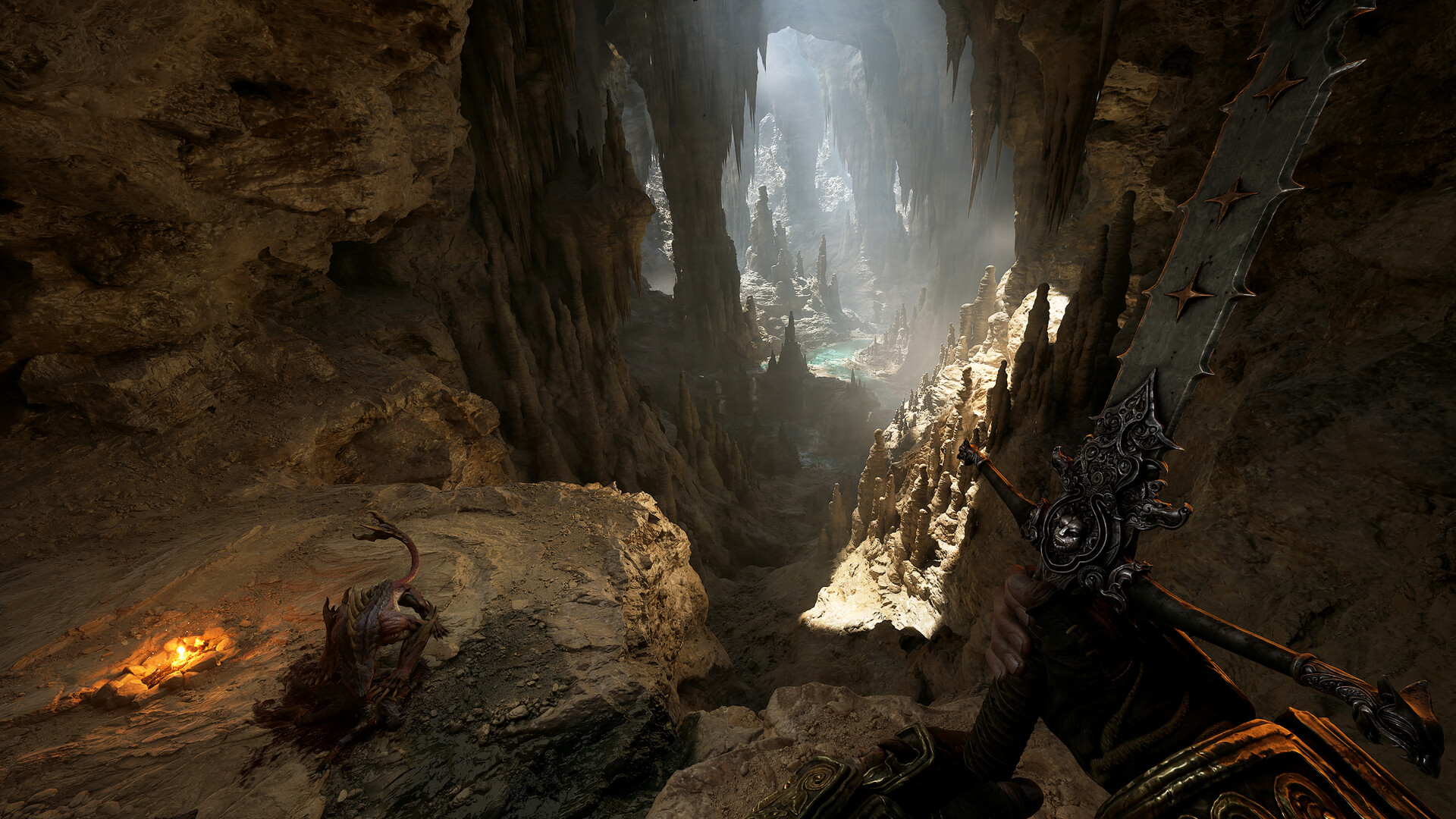
Each weapon class has a distinct fight posture:
Class | Range | Posture |
|---|---|---|
Very short | Skirmish in and out. High-frequency strikes, low per-hit damage, leans on stacking status and finishers. | |
Short-medium | Generalist baseline. Balanced commit timing, predictable cadence. | |
Medium | Cleaving swings; punishes after parries. | |
Medium | Heavy strikes with stagger value, exposes finisher windows. | |
Medium-long | Slow, heavy, very high stagger; pair with utility to create openings. | |
Short-medium | Brutal, simple-shape baseline; high commit. | |
Long | Pole-arm spacing; trades commit time for reach. | |
Variable | Two-handed swings sacrifice mid-fight spell-weave for damage spikes. | |
Long | Hybrid melee / spellcasting frame. |
Melee Combat is not a closed subsystem. The reveal showed the player breaking up a melee combo with a mid-string spell from Magic, or with a Telekinesis pull that yanked a flying enemy into stagger range. The player can also pour Weapon Oils and Vials onto a weapon to layer an elemental or status payload onto every strike for a duration. Practical implication: a strong melee run weaves spells in even if the build identity is melee-focused.
Melee Combat shares the defensive layer with the wider Combat loop. Parrying reads as a tight authored window that opens punish opportunities; Dodging handles the read-fail and the gap-close; blocking with the weapon spends stamina to mitigate. Recovery on whiffed strikes is real and exploitable; this is not a system that hides melee mistakes.
Hitting a finishing threshold or staggering an enemy hard enough opens a Finishers and Dismemberment prompt. Heavy weapon classes (hammers, two-handed) generate stagger faster than the dagger classes do; daggers reach the same finishing point via stacked status payoffs and weak-point precision. Both routes converge on the same execution layer.
Status effects are a primary melee throughput multiplier. The most-shown interaction is Shatter, where a frozen target broken by a heavy melee strike pays out a damage burst. Burn from Fire Magic, elemental layers from Weapon Oils and Vials, and wind-side displacement from Wind Magic all interact with weapon attacks. Status is what lets a build skip past raw weapon-damage scaling.
Two of the four flagship Builds archetypes are anchored on melee identity:
Dagger Skirmisher, fast in-and-out, parry windows, finisher chains.
Two-Handed Weapons, heavy commit, big stagger, slower spell-weave.
The Consumable Alchemist and the two caster archetypes still spend most of every fight in melee range, just with different damage-source priorities.
Combat, top-level loop.
Weapons, class index.
Finishers and Dismemberment, execution layer.
Parrying, active defence.
Dodging, directional iframes.
Shatter, frozen-target payoff.
