
Loading...
Loading...
Gameplay
June 1, 2026 at 08:11 PM
Added Lords, Power, and War section linking the feudal politics, diplomacy, and war layer
Chronicles: Medieval is a sandbox RPG in which players create a character and pursue their own path through a dynamic medieval world. The game emphasizes player-driven storytelling, tactical combat at multiple scales, and long-term character and faction development. A single playthrough spans up to 35 in-game years within one historical chapter, with characters aging over time and a legacy summary provided at retirement.
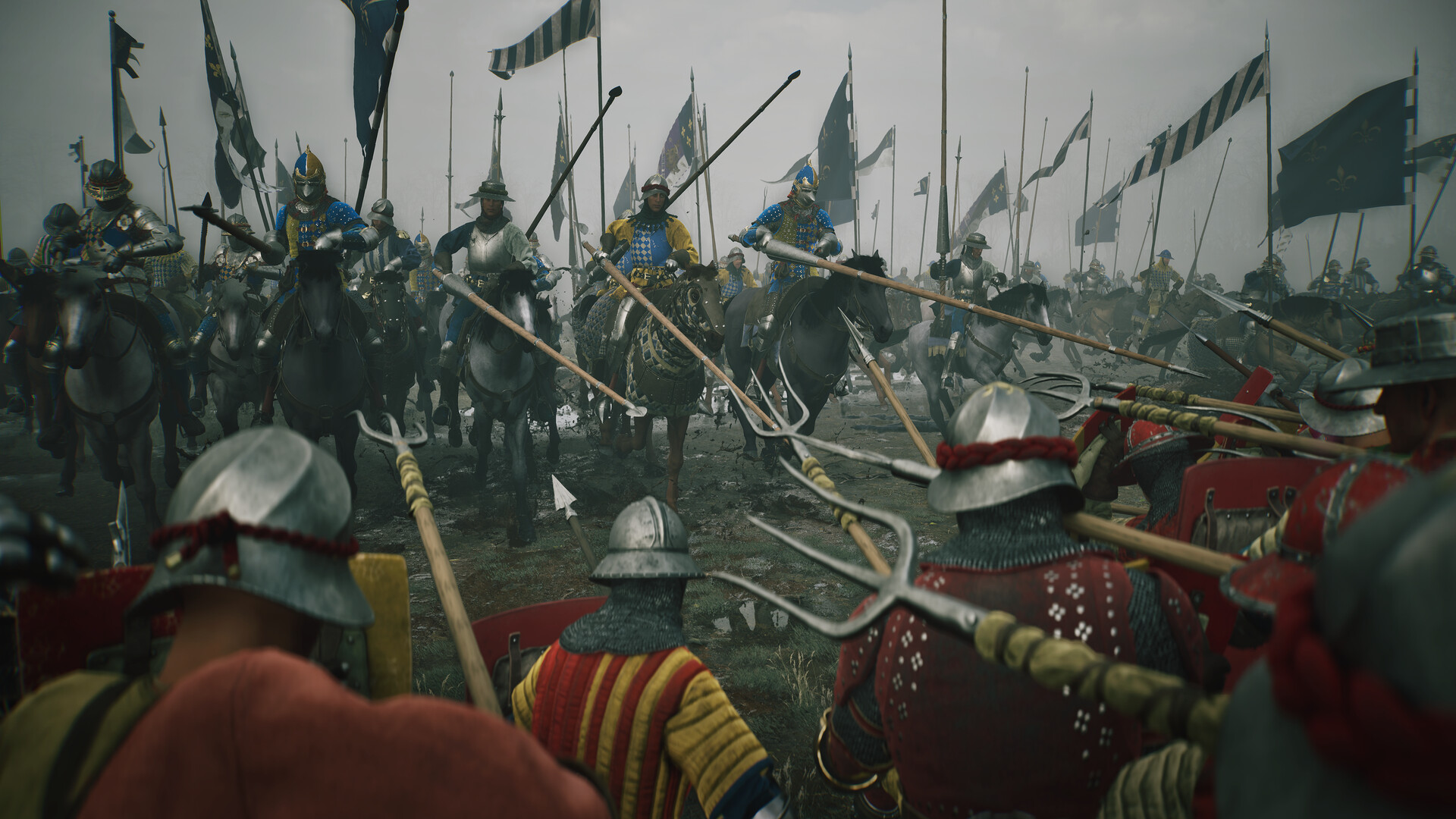
Combat in Chronicles: Medieval operates across three integrated layers that players can move between during an engagement.
Layer | Description |
|---|---|
General | Pre-battle strategy phase where players plan positioning, unit composition, and tactical approach before engagement begins. |
Captain | Real-time command layer where players issue orders to their units, managing troop formations and directing forces across the battlefield. |
Direct engagement layer where players control their character in third-person melee combat alongside their troops. |
Players can switch between the Captain and Combat layers seamlessly during a battle. An auto-resolve option is available for players who prefer to focus on diplomacy or trade rather than direct battlefield participation, though manual command generally produces better outcomes.
Players recruit, train, and command historical military units. Confirmed units include English Longbowmen, French cavalry, and Imperial Polearm infantry. Units gain veterancy over time and unlock advanced techniques as they progress from Apprentice to Master tiers.
Chronicles: Medieval uses a use-based skill development system. Weapon proficiency improves through repeated use, with each weapon category following its own progression path. As characters level up, they earn perk points to spend on weapon specialization trees, unlocking techniques from Apprentice and Journeyman moves up to advanced chains. Broader perks also improve overall power, efficiency, or performance with higher-tier equipment.
Players explore the world through a top-down overworld map that transitions contextually to third-person instances when entering settlements and battlefields. The overworld map is open in structure, allowing players to explore any accessible region. Points of interest include settlements, castles, battlefields, and camps. A fog of war system features three visibility states: unexplored regions (fully hidden), previously visited regions (showing outdated information), and areas within current scouting range (live tactical data).
The game offers multiple roles including bandit, trader, knight, mercenary, and captain, among others. Players can interact with and navigate rival factions, rising through ranks via diplomacy, reputation, or force. The army commander path is the most developed content at Early Access launch. Players can ultimately rise to rule kingdoms, controlling territory and managing vassals through direct character interaction.
Above the battlefield, the world runs on a layer of feudal politics. Factions are modelled as networks of individual lords linked by titles rather than as monolithic blocs. Each title carries a rank and a type, characters build or lose legitimacy and personal relationships on scales from -100 to 100, and lords can declare war, occupy settlements, raid trade caravans, and force peace through an accumulating warscore. The army commander path threads directly through these systems as the player climbs from a nobody to a ruler of kingdoms. See Lords, Power, and War for the full breakdown of titles, vassals, diplomacy, and war.
The world features interconnected economic, diplomatic, social, and environmental simulation systems. Events such as plagues and famines affect the world dynamically. Player decisions create rippling consequences both locally and globally. The design emphasizes a world that operates with its own logic and momentum, rather than centering all activity on the player character.
Each playthrough begins with the player selecting a historical chapter, each covering a distinct era between the 14th and 15th centuries with its own context and events, such as the Black Plague or the Hundred Years' War. Additional historical chapters are planned as part of the Early Access development roadmap.
