

This article is incomplete
Some sections are missing or need additional details. Help improve it by contributing.
Chronicles: Medieval will launch in Steam Early Access on PC in early 2027. The studio announced the new window in August 2026 alongside its developer diary on army management, moving the release out of its original 2026 target. In the studio’s words, the additional development time will be used to refine the experience and strengthen core systems so the Early Access journey starts in the best possible place for both the team and the community. The Early Access phase is expected to last approximately one year before the full 1.0 release, though the actual duration will depend on development progress and community feedback.
Pricing
The Early Access price had not been announced as of mid-2026. Raw Power Games has confirmed the Early Access price will be lower than the final full-release price, with early supporters receiving the game at a discounted rate.
Content at Launch
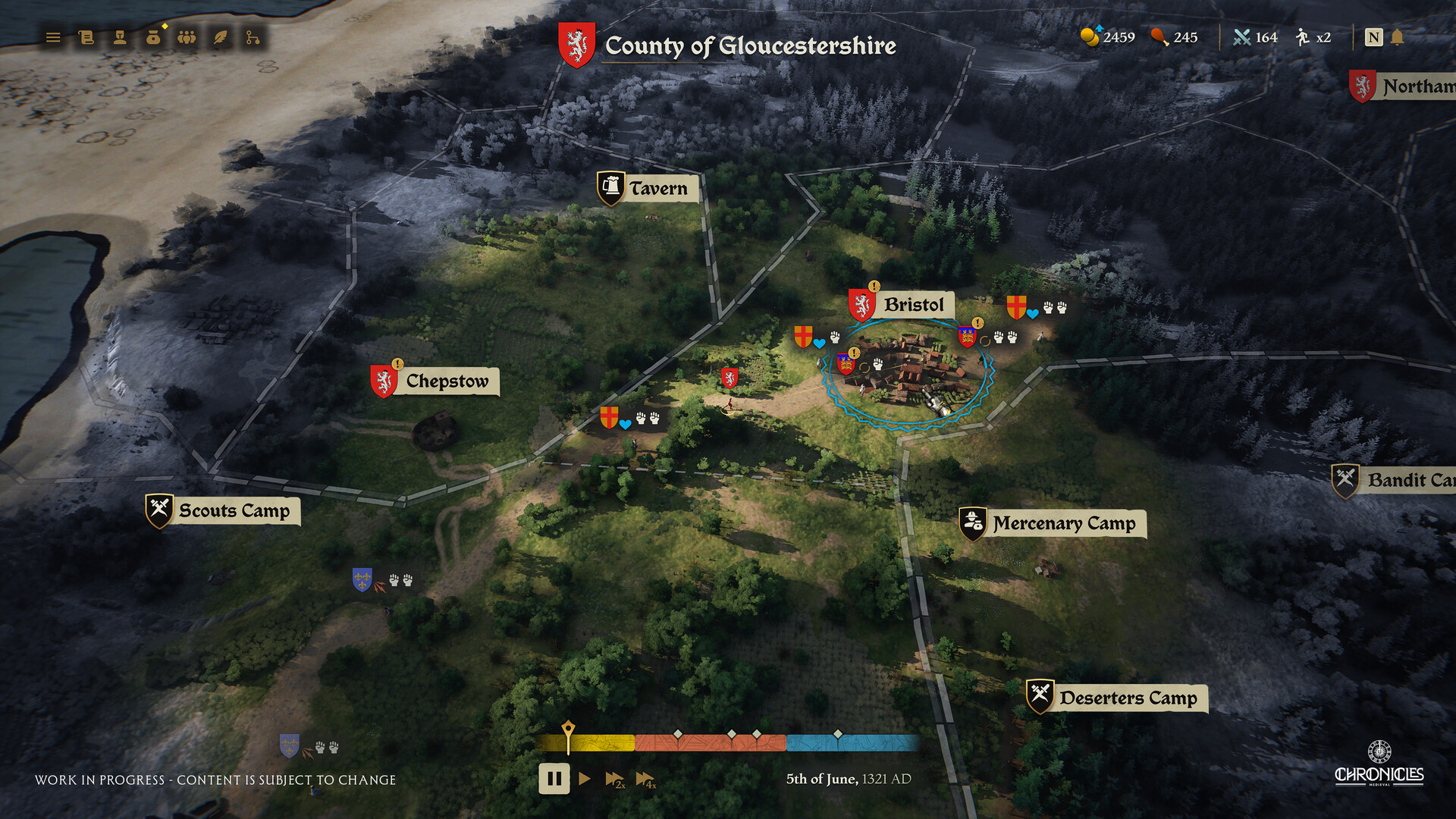
The following systems are confirmed for inclusion at the Early Access launch.
Playable medieval sandbox with a focus on the army commander path
Core exploration system with an overworld map covering a large part of medieval Europe
Crafting system
Combat system with Energy and Posture mechanics, weapon progression, and mounted combat
Skirmishes and field battles
Castle building and defense
Troop recruitment, training, and unit command
Co-op custom battles (up to 4 players)
Planned Additions During Early Access
The following features are planned for development and release during the Early Access period.
Multiple additional historical chapters with varied scenarios
Enhanced castle tiers and siege machinery
Expanded diplomacy and economy systems
Expanded combat systems
Additional locations and factions
Modding tools and platform
Performance improvements
Tournaments
Full Release Goals
The full 1.0 release targets co-op campaign play, allowing players to invite friends to play through the campaign together. Dedicated servers, matchmaking, server browsers, and large-scale PvP battles are not a focus for the game.
Design Principles
Raw Power Games frames the game around four pillars (dynamic sandbox, tactical battles, mod support, and co-op play) and a set of five design principles that guide how the sandbox behaves during Early Access and beyond:
Wheel of Time: life and death are cyclical and resources are finite. Characters age and die, from beggars to kings, and what one generation builds the next may inherit or squander.
Information is Power: players do not begin with a fully revealed map. Knowledge of regions, factions, and characters must be gathered, and a player cannot maintain real-time information about distant places they cannot see.
Sidetracking Through Opportunities: the world is seeded with hooks that invite players off their intended course, such as a rumour overheard at an inn or an unfamiliar banner on the horizon. Following them is always optional.
Historical Believability: the game is grounded in how the medieval world worked socially, economically, and militarily, balanced against what is fun, with liberties taken thoughtfully.
Dynamic Environment: the simulation runs whether or not the player is watching, so every playthrough unfolds differently. The studio treats history before the campaign start as fixed, while the future is open to player influence. The Hundred Years' War historically broke out in 1337, and because a chapter can begin earlier, players can push that war to break out sooner, later, or not at all.
Development Approach
Raw Power Games has outlined a transparent approach to Early Access development, including regular updates explaining what is being worked on and why, community polls and votes to help prioritize features and fixes, and playtest opportunities for players to try systems before public updates. The studio plans to build a modding platform that gives modders the same or similar tools used internally to create game content, with active collaboration with experienced modders from the start of the process.