

Overview
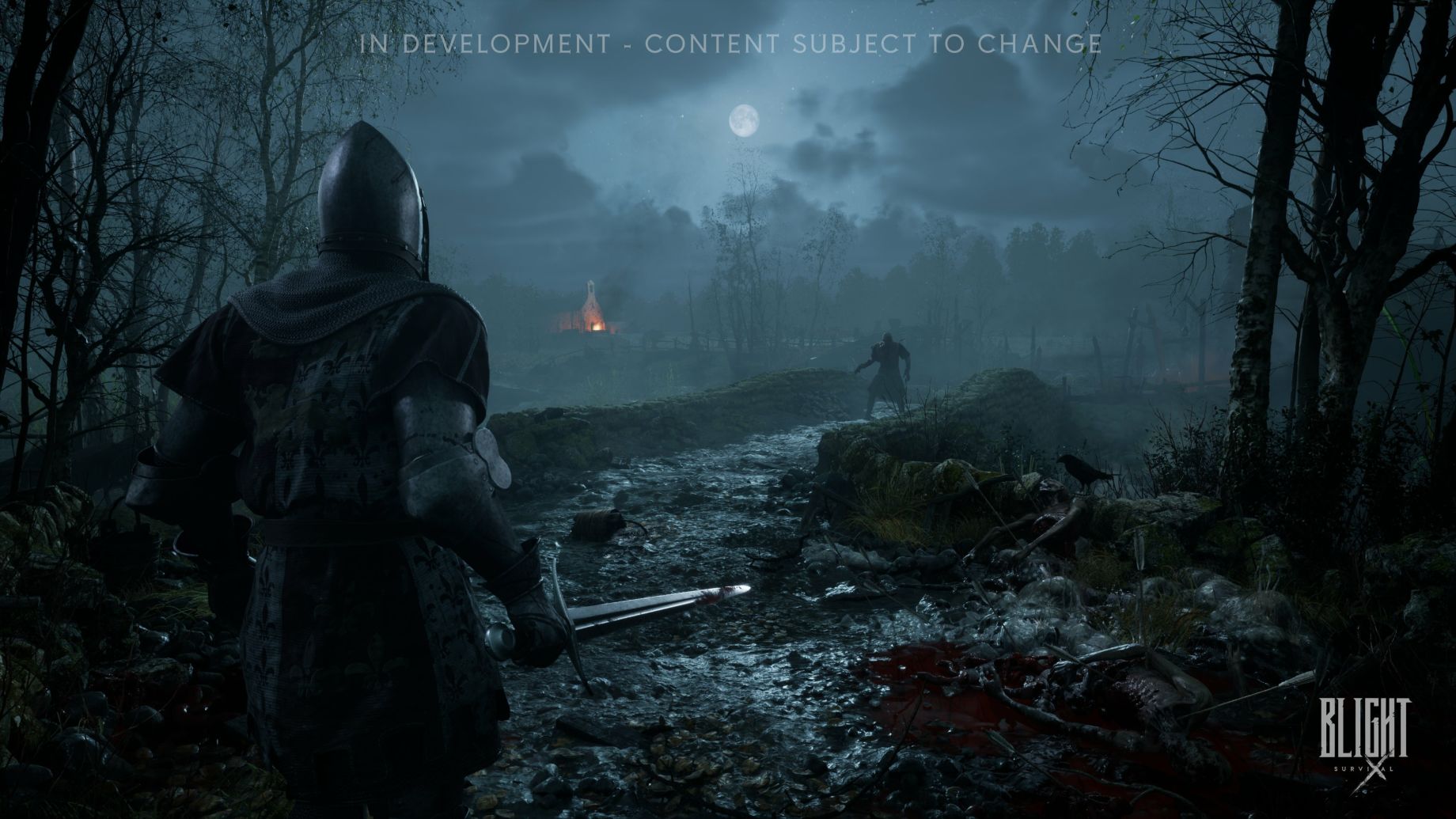
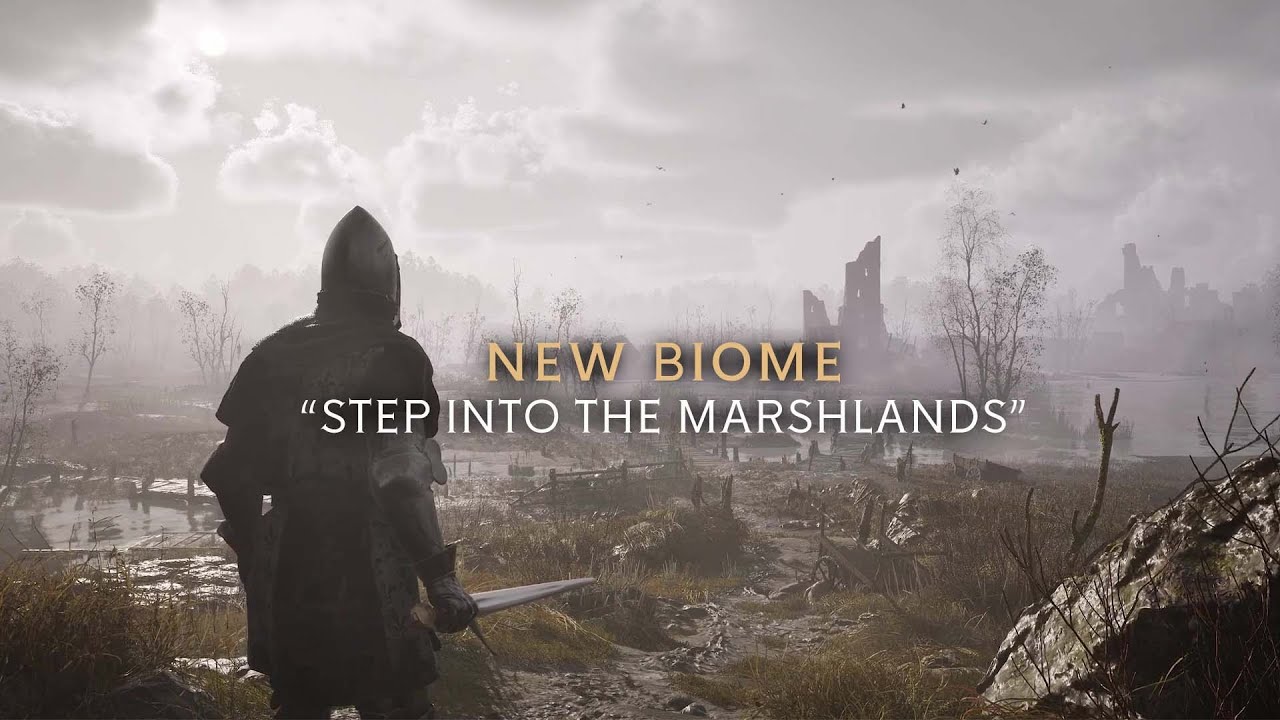
The Marshlands is a biome within No Man's Land in Blight: Survival. It is a fog-shrouded wetland area defined by its bleak atmosphere, grim environmental details, and oppressive mood. The developers describe it as "one of the most atmospheric biomes," and it was the first biome to receive a dedicated Steam devlog titled "Creating the Marshlands." described the result as "mud-and-blood medieval horror."
Lore
The in-game lore description reads:
"The Marshlands were quiet, but never peaceful. The locals survived on whatever the waters offered, but most of it was taken by those in power. Peat-digging, once a vital way to earn a living, became a brutal curse. As bodies stacked up and old customs faded, strange growths began to spread across the land, marking the beginning of a transformation that left the land and its people unrecognizable."
This lore establishes the Marshlands' pre-Blight history. The area was already a place of exploitation and suffering before the infection arrived. The locals survived on fishing and peat-digging, both taken by those in power. "Bodies stacked up" refers to the war between the two kingdoms, and the "strange growths" are the first signs of the Blight emerging from blood-soaked soil. By the time players enter the Marshlands, the transformation is well underway: the land and its people are unrecognizable.
Visual Design
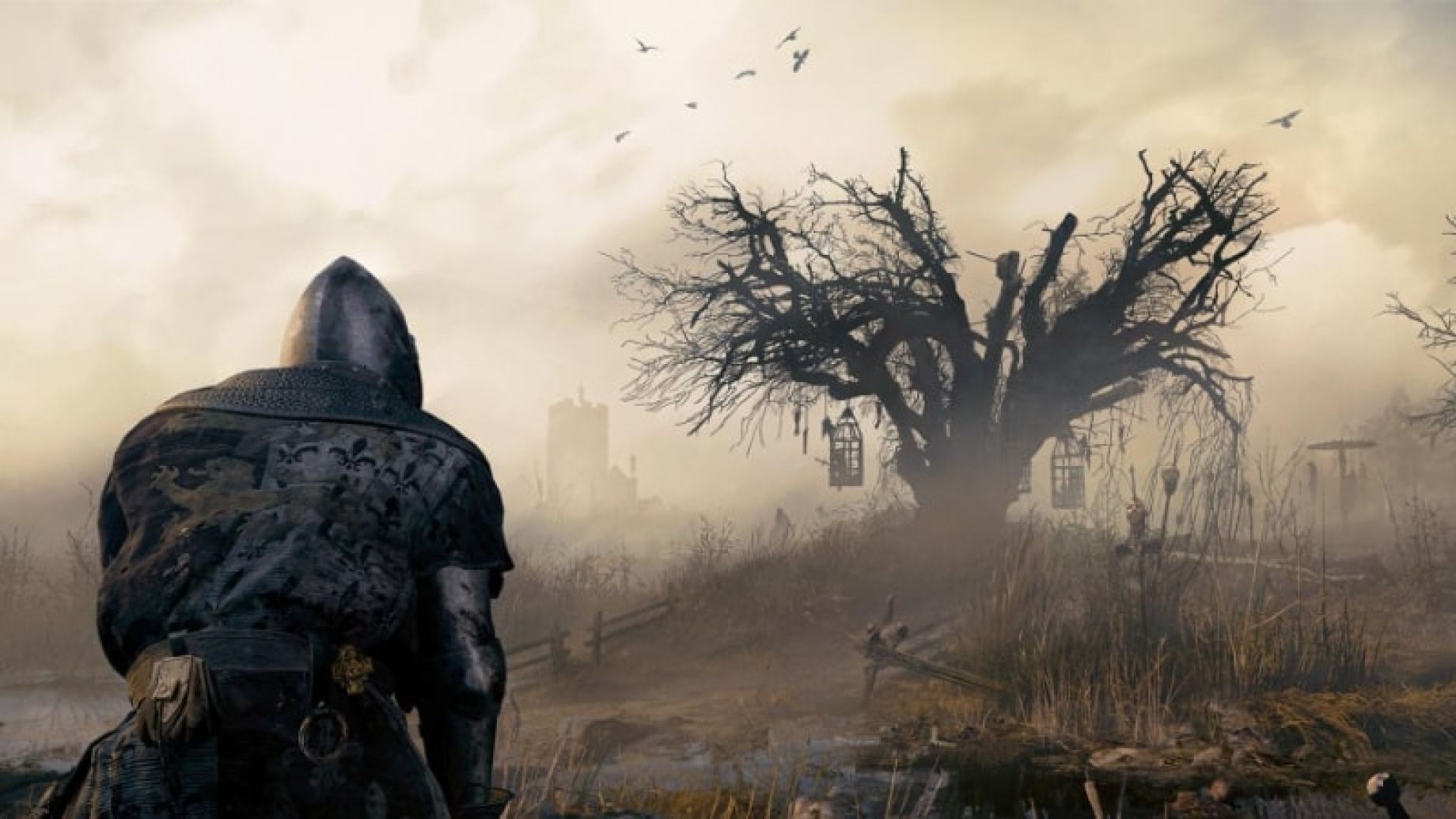
The Marshlands is soaked in mysterious fog that limits visibility and creates constant unease. Standing water covers much of the ground. This reflects dim light and the silhouettes of dead trees. The environment communicates danger through visual storytelling: corpses hang in gibbets from trees, flocks of crows peck at the dead, and spooky ruins sit across the water, half-submerged and crumbling.
Deeper into the environment, flooded courtyards with ruined arches give way to dust-lit underground passages with barred gates. These transitions from outdoor marshland into enclosed spaces introduce dungeon-like areas within the biome. The level of environmental detail reflects the game's Unreal Engine 5 and Quixel Megascans foundation, with Briac's work using Blender alongside UE5, drawing from photographs, videos, and documentaries for real-world reference.
Each element serves both atmospheric and informational purposes. The gibbets are not just set dressing; they tell a story about the Marshlands' violent past. The crows are not just ambient creatures; they signal where bodies lie, potentially warning of Hidden enemies nearby.
The Cliff Vantage Point
Devlog footage showed a striking moment: a lone player standing on the edge of a cliff studying the Marshlands below. The developers described this as "a branching point where you stop, take in the land, and decide how you want to approach what's next." Below, scattered peasant houses are visible, signs of an old battle, and the blood-red fog of Blight spores creeping in as the infection's tendrils consume the environment.
The studio introduced the region as a codename rather than a settled place name, so the label may not be what the finished game calls it. This vantage point suggests the Marshlands are entered from above, giving players an overview of the area before descending into it. The ability to survey the landscape before committing is consistent with the game's emphasis on player choice and risk assessment.
Key Landmarks
The most notable landmark in the Marshlands is the Wailing Tree, a twisted willow with deep ties to the area's past. The developers describe it as a tree that "bleeds horror into the land around it." Near the tree stands a Breaking Wheel, an old execution device historically used to make public examples of condemned people.
The Marshlands also contain ruined structures visible across the water, suggesting the area was once settled before the Blight consumed it. These ruins provide both exploration opportunities and cover during combat encounters.
Day and Night
The Marshlands' appearance changes depending on the time of day. The developers confirmed that time of day impacts "everything from difficulty to visibility." The Marshlands devlog included footage showing day-to-night transitions in the same location.
Time | Effect |
|---|---|
Daytime | Fog lifts slightly, visibility improves. The atmosphere remains oppressive but the environment is more navigable. Fewer enemy encounters |
Nighttime | Visibility drops dramatically. Fog thickens. More frequent and dangerous enemy encounters. Torches become essential but signal your position |
Traversal Challenges
The Marshlands' terrain presents unique challenges compared to other areas of No Man's Land. Standing water and muddy ground may affect movement speed and noise levels, both of which are relevant to the stealth system. Splashing through water is louder than walking on dry ground, potentially alerting nearby enemies.
The fog limits sightlines, making ranged weapons like bows and crossbows less effective and increasing the risk of walking into ambushes. Shorter engagement distances favor melee weapons and quick reactions over careful ranged play.
Torches serve dual purposes in the Marshlands: they illuminate the path through fog and darkness, but they also compromise stealth by signaling your position. A player carrying a torch through the Marshlands at night is easier for enemies to detect.
Enemy Encounters
Hidden enemies are particularly dangerous in the Marshlands. The bodies and debris scattered across the wetland provide natural concealment for dormant infected. In an open field, a player might spot a Hidden from a distance. In the Marshlands, fog and standing water obscure the ground, and the first warning may be the attack itself.
The Marshlands' enclosed ruin areas and underground passages can contain Swelters whose toxic gas fills rooms quickly, and Bellowers whose screams echo across the open wetland, pulling enemies from a wider area than in environments with more sound-blocking terrain.
Creation
The Marshlands were primarily created by Briac, a Senior 3D Artist on the team, working to a creative direction still set by the founders of Haenir Studio, with audio direction by Ian. The biome "started to take shape after a few months of development." A dedicated Steam devlog featured Briac discussing the creative process behind building the environment, including the real-world reference material (photographs, videos, documentaries) that shaped the biome's look and feel. For more on the audio design, see Sound Design and Atmosphere.