

Overview
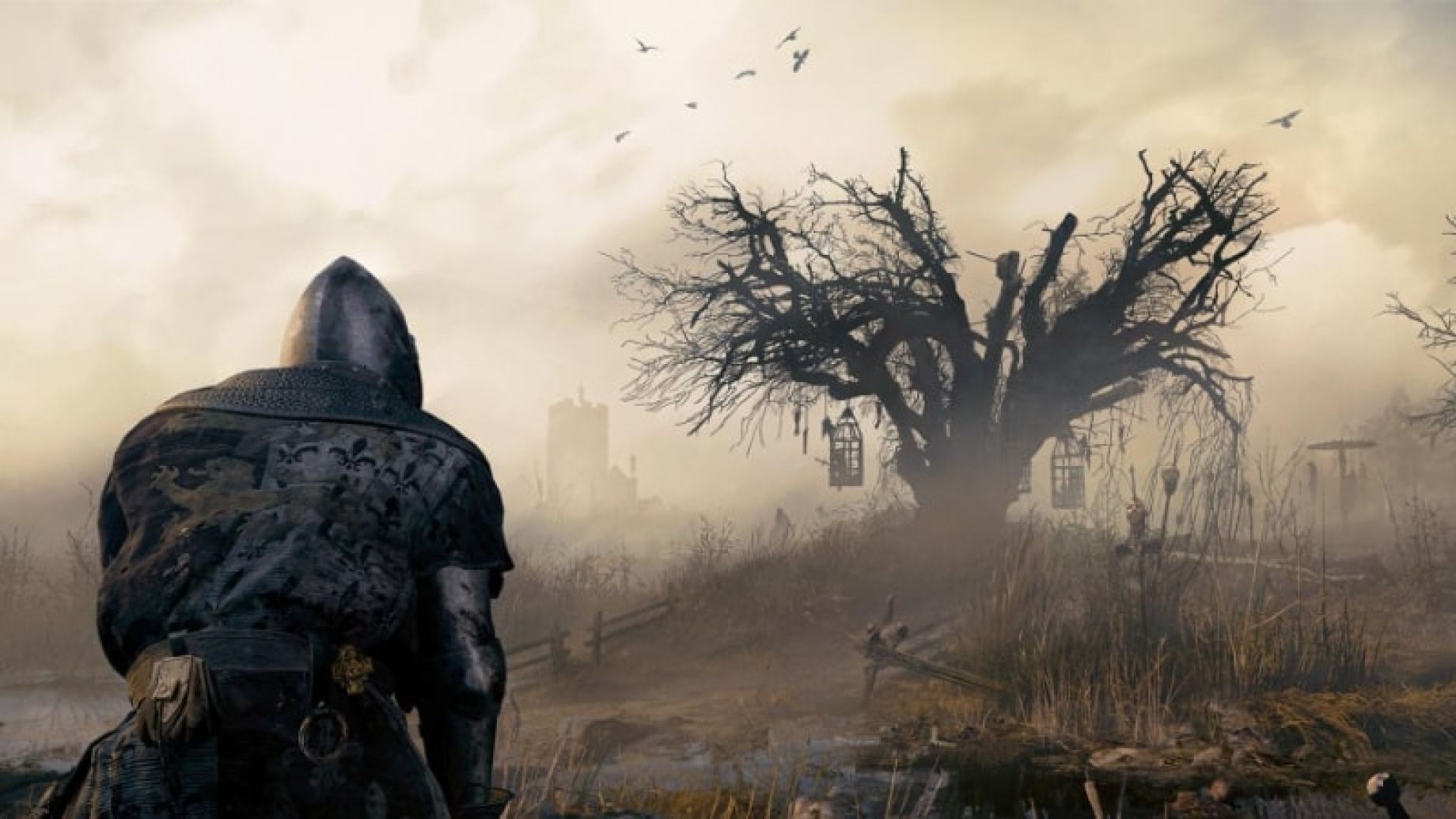
The Wailing Tree is a landmark located within the Marshlands biome in Blight: Survival. It was the focus of the developers' first in-game footage shown after the initial reveal trailer, making it one of the earliest locations fans saw rendered in the game's engine. The developers described the tree's design as something that "evolved from a basic concept into an instantly recognizable landmark and piece of environmental storytelling."
Description
The Wailing Tree is described by the developers as a "twisted and terrifying willow that bleeds horror into the land around it." The tree dominates the surrounding wetland, its gnarled branches reaching outward over the fog-shrouded marsh. Attached to the tree is a Breaking Wheel, an old medieval execution device historically used to make public examples of condemned people. Victims were sometimes hung on these wheels not just to inflict pain but to humiliate them in full view of the community.
The presence of the Breaking Wheel connects the tree to the Marshlands' violent history. Before the Blight consumed the region, the wheel served as a tool of the ruling powers. Now that the area has been abandoned to the infection, the tree and its wheel stand as remnants of a human cruelty that preceded the supernatural one.
Lore
According to a developer devlog, the Wailing Tree "has deep roots in the Marshlands' past, once tied to quiet rituals and respect for the land. What it meant to the people has been lost." The original purpose of the tree appears to have been something peaceful or spiritual, but that meaning faded as conflict and death overtook the region.
The devlog continues: "As bodies stacked up and old customs faded, strange growths began to spread across the land, marking the beginning of a transformation that left the land and its people unrecognizable." This is a direct reference to the early spread of the Blight through the Marshlands. The blood from executions and warfare soaked into the soil around the tree, and the fungal infection took root.
Now the tree "is something darker, repurposed as a warning to anyone who steps out of line." Whether this warning was placed by the surviving population before they fled, or by the soldiers from one of the two warring kingdoms, is left for the player to piece together. This ambiguity is consistent with the game's approach to lore: stories are scattered through the environment rather than delivered through cutscenes.
The Breaking Wheel
The Breaking Wheel (also called the Catherine Wheel or execution wheel) was a real medieval torture and execution device used across Europe from the Middle Ages into the early modern period. The condemned person was tied to a large wooden wheel and their limbs were broken with an iron hammer or cudgel. The wheel was then hoisted onto a pole so the victim could be displayed publicly, sometimes left to die of exposure over days.
In the context of the game, the Breaking Wheel at the Wailing Tree serves two purposes. It grounds the world in historical brutality, reinforcing the low-fantasy setting where human cruelty is as much a theme as the supernatural Blight. It also provides visual storytelling: players approaching the tree can immediately understand what kind of place this was before the infection arrived.
Visual and Audio Design
The Wailing Tree was featured in the Steam devlog titled "Sneak Peek: The Wailing Tree," which demonstrated the environment's atmospheric quality. The footage showed fog rolling through the wetlands, the Breaking Wheel silhouetted against dim light, and the environmental audio that gives the location its eerie character.
The environment around the tree fits the broader Marshlands aesthetic: waterlogged ground, grim remnants of past habitation, scattered peasant houses, signs of old battles, and the blood-red fog of Blight spores creeping in at the edges. The Marshlands were built primarily using Unreal Engine 5 and Blender, with the team drawing from photographs, videos, and documentaries for real-world reference.
Creation
The Wailing Tree and its surrounding Marshlands environment were primarily created by Briac, a Senior 3D Artist on the team, working to a creative direction still set by the founders of Haenir Studio. Audio direction was handled by Ian. The developers sat down with Briac in the Steam devlog to discuss the creative process behind building the Marshlands, including how the biome "started to take shape after a few months of development."
Role in the Marshlands
The Marshlands are described as full of "unsettling landmarks that help tell the story of what this place has become." The Wailing Tree is the most prominent of these. The devlog notes that the lore-driven unease "translates directly into how the Marshlands feel when you're playing," with time of day affecting everything from difficulty to visibility.
The broader Marshlands landscape includes a view from a cliff overlooking the biome, scattered peasant houses, and the Blight's tendrils consuming the environment and materials. For more on the biome itself, see The Marshlands.
Gameplay Function
The Wailing Tree's specific gameplay function has not been fully detailed as of September 2026. Its prominence in marketing and its named status suggest it plays a meaningful role in the Marshlands section of No Man's Land. It may serve as a navigation landmark, an encounter area, a point of interest tied to discoverable lore, or some combination. Environmental landmarks like this one are expected to tie into the game's discovery system, where players investigate elements in the world to piece together the history of the Blight and the kingdoms that fell to it.
The Baron
The developers have published a short lore passage for the tree that names a figure of authority behind its desecration: "Before the ages of kings, the Wailing Tree chimed a hymn of ancestral bones. But the Baron's terror stripped the boughs of their holy song. Laden are they now with sewn hands and rusted garlands, and final prayers spoken only in a whisper."
That passage does two things. It dates the tree to before the region had kings, establishing it as older than the political order that now fights over No Man's Land. And it attributes the tree's current state to the Baron rather than to the Blight, which is consistent with the Breaking Wheel standing nearby: the cruelty at this site is human in origin and predates the infection.
A second developer passage frames the same shift in plainer terms, describing the tree as once tied to quiet rituals and respect for the land, with that meaning now lost and the tree repurposed as a warning to anyone who steps out of line. No further detail about the Baron as a character has been published.