

Enemies
All enemy types in Blight: Survival, including six categories of Blight-infected creatures (Hybrids, Armoreds, Hiddens, Swelters, Decayeds, Mini-bosses), named threats like Rattlers, Bellowers, Gravestriders and the Nightstalker, human combatants, and the multi-stage evolution system.
On This Page
Two Types of Threat
Blight: Survival has two broad categories of enemies. First, Blighted creatures, the reanimated dead twisted by the fungal infection into new forms. Second, human enemies: soldiers, knights, and bandits still fighting the war or trying to survive in No Man's Land. Some encounters pit players against both at once. Some infected retain twisted remnants of their former selves, including the ability to wield weapons, which makes them especially dangerous.
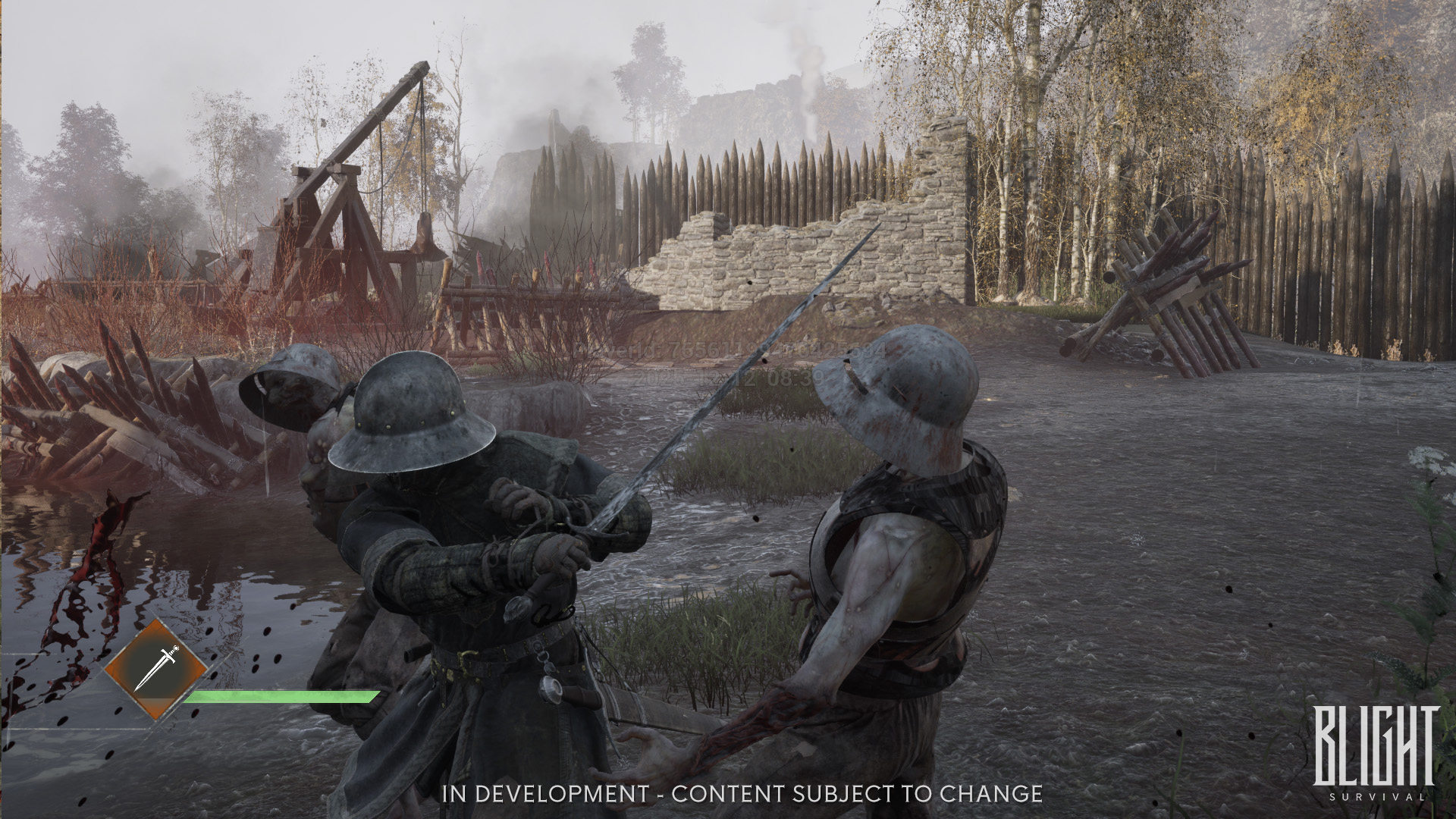
The infected are organized into six distinct categories, each presenting different combat challenges. Human enemies use the same directional combat system as the player, creating a different kind of fight.
Blighted Enemy Categories
The developers confirmed six categories of Blighted enemies. The design direction was partly shaped by a community poll conducted on Twitter/X in May 2023, where fans voted on which enemy concepts they wanted to see developed.
Hybrids
Animals fused with humans. The Blight doesn't distinguish between species when it reanimates and combines dead matter. A horse and its fallen rider might become one creature. The results are unpredictable in both appearance and combat behavior. These enemies combine the speed and aggression of animal behavior with the unpredictability of human-scale threats. Their mixed anatomy makes attack patterns harder to read than pure human or animal enemies, and they are among the most visually striking because they combine body plans that were never meant to coexist.
Armoreds
Humans and infected organisms merged together, retaining pieces of armor from their former lives. These are tougher than standard infected because the armor still provides real protection, and the Blight has grown around and through the metal and leather. Attacking the armored sections is less effective than finding exposed weak points. The directional combat system makes these encounters tactical puzzles rather than damage races. They are slower but significantly more durable than other infected types, requiring players to use heavier weapons or aim for gaps in the plating.
Hiddens
Infected that play dead or hide among the corpses littering No Man's Land, reanimating when players get close. Not every body on the ground is just scenery. Hiddens exploit this ambiguity to ambush unwary players, bursting from what appeared to be corpses or emerging from environmental cover. They punish players who rush through areas without scanning their surroundings, and they make the environment itself feel threatening, which feeds directly into the horror atmosphere. Cautious players learn to watch for subtle signs of dormant infected before walking past them.
Swelters
Heavily infected creatures formed from the merging of two enemies that emit airborne toxic spores. Swelters create hazardous zones around themselves, forcing players to either deal with them from range, rush in and kill them fast, or find a way around. The toxic gas lingers after the Swelter is killed, so positioning matters even after the fight. In enclosed spaces like dungeons, a Swelter can make an entire corridor impassable for a period. Fighting Swelters requires spatial awareness and the ability to manage multiple threats while avoiding contaminated zones.
Decayeds
Old, decomposing infected that have been reanimated for a long time and are falling apart. They're weaker individually but appear in groups. Their decayed state makes them slower, but it also makes their behavior more erratic. A Decayed might stumble unpredictably or collapse partway through an attack, making their timing harder to read than stronger enemies with consistent patterns. They can potentially break into smaller threats or release hazardous material when destroyed.
Mini-Bosses
Larger creatures formed from multiple organisms fused together. These represent the Blight at its most extreme. The combination of several bodies into one mass produces something that fights with more aggression and durability than any individual infected. Mini-bosses require coordinated team effort in co-op or careful, patient solo play to bring down. They often serve as gatekeepers or high-value targets within missions, and the encounters that make extraction feel earned.
Named Enemy Types
Enemy | Description |
|---|---|
Rattlers | The most common Blighted enemies. Reanimated peasants or knights that shamble and attack. Rattlers are the baseline threat on every run; manageable individually but dangerous in groups, especially when they swarm a player already engaged with a tougher enemy. TikTok footage has shown a "Stage 03 Rattler," confirming the multi-stage progression system. Finisher animations include a knight stabbing through the jaw. |
Gravestriders | A Blight-infected monstrosity shown fully rendered in-engine in the March 2025 developer update, where it was introduced by name as a new enemy. |
Bellowers | Merged creatures that scream to attract more infected to the player's position. Killing a Bellower quickly is a priority. If the scream goes off, it brings waves of Rattlers and worse. A single Bellower can turn a quiet stretch of map into a swarming fight. Bellowers create urgency in encounters: leaving one alive too long means the fight escalates as additional enemies converge on the noise. |
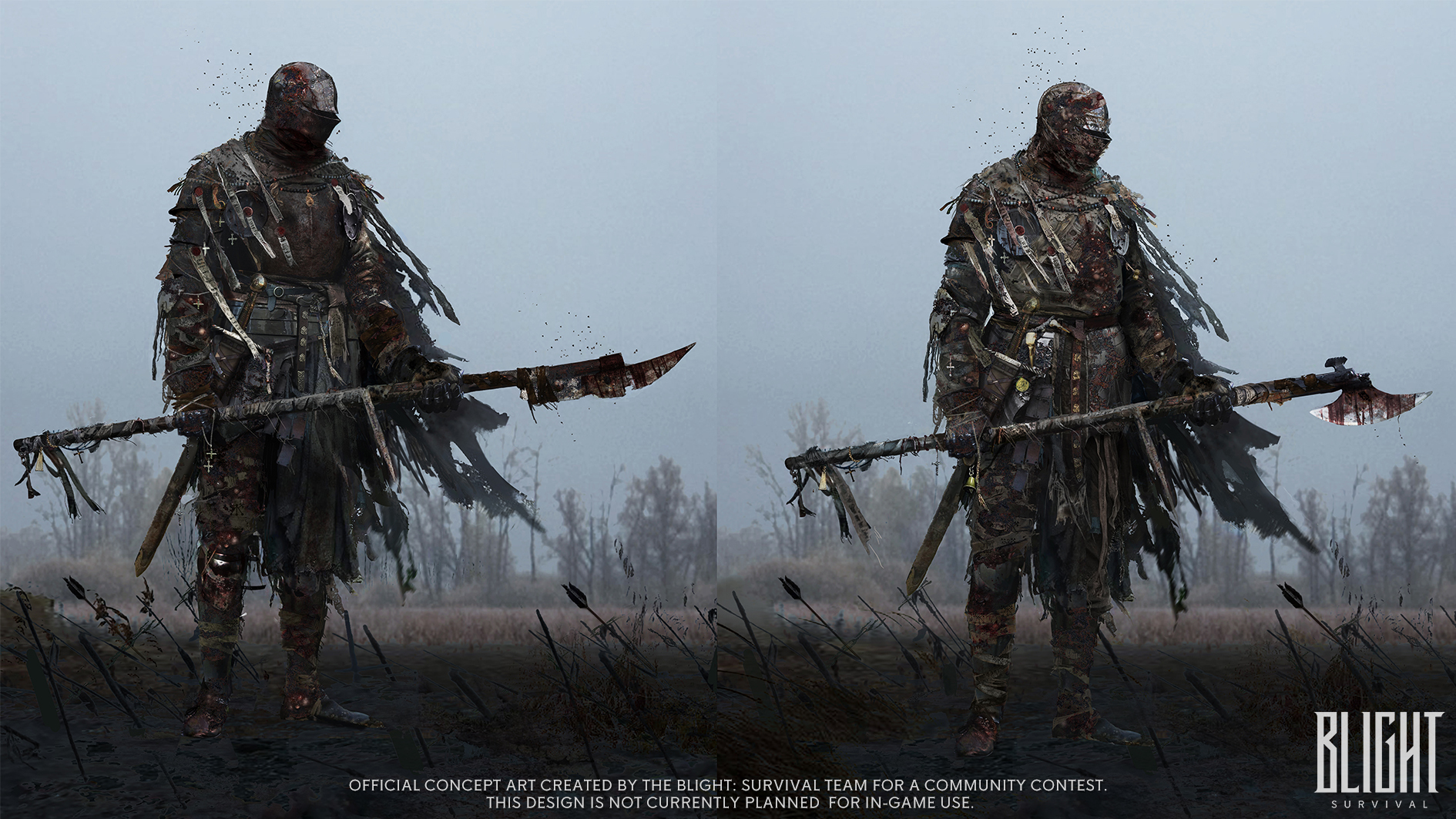
Nightstalker | A predatory threat revealed in the September 2025 devlog. The studio introduced the name as a codename rather than a settled one. As of December 2025, Concept Artist Ana has been working on different visual designs, while Principal Animator Richard created an early finisher animation designed to show "the visceral, weighty interactions" the team aims for. The team describes it as "one of those encounters the team wants players to approach with caution" and says it is "already giving both playtesters and devs nightmares." Players are meant to approach Nightstalkers carefully rather than charging in. |
Human Combatants
Not all enemies in No Man's Land are infected. The game's setting involves two kingdoms locked in war, and soldiers from both sides still operate in the battlefield. Players also encounter opportunistic bandits taking advantage of the chaos.
Human enemies use the same directional combat system as the player. They can parry, dodge, block, and use directional attacks. They read the player's attack directions and respond accordingly, making fights against them feel like skill-based duels rather than pattern-recognition exercises. Fighting human opponents requires the kind of tactical thinking that Blight-infected enemies, with their more predictable patterns, do not always demand.
Some human enemies still serve one of the two warring kingdoms. Others are just desperate survivors trying to make it through the same wasteland the Writhen are operating in.
Multi-Stage Enemies
The developers confirmed multi-stage enemies that change behavior or form as the fight progresses. This applies to both mini-bosses and certain regular enemies. TikTok footage of a "Stage 03 Rattler" confirms the system extends to common enemies as well.
The dismemberment system feeds directly into this. An infected that loses a limb doesn't just take less damage and keep going. It adapts, changing its attack patterns and movement to compensate. A one-armed Blighted might charge more recklessly. A legless one might drag itself toward you with surprising speed. The fights evolve as you damage the enemy.
Variety and Strategy
The range of enemy types means that players cannot rely on a single combat strategy for every encounter. Each category punishes a different mistake:
Enemy Type | Punishes |
|---|---|
Hiddens | Reckless movement and failure to scan the environment |
Bellowers | Slow play and failure to prioritize targets |
Armoreds | Weak weapons and failure to find weak points |
Swelters | Static positioning and poor spatial awareness |
Decayeds | Overconfidence; erratic patterns catch players off-guard in groups |
Hybrids | Predictable expectations; mixed anatomy breaks normal attack-pattern reading |
Human combatants | Predictable attack patterns; they read and counter your directional inputs |
This variety gives the directional combat system its long-term depth. The mechanics are consistent, but the application changes depending on what you are fighting.
The Infection
The enemies encountered in No Man's Land are products of the fungal plague that devastated the region. For details on how the Blight spreads through the environment and creates the conditions that produce these creatures, see Infection and Environment. Understanding the infection's mechanics helps explain why different enemy categories behave the way they do and why certain areas are more dangerous than others.