

Overview
Sound design plays a central role in Blight: Survival's horror atmosphere. The game uses environmental audio, creature sounds, and combat feedback to build tension and provide gameplay information. Early exploration for the game's music was credited to composer Jose Pavli in a 2023 studio video. Audio direction is handled by Ian, the Audio Director, who was credited alongside Senior 3D Artist Briac in the Marshlands devlog for shaping the biome's oppressive mood. The developers have described the Marshlands as "one of the most atmospheric biomes," and audio is a major reason why.
Horror Through Sound
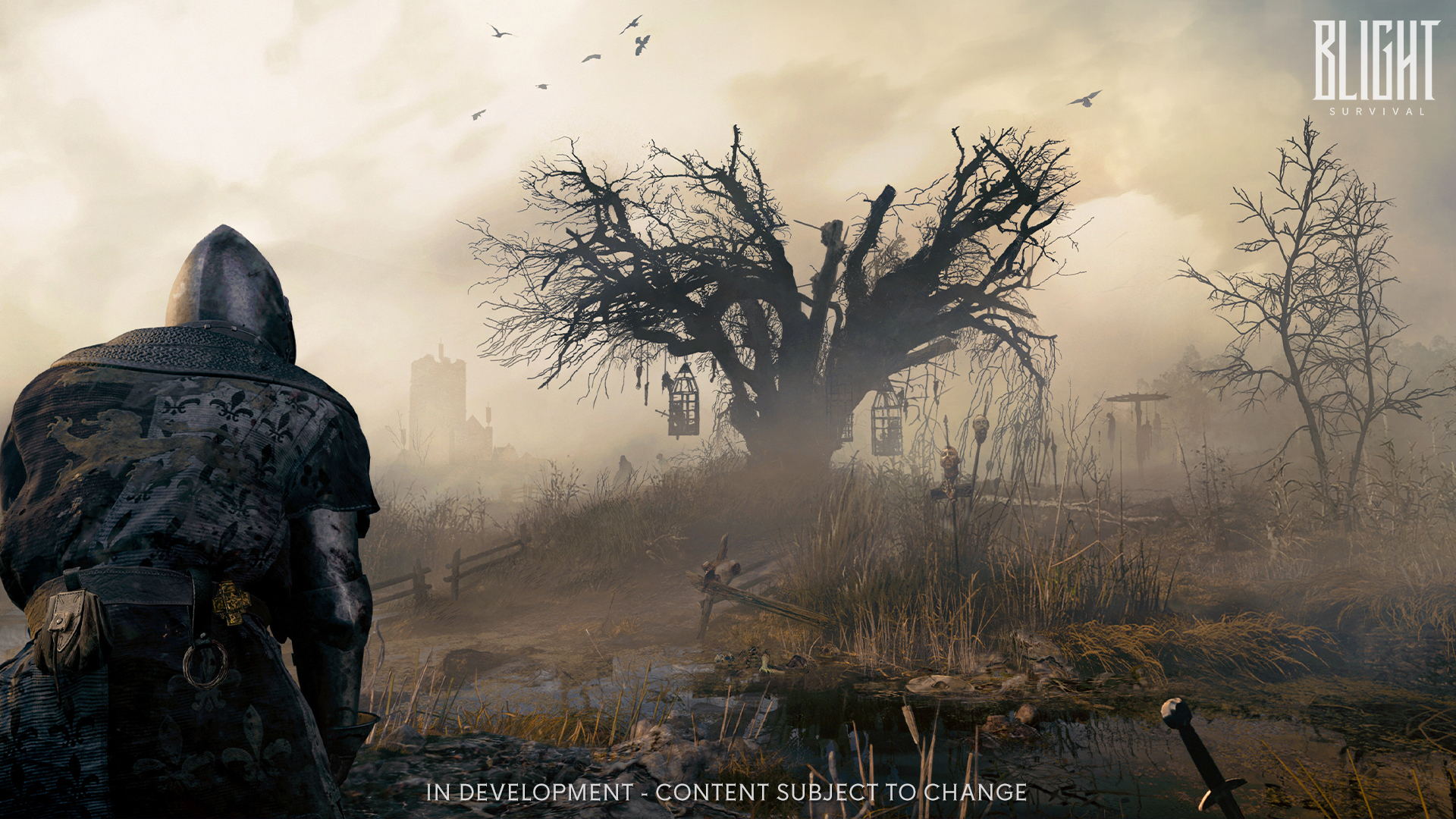
The horror in Blight: Survival is environmental as much as it is enemy-driven. The world itself acts as a constant, oppressive presence, and sound is the primary tool that communicates this. The developers have built environments emphasizing "the grit, grime, and desperation of a medieval battlefield." Audio translates that visual design into something felt rather than just seen.
The approach leans on restraint as much as shock. Long stretches of ambient unease make the sudden burst of a Bellower's scream or the scrape of metal in a corridor hit harder because they break a carefully established baseline of tension. The audio design aims to make players feel uneasy even when no enemies are visible.
Environmental Audio
Infected areas of No Man's Land feature ambient soundscapes that communicate the level of danger. Distant screams echo across fog-covered landscapes. Wind moves through ruined structures. Water drips in dungeons. The environmental audio is layered: a base layer of wind and ambient noise, a mid-layer of distant creature activity, and foreground sounds that respond to the player's movement and actions.
The environments span "dense forests shrouded in fog to crumbling villages overtaken by the Blight." Each area has its own audio character. The Marshlands devlog footage demonstrated fog rolling through wetlands with an accompanying audio atmosphere that shifts with the environment. Open marshland sounds different from enclosed stone corridors, which sounds different from dense forest.
Day-Night Audio Dynamics
Time of day affects the soundscape. The developers confirmed that time of day impacts "everything from difficulty to visibility," and audio shifts are part of this. Daytime environments carry different ambient tones than nighttime. As darkness falls, the audio landscape becomes more threatening: creature sounds become more prominent, ambient noise drops to emphasize closer threats, and the silence between sounds stretches longer.
The Marshlands devlog included footage showing day-to-night transitions in the same location, demonstrating how the visual and audio atmosphere shifts as light fades. Nighttime runs force players to rely more heavily on audio cues for situational awareness when visibility drops.
Creature Sounds
Blight-infected enemies produce distinctive audio cues. The infected, called "the Blighted," are described as exhibiting "erratic behavior and grotesque appearances" while retaining "twisted remnants of their former selves, making encounters even more unnerving." Their audio profiles reflect this: not clean monster roars, but distorted, corrupted human sounds.
Enemy Type | Audio Profile |
|---|---|
Rattlers | Shuffling movements, low groans. The most common ambient enemy sound. Often heard before seen |
Bellowers | A piercing scream that attracts other infected. The scream is a gameplay-critical audio cue: hearing it means reinforcements are incoming |
Swelters | A toxic hiss from the gas they emit. The sound warns players they are entering a contaminated zone |
Hiddens | Near-silent until they attack. The absence of sound from a Hidden is itself the audio cue: a suspiciously quiet area may not be empty |
Nightstalker | Audio details not fully revealed. Described as an encounter that is "already giving both playtesters and devs nightmares" |
The "guttural growls and distant screams" that fill infected areas serve dual purposes: atmospheric horror and spatial information. Players who learn the audio vocabulary of each enemy type gain an advantage in reading encounters before they happen.
Combat Audio
The medieval combat system uses heavy, impact-driven sound effects. Metal on metal, the crunch of a mace hitting armor, the thud of a body dropping. Gameplay footage has featured "sickening bone-crunching sounds" during shield attacks and finisher moves. The audio feedback reinforces the game's emphasis on weighty, committed attacks.
Each weapon type produces different audio. A longsword cutting through air sounds different from a mace swing. A parry rings differently from a blocked hit. These distinctions are not just cosmetic; they provide combat feedback that helps players read the rhythm of a fight, especially in chaotic multi-enemy encounters where visual tracking alone is not enough.
The finisher system showcased at the Future Games Show 2026 emphasized visceral audio: the sound of a blade driven through armor, the wet impact of a killing blow. These are designed to punctuate the end of a tense encounter with an audio exclamation point.
Stealth and Noise
Sound ties directly into the stealth system. Armor type affects how much noise a character makes. Heavy plate armor clanks with movement, while lighter leather allows quieter traversal. Running is louder than walking. Combat itself attracts nearby enemies.
Environmental sounds can mask player movement but also hide approaching enemies. The interplay works both ways: a waterfall or howling wind might cover your footsteps, but it also means you cannot hear the Rattler behind you. In dungeons, enclosed stone environments amplify all sounds, making stealth harder but also making enemy audio cues more prominent.
Dungeon Acoustics
Sound behaves differently in dungeons than in open areas. Stone walls create echoes that carry sound further but also make it harder to pinpoint direction. A Bellower's scream in a corridor network reverberates and disorients. Footsteps on stone are sharper and louder than footsteps on mud or grass. Water dripping from ceilings creates a constant low-level audio texture that masks subtle enemy movements.
The audio design in dungeons is one of the reasons these enclosed spaces feel more threatening than open areas. The combination of limited visibility and amplified, echoing sound creates a heightened state of alertness that open environments, with their longer sightlines and more diffuse soundscapes, do not produce as intensely.