

What is the Blight
The Blight is a fungal affliction that spawns where soil has been soaked by large quantities of human blood. Two kingdoms have been fighting an endless war, and the sheer volume of bloodshed across their shared border created the conditions for this organism to emerge. The developers describe the Blight as "nature's cruel response" to centuries of warfare. It feeds on death and grows stronger every day. The Blight is the sole supernatural element in the game's otherwise grounded medieval setting.
How it Works
The fungus brings dead organic matter back to life, but not in a simple zombie sense. It morphs, fuses, and alters what it touches, combining multiple organisms into new forms. A fallen knight might be fused with the horse it rode. Two soldiers locked in combat might become one creature. The results make up the game's enemy roster, from shuffling reanimated peasants to grotesque multi-organism abominations. Some Blighted creatures retain twisted remnants of their former selves, including the ability to wield weapons.
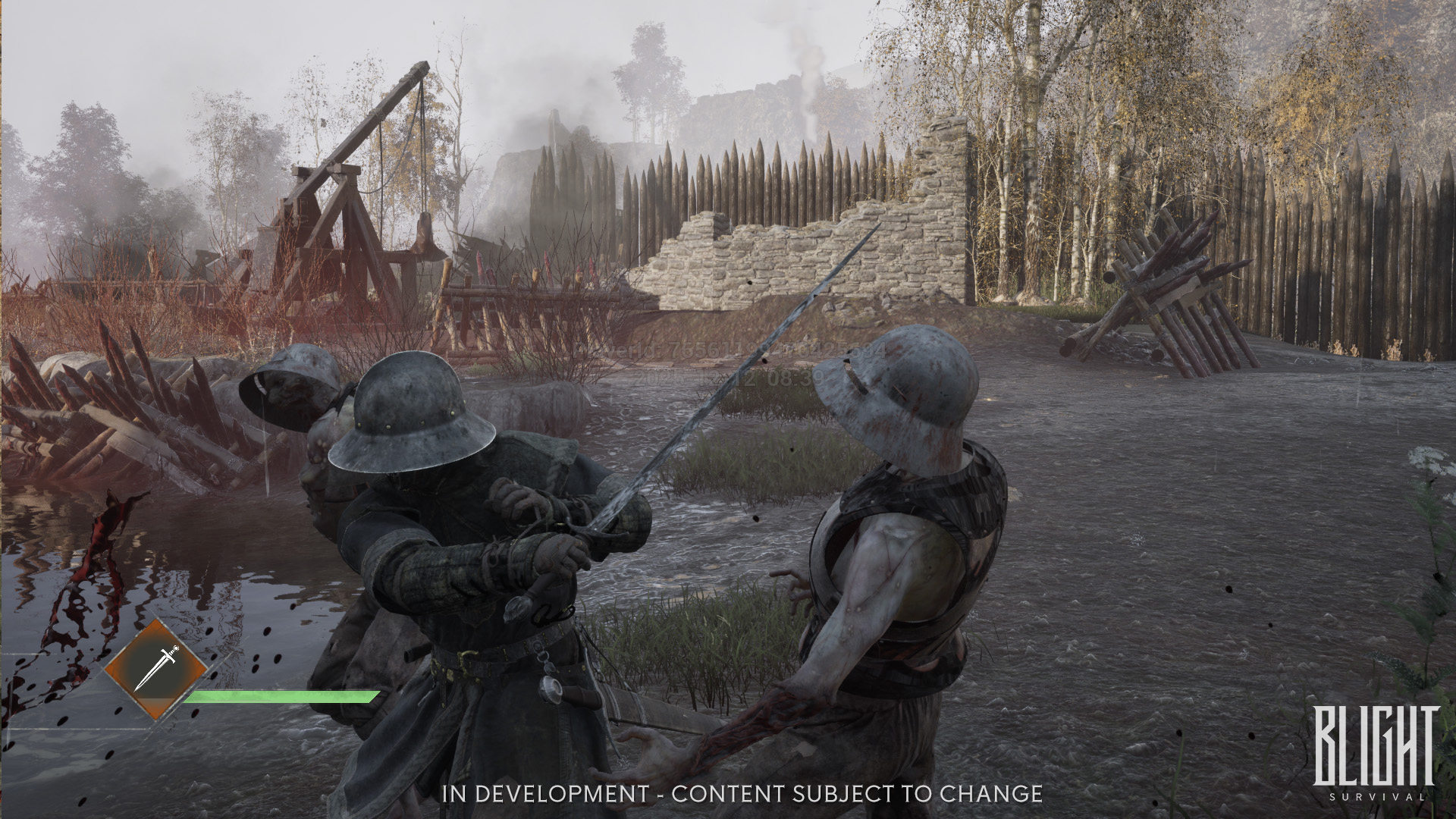
The infection also creeps through the environment. Levels show the Blight consuming structures and terrain. Fungal tendrils, organic growths, and spore clouds spread across stone and wood. The visual progression of the fungus acts as environmental storytelling. This shows how far the infection has advanced in each area of No Man's Land. A fully consumed village tells you the area fell long ago. Finding partially infected structures means the Blight is still actively advancing.
The Blight and the War
The connection between the war and the Blight is direct: more killing means more blood in the ground, which means the Blight grows faster. The two kingdoms are locked in a cycle where their conflict fuels the thing that threatens to destroy them both. Neither side has stopped fighting long enough to deal with the actual problem, which is why the Writhen were turned to as the only people willing to enter the wasteland.
Spore Movement
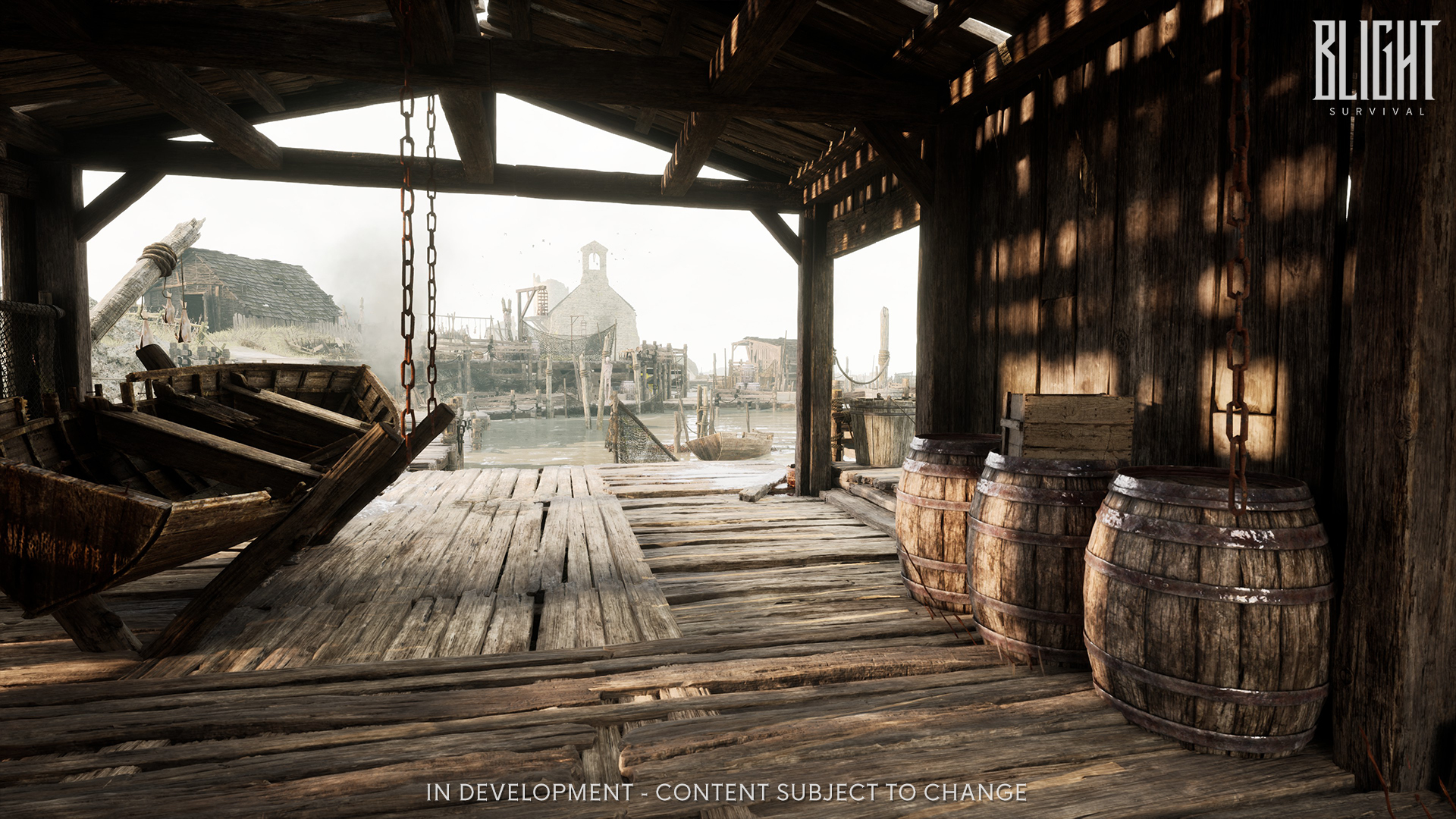
During runs, deadly fungi spores gradually move around the map. This creates what the developers describe as an "ever-changing living maze." Areas that were safe on a previous run might be filled with toxic spores on the next. The moving spore system is one of the dynamic elements that keeps No Man's Land unpredictable. Combined with weather patterns, time-of-day cycles, and seasonal changes, the spore movement ensures the Blight feels like a living, spreading force rather than static scenery.
Environmental Hazards
Swelters, one of the six enemy categories, emit airborne toxic spores that create hazardous zones. These spore clouds linger after the Swelter is killed and are particularly dangerous in enclosed spaces like dungeons. The spreading fungus can alter level conditions between runs, meaning areas change over time as the infection advances or recedes.
Infection Mechanics
The September 2025 developer update confirmed that infection and contamination mechanics are being actively experimented with. The team is "still experimenting with how the infection affects the environment." The exact player-facing infection mechanics (whether characters can become infected, how contamination works) are still being developed and may change before release. What's confirmed is that the Blight isn't just a lore backdrop. It's an active gameplay system that shapes how runs play out.
Controlling How the Blight Spreads
The spread of the infection is a built system rather than static set dressing. In July 2026 the developers showed a work-in-progress tool that controls both the number of Blight tendrils running through an environment and the speed at which they spread, letting the team tune how far gone any given area looks.
The visuals attached to that tool were described as placeholder, with new Blight visuals promised in the months after. What the tool confirms is the intent: infection density is authored per area and can escalate, which is what allows deeper parts of a run to read as more consumed than its opening stretch. See Infection and Environment for how those stages appear in the world.