

Infection and Environment
How the Blight infection interacts with the game's environments in Blight: Survival: spawning from blood-soaked soil, spreading through spores and organic growth, transforming landscapes across visible stages, and creating environmental hazards and storytelling.
On This Page
Overview
The Blight is not just a disease that affects living creatures. It is a living environmental force that consumes and transforms the landscape of No Man's Land. The September 2025 developer update confirmed ongoing work on how the infection "affects the environment, creeping and consuming all it touches." The Blight functions as both a narrative device and a visual system: it tells the story of what happened to this land while simultaneously creating gameplay hazards and atmosphere.
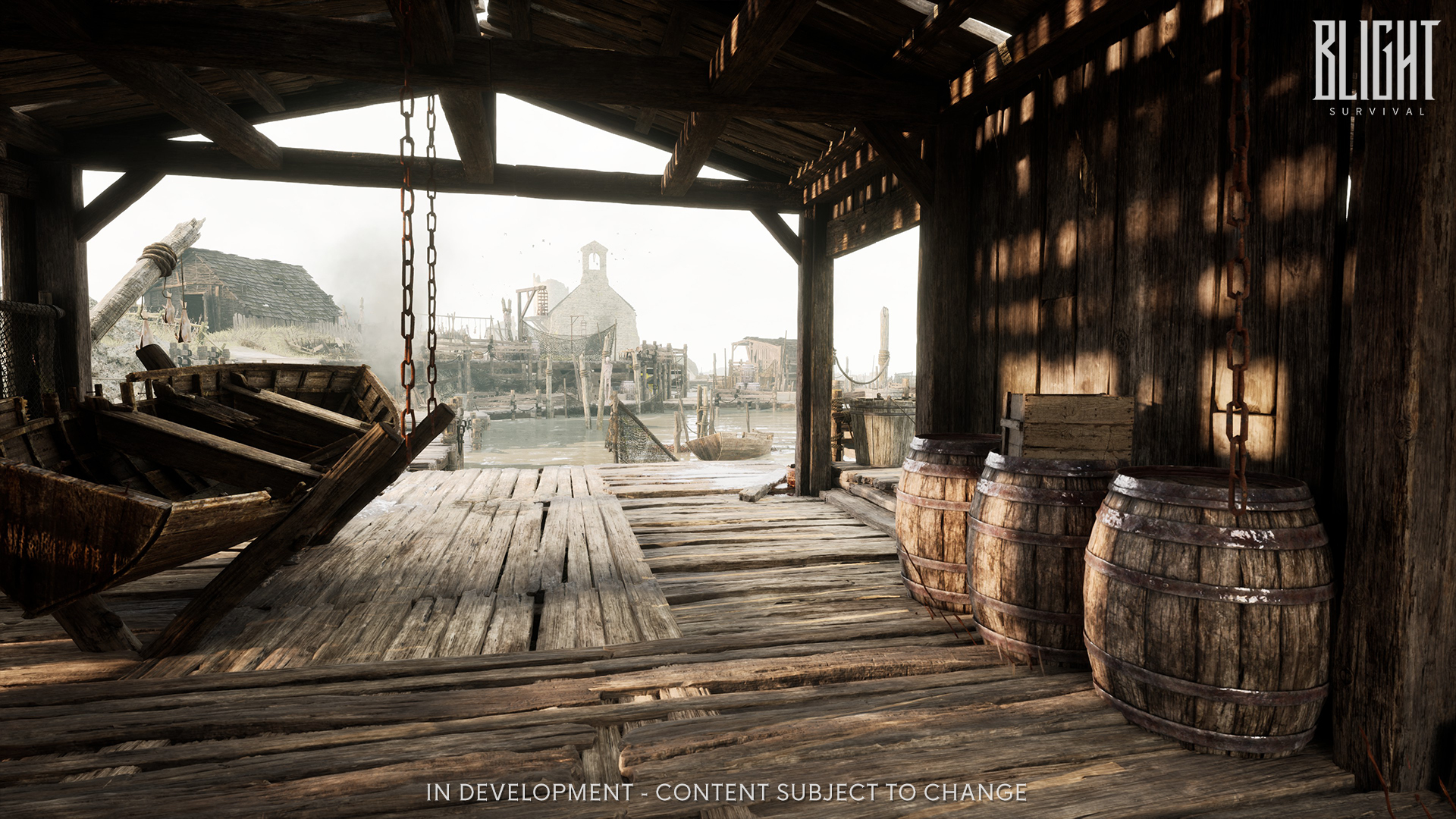
Origin and Growth Cycle
The Blight is a fungi that spawns where soil has been soaked by large quantities of human blood. Two kingdoms have been fighting an endless war across the land that became No Man's Land, and the sheer volume of bloodshed created the conditions for the organism to emerge. The developers describe it as "nature's cruel response" to centuries of warfare.
Once established, the Blight feeds on death and grows stronger every day. It "erupted from remains of the fallen, fed and strengthened by the blood that has been spilled." It does not just infect living things. It brings dead organic matter back to life, morphing, fusing, and altering it into new forms. A dead horse and its fallen rider might be fused into a single Hybrid creature. A pile of corpses might spawn a cluster of fungal growths that spread across an entire clearing.
Transmission
The Blight spreads through two confirmed vectors: spores and bodily fluids. Spores fill the air in heavily infected areas, creating visible clouds that reduce visibility and establish the atmospheric tension of the game's most dangerous zones. Bodily fluids from infected creatures can transmit the infection on contact.
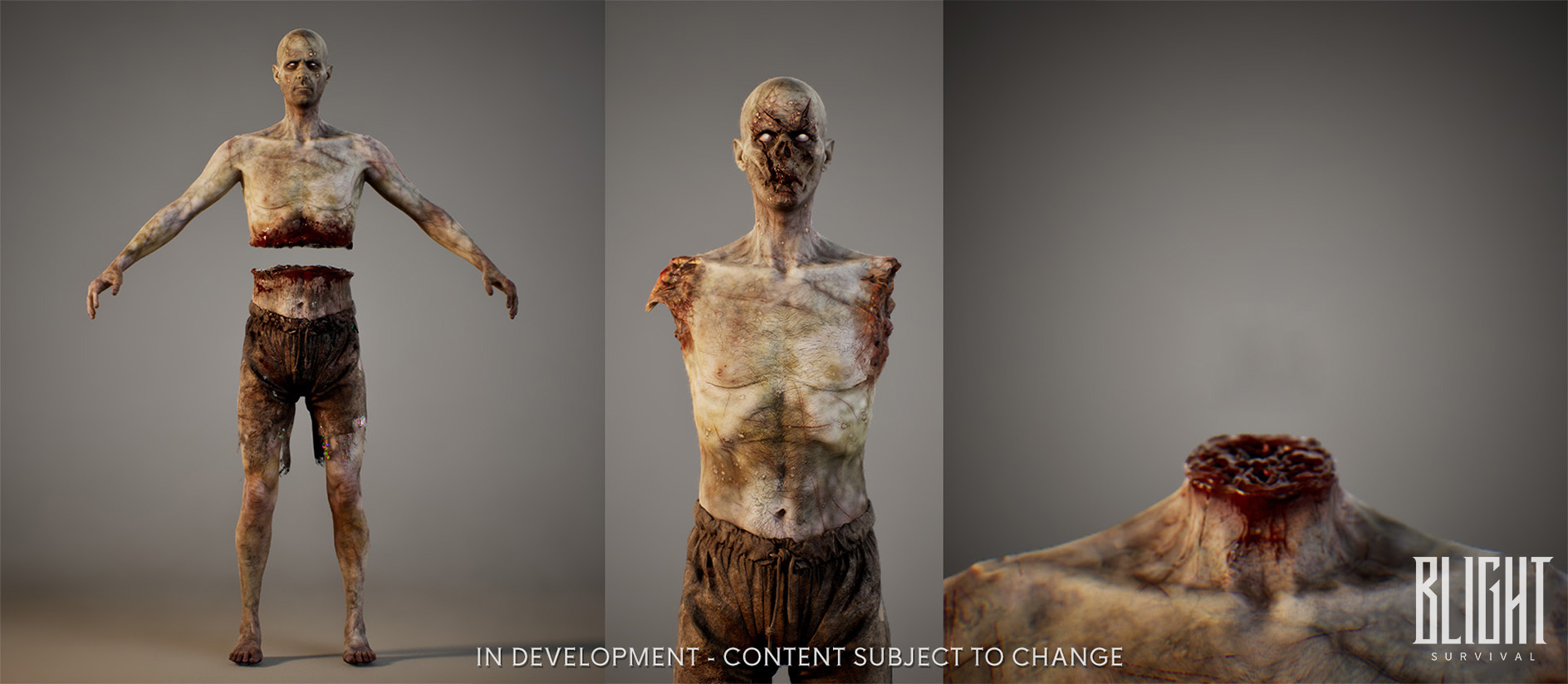
The Writhen wear masks specifically to protect against spore inhalation. The masks are part of Writhen initiation: new members are "stripped of identity and forced to wear masks, partially to survive the spores, partially to erase who you were." The mask serves a dual purpose in the game's lore. It is practical protection against the Blight's airborne transmission, and it is a symbol of the Writhen's exile and loss of their former lives.
Visual Stages of Infection
Different areas of No Man's Land show different stages of infection, creating a visual gradient across the game world:
Stage | Visual Description |
|---|---|
Early infection | Scattered fungal patches on the ground. Faint discoloration on stone and wood. The landscape is recognizably medieval, with signs of the Blight only at the edges |
Moderate infection | Roots and tendrils spreading across surfaces. Fungal growths overtaking vegetation. Structures beginning to show organic overgrowth. The Blight is clearly present and advancing |
Heavy infection | Thick organic growth covering every surface. Spore clouds filling the air. The original landscape is barely recognizable under layers of fungal corruption. The environment itself has become hostile |
Complete transformation | The Blight has fully consumed the area. Dead matter has been reanimated and fused into new forms. The landscape feels like it is being slowly digested by a living organism |
These visual stages serve a gameplay purpose beyond aesthetics. Players can read the environment to gauge danger levels. An area with scattered fungal patches is likely safer than one choked with spore clouds and organic overgrowth. The visual language communicates threat without requiring a UI indicator.
Environmental Hazards
Beyond the infected creatures, the Blight-transformed environment itself poses risks. Fungal growths can block pathways or create impassable terrain. Contaminated water presents navigational challenges. Structural decay from organic overgrowth makes some buildings and passages unstable. Players exploring deeply infected areas face environmental dangers alongside enemy encounters.
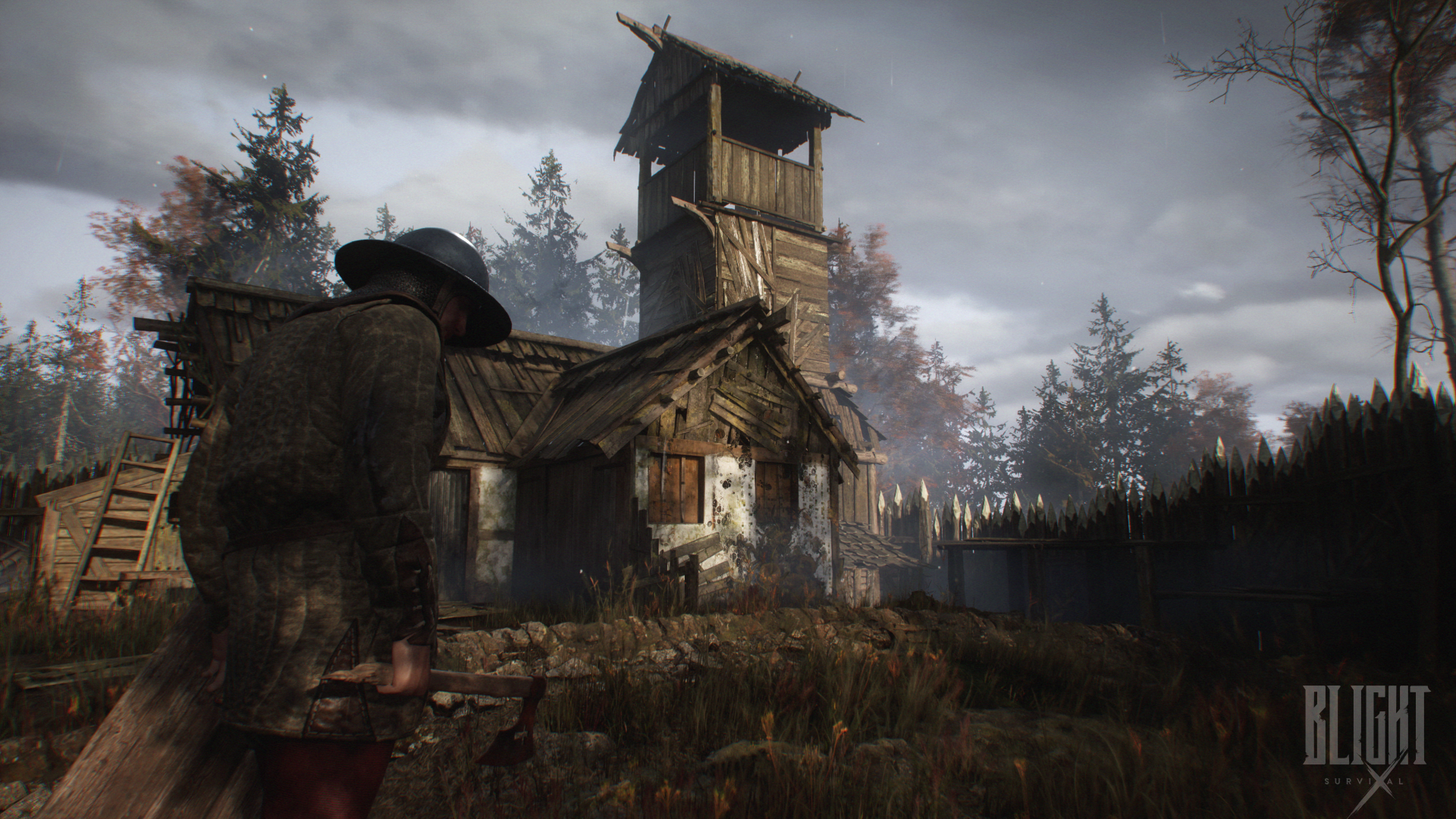
The Marshlands devlog showed the Blight's tendrils "consuming the environment and materials." In the Marshlands specifically, the landscape includes scattered peasant houses, signs of old battles, and "blood-red fog of Blight spores creeping in" at the edges. Landmarks like the Wailing Tree show the intersection of human history and Blight corruption: a place that served a purpose before the infection arrived, now consumed by something else entirely.
Environmental Storytelling
The infection system is the game's primary tool for environmental storytelling. The developers have confirmed that lore is discovered through exploring the environment rather than through cutscenes or dialogue. The visual progression of the Blight across different areas tells the story of how the infection spread: from the blood-soaked battlefields where it originated, outward through farmland and villages, and deep into structures where people tried to shelter.
Objects and structures in various stages of corruption provide context. A half-overtaken farmhouse tells a different story than a completely consumed fortress. The Breaking Wheel at the Wailing Tree, an execution device from before the Blight, shows that human cruelty preceded the supernatural kind. Players who explore carefully and read the environment piece together the history of the two warring kingdoms and the catastrophe they created.
Atmosphere and Time of Day
The infection system contributes heavily to the game's horror atmosphere. Fog and spore clouds limit visibility. Time of day affects "everything from difficulty to visibility," and the Blight's visual presence shifts with lighting conditions. During daytime, fungal growths are visible at a distance. At night, they become part of the darkness, and spore clouds become harder to distinguish from fog until the player is already inside them.
For more on the visual technology behind these environments, see Art and Visuals. For the audio component, see Sound Design and Atmosphere.