

Combat
Comprehensive combat guide for Blight: Survival covering the 5-directional melee system, attack angles, core mechanics (light/heavy attacks, parrying, blocking, dodging, shoves, tackles, grapples), defensive techniques, weight and commitment, the posture system, stamina management, dismemberment, armor and noise trade-offs, ranged weapons, movesets and crafting, lockpicking, and design influences from Dark Souls, Mount & Blade, and Mordhau.
On This Page
Combat Philosophy
The developers describe Blight: Survival's combat as a "a hybrid between Dark Souls and Mount and Blade." From Dark Souls, it takes the weight and deliberateness, the stamina bar that punishes button mashing, and the read-and-react pattern of fighting tough enemies. From Mount & Blade, it takes the directional attack system where the angle of your swing matters. The combination produces something distinct from either source. Dark Souls is third-person action with rolls and i-frames. Mount & Blade is first-person with directional swings. Blight: Survival uses a third-person camera and deliberate Souls-style pacing, then layers Mount & Blade's directional depth on top.
Directional Attacks
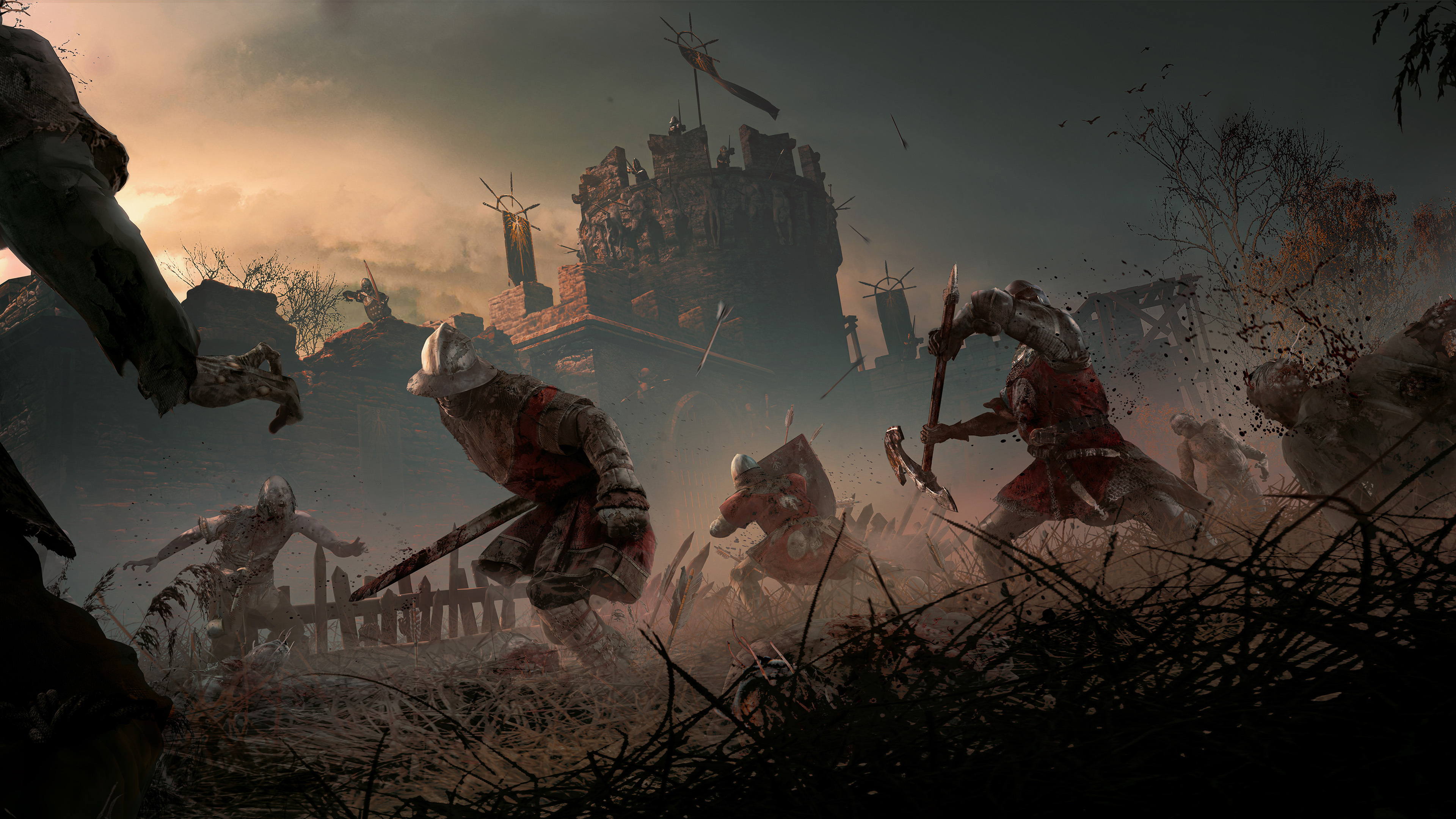
Attacks are aimed rather than simply timed. The developers describe the combat as "a hybrid between Dark Souls and Mount and Blade," and the direction a swing comes from is part of the decision, not just when it lands. Armor coverage, exposed body parts and an enemy's defensive stance all shape which angles are worth taking: a heavily armored knight is a poor target for a flat swing into the breastplate and a better one for a thrust at a gap in the plating.
Attack Directions
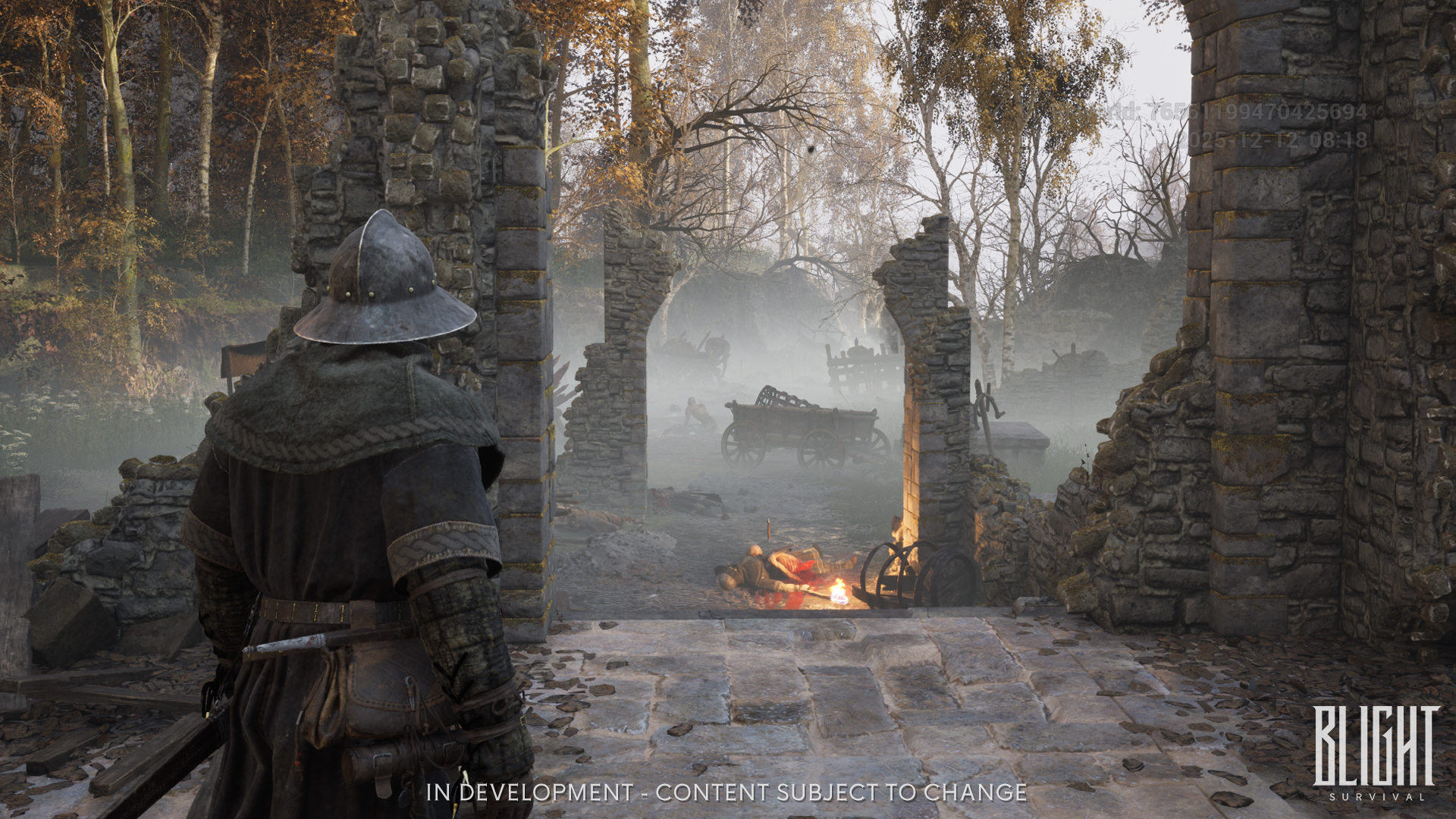
The default control scheme the studio published in September 2025 binds three separate attacks: a left attack, a right attack and a centre attack, each on its own trigger or bumper, and each with a heavy version on a hold. Parry sits on its own input with block on the hold, and there are dedicated dodge, roll, crouch, kick and grab bindings alongside them. The studio marks that layout as in development and subject to change, and it has not published swing arcs, per-direction damage values or recovery frames.
This directional variety means that combat is not about spamming a single attack button. Players must read enemy stances, choose attack angles that are harder to block, and vary their swings to avoid becoming predictable. Against human enemies, who use the same directional system, fights become tactical exchanges of reads and counters.
Core Mechanics
The combat system includes the following actions:
Feature | Description |
|---|---|
Light attacks | Faster swings that consume less stamina |
Heavy attacks | Slower, more damaging swings that cost more stamina |
Parrying | Timed blocks that open enemies to counterattacks |
Dodging | Evasive movement to avoid attacks |
Blocking | Holding a defensive stance with a shield or weapon |
Shove kicks | Close-range pushes to create space between you and an enemy |
Tackles | Charging moves that knock enemies down, opening them to follow-up attacks |
Shoulder tackles | A variant of the charge that can stagger enemies out of their stance |
Grapples | Close-quarters grabs that let you manhandle an enemy for a follow-up blow |
Stealth finishers | Silent kills from behind or from hiding (see Stealth) |
Defensive Mechanics
Defense in Blight: Survival involves three primary actions:
Defense | Description |
|---|---|
Parrying | Timing a block to match an incoming strike deflects the attack and creates an opening for a counterattack. Parries are the most rewarding defensive option but require precise timing and directional awareness. |
Blocking | Holding a block absorbs damage but drains stamina. Blocking is safer than parrying but less efficient. Extended blocking leaves the player stamina-starved and vulnerable. |
Dodging | Moving out of an attack's path avoids damage entirely. Dodging uses stamina and requires spatial awareness. It is the best option against attacks that are difficult to parry, such as heavy overhead strikes or multi-hit combos. |
A dedicated stamina bar ties all actions together. Every attack and defensive action costs stamina. A player who blocks too much will run out and become staggered. A player who dodges excessively will be too tired to counterattack. The system forces players to mix defensive techniques based on the situation, making each encounter a stamina economy puzzle as much as a reflexes test.
Weight and Commitment
Attacks in Blight: Survival feel heavy and committed. Swings have wind-up animations, follow-through recovery, and impact that communicates the force behind each strike. This is not a game where you can cancel attacks on reaction or instantly switch between offense and defense. Once you commit to a swing, you are locked into it until the animation completes. This commitment gives combat its signature tension: every attack is a calculated risk.
The weight extends to enemy attacks as well. Blight-infected creatures and human opponents telegraph their strikes through distinct animations, giving observant players time to read and react. Learning enemy attack patterns and their directional tells is a core skill that improves with experience.
Posture System
Beyond raw health damage, players can attack an enemy's posture. Landing successive hits or well-timed parries damages the enemy's stance until it breaks. Once an enemy's posture breaks, they stagger, leaving them open to a charge, a grab, or a devastating follow-up blow. The posture system rewards aggressive but measured play. Rather than chipping away at a heavily armored foe's health bar, breaking their posture creates openings that bypass their defenses entirely.
Stamina
A stamina bar governs all physical actions. Swinging, blocking, dodging, and sprinting drain stamina. Run out and you're left staggering, unable to defend yourself. Managing stamina under pressure, especially when multiple enemies close in during a Co-Op run, is where the skill expression lives. The system punishes panic swinging and rewards players who pick their moments.
Dismemberment
The game has a dismemberment system that the developers describe as a collaborative effort by their 3D and technical artists (Léo and Hugo were specifically credited in the September 2025 devlog). Limbs can be severed, creating both visual feedback and gameplay consequences. An enemy that loses an arm fights differently than one at full capacity. The dismemberment isn't just cosmetic. Multi-stage enemies adapt their attack patterns when they lose body parts, meaning the fight changes as you damage them.
Armor and Noise
Heavier armor creates more noise when you move, which directly affects stealth viability. Armor affects five things simultaneously: defense, movement speed, stamina consumption, weight, and noise level. Full plate armor will keep you alive in a head-on fight but will announce your presence to everything in the area. Lighter leather or cloth armor makes you quieter but far more vulnerable. The trade-off is central to how each player approaches the game.
Ranged Combat
Multiple ranged weapon types are confirmed: bows, longbows, and crossbows. These serve as a complement to melee rather than a primary playstyle. Asked about guns, the developers answered: "No, although we haven't ruled out firearms in post-release updates." The medieval focus keeps the arsenal grounded in period-appropriate weaponry.
Movesets and Crafting
New movesets are unlocked through crafting and gear progression. Different weapons come with different swing patterns, reach, and directional properties. A longsword plays differently from a mace, which plays differently from a dagger. The Artisan at The Camp is the primary source of weapon upgrades and modifications, with modular components that alter both the look and feel of each weapon.
Lockpicking
A lockpicking mechanic is in development. While details on exactly how it works are sparse, the system will give players who invest in non-combat skills access to locked areas, containers, and shortcuts during runs. This fits the broader design philosophy of offering multiple approaches rather than forcing every encounter into a fight.
Influences
The developers have cited specific games as influences on the combat design:
Game | Influence |
|---|---|
Mordhau | The directional attack system and emphasis on reading opponent stances |
Dark Souls | The weight of attacks, stamina management, and punishing focus on each action |
Mount & Blade | The flow of infantry combat and the feel of medieval weapons in motion |
The result is a combat system the developers describe as "easy to get into, but hard to git good at." A simplified combat mode is also planned for players who prefer not to engage with the full directional complexity. As of December 2025, the team is also working on a dismemberment system and a wounds system that adds "layers of visual and tactical feedback to combat."