

Extraction-Lite Gameplay
Blight: Survival uses an extraction-lite gameplay loop where players venture into No Man's Land, gather loot, and decide whether to push deeper for greater rewards or extract while they still can. The framing draws from Helldivers and Deep Rock Galactic, not traditional extraction shooters.
On This Page
Overview
"Extraction-lite" is the term Haenir Studio coined to describe Blight: Survival's core gameplay loop. Each mission sends players into No Man's Land to complete objectives, fight Blight-infected creatures and human enemies, and gather loot. The "extraction" part is the core risk: players must reach the extraction point to keep everything they collected. If the character dies, they are gone permanently along with all their equipped gear and gathered materials.
Why Extraction-Lite and Not Extraction
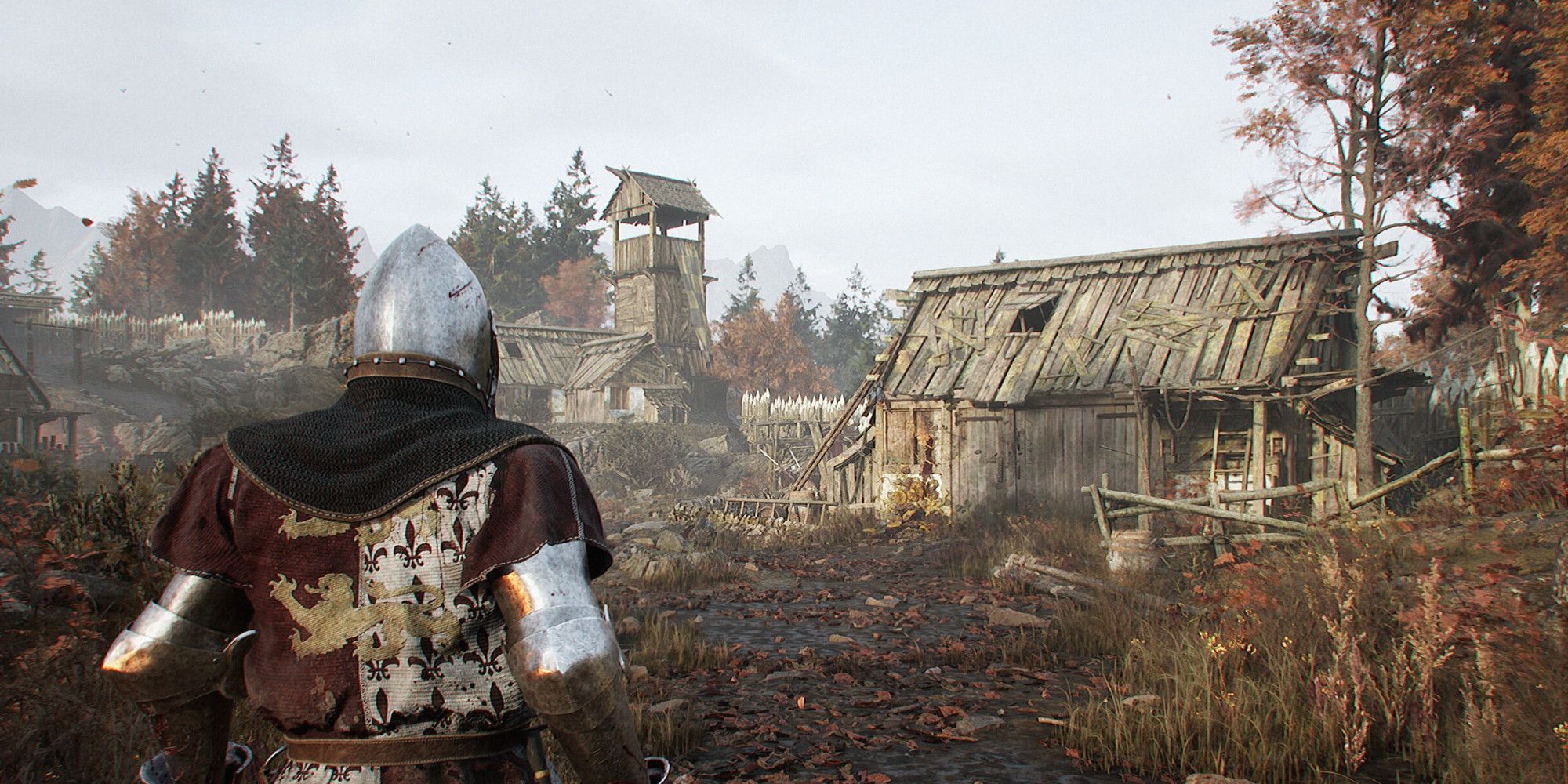
The team coined the term to set expectations against the established extraction-shooter genre. Ashley Pannell, Senior Creative Director at Behaviour Interactive, speaking during the Future Games Show 2026 press window, framed the loop in plain terms:
"You go in, you try and amass what you can, and you can always push for more, but you could always back out when you feel like you've got something meaningful. It's not driven exclusively as the extraction genre."
The team has cited Helldivers and Deep Rock Galactic as the closer reference points. Both are PvE co-op games where the run is the unit of play, the squad has agency over how far to push, and the moment-to-moment decisions hinge on "is this worth the risk." Blight: Survival applies that same loop in a melee-driven medieval setting with permadeath, rather than the shooter-first framing of dedicated extraction shooters.
Mission Flow
Each run begins at the camp, where players select their loadout, prepare remedies, and head into No Man's Land. Once inside, the mission is a free-roam experience where players navigate the map, engage enemies, complete objectives, and collect weapons, armor, and crafting materials.
The map contains both required objectives that must be completed to unlock the extraction point and optional objectives that offer additional rewards. As players progress deeper into the map, they eventually reach a point of no return. Beyond this threshold, the only way out is forward, through the extraction point. The extraction point itself may be guarded or require completing a final objective to access. Reaching it successfully means keeping everything gathered during the run.
The Loop in Detail
Phase | What Happens |
|---|---|
Preparation | At the camp, players choose their loadout, talk with hub NPCs like the Artisan, repair and craft gear, prepare remedies, and decide which mission to take. The camp is the only safe space. |
Insertion | The party enters No Man's Land with whatever they carried in. Maps are hand-crafted with semi-procedural variation, so the broad layout is consistent but encounter and loot placement varies. |
Engagement | Players fight, scavenge, stealth past patrols, loot fallen enemies, gather crafting materials, and pursue both required and optional objectives. Weapons degrade with use and can break. |
Risk Decision | At any extraction point, the squad decides: extract now and bank what they have, or push deeper for higher-value loot. Pushing further increases enemy density, reduces resources, and raises the chance of a wipe. |
Extraction | Reaching the exit alive lets the squad keep everything carried. Loot is added to camp storage. |
Death | If a character dies before extraction, they are gone permanently along with all gear. The bloodline system carries some progress to the next character, but the lost character itself does not return. |
Risk and Reward
The extraction-lite loop is the framework that the broader risk-and-reward design philosophy lives inside. Pannell described risk and reward as "a key element of the overall driving part of many features in the game." Every fight is a wager: stamina spent, equipment durability lost, the chance of injury or death set against the loot dropped, the locked container opened, the dungeon explored.
The same logic applies at the squad level. Splitting the party speeds up looting but reduces survivability. Pulling extra patrols to clear a high-value pocket may cost the squad members or rare equipment that cannot be recovered. The decisions compound across the run.
Death and Permadeath
Death is permanent at the character level. If a character dies during a run, that character is gone along with all their equipped gear and anything they collected during the mission. There is no respawning, no checkpoint loading, no recovery. This creates the fundamental tension of the extraction loop: every decision to push deeper, fight one more group of enemies, or explore one more room is weighed against the risk of losing everything.
The permadeath applies to the character, not the player. When a character dies, the player creates a new one and starts over with fresh equipment. Some progress carries forward through the bloodline system, but the loss of a well-geared character with upgraded equipment is always significant.
Bloodline and Next-Of-Kin
The bloodline system provides continuity between characters. When a character dies, they lose their equipment, but some experience points carry over to their next of kin, who carries on the legacy of the bloodline. Specifically, talents and traits are passed down the bloodline, so a player keeps some of the XP for the next character, getting stronger even when they fail.
The bloodline creates a long-term progression arc that sits above the individual-run stakes. Even failed runs contribute to the bloodline, meaning no mission is truly wasted. Over time, the accumulated bloodline benefits make new characters slightly more capable at the start, though they still need fresh gear and materials from successful extractions.
Narrative Context
Players assume the role of the Writhen, nomadic knights cast out from their kingdom and accused of having caused the Blight. They are the only ones willing to venture forth and eradicate the all-consuming corruption, seeking redemption to reclaim their ancestral home.
The story is described as "both in-game and external, though not linear narrative-driven," meaning lore is discovered through environmental storytelling, optional objectives, and exploration rather than a traditional campaign structure. See Lore and World for the broader setting.
PvE Focus
Unlike many extraction games, Blight: Survival is PvE only at launch. PvP is not planned for the initial release, though the developers have said that if it is introduced later, it would be opt-in. Players face Blight-infected creatures and human AI combatants, not other players. This removes the anxiety of player-versus-player encounters and refocuses the tension on environmental threats, enemy encounters, and the extraction decision itself.
The PvE approach allows the game to design encounters with specific difficulty curves, enemy placement, and environmental storytelling that would be impossible in a PvP environment. It also makes co-op play purely cooperative, with teammates working together against the game rather than watching for betrayal.
Co-Op Extraction
In 1 to 4 player co-op, extraction adds group dynamics. If one player dies, their character is permanently lost, but the surviving teammates can continue the run. This creates situations where the group must decide whether to play it safe and extract with what they have, or push further to complete optional objectives at the risk of more losses.
Group composition also matters for extraction. A team where one player is carrying most of the gathered materials has more to lose than a team that has distributed loot evenly. The natural tension between greed and caution is amplified when four players have to agree on when to stop and extract.
Comparison Frame
See Comparisons to Other Games for the full set of developer-cited inspirations and structural cousins. The short version: closer to Helldivers and Deep Rock Galactic in loop structure, closer to Hunt: Showdown in setting tension, closer to Dark Souls and Mount & Blade in moment-to-moment combat feel.