

Background
Cirilla Fiona Elen Riannon, known as Ciri, is the protagonist of The Witcher IV. She is a princess of Cintra by birth, the daughter of Pavetta and Emhyr var Emreis (the emperor of Nilfgaard, who disguised himself as a knight called Duny). Geralt of Rivia claimed the Law of Surprise over Ciri before she was born, binding their fates. After the fall of Cintra to Nilfgaard, Geralt took Ciri to Kaer Morhen, where she trained alongside other witchers.
She is also a carrier of the Elder Blood gene, an ancient elven trait that grants her latent space-time manipulation powers. The Wild Hunt pursued her across dimensions to exploit this ability, which formed the central conflict of the previous Witcher game.
In the previous Witcher game, Ciri was a playable character in select sequences of Wild Hunt, where she could teleport using her Elder Blood abilities. In The Witcher IV she is the sole playable character throughout the entire game. She is voiced by Ciara Berkeley, an Irish actress replacing Jo Wyatt from the previous game.
The Trial of the Grasses
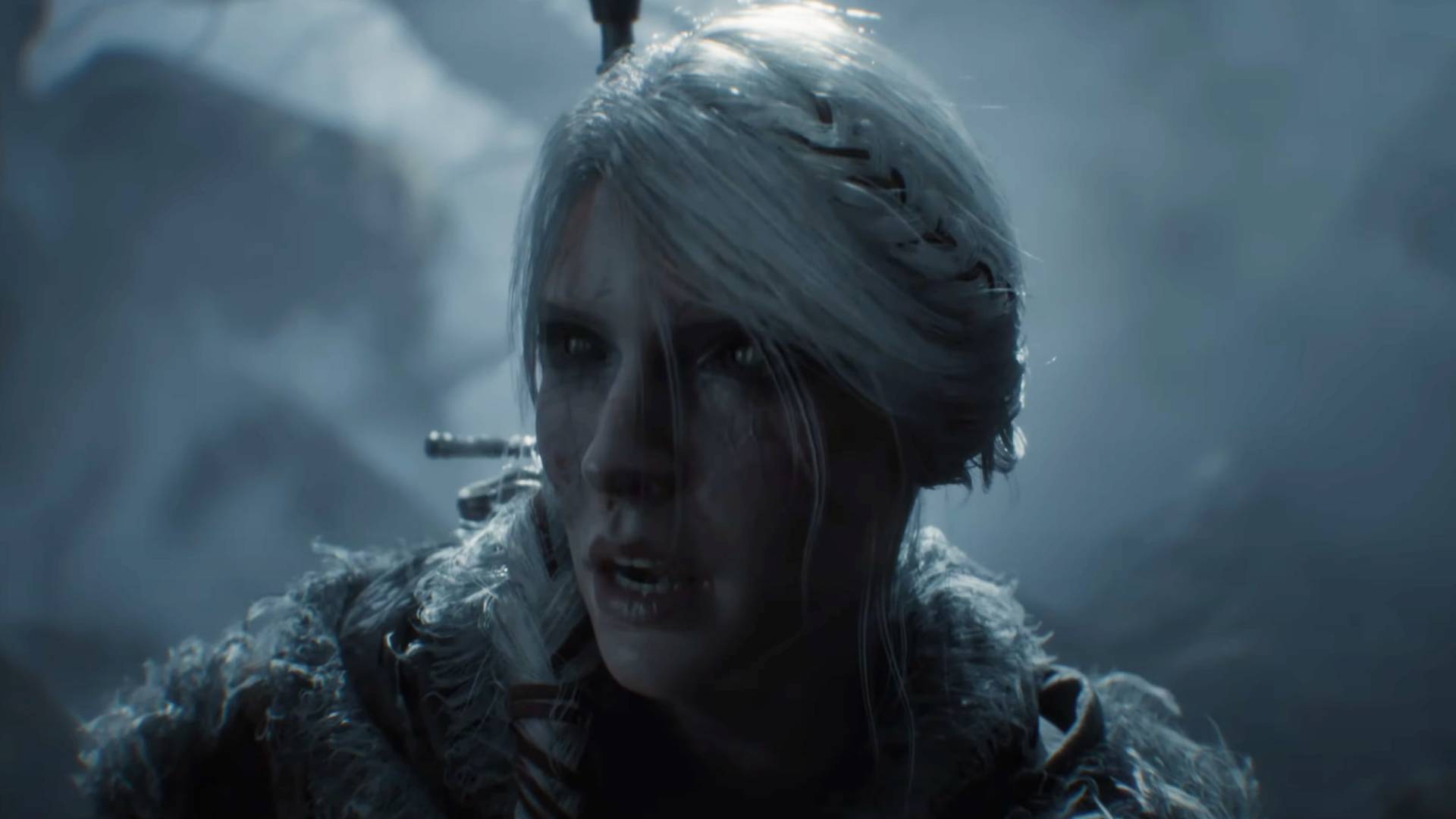
In The Witcher IV, Ciri has undergone the Trial of the Grasses, the mutagenic process that transforms ordinary humans into witchers. This is confirmed by her cat-like eyes with vertical pupils, her ability to use Witcher Signs, and her consumption of witcher potions in the cinematic trailer.
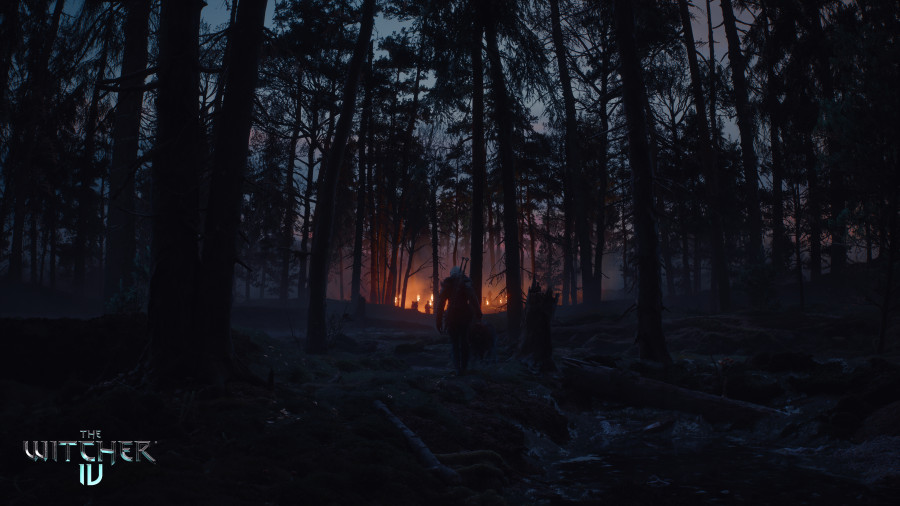
This is a significant development. In the books and previous games, Ciri never underwent the Trial. The process was historically administered only to boys, and it killed roughly seven out of every ten candidates. How Ciri survived remains an open question, though her Elder Blood and innate magical abilities (she is a Source, a person born with natural magical talent) likely played a role.
Game director Sebastian Kalemba confirmed that players will experience Ciri's Trial of the Grasses firsthand during the game, witnessing her transformation. This suggests the Trial is depicted as a narrative event rather than happening entirely off-screen between games.
The School of the Lynx
Ciri belongs to the School of the Lynx, a new witcher school introduced in The Witcher IV. She wears the school's feline medallion around her neck. Game director Sebastian Kalemba described her as "about to form her own codex on her own terms," suggesting the School of the Lynx may be her own creation.
Equipment
Ciri carries Zireael, a gwyhyr (gnome-forged blade) whose name means "Swallow" in Elder Speech. It is the same sword Geralt gifts her in the previous Witcher game's witcher ending. She also carries a steel sword for human opponents.
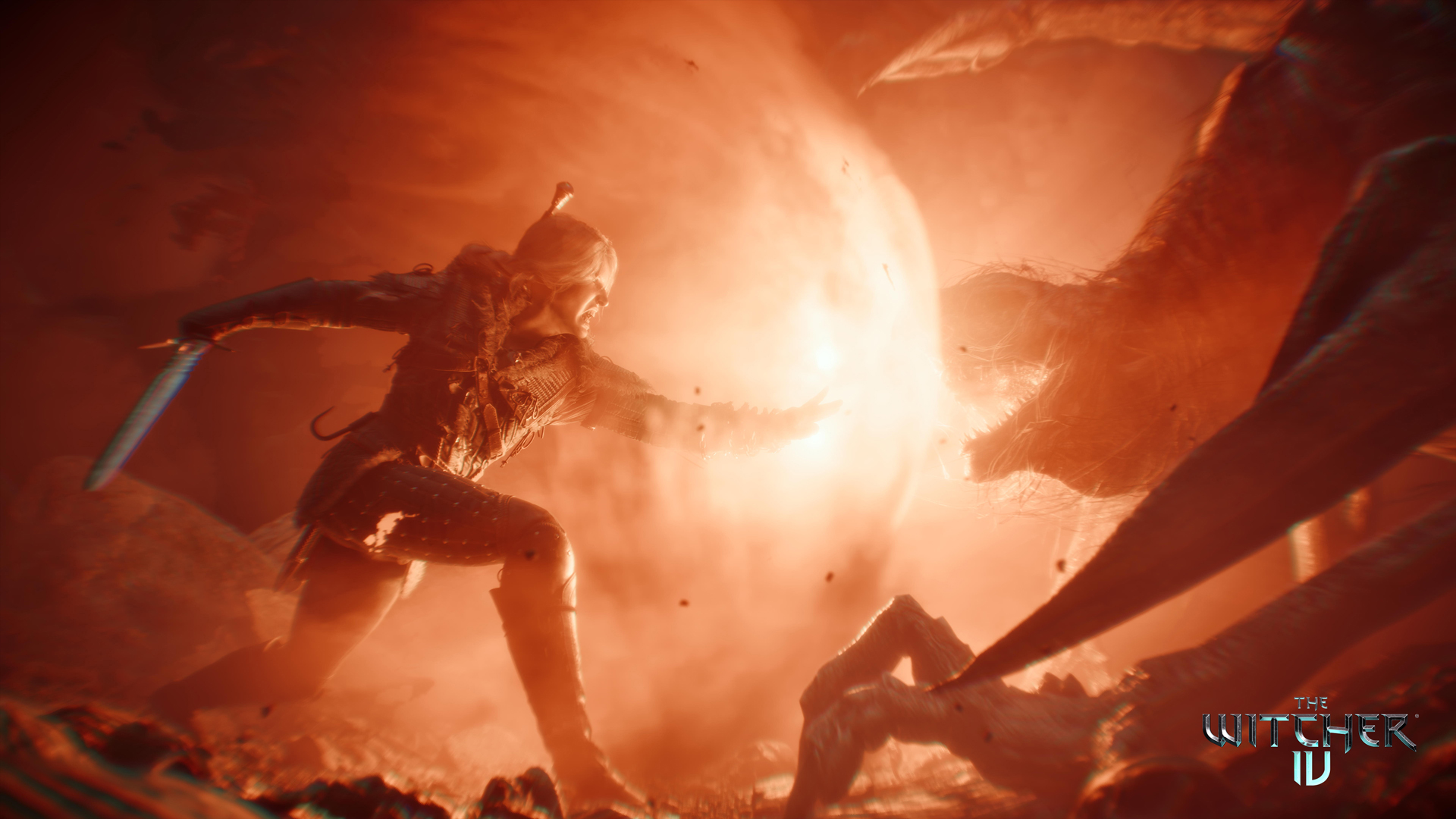
Her secondary weapon is a Chain Weapon, taking the slot the previous Witcher game gave to Geralt's crossbow. The chain can be imbued with Igni to light it on fire. She uses it to grapple, restrain, and pull enemies. The weapon recalls Geralt's chain usage against the striga in the original game's opening cinematic.
Combat abilities
Ciri's combat style relies on speed and agility. The developers describe her fighting as "liquid" compared to Geralt's more grounded approach. Her lighter build and flexibility allow for rapid strikes and evasive movement. She is described as a "Source Warlock" whose magical abilities go well beyond standard witcher signs.
In the cinematic trailer she channels water from a cave wall into an electrical blast, a form of elemental magic that reflects her training under Yennefer of Vengerberg. She can also perform short-range teleportation dashes during combat. Her full Elder Blood powers, which allowed reality-warping in the previous Witcher game, appear to be restricted.
Horse
Ciri rides Kelpie, a black mare from Andrzej Sapkowski's novel The Tower of the Swallow. Kelpie was shown in the Unreal Engine 5 tech demo, traversing the mountains and forests of Kovir.
Appearance
In The Witcher IV, Ciri has shorter ashen hair compared to her appearance in the previous Witcher game. Her cat-like eyes confirm the Trial of the Grasses. She wears practical witcher armor. The scar across her left cheek, given to her by Leo Bonhart in the novels, is carried over from the books and previous games.
Canon Considerations
The Witcher IV continues from the previous Witcher game's ending in which Ciri survives and chooses the witcher's path. CDPR's franchise and lore designer Cian Maher addressed other endings: "There are hints in that ending that highlight the fact that she probably does not die." He added that Ciri's story represents "a natural evolution that will unfold in a way that made sense regardless of how players' playthroughs of Witcher 3 ended."
CDPR's 10-year anniversary video in 2017 showed Geralt at Corvo Bianco with Ciri arriving in rough traveling gear rather than Nilfgaardian robes, already hinting at the witcher ending as the intended canon.
In the Novels
In Sapkowski's novels, Ciri's story spans the entire saga. After the fall of Cintra, she wandered as a refugee before being found by Geralt. She trained at Kaer Morhen and then studied magic under Yennefer at the Temple of Melitele in Ellander. She was later captured by the bounty hunter Leo Bonhart and forced to fight in arena combat. She spent time with a criminal gang called the Rats under the alias Falka. Eventually, she was drawn into the conflict between the Northern Kingdoms, Nilfgaard, and the Aen Elle elves over her Elder Blood.
The name "Ciri" is informal. Her full titles include Princess of Cintra, Heiress to Inis Ard Skellig and Inis An Skellig, and Suzeraine of Attre and Abb Yarra, among others. She is also known as the Lion Cub of Cintra and Zireael (Swallow).